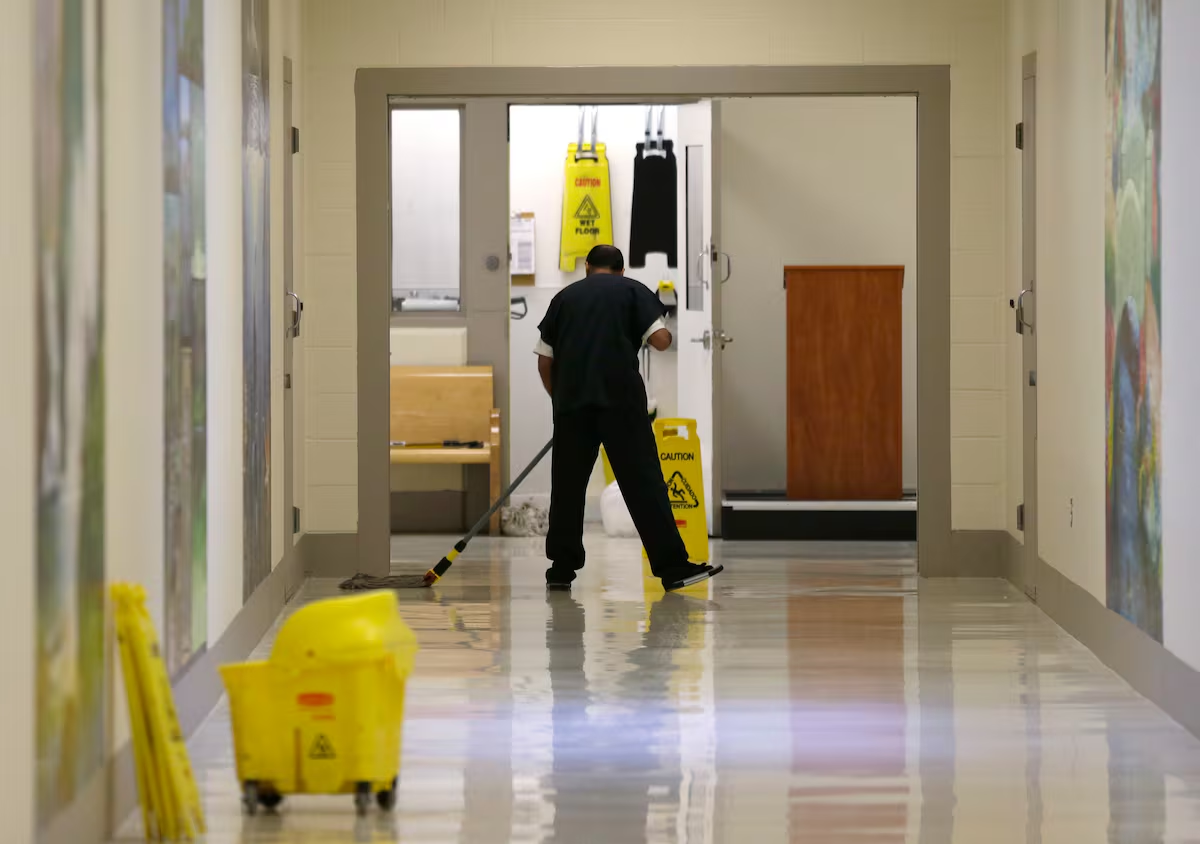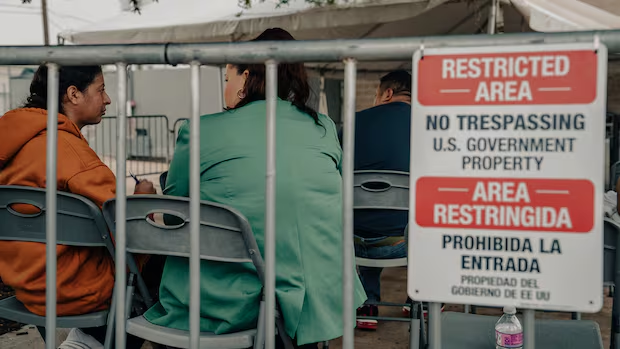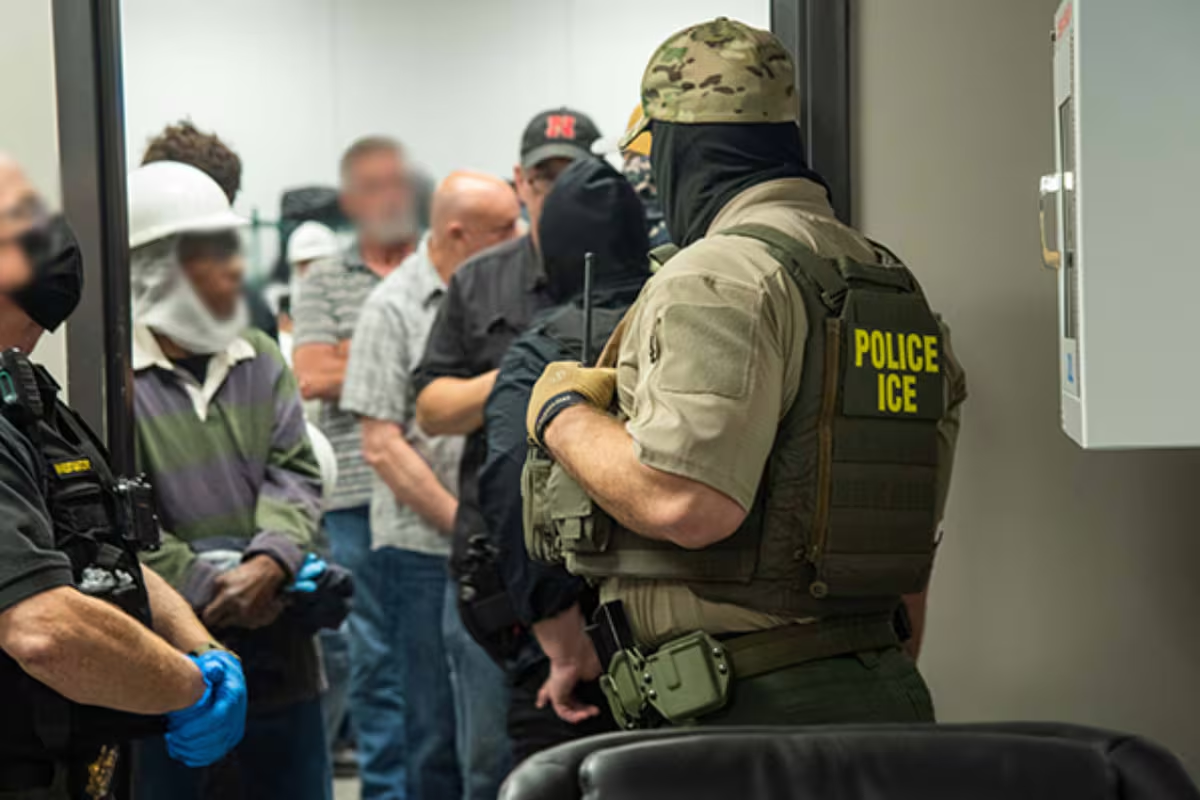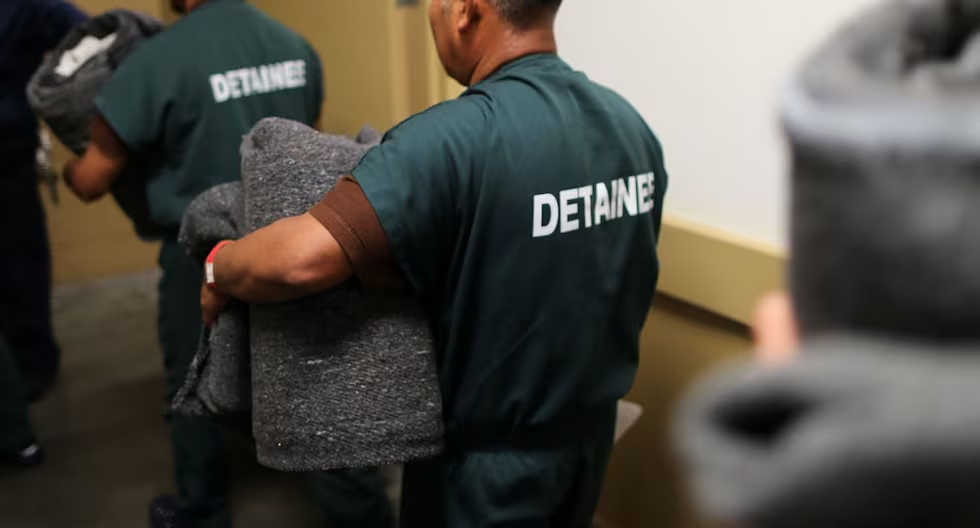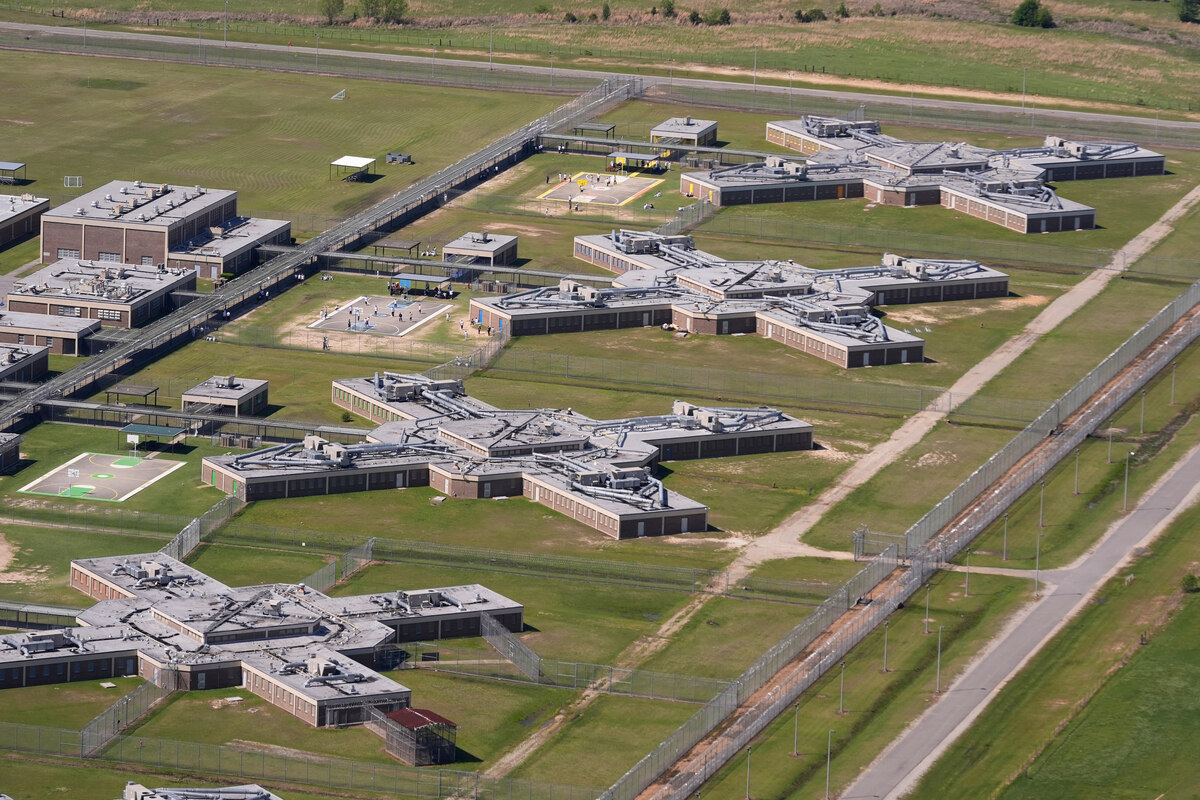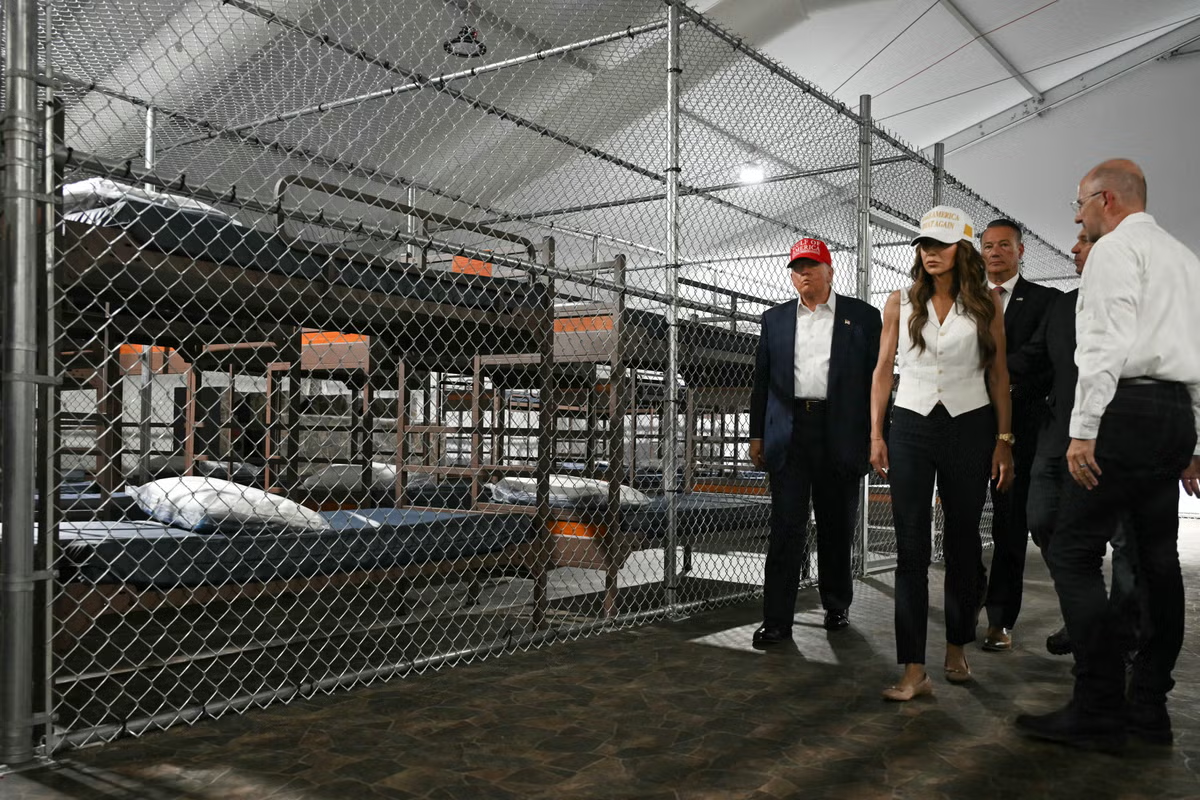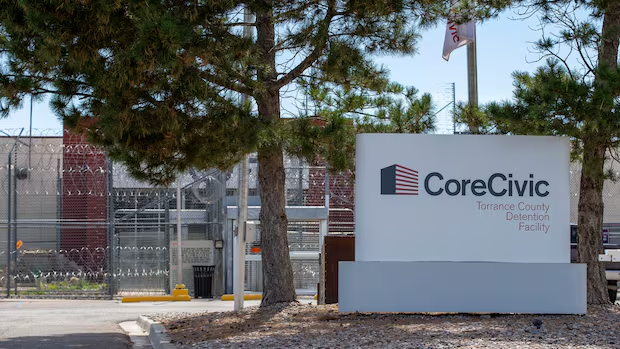
When David Gomez was arrested by immigration agents in New Jersey last year, he entered a detention system run almost entirely by for-profit corporations. He was released six months later, more than 3,000 kilometres from home and having spent $5,000 while in detention, not including his lawyer’s fees.“You're just a dollar sign for these people,” Gomez, 37, told CBC News. “Not only are you a prisoner, you're a customer.” The masked agents of U.S. Immigration and Customs Enforcement (ICE) may be the most visible element of the Trump administration’s immigration crackdown, but the logistics of detention and deportation are carried out by a network of private-sector suppliers.Charter airlines ferry detainees to detention centres owned by publicly traded corporations, where they’re served food produced by subsidiaries of multibillion-dollar investment firms. Nearly all ICE detainees — 90 per cent — are held in for-profit facilities. The system is fuelled by the staggering sums allocated for Trump’s mass deportation plan, which includes $45 billion US to boost ICE’s detention capacity. A detained migrant has a laser pointed at him as he stands by the window while ICE agents stand guard outside the Delaney Hall detention centre during a protest near the entrance gates on May 27 in Newark, N.J. (Andres Kudacki/The Associated Press)Critics say that money has turbo-charged an industry already the subject of complaints about its treatment of detainees. In recent months, detainees at four different facilities have staged hunger strikes over food quality, low wages and amenities.The GEO Group, which runs Delaney Hall in New Jersey, “fails to meet the basic conditions necessary to protect our health and our lives,” detainees there wrote in a public letter. Their hunger strike is reportedly entering its second week.First stop: ElizabethGomez, who immigrated from Colombia when he was four, was arrested in March 2025 while attending one of his regularly scheduled check-ins with ICE. Like the majority of people ICE has arrested since the start of 2025, he is not a felon. He is a father of two, a university graduate and, for the past 10 years, an employee of the Prudential Center, home of the New Jersey Devils.How ICE detention is forcing immigrants out of the U.S.After his arrest, Gomez was sent to a detention facility in his hometown of Elizabeth, N.J. Located in a converted warehouse, the Elizabeth Contract Detention Facility was among the first wave of privately operated immigration detention centres to open in the late 1980s and early '90s.This Dec. 10, 2008, photo shows a row of beds at the Elizabeth Detention Facility in Elizabeth, N.J. The facility was among the first wave of privately run detention centres to be built in the late 1980s and early '90s. (Mel Evans/The Associated Press)For much of the postwar period, U.S. policy was to limit the number of immigrants in detention. That changed under Ronald Regan, whose administration escalated the war on drugs and turned to private prisons to handle the influx of prisoners. It also started detaining asylum seekers from the Caribbean and Central America, but the federal government didn’t have the physical infrastructure needed to hold them.“So they turned to what was then a very fledgling private prison industry,” said César García Hernández, a professor of immigration law at Ohio State University.ICE nodding to far-right extremists in recruitment posts, experts sayGomez spent a week at the facility in Elizabeth, now run by CoreCivic. With the GEO Group, CoreCivic emerged as the dominant player in the private prison industry as incarceration rates climbed steadily in the '90s. While in Elizabeth, Gomez’s family was able to visit. He figured he would soon be either deported or released. Flying ICE AirInstead, he was shackled and taken to Newark airport, where ICE agents marched him and other detainees onto a charter flight operated by Global Crossing Airlines.The Miami-based company signed a $64-million contract in 2024 to provide charter services to ICE. It operated nearly half of the agency’s 13,446 flights last year, according to figures compiled by ICE Flight Monitor.A worker in a mask walks off a U.S. Immigration and Customs Enforcement flight departing from King County International Airport-Boeing Field in Seattle on Aug. 23, 2025. The agency is projected to spend $748 million US this year on transportation and removal operations. (Lindsey Wasson/The Associated Press)ICE initially used military planes to move detainees but began turning to the private sector during the Obama administration. The agency now has a dedicated air operations division and is projected to spend $748 million this year on transportation and removal operations.Most of these flights involve shuttling detainees significant distances around the country. Gomez was taken to a detention centre in Torrance County, N.M. Under Trump, there has been a huge increase in “domestic shuffle” flights, which advocates say makes it more difficult for detainees to communicate with their lawyers and families — and to fight their deportation orders. “You take them away from the resources that might potentially help them to navigate what is necessarily a high-stress and high-stakes legal process,” said García Hernández.What is old is new againThe ICE facility in Torrance County is also run by CoreCivic. Like many privately run detention centres, Torrance County was initially a prison, which CoreCivic (then named Corrections Corporation of America) built in 1990.At the outset of 2025, both the GEO Group and CoreCivic had lower occupancy rates and several idle facilities, following several difficult years for the private-prison sector.Since peaking in 2009, prison populations in the U.S. have trended downward while scrutiny of the industry increased.David Gomez described a period at the Torrance facility in New Mexico when the toilets repeatedly flooded, spilling human waste into the cells. (Andres Leighton/The Associated Press)President Joe Biden, in one of his first acts of office, banned the Department of Justice from entering into any new contracts with companies like CoreCivic or the GEO Group. Trump promptly overturned the order in 2025 and is seeking to expand ICE’s detention capacity from 41,000 to 100,000, contracting the reopening of shuttered prisons and detention centres.ICE, not the Bureau of Prisons, is now a larger source of revenue for both private prison industry giants.Given their age, conditions at their former prisons are often poor, according to ex-detainees and advocacy groups. Gomez described a period at Torrance when the toilets repeatedly flooded, spilling human waste into the cells. “We had to use bags, bro, like plastic bags. We had to shit in a bag because we couldn't [use the toilet],” said Gomez.David Gomez is seen in a 2023 photo with his two children. Gomez spent six months in a detention facility in New Mexico. (Submitted by David Gomez)In a statement to CBC News, CoreCivic blamed the plumbing problems at Torrance County on local water supply issues.“CoreCivic is committed to providing safe, humane and appropriate care for the people in our facilities,” the statement said.‘Bad food is the business model’At ICE detention facilities across the country, detainees say they're served food that's unnutritious and sometimes downright unsanitary. Former detainees at three different facilities told CBC News they were given food that was rotting. Food services are provided either by the operator of the facility or subcontracted to companies like Aramark Correctional Services and GD Correctional Services. Workers are shown in the kitchen of the GEO Group's immigration detention centre in Tacoma, Wash., during a media tour on Sept. 10, 2019. ICE detainees can take part in voluntary work programs, where they can be paid as little as $1 per day. (AP)Successful bids for these contracts depend on keeping costs to a minimum. Aramark, for instance, won a food services contract in 2015 for a detention centre in New Jersey that budgeted spending $1.46 per meal, according to Nancy Hiemstra and Deirdre Conlon, authors of Immigration Detention Inc.: The Big Business of Locking up Migrants.At that price, only a limited amount of protein and other nutritious elements can be included in a meal, said Conlon, a geography professor at the University of Leeds.“Bad food is the business model,” she told CBC News. “The provision of poor quality and poor quantities of food is written in the contracts.”As a result, detainees often turn to the commissary, or canteen, to supplement their diets with instant ramen, tuna or other nonperishable items.The commissaries are also run by private companies that routinely inflate prices between four and seven times what they would cost outside a detention centre, according to Hiemstra and Conlon’s research. Gomez said he would pay six dollars for a can of tuna at Torrance. “Even though I don't like tuna, I would have to eat it because that's the protein,” he said.He estimates he spent $3,000 on commissary items during the six months he was in detention. He spent an additional $2,000 on phone calls. VideoHow ICE detention is forcing immigrants out of the U.S.Telecom services in prisons and detention centres are provided mainly by two companies, ViaPath and JPay. The same companies also provide commissary account services, charging fees when friends or family donate to a detainee’s account. It’s not uncommon for detainees to be several thousands dollars out of pocket by the time they leave detention, said Conlon.As goes ICE, so go profitsAfter five months in Torrance, a judge ordered Gomez released because he's a legal permanent resident. The hearing took less than five minutes.He returned to New Jersey, is back at his old job and waiting for his citizenship exam. After spiking more than 80 per cent in the days after Trump’s reelection in 2024, shares of both CoreCivic and the GEO Group dipped in the spring amid a lull in ICE arrests.On an earnings call last month, CoreCivic CFO David Garfinkle said the company believes the lull is temporary and projected increased profit when “ICE populations” grow again later this year.
Meet the companies squeezing profits from migrants in U.S. detention | CBC News
Charter airlines ferry detainees to detention centres owned by publicly traded corporations, where they’re served food produced by subsidiaries of multibillion-dollar investment firms. The masked agents of U.S. Immigration and Customs Enforcement (ICE) may be the most visible element of the Trump administration’s immigration crackdown, but the logistics of detention and deportation are carried out by a network of private-sector suppliers.
TL;DRAI
Trump allocated $45B for ICE detention expansion; 90% detainees now in for-profit facilities (GEO, CoreCivic). For tech leaders: critical infrastructure vendor concentration creates misaligned incentives—revenue scales with system size, not outcome.
1,624 words~7 min read