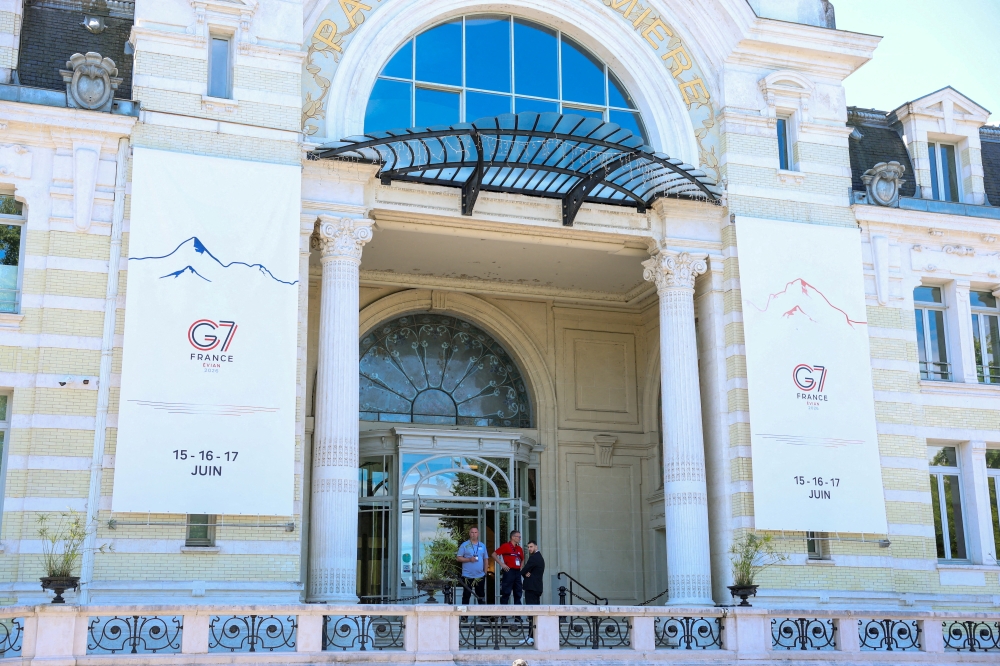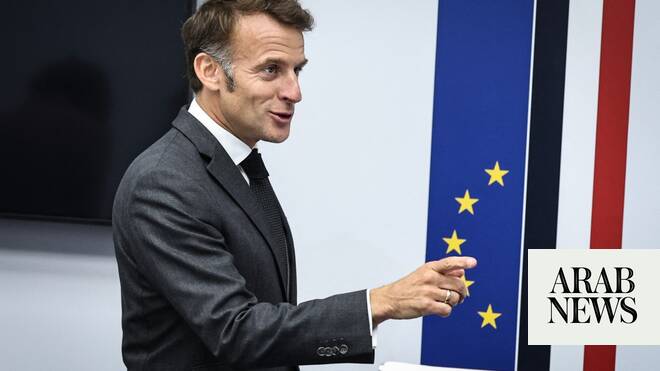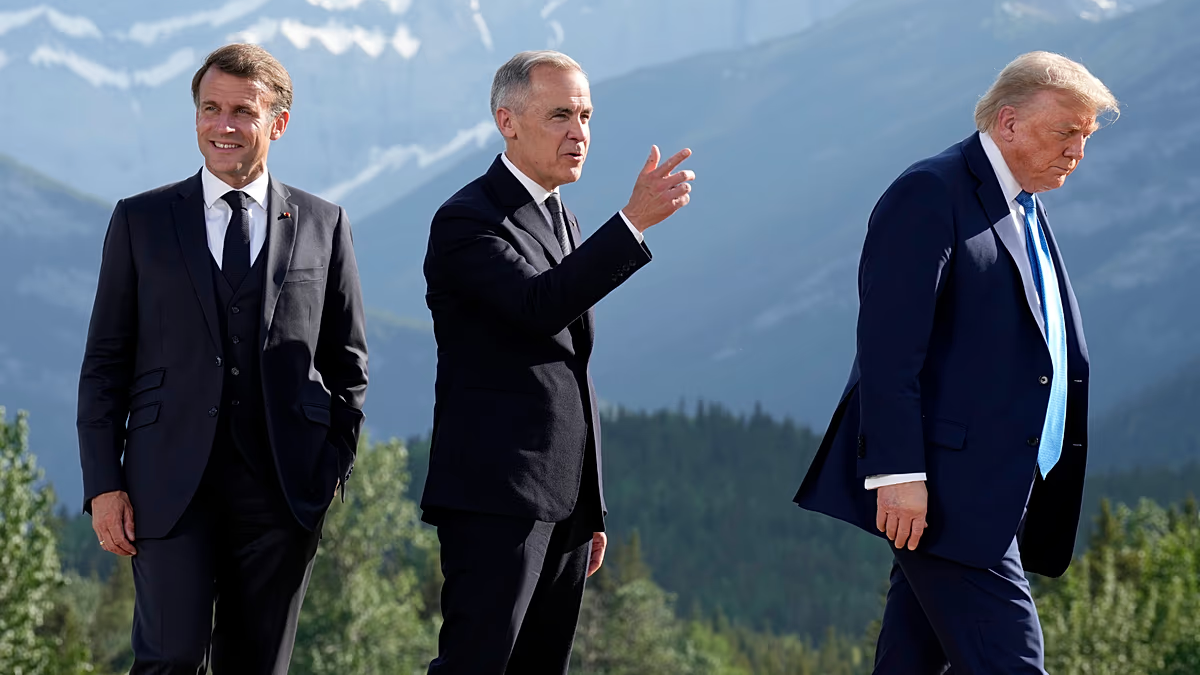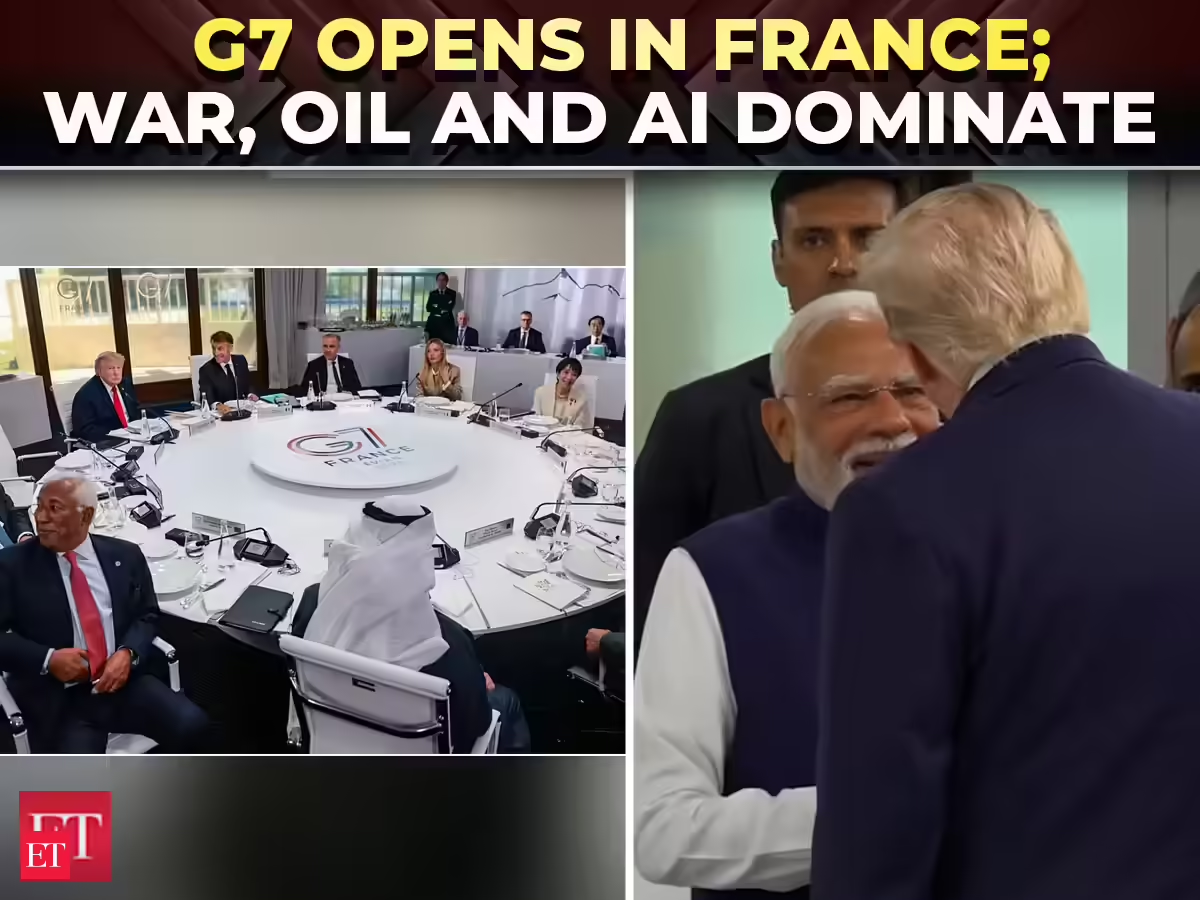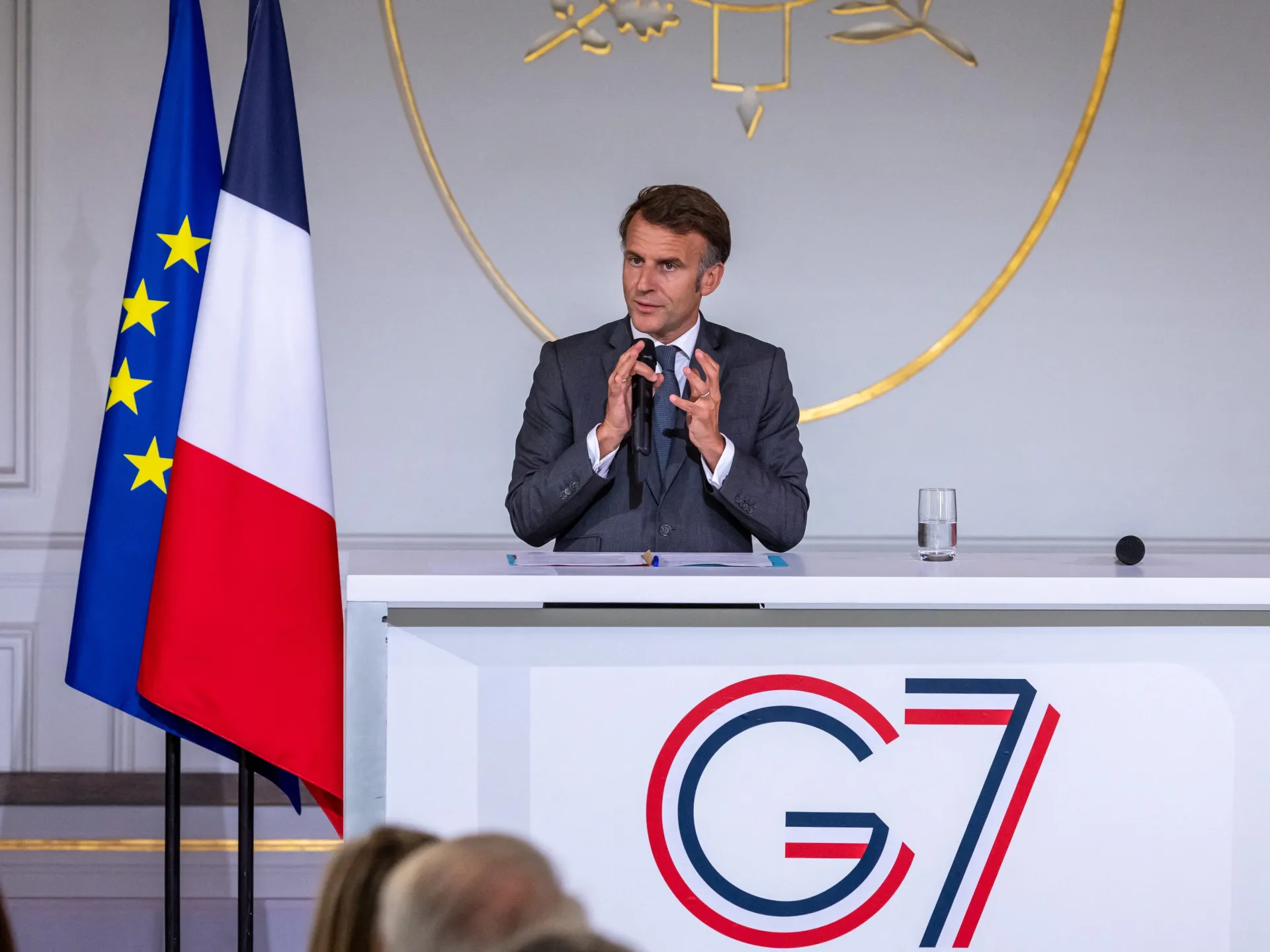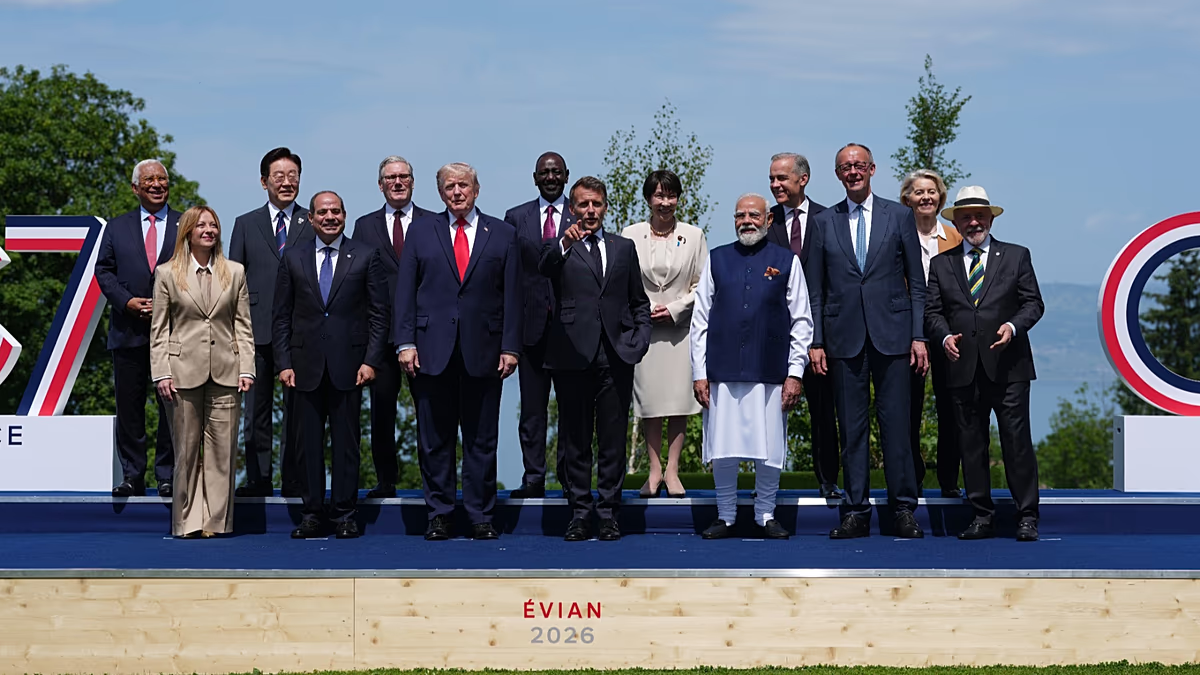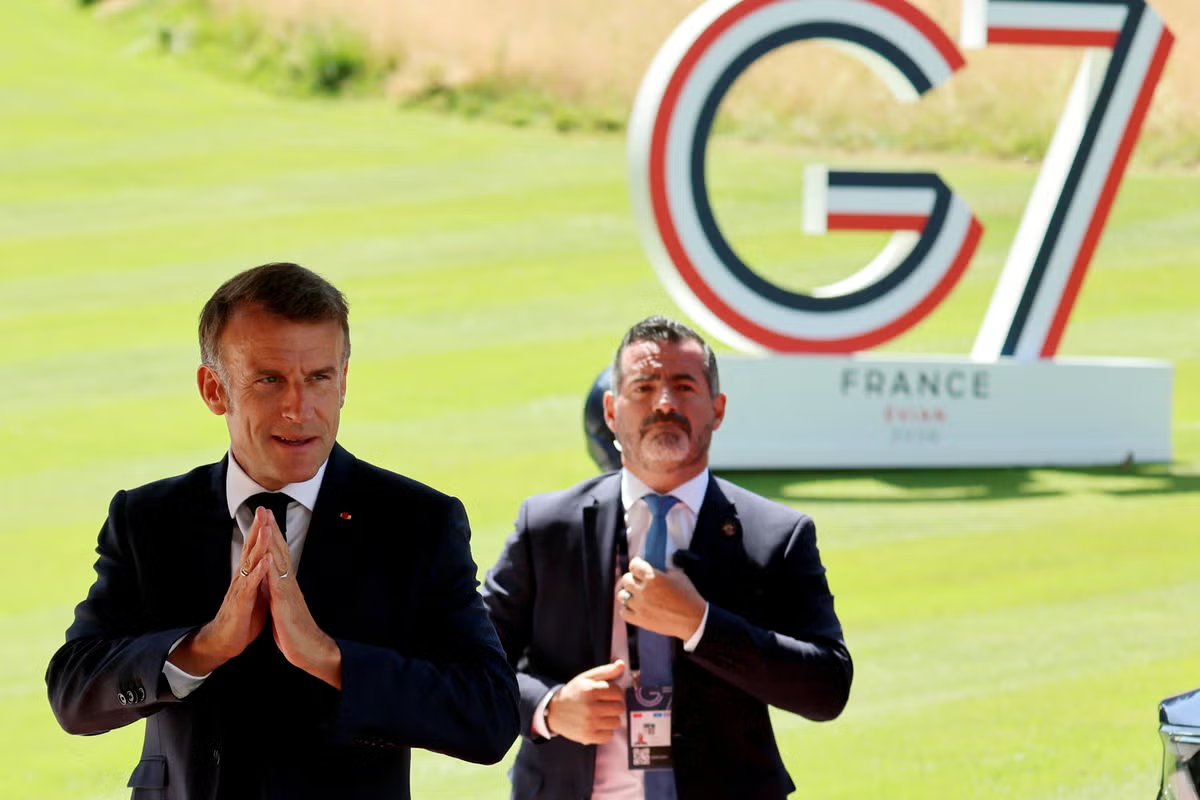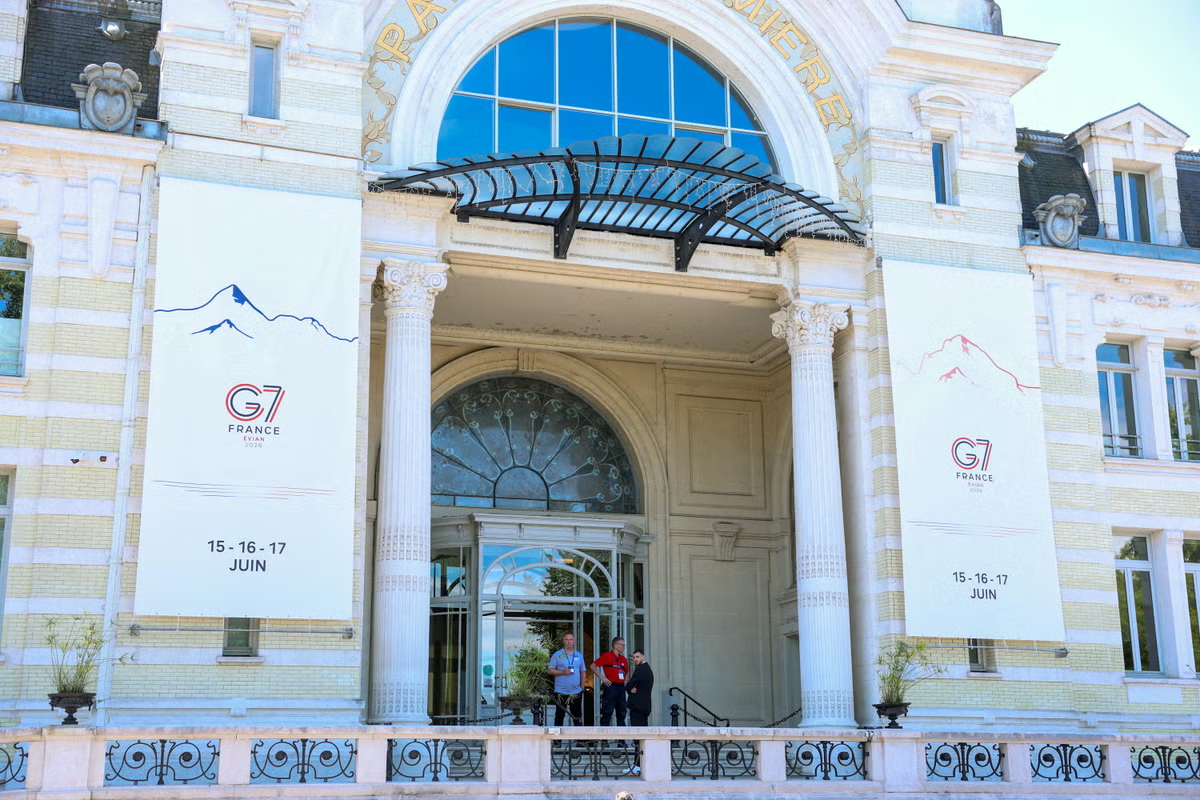
The Group of Seven wealthy nations are set to convene on Monday in the picturesque French lakeside resort of Evian-les-Bains to discuss wars in Ukraine and Iran, global economic imbalances that threaten financial stability, and the irrepressible rise of AI.Throughout its five-decade history, the G7 has navigated significant geopolitical catastrophes, from the 1970s oil crisis to the global fallout from U.S. President Donald Trump's military strikes against Iran, as well as questions about its role as multilateralism falters and other countries' economic and political power grows.What is the G7?The G7 operates as an informal assembly of wealthy nations, lacking a permanent secretariat or formal legal standing.Its members are the U.S., Britain, Canada, France, Germany, Italy and Japan. While the European Union attends all summits, it is not considered one of the core "7" and does not hold the rotating presidency, as it is not a single nation but a bloc of 27.Donald Trump boards Air Force One to fly to Evian-les-Bains, France, for the G7 summit (AFP/Getty)Russia was included in what became the G8 in 1997, but was later suspended in 2014 after annexing Crimea from Ukraine.France took over the presidency from Canada in 2026.How long has it been around? The G7 was founded following the 1973 OPEC oil embargo as a forum for the richest nations to discuss crises affecting the world economy. Its member states have a combined annual GDP of more than $50 trillion - just under half the world economy.Keir Starmer and Japan's prime minister Sanae Takaichi met ahead of the G7 summit (Reuters)The scope of the G7 was expanded in the 1980s to include political issues.In recent years, it has become customary to invite other nations. This year, the leaders of India, South Korea, Kenya and Brazil are among those invited.What’s on the agenda? Supporting UkraineThe G7 will want to show unity in its support for Ukraine, faced with a Russian war now in its fifth year.Ukraine's President Volodymyr Zelenskiy has proposed face-to-face talks with Russian President Vladimir Putin to try to end the war. He wants Europeans to play a more prominent role in the process, worried the U.S. is distracted by the conflict in Iran.The G7's European members want to persuade Trump that Ukraine's position has strengthened, Europe is now shouldering the financial, military and political burden of Ukraine's war effort, and the G7 should agree on how to approach meaningful negotiations with Putin.Zelenskiy will be in Evian-les-Bains for the discussion on Ukraine.IranThe G7 leaders meet shortly after the U.S. and Iran announced they had agreed on a framework to end their war.The agreement is not due to be signed until Friday, but G7 leaders will want to know the details of the accord and, in particular, how quickly the vital Strait of Hormuz can be reopened to shipping traffic. Trump said it would reopen on Friday and that he had ordered the end of the U.S. blockade on Iranian ports.In the run-up to the G7 meeting, France had been keen for an agreement within the G7 and with Middle East partners on the demands that can be made of Iran over its nuclear and ballistic programs.The leaders of Egypt, Qatar and the United Arab Emirates will join the discussion.Correcting global economic imbalances France summarises the imbalances as: China produces too much, the U.S. consumes too much, and the Europeans invest too little.There is growing alarm in the West at China's record trade surplus and its move up the value chain. Beijing has defended its industrial policies and rejected allegations of Chinese exporters unfairly benefiting from state subsidies.Macron has sought to make a last-ditch attempt at a cooperative approach before the EU decides whether to toughen its trade policy towards China.With China absent from the table, no breakthroughs are expected. France says acknowledgement that a problem exists is a win in its own right.Artificial IntelligenceFrance has invited about a dozen senior tech executives, including OpenAI's Sam Altman and Anthropic CEO Dario Amodei, to discuss the latest artificial intelligence technologies and the possible threats and opportunities they offer.The protection of children online and digital infrastructure will also be on the agenda, but not the taxation of digital giants.Debt burden of developing nationsThe G7 leaders are likely to express their resolve in addressing the heavy debt burden faced by many emerging market and developing countries. It is not clear what this commitment will mean in concrete terms.
What is the G7 and what’s on the agenda for the Evian-les-Bains summit?
The Group of Seven wealthy nations will meet in the French lakeside resort of Evian-les-Bains on Monday
TL;DRAI
G7 summit tackles Ukraine war (year 5), Iran accord, China trade imbalance, and AI policy; OpenAI and Anthropic leaders attend. Government alignment on AI regulation and China tech competition will shape enterprise AI stack and partner strategy for tech leaders.
732 words~3 min read