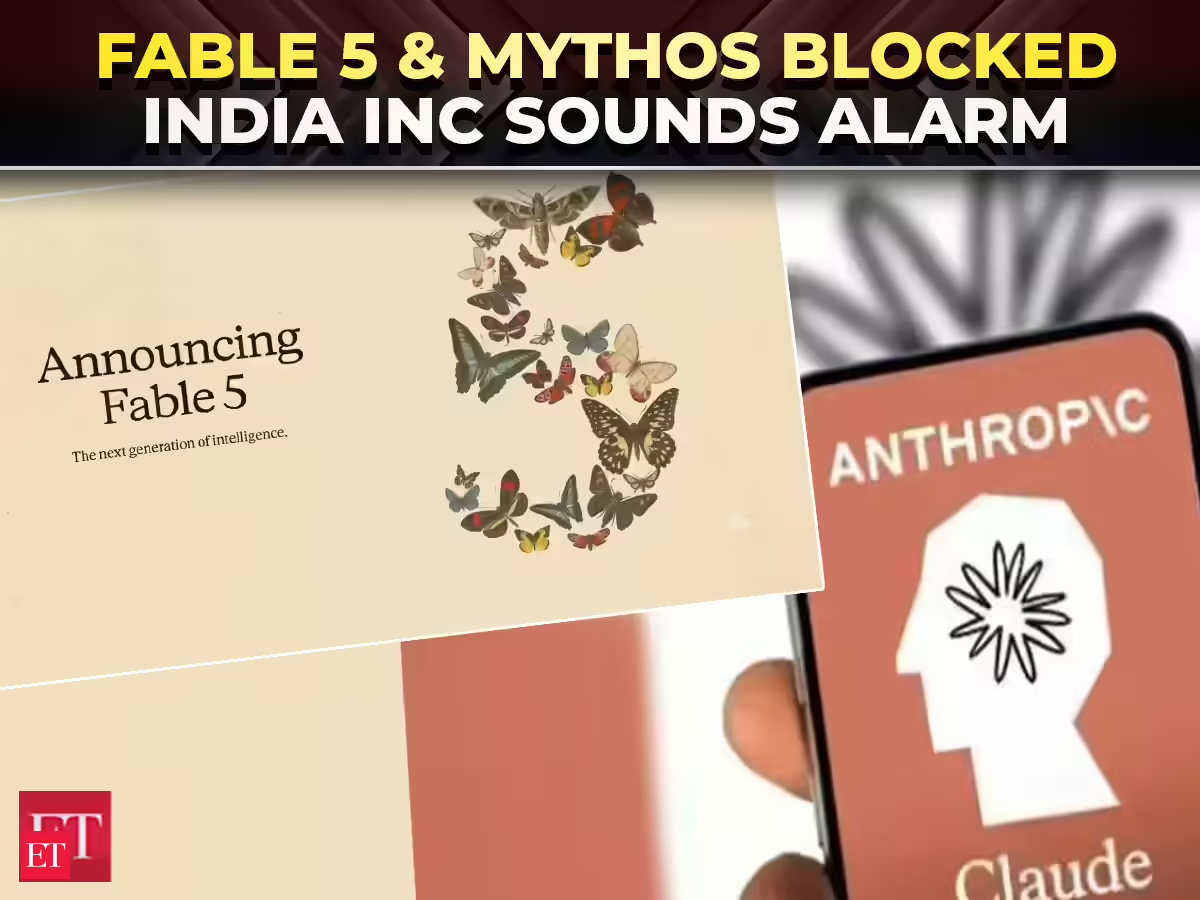
Anthropic’s latest artificial intelligence models Claude Fable 5 and Mythos 5 have triggered a fresh debate in India after access restrictions linked to US government export controls left several international users unable to use the advanced AI systems. As discussions around the ban spread online, Indian developers and technology enthusiasts started sharing their own “jugaad” ideas, while many argued that the situation highlights the need for India to build stronger homegrown AI capabilities.Also Read: ‘I lost my job to AI’: 24-year-old Meta data scientist says layoff was more relief than pain, big tech jobs are no longer safeThe restrictions have created a new conversation around access to advanced technology, global AI competition, and whether countries should depend heavily on foreign AI platforms.Why Claude Fable 5 and Mythos 5 access is bannedAnthropic, the US-based company behind Claude AI models, recently introduced Fable 5 and Mythos 5 with improved capabilities in areas including general AI tasks and cybersecurity-related applications.However, concerns around possible misuse and national security risks led to tighter controls from the US government. Under the new restrictions, access to these AI models has been limited mainly to US citizens.The move reportedly even affected well-known AI researcher Andrej Karpathy, who recently joined Anthropic, as he was unable to access the models because he is not a US citizen.The development has raised concerns among global developers who rely on advanced AI tools for research, coding, startups and innovation.Indian techies reacts with ‘jugaad’ solutionsSoon after the restrictions came into discussion, social media platforms in India saw a wave of reactions from developers and technology users.— TanmayJain5114 (@TanmayJain5114) Many Indian users shared possible workarounds involving VPNs, proxies, overseas connections and other methods. The conversation quickly turned into a familiar debate around the Indian culture of finding solutions when faced with restrictions.One viral reaction summed up the mood among many users: "Do they really think they could stop Indians?"Also Read: Sundar Pichai tells Stanford graduates ‘your choices will shape your journey’ after students walk out during speechSeveral users pointed out that software restrictions have historically not prevented determined communities from finding alternative ways to access technology. At the same time, experts warned that stronger identity checks and compliance measures could make such access more difficult in the future.AI restrictions raise questions about technology dependenceThe Claude restrictions have also brought attention to a larger issue, dependence on foreign AI systems.India has one of the world’s largest pools of software engineers, developers and technology entrepreneurs. However, many startups and professionals still rely on AI models created by companies outside the country.The latest development has renewed calls for India to accelerate investments in domestic AI models, computing infrastructure and data centres.Is it time for India’s own AI push?India has already started focusing on building its AI ecosystem through initiatives such as the National AI Mission and increased collaboration with global technology companies.Technology leaders believe that the country needs stronger AI infrastructure that can address local requirements, including Indian languages, agriculture, healthcare, education and governance.The argument is that instead of depending entirely on foreign AI platforms, India should create models designed around its own data, challenges and user needs.From jugaad to innovation: India’s AI challengeThe debate around Claude Fable 5 and Mythos 5 access is not only about bypassing restrictions. It has also become a discussion about India’s future role in the global AI race.While some developers are looking for short-term solutions, others believe the bigger answer lies in creating powerful Indian AI systems.As countries compete for leadership in artificial intelligence, the latest restrictions have added urgency to India’s push for technology independence. The message from many in the tech community is clear — access matters, but building the next generation of AI may matter even more.
Claude Fable 5, Mythos banned: Indian techie shares Indian jugaads one can use to bypass restrictions to access AI tools
New US restrictions on advanced AI models from Anthropic have caused a stir in India. Indian tech enthusiasts are sharing 'jugaad' solutions to bypass these limitations. This situation highlights India's reliance on foreign AI platforms and fuels calls for stronger domestic AI development. The focus is now on building India's own AI infrastructure to meet local needs and compete globally.
TL;DRAI
Anthropic restricts access to Claude Fable 5 and Mythos 5 to US citizens only under export controls, prompting Indian developers to seek workarounds via VPN. The episode accelerates calls for domestic AI systems instead of dependence on foreign platforms.
618 words~3 min read