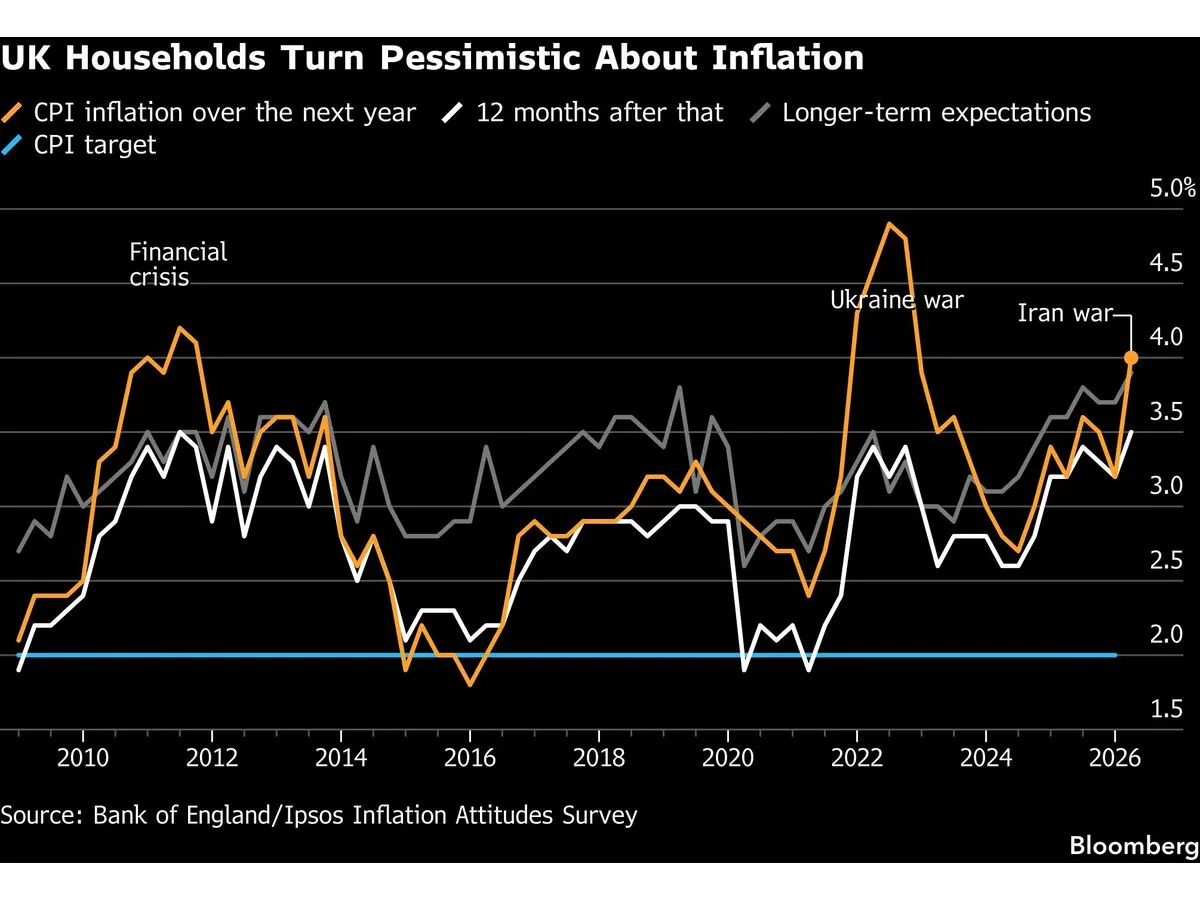
Skip to Content News Archives Economy Energy Oil & Gas Renewables Electric Vehicles Mining Commodities Agriculture Real Estate Mortgages Mortgage Rates Finance Banking Insurance Fintech Cryptocurrency Work Wealth Smart Money Wealth Management Investor Personal Finance Family Finance Retirement Taxes High Net Worth FP Comment Executive Women Puzzmo Newsletters Financial Times Business Essentials More Innovation Information Technology FP500 Podcasts Small Business Lives Told Tails Told Shopping Financial Post Store Obituaries Place a Notice Advertising Advertising With Us Advertising Solutions Postmedia Ad Manager Sponsorship Requests Classifieds Place a Classifieds ad Working Profile Settings My Subscriptions Saved Articles My Offers Newsletters Customer Service FAQ News Economy Energy Mining Real Estate Finance Work Wealth Investor FP Comment Executive Women Puzzmo Newsletters Financial Times Business Essentials HomePMN BusinessMore Bank of England Officials Set to Back Hikes as Iran War Frays UnityThe Iran war has produced an unusual sight on the Bank of England’s rate-setting panel: unity. Economists don’t expect it to last.Author of the article: You can save this article by registering for free here. Or sign-in if you have an account.12s(rrr1we66e9lu]ketgu7c_media_dl_1.png Bank of England/Ipsos Inflation(Bloomberg) — The Iran war has produced an unusual sight on the Bank of England’s rate-setting panel: unity. Economists don’t expect it to last.Subscribe now to read the latest news in your city and across Canada.Exclusive articles from Barbara Shecter, Joe O'Connor, Gabriel Friedman, and others.Daily content from Financial Times, the world's leading global business publication.Unlimited online access to read articles from Financial Post, National Post and 15 news sites across Canada with one account.National Post ePaper, an electronic replica of the print edition to view on any device, share and comment on.Daily puzzles, including the New York Times Crossword.Subscribe now to read the latest news in your city and across Canada.Exclusive articles from Barbara Shecter, Joe O'Connor, Gabriel Friedman and others.Daily content from Financial Times, the world's leading global business publication.Unlimited online access to read articles from Financial Post, National Post and 15 news sites across Canada with one account.National Post ePaper, an electronic replica of the print edition to view on any device, share and comment on.Daily puzzles, including the New York Times Crossword.Create an account or sign in to continue with your reading experience.Access articles from across Canada with one account.Share your thoughts and join the conversation in the comments.Enjoy additional articles per month.Get email updates from your favourite authors.Create an account or sign in to continue with your reading experience.Access articles from across Canada with one accountShare your thoughts and join the conversation in the commentsEnjoy additional articles per monthGet email updates from your favourite authorsSign In or Create an AccountorThe two decisions to hold Bank rate at 3.75% since the US and Israeli attacks on Iran have seen the strongest consensus on the Monetary Policy Committee in years, with just one dissenting vote across the March and April meetings. That is likely to change this week as policymakers meet against a backdrop of both mounting inflation and a weakening economy with the conflict now approaching the four-month mark.Get the latest headlines, breaking news and columns.By signing up you consent to receive the above newsletter from Postmedia Network Inc.A welcome email is on its way. If you don't see it, please check your junk folder.The next issue of Top Stories will soon be in your inbox.We encountered an issue signing you up. Please try againWhile economists and investors expect rates to stay on hold on June 18, recent comments point to growing divisions on the nine-member MPC. Governor Andrew Bailey argues tighter financial conditions mean the panel has breathing space to assess the inflation danger posed by the energy shock. Others are growing concerned they are running out of time. Officials are still thought to be broadly in the two camps they were in before the war, when Bailey often cast the deciding vote in numerous tight meetings.“I think we are going to see a return to the old battle lines,” said James Smith, developed market economist at ING. “July is going to be like a real crunch month. If there has been no clear resolution to the crisis by then, the inventory story for oil is going to get a lot tighter.”Chief economist Huw Pill has been the only rate-setter to back hiking rates so far. But economists believe at least one could join him this week.A slew of figures on Friday underlined the dilemma facing policymakers, who are having to balance slowing growth against the threat of the oil shock causing a feedback loop as companies raise prices and workers demand higher wages.The economy contracted in April, official figures showed, and a BOE survey of its agency network found a deepening sense of gloom among businesses. On the other hand, households expect inflation to accelerate to 4%, double the BOE target.Traders slashed wagers on the extent of BOE hikes on Friday, as renewed optimism over a potential peace deal pushed oil prices sharply lower. Swaps imply almost no chance of a hike this week, with the odds of a move in July at around one-in-three.External rate-setter Megan Greene is seen as the most likely to back a quarter-point hike this week after recently making the case that tighter policy may be needed promptly. Other long-standing hawks on the committee are being watched closely.“There is also a risk that Catherine Mann and/or Clare Lombardelli could join them, meaning up to a possible four votes for an increase,” said Elizabeth Martins, senior economist at HSBC. The window to determine the risk posed by the energy shock is “only open for so long,” she warned.The dovish camp has talked up weakness in the labor market, arguing that a lack of bargaining power could mean workers struggle to get the wage increases they want. Job-to-job moves, when people often receive a hefty pay boost, fell in the first three months of the year.Bailey has argued the BOE could temporarily tolerate a period of above-target inflation if second-round effects do not emerge.The hawks have been more concerned about firms passing on higher energy and raw material costs, particularly given profit margins were squeezed by the last inflation shock. Mann has warned that corporate pricing power may be stronger than expected, while Lombardelli has pointed to surveys that show firms will try to hike prices to recover costs.Despite having its fingers burnt by judging the 2022 surge in inflation to be transitory, some economists believe the UK central bank can avoid hiking rates.“You will probably get a member or two that will say inflation has been so high for so long I can’t risk us losing credibility,” said Karen Ward, EMEA chief market strategist at JP Morgan Asset Management. “You will get split vote. It may come very close.”She warned that the labor market is “so weak that it risks compounding an even deeper slowdown if they raise rates.” Join the Conversation This website uses cookies to personalize your content (including ads), and allows us to analyze our traffic. Read more about cookies here. By continuing to use our site, you agree to our Terms of Use and Privacy Policy.
More Bank of England Officials Set to Back Hikes as Iran War Frays Unity
The Iran war has produced an unusual sight on the Bank of England’s rate-setting panel: unity. Economists don’t expect it to last.
1,180 words~5 min read