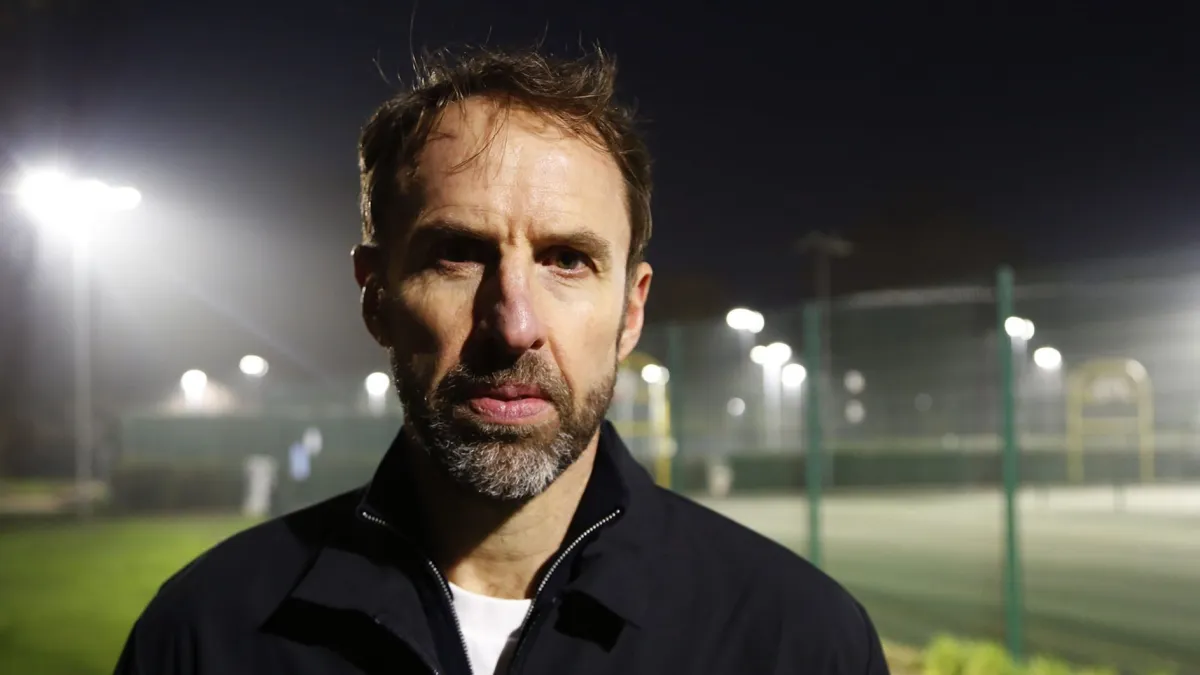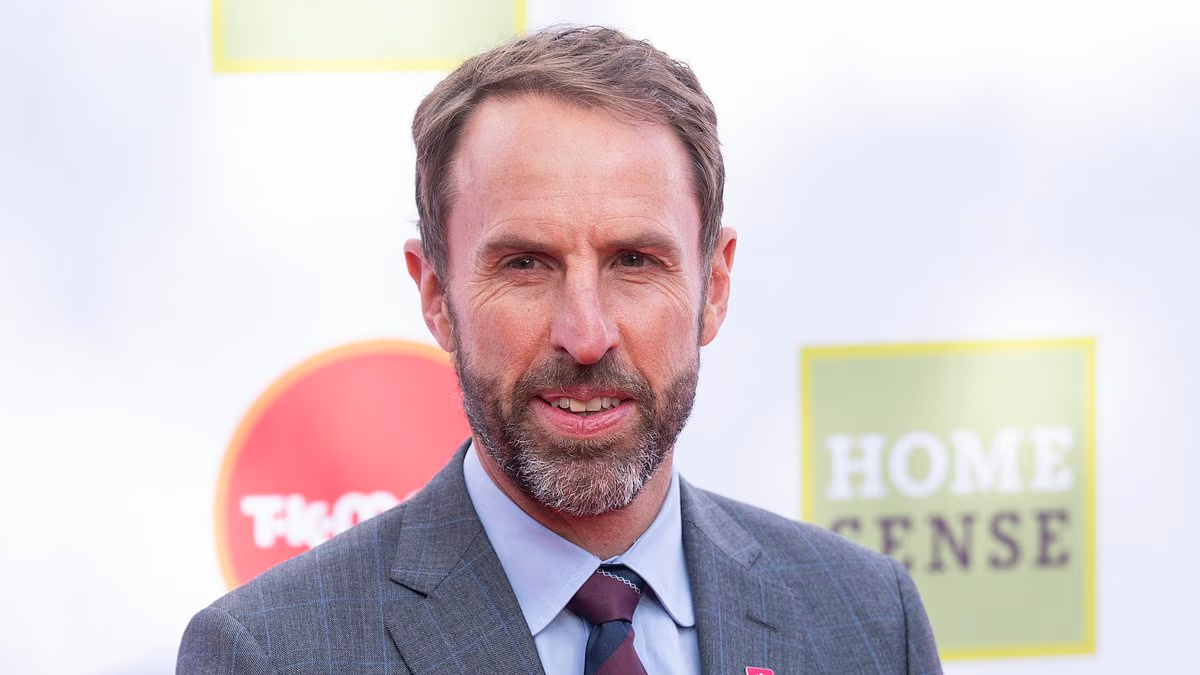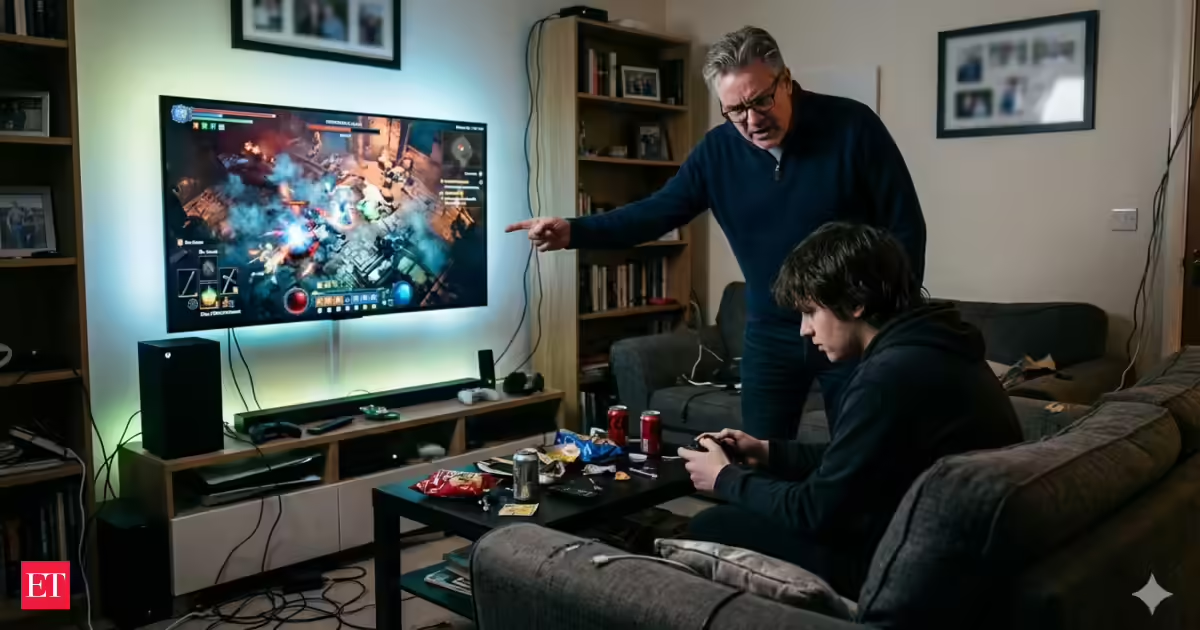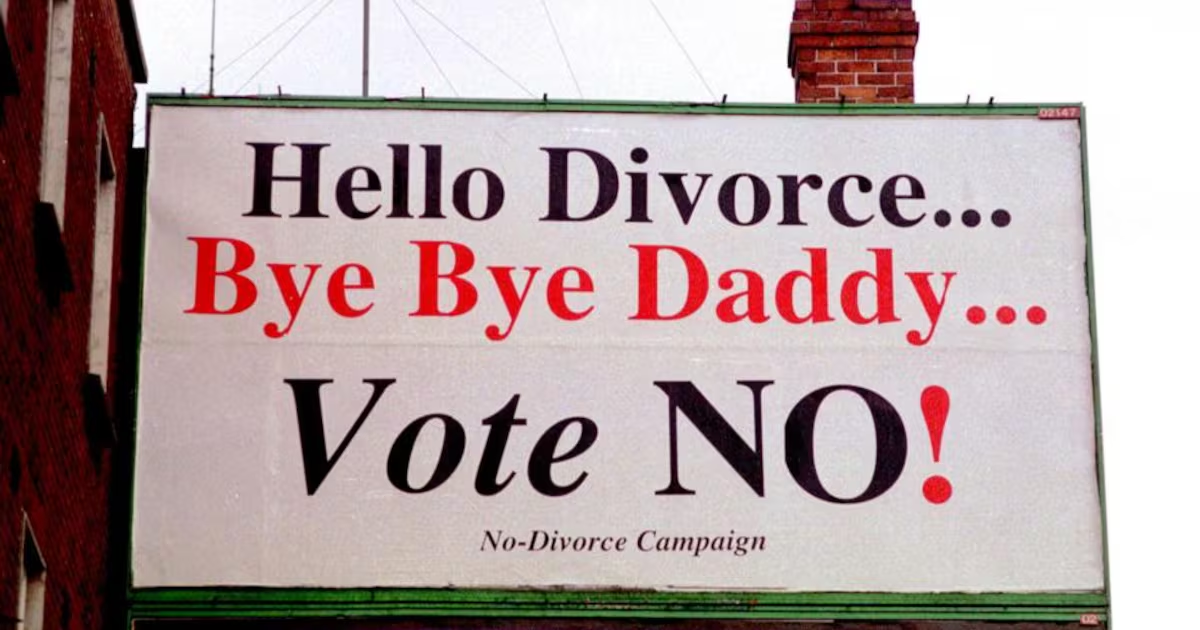
In the run up to launching his new documentary Changing the Game for Young Men, former England football manager Gareth Southgate did the rounds with the British media, discussing factors impacting young men and their welfare. The discourse is a successor to the one surrounding last year’s Netflix drama Adolescence. Its theme: “many boys are not doing so well. How can we help them?” As a man whose input with the England team was regarded as essential in steering them back to increased footballing credibility (sufficient to warrant Atomic Kitten rearranging a major ballad, no less), Southgate is an important voice in the debate over recovering a healthy sense of masculinity, especially with manosphere influencers competing for boys’ attention online.Given his experience, it’s not surprising that his recommendations are directed at the grassroots level, primarily looking at what individuals can do. There is less discussion of the grander structural issues involved, like impoverished educational services and challenging economic shifts, especially regional ones. Sometimes dots are not connected. He laments a lack of male teachers in schools without really reflecting on why fewer men are in those roles and the economic circumstances that have made many men think a career in teaching is inconsistent with being a traditional breadwinner. Circumstances, which, of course, we seem more ready to accept for women teachers.Another topic that features in press interviews is Southgate’s belief that too much divorce and the “changing dynamic of families” are leaving boys without father figures. Southgate and his interviewer discussed the statistic that where once 80 per cent of kids grew up in a two-parent family, close to 50 per cent now have “no father figure at home”. “If there isn’t a male role model at home, that gap used to be filled by someone else in the family, it used to be filled by a teacher or youth worker”. It’s this gap, which he thinks is now open, that pernicious “influencing” slips in through.I find the frequent framing of these issues in terms of “divorce” strange. Blaming divorce for a lack of male role models feels like a perniciously abstract way to describe what really seems to be the phenomenon these people bemoan – many men not taking obligations to their kids seriously, especially after a relationship breakdown. Labelling “divorce” the cause is sleight of hand.On this side of the Irish Sea we have more recent experience of the supposed bliss of divorcelessness. Telling visitors to Ireland that divorce was only legalised here in 1996 is one of my go-to facts for understanding Ireland and its relationship with traditions that are understood as religious.The same morning as Southgate was opining on the BBC, I was in the National Library looking at 1970s reports from the Economic and Social Research Institute. By chance, the first one that came my way was Marital Desertion in Dublin by Kathleen O’Higgins, published in 1974. It’s a sad read.Describing how, by and large, marital desertion abandonment was reasonably similar across regions (“mostly a male phenomenon”, often involving wishes to remarry, occurring across the class spectrum) the spectre of Irish exceptionalism rears its head immediately.“Desertion in Ireland differs from desertion in other countries in one very important aspect. Divorce is not permitted by the Irish Constitution, so desertion cannot be used as a ground for divorce – a deserted wife remains a deserted wife.”[ ‘You can end up with a house of horrors’: How much does a divorce in Ireland cost?Opens in new window ]I was nine during the 1995 referendum, so have few memories beyond the vaguest awareness of an issue of importance under discussion. As a married mother with peacefully divorced parents looking back on the campaign literature now, I find it shocking and indicative of changing attitudes towards marriage more generally. The insidious “Hello divorce ... Bye Bye Daddy ... Vote NO!” posters carry a similar message to the current hand-wringing about divorce as an explanation for paternal absenteeism; the implication being that the only thing preventing many men from abandoning their children is a breach of contract worry. If so, I struggle to understand the great hope that such flippant parental mentorship could be the saviour of young men. And anyway, as O’Higgins’s 1974 report shows, plenty of married men left anyway.Southgate is convinced boys and girls require somewhat different education and mentoring from one another. If this is true, and that’s a significant if in my opinion, he should be talking about improving the conditions for men to really lean in to their parenting and mentorship opportunities.Universal shared parental leave that supports the notion that fathers are not just a kind of beta/substitute parent would be a good start. Ireland has improved somewhat here. When my five-year-old was born, two weeks off for dad was still the norm; such policies sent a clear message of dads as largely superfluous. If we want more men back in educational and other more classic mentoring roles, we should be pursuing fairer pay for those roles and a distribution of wealth that makes such jobs consistent with a stable economic existence.[ Does it matter if Belle Burden’s controversial divorce memoir doesn’t tell the whole truth?Opens in new window ]Ditto for the funding of what are often regarded as mere hobbies – sports and the arts are where most mentoring occurs, and they need to be seen for the critical infrastructure they provide for role-modelling (and setting kids up to start mentoring the next generation themselves). It’s about creating positive opportunities for the culture of positive masculinity, not trapping people in unhappy households.Clare Moriarty is a Research Ireland Enterprise Fellow, working at University College Dublin and the National Library of Ireland
Opinion: Divorce is not the reason many kids are growing up without a father figure
Unthinkable: The implication is that the only thing preventing many men from abandoning their children is a breach of contract worry
TL;DRAI
Moriarty refutes Southgate's divorce-blaming narrative: male irresponsibility and structural gaps (shared parental leave, fair wages, arts/sports funding) drive paternal absence. Real solutions demand systemic policy, not cultural nostalgia.
947 words~4 min read