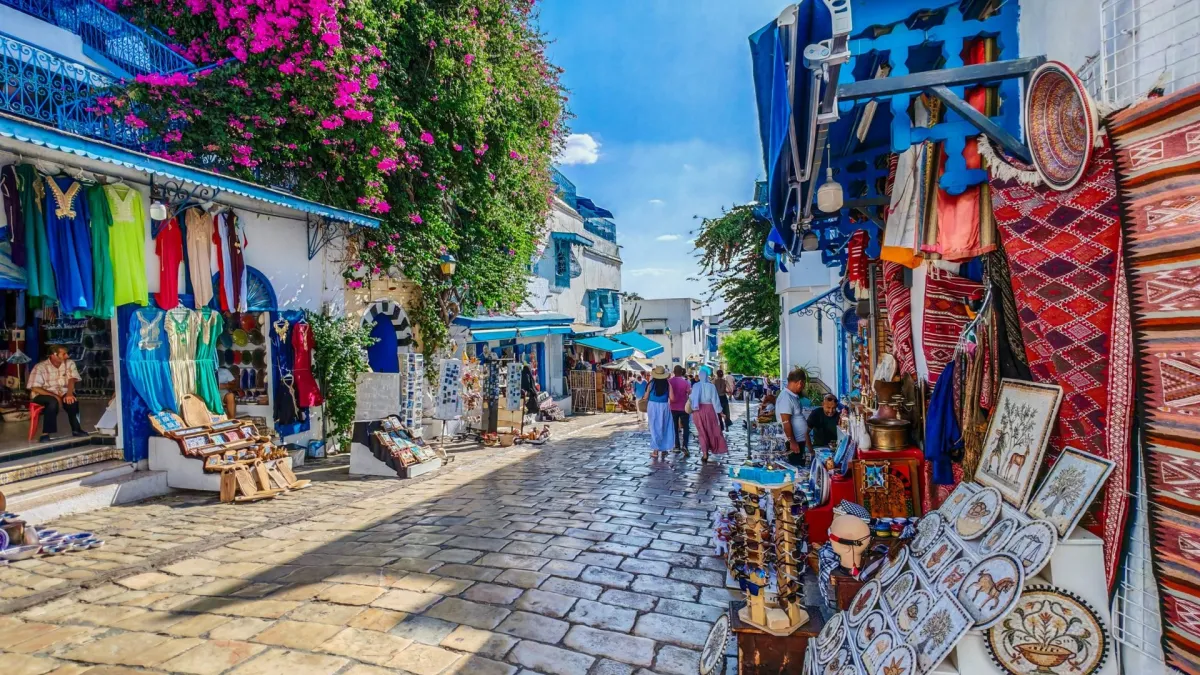
As I navigate the warren of streets in Hammamet’s medina, the 15th-century walled old town that grips the coastline, not everyone is thrilled by my presence. Basking in patches of sunlight dappling the stone streets, dozens of tiny cats appear nonplussed by the interloper casting a shadow. The more curious kittens are chastised by their mothers for responding to my advances.
Otherwise, the welcome is warm. Shopkeepers and shoppers beam at me as I pass, the former only gently entreating me to peruse their wares once I return their smile. I admire the ceramic tiles and woven baskets on display. “Natural air conditioning,” one shop owner advises sagely as I linger by a djellaba, a traditional long tunic. One chats with my guide, Madhi, who explains I’m from the UK. “Does this mean we’re going to see more British visiting us?” the shopkeeper asks, his smile broadening.
One of the ornate doorways in Hammamet Medina, Tunisia (Photo: Siobhan Norton)
It’s a refreshing contrast to Mediterranean visitor hotspots such as Mallorca and Malaga, where anti-tourism protests have dampened the atmosphere in recent summers.
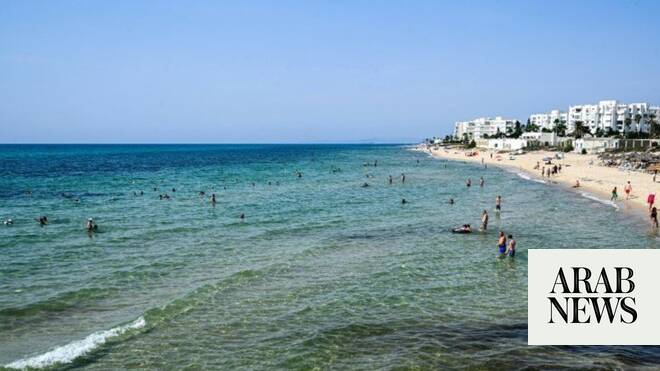
Tunisia, on the other hand, is greeting travellers with open arms, and now’s an opportune time to visit, with June bringing average high temperatures of 28°C. Direct flights from the UK take around three hours and regional connections are also improving, with easyJet launching a new twice-weekly route from Newcastle to Enfidha (around a 40-minute drive from Hammamet) this spring.