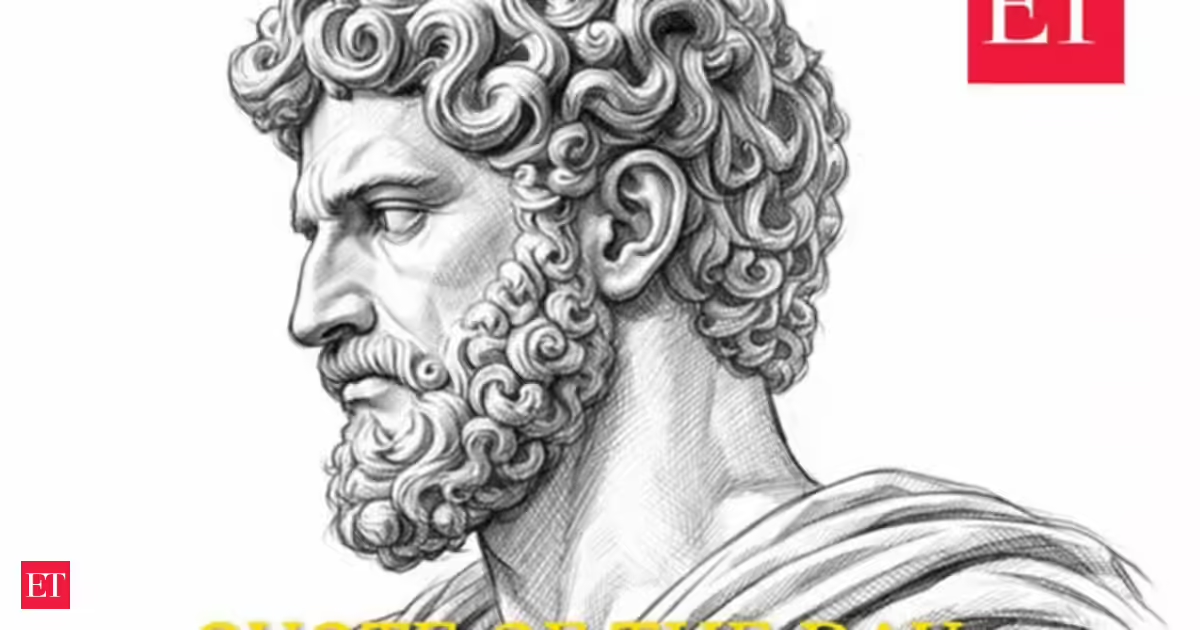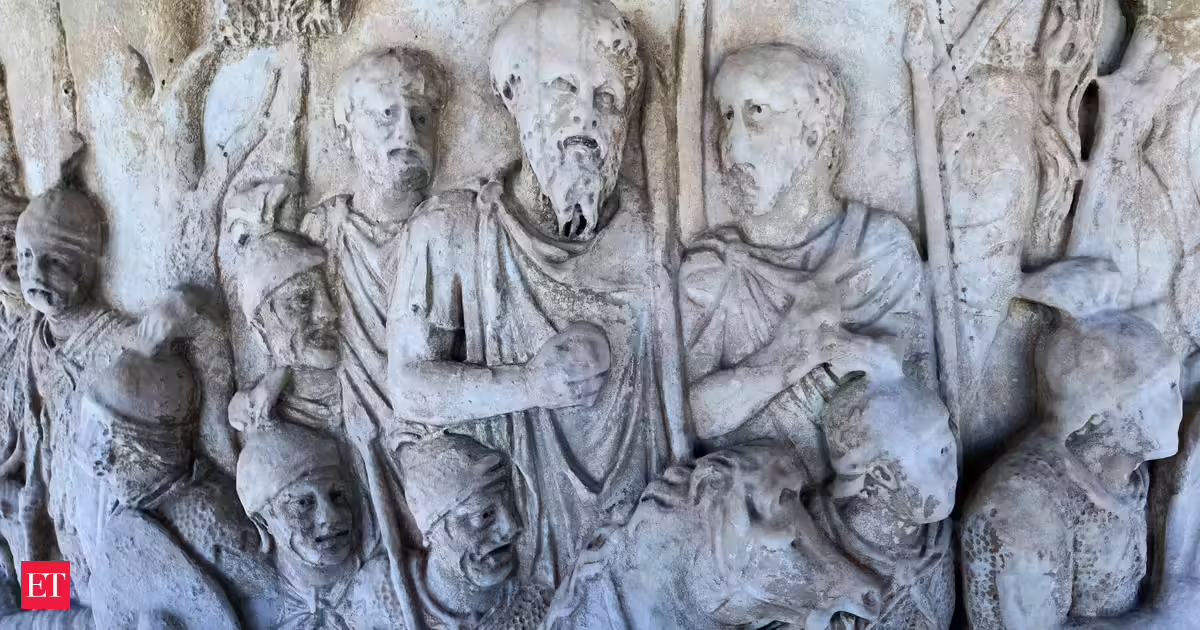
Many people picture Marcus Aurelius as the embodiment of stoic toughness, a Roman emperor focused on responsibility, self-control and perseverance in the face of hardship. A closer reading of his famous work Meditations reveals that compassion and acceptance are woven throughout his philosophy. His reflections encourage kindness toward difficult people, acceptance of circumstances beyond one's control, and a willingness to embrace duties that may feel burdensome. Today’s quote of the day by Marcus Aurelius explores the Stoic belief that life unfolds according to a larger order, and peace comes from accepting events with resilience and grace rather than resisting them.Marcus Aurelius’ quote of the day, ‘Whatever happens to you has been waiting to happen since the beginning of time. The twining strands of fate wove both of them together: your own existence and the things that happen to you’ can be found in his private journal, Meditations, specifically Book 10, Section 5. According to reports, the quote is deeply personal for the philosopher, given the context of his time.When Marcus Aurelius was writing Book 10, he was stationed on the chaotic northern borders of the Roman Empire, leading military campaigns against Germanic tribes. At the same time, Rome was being ravaged by the Antonine Plague, and he was dealing with political betrayals and the deaths of several of his children. Exhausted and surrounded by suffering, Marcus wrote these words to comfort himself and to keep from despairing over the brutal reality of his life.Quote of the day by Marcus Aurelius: Deeper meaning and modern relevanceIn this quote, Marcus Aurelius suggests that events in our lives are not random interruptions but part of a larger pattern that has unfolded over time. The image of fate weaving together our existence and experiences reflects a central Stoic idea: many things are beyond our control, but our response to them is not. Rather than resisting reality or asking why difficulties happen, Marcus encourages acceptance. This does not mean passivity or surrender. Instead, it means recognising that challenges, setbacks and successes are all part of the human experience and can be met with wisdom, courage and self-control.The message remains highly relevant in a world filled with uncertainty, rapid change and constant pressure to control outcomes. People often struggle with unexpected setbacks, failed plans, career disappointments or personal losses. Marcus Aurelius reminds us that not everything can be predicted or prevented. By accepting what has already happened, we can focus our energy on what comes next rather than becoming trapped in frustration or regret. This mindset can reduce stress, improve resilience and encourage emotional balance. The quote offers a timeless reminder that peace often comes not from controlling life, but from learning how to navigate it with acceptance.More about Marcus AureliusMarcus Aurelius, born in Rome in 121 CE as Marcus Annius Verus, became one of the “Five Good Emperors” of Rome, ruling the city from 161 to 180 CE. From a young age, Marcus developed a strong interest in philosophy, heavily influenced by Stoicism, a philosophical tradition founded in Athens that focused on reason, self-control, virtue, and emotional resilience. Stoic thinkers believed that external things like wealth, fame, or praise should never control a person’s peace of mind. Instead, character and moral conduct mattered most.Marcus Aurelius’ education was guided by important teachers, including the rhetorician Fronto. However, he was deeply influenced by the teachings of the Stoic philosopher Epictetus, whose ideas shaped much of his thinking later in life. The philosophy of Marcus Aurelius survives mainly through Meditations, a collection of personal reflections written in Greek between roughly 170 and 180 CE. The work focuses on Stoic principles and practical ways to deal with life’s uncertainties.Marcus Aurelius’ writings repeatedly discuss self-discipline, humility, duty, mortality, and emotional control. He also reflected regularly on how temporary human life is and why people should focus more on good actions than on reputation or anger.
Quote of the day by Marcus Aurelius: ‘Whatever happens to you has been waiting to happen since the beginning of time. The twining strands of fate wove both of them together: your own existence and the things that happen to you’ - Stoic philosopher on destiny and accepting life’s twists
Roman Emperor Marcus Aurelius' writings reveal a philosophy of compassion and acceptance. His famous quote suggests life unfolds according to a larger order. Peace comes from accepting events with resilience. This timeless message remains relevant today, offering a way to navigate uncertainty and reduce stress. It encourages focusing on what comes next rather than regret.
645 words~3 min read