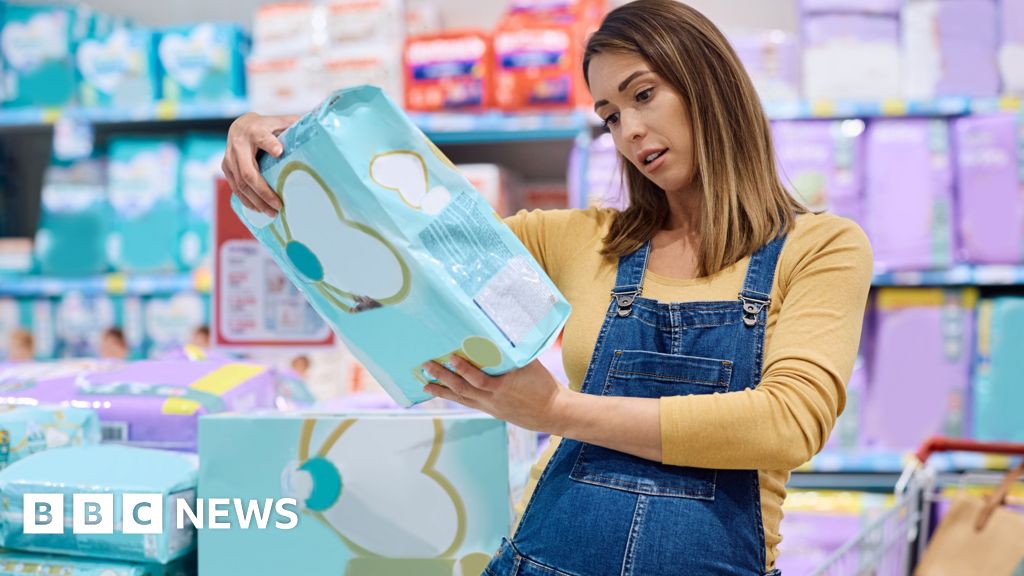
When you see our rivers and surrounding areas piled high with refuse, including a frightening amount of disposable nappies, you immediately understand the critical need for a national initiative to address the accelerating nappy pollution crisis.Towards achieving this, a project called Smart Nappy is being implemented in rural Matatiele, Eastern Cape, by Environmental & Rural Solutions (ERS), a long-standing nonprofit organisation in Matatiele, with support from the WWF Nedbank Green Trust.“Smart Nappy is the term we use for the beautifully designed, technically advanced, cost-effective, reusable nappies produced by several brands, including our South African project partner, BiddyKins,” says Amanda Kalaku, project manager for Smart Nappy and catchment convenor for ERS. “The Smart Nappy project is part of a broader focus on catchment and freshwater conservation, regenerative farming and livelihoods. It makes absolute sense for mothers, grandmothers and carers of babies to change to reusable nappies, but it takes a lot of time and effort to try to change behaviour.”Grandmothers are far more open to reusable nappies, whereas the younger mothers say disposable nappies are convenient and that while they know they cost more, they don’t like to wash nappies. “We show them that the Smart Nappy is nothing like the old-fashioned cloth nappies of days gone by. These nappies are incredibly easy to use, comfortable and well-fitting, and require minimal water and washing. This helps to keep the rivers and springs where they get their drinking and household water clean.”A survey of 504 homes in two pilot areas in the rural villages around Matatiele, which has a population of 225,000 people, was undertaken by ERS in collaboration with the University of the Western Cape’s National Research Foundation Chair in Waste & Society. The survey was supported by the WWF Nedbank Green Trust and revealed that 100,000 disposable nappies per day and more than 1,000 tonnes of nappy waste (200 soccer fields) per year are discarded in the surrounding environment and streams.As with most rural areas, 75% of the villages are underserviced and have limited refuse removal services. In Matatiele this is despite the efforts of the local municipality, which does not have the resources to cover the huge rural footprint with no formal road network. The only solution is to reduce the number of disposable nappies and refuse polluting the environment and Matatiele’s Umzimvubu River catchment, which is one of South Africa’s strategic water source areas.“We started supporting the Smart Nappy project in 2021 after seeing the outcomes of testing the reusable nappies with eight mothers with a grant provided to ERS by the nonprofit The Nature Conservancy and we have grown it from here with the WWF Nedbank Green Trust funding,” said Poovi Pillay, executive head of the Social Impact Unit at Nedbank. “The beauty of the Smart Nappy model is that it is not only an essential initiative to stop polluting river sources and the environment, but also far more affordable than disposables and it is a microenterprise development initiative for women in the area.”The size-adjustable waterproof outer pants of the Smart Nappy can be used from one month until the child is three years old. The pants have a washable double-layered inner with a waterproof outer that forms a “pocket” into which a washable microfibre, moisture-absorbing pad fits. A biodegradable liner is layered over this to trap moisture and solids. The liner is easily disposed of in a toilet or compost heap and breaks down in weeks, as it contains no plastic but only bamboo fibre. The outer pants, pockets and insert pads last for many years and can be used by successive children.The beauty of the Smart Nappy model is that it is not only an essential initiative to stop polluting river sources and the environment, but also far more affordable than disposables and it is a microenterprise development initiative for women in the area. — Poovi Pillay“To understand the financial implications, as part of the survey we found that mothers and grandmothers spend an average of R220 (ranging from R100 to R500) on disposable nappies per month, which amounts to a significant portion of their grant-based income,” Kalaku said. There is a 57% unemployment rate in the Matatiele area and 93% grant dependency, and the average monthly household income is R3,300 for five people. The statistics are similar in other rural areas of South Africa.“We explain the huge cost saving by converting to Smart Nappy at a one-off amount of R800 for the full pack that lasts for several years instead of R8,000 per year for disposables,” Kalaku said.The project, run in partnership with BiddyKins and the NGO SaveAct, supplies the starter packs at cost as part of this pilot. The project team has developed an incremental purchase plan, with starter packs retailing at R290 and larger packs at R525, which includes the team of resellers’ profit of R30 to R55 per sale. Individual items can also be purchased for a few rand at a time to build up the pack. The biodegradable liners cost R63 for a roll of 100. Many mothers, especially the grandmothers, wash the liners several times to extend their life.The project is in the implementation and early scaling phase, with more than 150 mothers using the Smart Nappy, and the numbers are growing. The users said they like them, pointing out that there aren’t any leakages and the materials are easy to wash in a bucket with a bit of cold water and green soap.The project now has 28 resellers, locally known as amatengathengisas, who are expanding their customer base in the two pilot areas and to other villages. “We are aiming for over 1,000 users over the next two years. If ERS can meet the 1,000 target through the current Green Trust project, the potential savings per year would be about R12m. This can be allocated towards more beneficial household spend, including food security and education.The Matatiele municipality recently won an award for the 'Greenest Town' in the Eastern Cape, with the Smart Nappy project cited as a key factor in the decision. Picture: (123RF/ alfazetchronicles) “Once we have reached 1,000, the use will gain traction here and in other areas in the country where we are doing learning exchanges, such as in KwaZulu-Natal and Limpopo,” Kalaku said. ERS has also had discussions with NGOs in neighbouring countries such as Zimbabwe and Mozambique, who are keen to include the Smart Nappy option in their outreach and support efforts.“In Matatiele, we are also including the project in the Rangeland Stewardship Agreement, which we have with several communal farmer associations in the greater Matatiele area where we offer incentives such as livestock vaccination and fire training to farmers who commit to rangeland conservation practices,” Kalaku said. “We are introducing free Smart Nappy packs as another incentive and we are also collaborating with the department of health which is giving us access to Matatiele’s clinics, where babies are brought for checkups.”The Matatiele municipality recently won an award for the “Greenest Town” in the Eastern Cape, with the Smart Nappy project cited as a key factor in the decision.Kalaku said the success of the project would be determined by a shift away from the use of disposals by 50% of mothers, grandmothers or carers in the two Matatiele pilot areas by end-2028. Associated impacts would include decreased nappy waste in the landscape; better conservation of freshwater systems leading to decreased risk of human and animal disease; and replication of the model countrywide, supported by a policy influence process.“The combination of these impacts has great potential to radically reduce the volumes of single-use nappy waste and be a real game changer for rural savings and waste management countrywide.”
A clever way of tackling the nappy pollution crisis
Smart Nappy project promotes affordable, technically advanced reusable product
1,274 words~6 min read