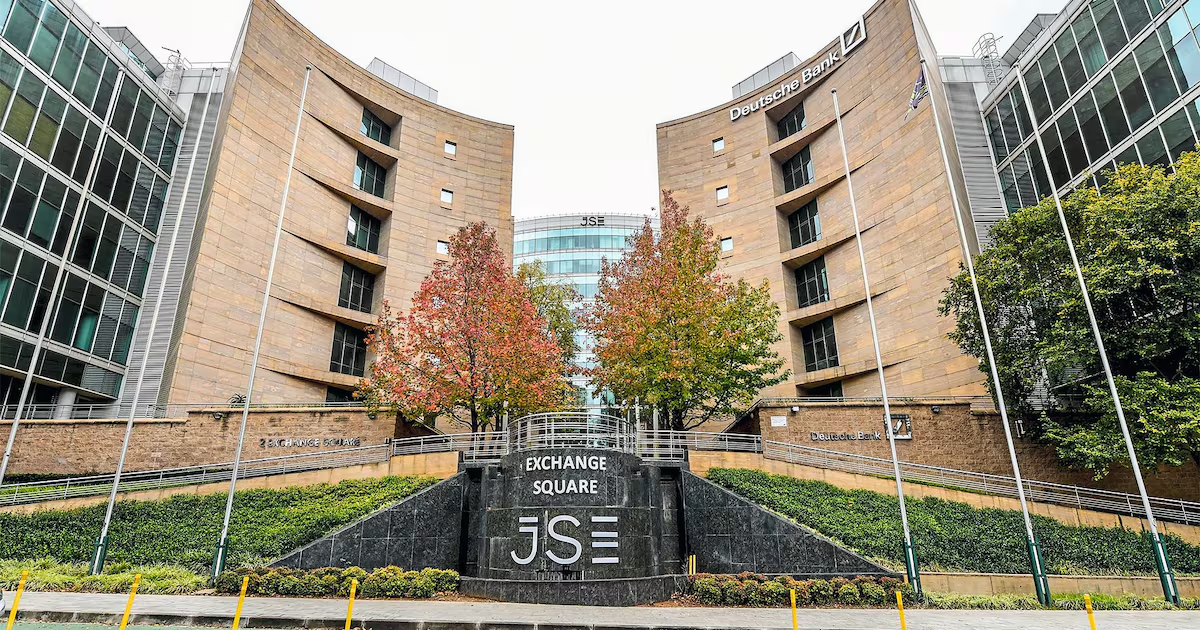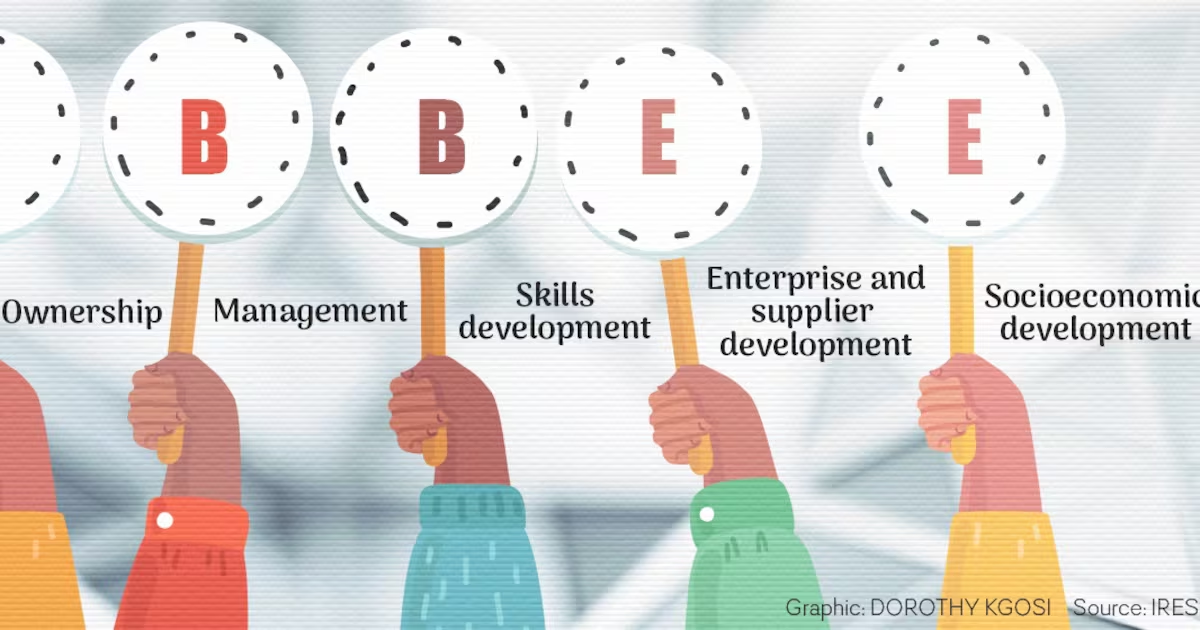
South Africa’s transformation project has been hollowed out. It didn’t happen with fanfare or any major policy turnaround. nor any serious acknowledgement of error. Like all good cons, it happened slowly, methodically and buried in paperwork. The original promise was ownership. Not only jobs in the economy, but a structural stake in it. In the language of the Freedom Charter, it was all about the “commanding heights”. A stake in the mines, banks and powerful JSE-listed behemoths that had been propped up for decades by dirt-cheap labour and hothouse markets. The concept was fairly uncontroversial; genuinely empower those who built the thing. Simple enough, but, no, we got scorecards instead. Last week, economist and fellow columnist Duma Gqubule did the tedious leg-work on commission by the Black Management Forum, scouring annual reports in meticulous detail. His final finding is that actual black ownership of South Africa’s 60 largest listed companies stood at 6.9% of their domestic assets at end 2024. The official number, released by the Broad-Based BEE Commission in 2022, is 39%. Someone has been rounding up by a factor of six. How is this possible? Through a set of design concessions so elegant they deserve to be taught in business school as a masterclass in regulatory capture.First, count the Public Investment Corporation’s R1.1-trillion pension fund shareholding as black ownership, even though the workers whose pensions it represents own precisely nothing. Second, keep your BEE score from an old deal under the “once empowered, always empowered” principle, even though the black shareholders have long since exited. And third — this is where employment enters, stage left — pad the remaining gap with headcount. A black security guard at reception. A black junior manager in middle management. A transformation committee. A diversity report — Downton Abbey at its best. Never mind that Pick n Pay still does not have a BEE transaction but boasts 22.2% black ownership on its verification certificate as at the end of 2025. Nedbank’s own annual report states true black ownership was 0.6% at most, and yet its BEE certificate is framed with a 36.59% rate. This is not a rounding error; it’s a system doing exactly what it was designed to do. But here is the part the scorecard cannot capture — what happens to the people locked out of ownership? They don’t disappear. Some get jobs, many do not. A significant number, now that the formal route to economic participation has been shut, find another one — through procurement. The tender economy is not a departure from transformation, it’s the logical continuum. When ownership is made impossible by lobbyists who ensured loopholes were entrenched in the codes, well-connected networks swoop in. The asset does not move, but the access fee does. This is designed elite capture where regulatory codes have long favoured contracts over equity. Yes, two thirds of actual black JSE ownership now sits in broad-based schemes — employee trusts, community funds, retail programmes. Real wealth, paid in dividends to real people. Phuthuma Nathi’s 73,791 shareholders have collected R19.6bn since 2006. This is not chump change. But it is also not ownership of the commanding heights. Real transformation — across women, youth, rural communities and the full spectrum of previously disadvantaged South Africans — would start by calling the scorecard what it is; a receipt for a transaction that never happened. It would close the loopholes, mandate replacement deals, and measure what companies actually transferred, not what they once promised they might. The asset — the house — has appreciated enormously since 1994. The question is who holds the title deed. Apparently, not the cleaners at various levels of Downton Abbey.• Cachalia, a businessman and management consultant, is a former DA MP and shadow public enterprises minister, and chaired De Beers Namibia.
GHALEB CACHALIA | Scorecards mask real transformation shortfalls
Official BEE scores obscure low real black ownership in major companies
629 words~3 min read