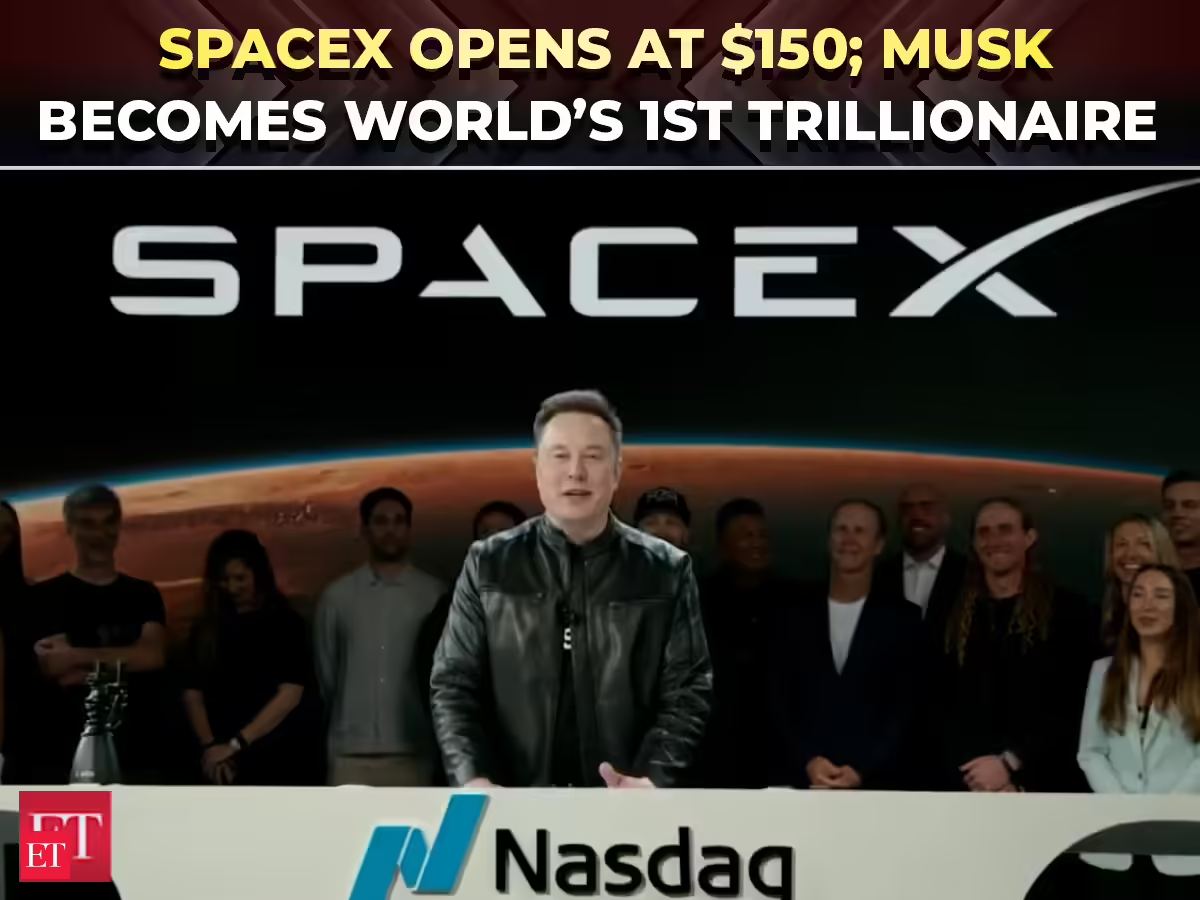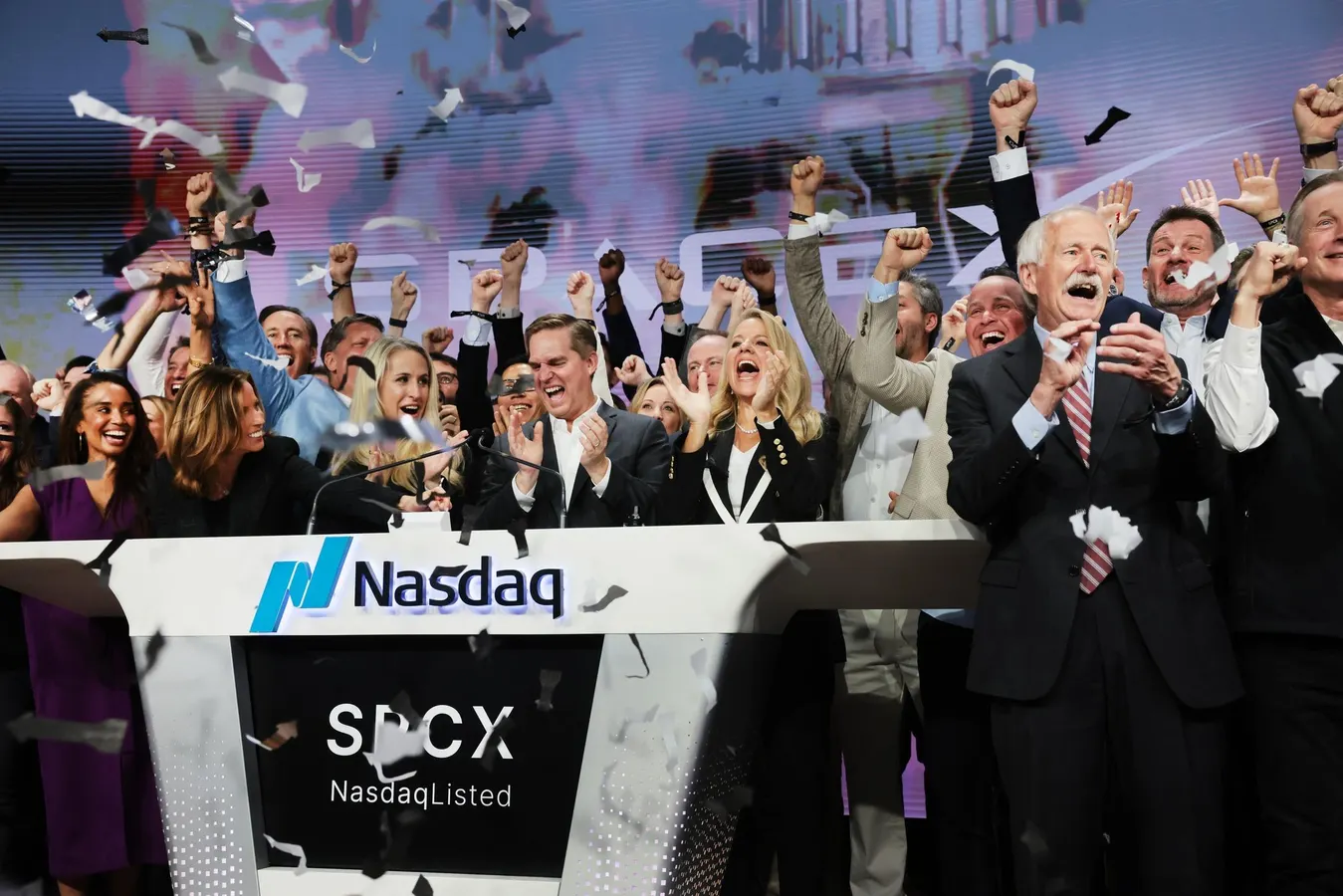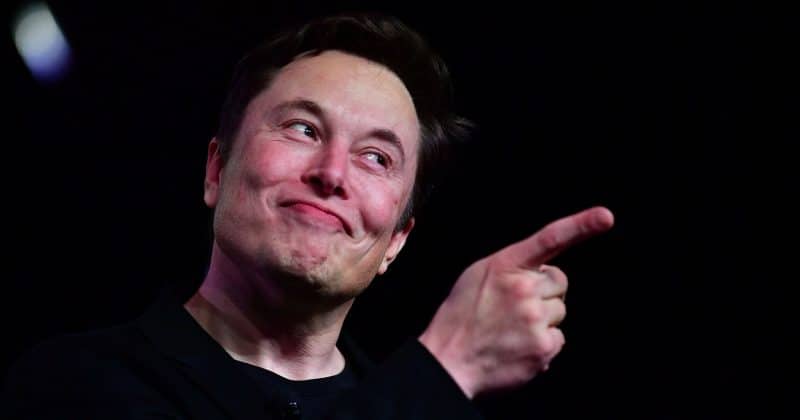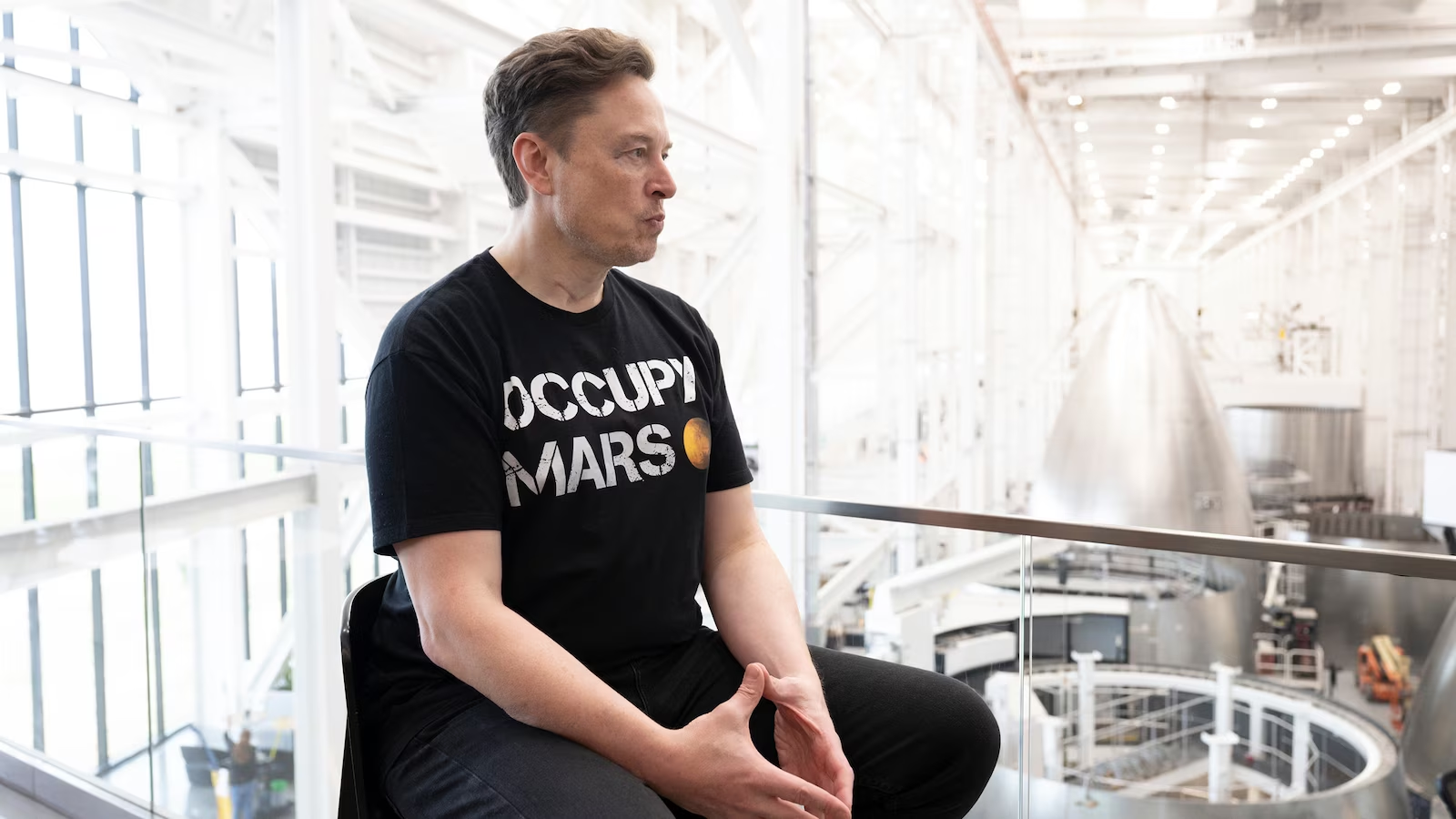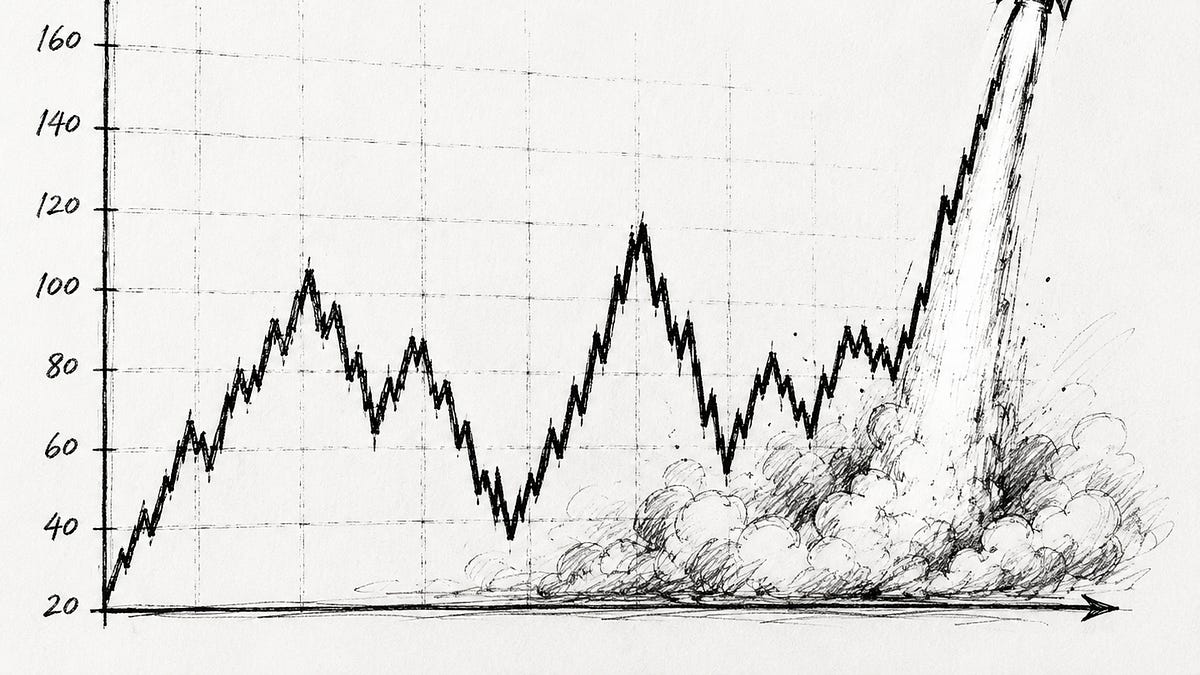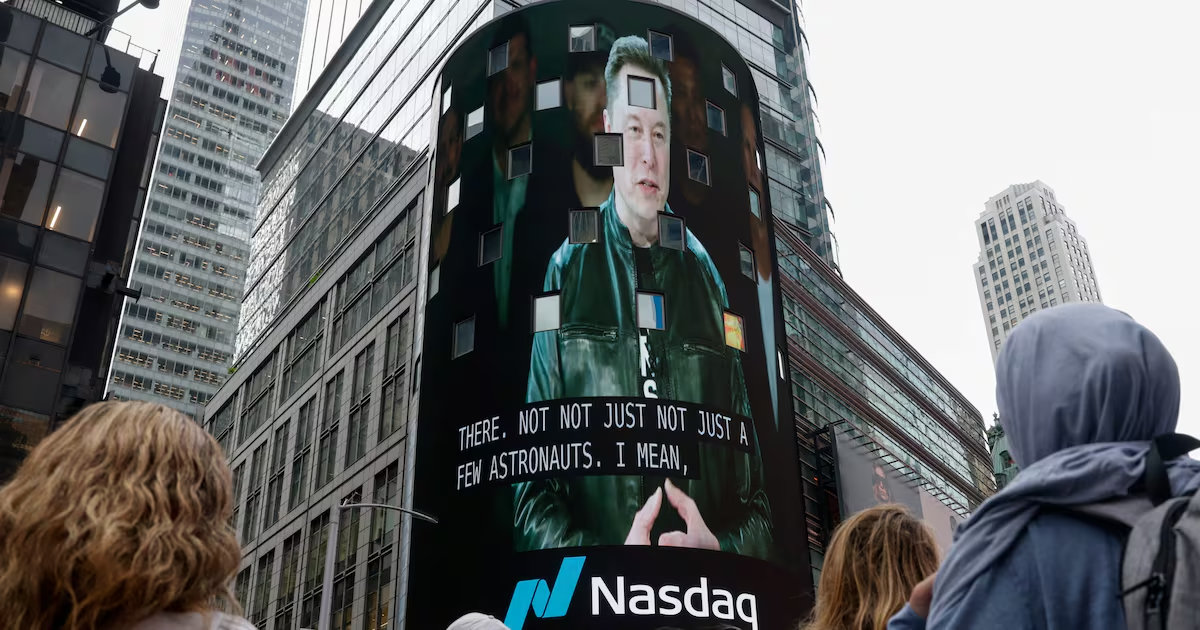
And so it begins. SpaceX has launched its initial public offering (IPO) on the Nasdaq. More than $75bn has been raised for the offering, boosting the company past a $2.1-trillion valuation. With his 42% holding now worth about $900bn according to the Financial Times, and his Tesla holding at $280bn, founder Elon Musk becomes the first human trillionaire. Yes, those numbers are unfathomable, and it’s only going to get more incomprehensible. Anthropic and OpenAI plan to launch their own IPOs this year, also targeting trillions. Global investors have an AI appetite that is unlikely to be sated soon. Like cartoon characters floating through the air on whiffs of apple pie, the allure of a future built on AI has proven to be irresistible. As we discussed here a couple of weeks ago, SpaceX has very deliberately couched its IPO in a sui generis mythology. Even ignoring the frills of interplanetary exploration, at the core of the business model is a promise of industry-leading AI. That is despite that particular aspect of the business being, in the caustic words of Scott Galloway, a “money furnace”. It’s even more remarkable against the backdrop that SpaceX has in Starlink a product that is already hugely profitable and scalable.The bet is unequivocally with AI. Anthropic and OpenAI are similarly estimated based on the promise of future riches rather than existing revenue. Their business models may well develop into money printers. It may well be a smart bet. But it is still a bet.The legacy tech giants are making the same punt. Google’s parent company Alphabet, Meta, Amazon and Microsoft are all pulling various levers to increase their capacity to invest in the technology. For these companies, the risk of being frozen out of the AI circle when the music stops playing is too great to consider any other course of action.None of this is novel. Speculation is as much a part of the stock market as Red Bull and bad language. But the sheer amounts involved, and the manner in which established systems are contorting themselves, make this a profound moment we are all living through.As a journalist and editor I’m particularly interested in how we in the media cover and articulate this new reality. The circus is in full effect: it’s easy to get lost in the frivolity, losing all sense of introspection. Speculation is as much a part of the stock market as Red Bull and bad language. But the sheer amounts involved, and the manner in which established systems are contorting themselves, make this a profound moment we are all living through.Musk, being the contentious character he is, has naturally attracted plenty of scrutiny for the SpaceX filing. But it’s debatable whether those of us in what can be called the “mainstream press” are giving commensurate attention to what can go wrong with all of this. In the more offbeat corners of the internet, there is plenty of chatter about an “AI bubble”. What exactly that bubble is, or its consequences, will depend on which sceptic you ask (and how much they’ve had to drink). But in effect it can be distilled down to our earlier dilemma: revenue is far outpaced by cost. For instance, in November OpenAI revealed an eight-year $1.4-trillion infrastructure commitment, despite $13bn in annual revenues (it has since revised those figures). Demand is undeniable, but monetising it sustainably is altogether a different question. And most of the major players have only offered amorphous plans on how they intend to do so.I am not remotely qualified to offer any meaningful prediction on how any of this will turn out. But I am sceptical enough to ask the question. And more honestly, like any well-meaning journalist, I live in perpetual trepidation of being found out as a stooge. To wake one day and realise that you emboldened a huckster or swindler.I recently finished reading Easy Money by Ben McKenzie ― a TV actor who you might have seen doing the podcast rounds to promote his recent documentary Everyone is Lying to You for Money. The book, incredibly in retrospect, represents some of the first real questions that were asked of sketchy cryptocurrency players at a time when much of the mainstream press was utterly beguiled. According to McKenzie, in a quirk of coincidence, the day he arrived for his soon-to-be infamous interview with Sam Bankman-Fried, Fortune magazine reporters were on their way out the door with the photo they needed for a front cover lionising the FTX founder with the headline “The Next Warren Buffett?” (Incidentally, on Friday Bankman-Fried lost an appeal to have his 25-year jail term overturned).Another book that comes to mind is John Carreyrou’s Bad Blood. An investigative journalist at the Wall Street Journal, Carreyrou’s reporting was instrumental in exposing the fraudulent blood testing going on at Elizabeth Holmes’s company, Theranos. Until that point Holmes was a darling of the media and the manifestation of the Silicon Valley dream. She assembled a board including Henry Kissinger and George Shultz. Joe Biden was given a tour through her labs. Everyone was fooled.AI is nothing like the above schemes. It is a very real technology with very real applications. But it’s only prudent to remind ourselves how easily our minds can be wooed and wowedWe can’t afford to stumble into our new world with our eyes shut.• Feltham is Business Day editor-in-chief.
LUKE FELTHAM | SpaceX and AI ― are we asking the right questions?
Lessons from crypto and Theranos warn against blind optimism
TL;DRAI
SpaceX IPO raises $75bn at $2.1tn; OpenAI and Anthropic launch offerings betting AI over revenue. Infrastructure costs ($1.4tn) dwarf monetization plans, exposing an unexamined AI bubble that media overlooked with FTX, Theranos, and crypto.
894 words~4 min read