A year after CEO Mark Zuckerberg spent more than $14 billion to bring Alexandr Wang and a group of top Scale AI engineers into the company, Meta has made real progress. Wang’s team, now part of Meta Superintelligence Labs, rolled out Muse Spark in April, giving Meta a proprietary AI model after years of leaning heavily on its open-weight Llama strategy.
The launch helped put Meta back in the AI conversation. However, the harder part is convincing Wall Street that the technology can turn into meaningful revenue.
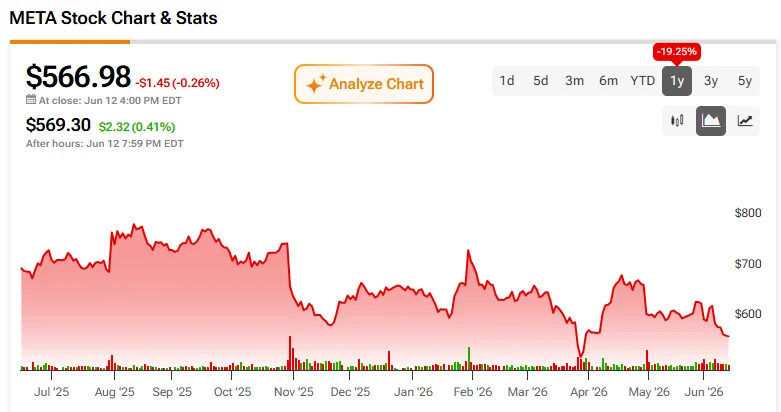
Meta’s stock is down 18% over the past 12 months, making it one of the weakest performers among the tech megacaps. That underperformance stands out because Meta’s business is still growing quickly. The company reported 33% revenue growth in the first quarter, its fastest pace since 2021.
Meta Needs More Than Better Ads
Investors already know AI is helping Meta improve its core advertising business. Better targeting, better recommendations, and better engagement all support the company’s main revenue engine. The issue is that Meta still gets about 98% of its revenue from ads, and investors want to see whether AI can create a new business line.