AI coding, using AntiGravity or Claude Code, has significantly increased the productivity of your junior developers. Applications which used to be ‘long-term roadmap goals’ that nobody ever thought would be developed are now ready in production.
Where have the bottlenecks gone in this brave new world? Everyone knows that if you improve productivity in one area to the point that it becomes effectively frictionless, the pain will be felt somewhere else. Where are the pain points now AI development is becoming mainstream?
One significant pain point that no one will miss is delays in coding leading to wasted work. I have seen development teams work for nearly a year and get to the point where they were days away from releasing significant new functionality just to be told that the company was going in a new direction and had bought a competitor’s product because it was ‘ready’ and had already released the key benefits that the business needed. Only to find that it was running on a platform that was a decade old and needed rewriting, putting the development team back into digging their way out of technical debt again.
Technical Debt
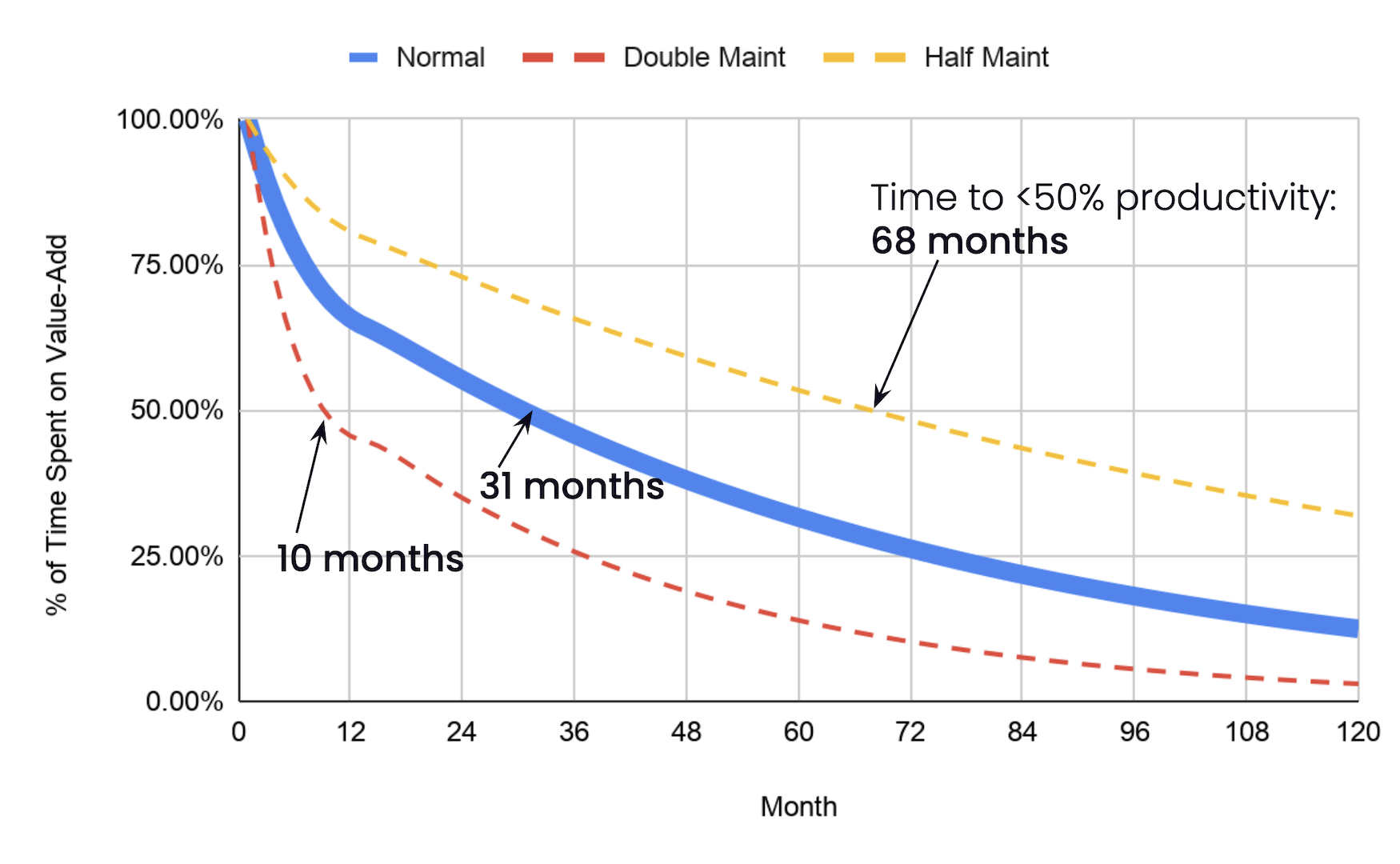
Developers use the term ‘Technical Debt’ and we all sort of understand what we mean by it, but everyone’s understanding differs slightly. Let me try and explain what I mean by the term; every design decision you make when developing code carries a cost to implement and a cost to fix or reimplement, down the line. Often developers will choose to develop in a way that costs less now, and gets code ‘finished’ more quickly, but leaves the cost of fixing it and doing it properly much higher. Businesses will often insist that software must be delivered ‘as soon as possible’ so that they don’t lose a sale in the short-term, without understanding that cutting corners to meet arbitrary targets may cost more in the mid-term because the software that has been delivered is fragile or otherwise not fit for purpose for the length of a contract, for example.