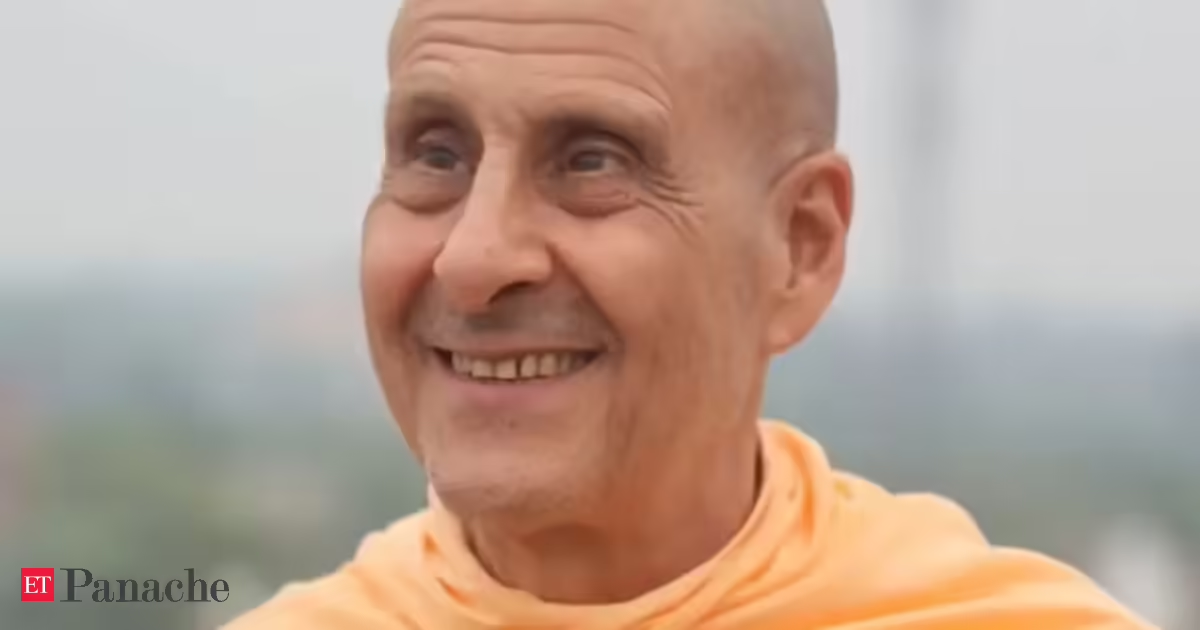
Spiritual Thought of the Day by Radhanath Swami highlights a simple yet powerful idea about love, responsibility, and the choices people make in their relationships with others. The thought, “If someone takes responsibility without force that is love,” offers a perspective on how genuine care is often expressed not through words alone but through willing action. It suggests that true love does not emerge from pressure, obligation, or fear. Instead, it is reflected when a person chooses to support, protect, or serve another person voluntarily.In everyday life, responsibility is often associated with duty. People take responsibility for their work, their families, and their commitments because they are expected to do so. However, Radhanath Swami's thought points toward something deeper. It highlights the difference between actions that are performed because they must be done and actions that are performed because the heart naturally wants to do them. When responsibility is accepted freely, it becomes a reflection of affection, trust, and genuine concern.Many people look to spiritual teachings for guidance on how to build healthier relationships and lead more meaningful lives. Such teachings often simplify complex human emotions into practical lessons that can be applied in daily situations. This thought from Radhanath Swami reminds people that love is not only about feelings or expressions. It is also revealed through willingness, commitment, and the readiness to care for others without being compelled to do so.Spiritual Thought of the Day — Why responsibility chosen freely becomes an expression of love“If someone takes responsibility without force that is love.” — Radhanath SwamiThis spiritual thought highlights the connection between responsibility and genuine affection. The first part of the statement focuses on taking responsibility. Responsibility is often viewed as a burden or obligation, but in this context it represents a conscious choice. It refers to a person's willingness to step forward, help others, and contribute positively without expecting rewards or recognition.The second part of the statement emphasizes the phrase "without force." This is what separates love from obligation. When a person acts because they are pressured, controlled, or compelled, the action may still be useful, but it does not necessarily reflect love. Love becomes visible when responsibility is accepted freely and willingly.Taken together, the thought teaches that love is not limited to emotions. Real love often appears in everyday actions. It can be seen in the parent who sacrifices personal comfort for a child, the friend who remains present during difficult times, or the individual who helps others simply because they care. The willingness to accept responsibility without coercion is what gives those actions their deeper meaning.Why Love Is Often Seen Through ActionsLove is usually measured less by what people say and more by what they do. Many individuals make promises or express affection through words, but responsibility reveals commitment in a practical way. When someone consistently shows up, fulfills their duties, and supports others without being asked repeatedly, their actions demonstrate sincerity.This is why responsibility and love are often connected. A person who genuinely cares does not always wait for instructions or demands. They notice what needs to be done and take initiative. Such actions create trust and strengthen relationships over time. In many cases, people remember acts of support far longer than verbal expressions because actions leave a lasting impact.Life Lessons from the Spiritual ThoughtThe thought carries valuable lessons about relationships, personal growth, and human connection.Love is voluntaryTrue affection cannot be forced. It grows naturally when people choose to care for one another without pressure or expectation.Responsibility reflects commitmentTaking responsibility willingly shows that a person values the relationship and is prepared to contribute to its well-being.Actions speak louder than wordsExpressions of love become more meaningful when they are supported by consistent actions and genuine effort.Service strengthens relationshipsHelping others without being compelled creates stronger bonds and develops mutual trust and respect over time.Why This Teaching Remains Relevant TodayIn today's world, relationships are often tested by busy schedules, professional demands, and personal pressures. People frequently speak about love, loyalty, and commitment, but these qualities are ultimately demonstrated through actions. Radhanath Swami's thought remains relevant because it shifts attention from words to responsibility.Whether in families, friendships, workplaces, or communities, people value those who can be relied upon. A person who accepts responsibility willingly often becomes a source of strength and stability for others. The teaching also encourages self-reflection. It asks individuals to consider whether their actions are driven by genuine care or merely by obligation.The message is especially important in an age where many interactions are brief and transactional. Choosing to support others without being forced creates deeper human connections. It reminds people that love is not always dramatic or visible. Sometimes it appears in small acts of service, consistency, and responsibility that are carried out quietly every day.About Radhanath SwamiRadhanath Swami is a respected spiritual teacher, author, community builder, and member of the International Society for Krishna Consciousness (ISKCON). Born as Richard Slavin in Chicago in 1950, he spent much of his youth searching for answers about life, purpose, and spirituality. His journey took him across Europe, the Middle East, and eventually to India, where he explored different spiritual traditions and lived as a seeker in search of deeper truth.His spiritual experiences were later documented in his bestselling memoir The Journey Home, which describes his travels and quest for self-discovery. He eventually became a disciple of A.C. Bhaktivedanta Swami Prabhupada, the founder of ISKCON, and dedicated his life to the practice and teaching of Bhakti-yoga.Apart from his spiritual work, Radhanath Swami has inspired several humanitarian and community initiatives. He has been associated with projects supporting free meals for schoolchildren, healthcare services through Bhaktivedanta Hospital in Mumbai, and sustainable development efforts through Govardhan Eco Village. Through his teachings, books, and public talks, he continues to encourage values such as compassion, service, humility, and devotion.
Spiritual thought of the day: 'If someone takes responsibility without force that is love...' ISKCON's Radhanath Swami gives timeless wisdom on what true love really means
Radhanath Swami's spiritual thought of the day, “If someone takes responsibility without force that is love,” highlights the deep connection between love and voluntary commitment. The teaching explains that genuine care is not expressed through pressure or obligation but through a person's willingness to support and serve others freely. Drawing from Radhanath Swami's spiritual philosophy and life journey, the article explores how responsibility, when accepted willingly, becomes a powerful expression of love, trust, and meaningful human relationships
966 words~4 min read