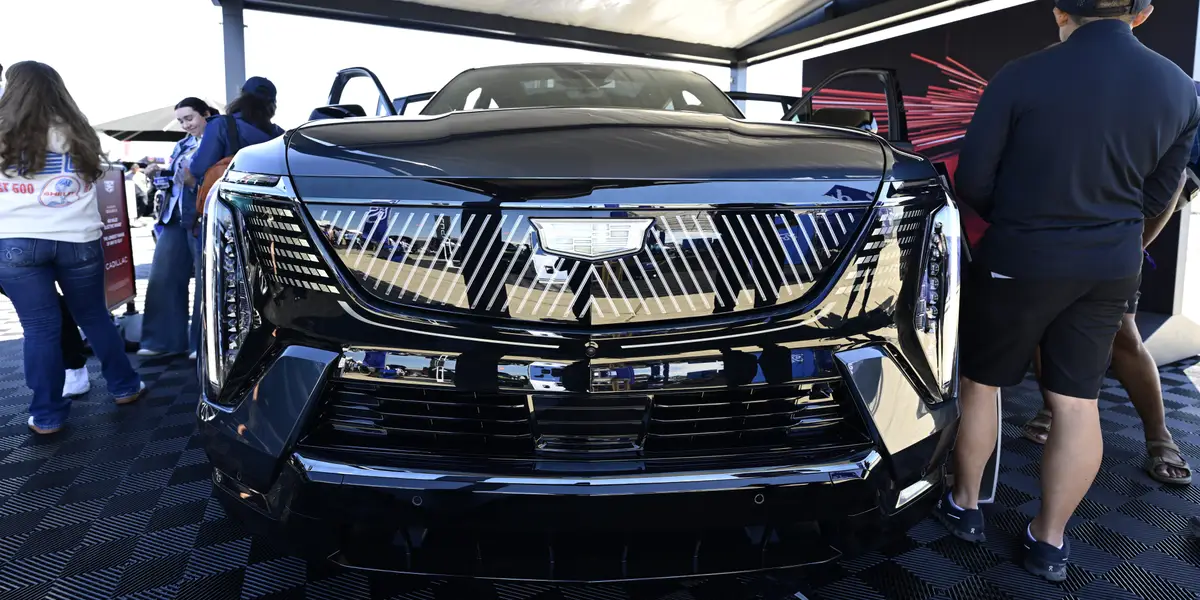
General Motors said it will roll out eyes-off driving on highways in 2028, starting with the Cadillac Escalade IQ.
Tayfun Coskun/Anadolu via Getty Images
General Motors may have shut down its dedicated robotaxi division, but it hasn't bowed out of the race.Sterling Anderson, the former head of Tesla's Autopilot program and GM's chief product officer, told Business Insider in an interview that the company's focus on autonomy in personal cars could be applied to driverless ride-hailing services in the future.Anderson said GM's approach is to develop self-driving technology by breaking the driving experience into pieces and examining where autonomy is most useful to car owners. That means first tackling long stretches of highway driving before expanding to arterial roads and urban centers.Over time, the executive said GM's autonomous driving systems will be able to operate in enough regions to make a viable robotaxi service."Ultimately, the two converge. Our operating region looks identical to the operating region of a robotaxi company," he said. "The question at that point becomes, 'Why not offer them in a robotaxi-type application as well?'"GM was once seen as one of the leading challengers to Alphabet's Waymo robotaxis, pouring more than $10 billion into Cruise, the robotaxi startup that it acquired in 2016. The division was shut down in 2024 after facing regulatory hurdles and a safety incident that forced Cruise to pause testing in California.