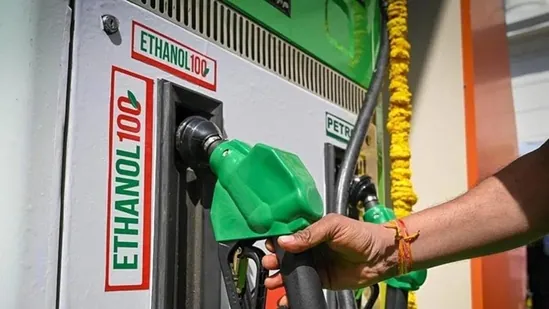
Geopolitical shocks have once again highlighted India’s dependence on imported energy. With prices rising and shipping lanes under pressure, vulnerability extends beyond crude: Imported natural gas underpins domestic ammonia and urea, placing the fertiliser supply chain on the same fault line. Strengthening energy security, therefore, also means insulating agriculture from imported gas volatility.Ethanol (Representative photo)Much of the required policy architecture already exists. The ethanol programme shows what disciplined targets, assured offtake, and predictable pricing can deliver: 20% blending achieved on schedule, meaningful forex savings, and large-scale income transfers to farmers. The next step is to apply the same clarity and ambition to CBG, bio-fertilisers, and higher blending targets; supported by a pricing framework that makes new capacity investable.India spends nearly $150 billion a year on crude oil and related imports—wealth transferred overseas that weakens the rupee and widens the deficit. Ethanol proves a serious biofuel policy can change this at scale: 20% blending delivered on time, $19.3 billion in forex savings over the past decade, and sustained payments to farmers. This is no pilot; it is a working template.The challenge now is replication: Apply ethanol-like discipline, with clear targets, procurement certainty, and bankable pricing, to accelerate CBG rollout and bio-fertiliser adoption.If ethanol and CBG were procured at a modest premium and supply met even half of petrol and CNG demand, would the net fiscal outcome be higher or lower once avoided imports, reduced fertiliser subsidies, rural income multipliers, and tax revenues are counted? Today, bio-energy is argued in silos: Petroleum policy treats ethanol and CBG as fuel additives; fertiliser policy treats bio-slurry as marginal; and agriculture policy often prioritises food security over energy crops. This fragmentation produces predictable outcomes including weak coordination on feedstock, procurement, and subsidies, and slows scale-up even when mandates exist. What is needed is a unified Cabinet mandate that aligns incentives across ministries and treats bio-energy as a strategic system, not three separate programmes.First, energy Atmanirbharta. Every litre of domestically produced ethanol or CBG saves imported fuel. The ethanol programme has saved $19.3 billion in foreign exchange over the past decade; in FY25 alone, savings were ₹43,000 crore. Yet CBG tells a sobering story. The SATAT scheme targeted 5,000 plants by 2023–24; so far only 133 have been commissioned. In contrast, Germany and China scaled biogas through infrastructure and pricing certainty. India has proof points ready to replicate: HPCL's plant in Badaun processes 100 tonnes of rice straw daily into clean fuel alongside 65 tonnes of nutrient-rich manure; in Sangrur, Punjab, paddy stubble otherwise destined for open burning feeds directly into the city gas grid. The mandatory CBG blending obligation, requiring 1% of CNG consumption in FY26 rising to 5% by FY29, provides the demand signal. A stable floor price that provides cost plus a reasonable rate of profit with guaranteed offtake, is what converts that signal into investable projects and, in turn, into robust supply chains. The rapid ramp-up of ethanol supply under predictable pricing shows exactly how this works. Second, agricultural Atmanirbharta. The bio-slurry left after CBG production is a valuable organic fertiliser. When co-composted with rock phosphate into PROM (phosphate rich organic manure), it can substitute a portion of imported phosphatic fertilisers at lower cost, strengthen local value chains, and improve soil health over time.Third, anchor crops for water-deficient regions. Sweet sorghum (ICAR-IIMR) yields up to 2,837 litres of ethanol per hectare in field trials, with roughly one-seventh the water use of sugarcane. It matures in under four months and can use existing sugar-mill infrastructure in the off-season. For dryland farmers, it works as a portfolio crop: grain for food, fodder, stalk juice for ethanol, residue for CBG, and bio-slurry as fertiliser.Fourth, rural incomes. Ethanol has delivered over $15 billion in direct payments to farmers over the past decade; at 20% blending, farmers are expected to earn about ₹40,000 crore this year. Moving toward E27.5 (a modest target considering Indonesia is already at E-40 for bio-diesel), alongside flex-fuel vehicles and credible long-term price commitments, could create a rural income multiplier that few welfare schemes can match.India does not need a new bio-energy vision. It needs clarity on what is blocking scale-up and a durable pricing framework that survives periods of cheap imported crude and gas.That means an administratively set floor price for ethanol and CBG that reflects strategic value, not just production cost and covers energy security, fertiliser independence, rural incomes, and carbon benefits. The floor can be indexed to a basket of crude prices and imported fertiliser parity. This is best seen as an energy-security hedge, akin to long-term power purchase agreements in renewables: it provides certainty, de-risks investment, and unlocks private capital.A single Cabinet mandate on bio-energy, backed by a cross-ministerial implementation body, is what will move this from intent to execution. The remaining requirement is administrative and political will to hold price certainty and coordination over the long term.(The views expressed are personal)This article is authored by Satyajit Bhatkal, CEO, Paani Foundation; Amit Chandra, co-founder, A.T.E. Chandra Foundation and chairperson, Bain Capital India Advisors and Anubha Sah, chief of staff, A.T.E. Chandra Foundation.
Bioenergy policy as India’s crisis response
This article is authored by Satyajit Bhatkal, Amit Chandra and Anubha Sah.
TL;DRAI
India saved $19.3 billion with 20% ethanol blending, but CBG deployment stalled at 133 of 5,000 plants. Unified pricing certainty and mandate scale critical infrastructure; policy coordination determines supply chain resilience amid geopolitical volatility.
843 words~4 min read