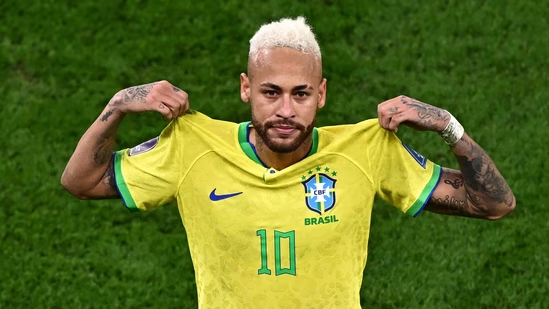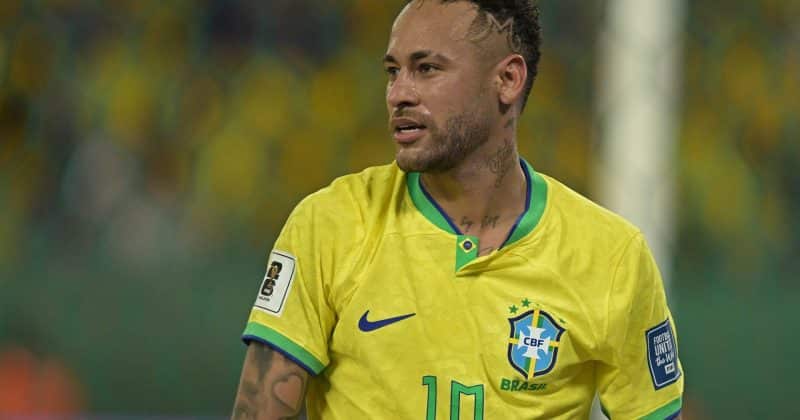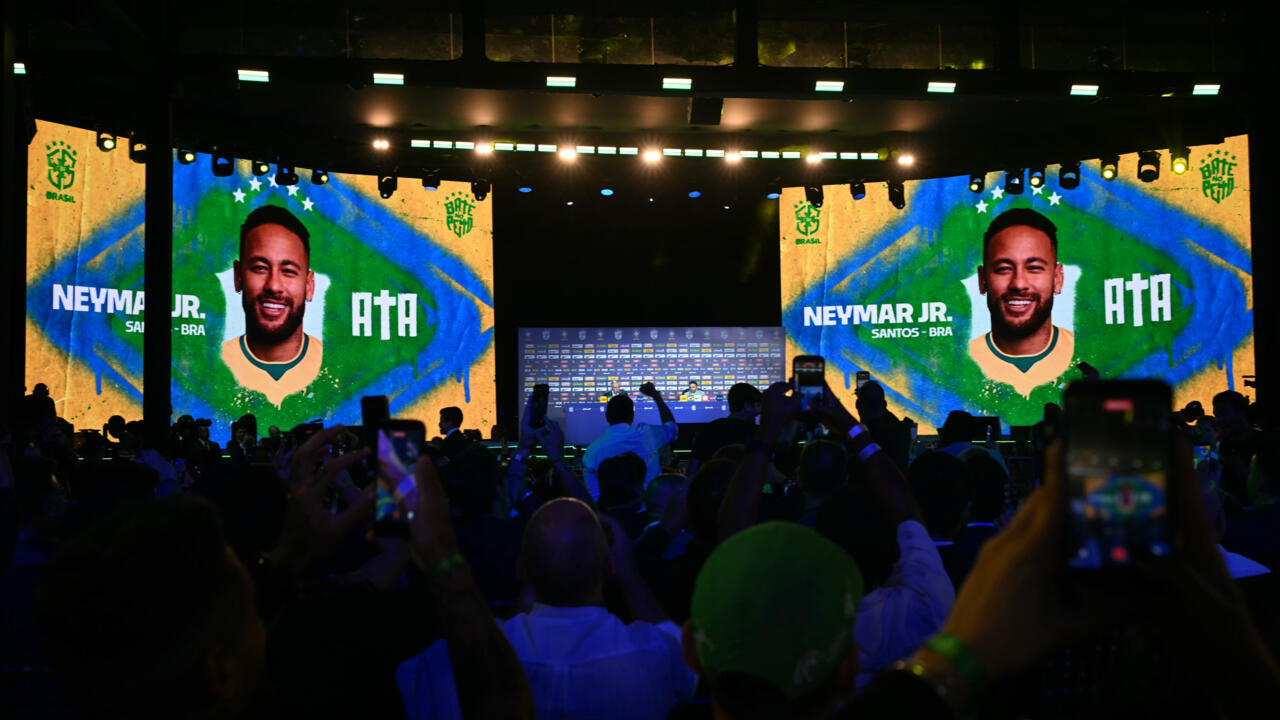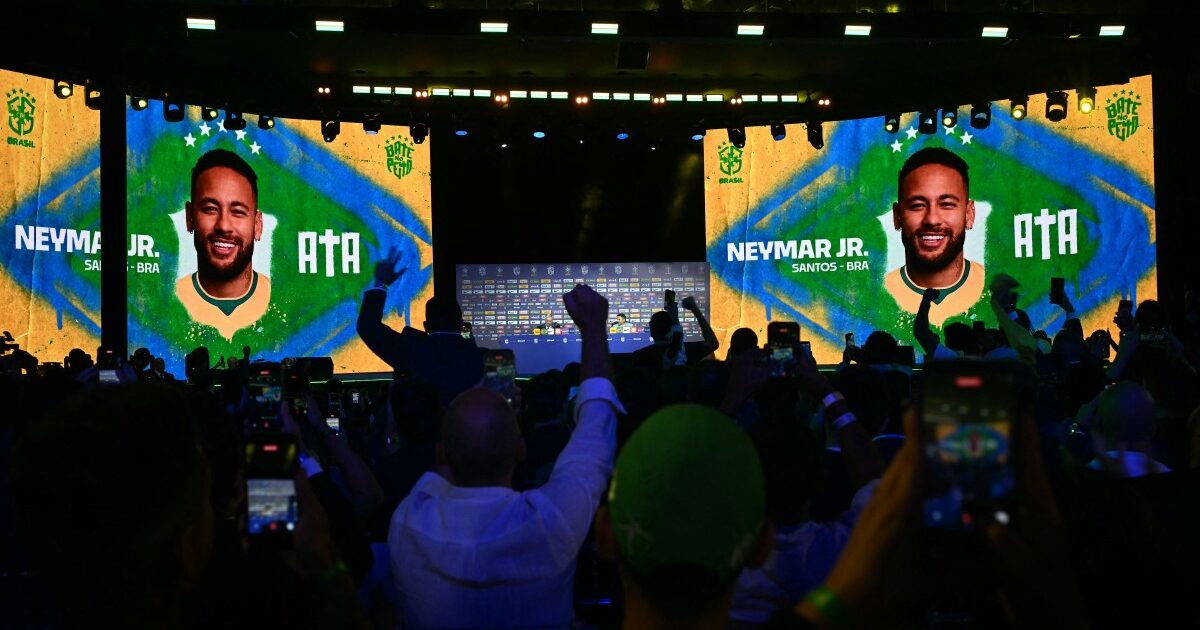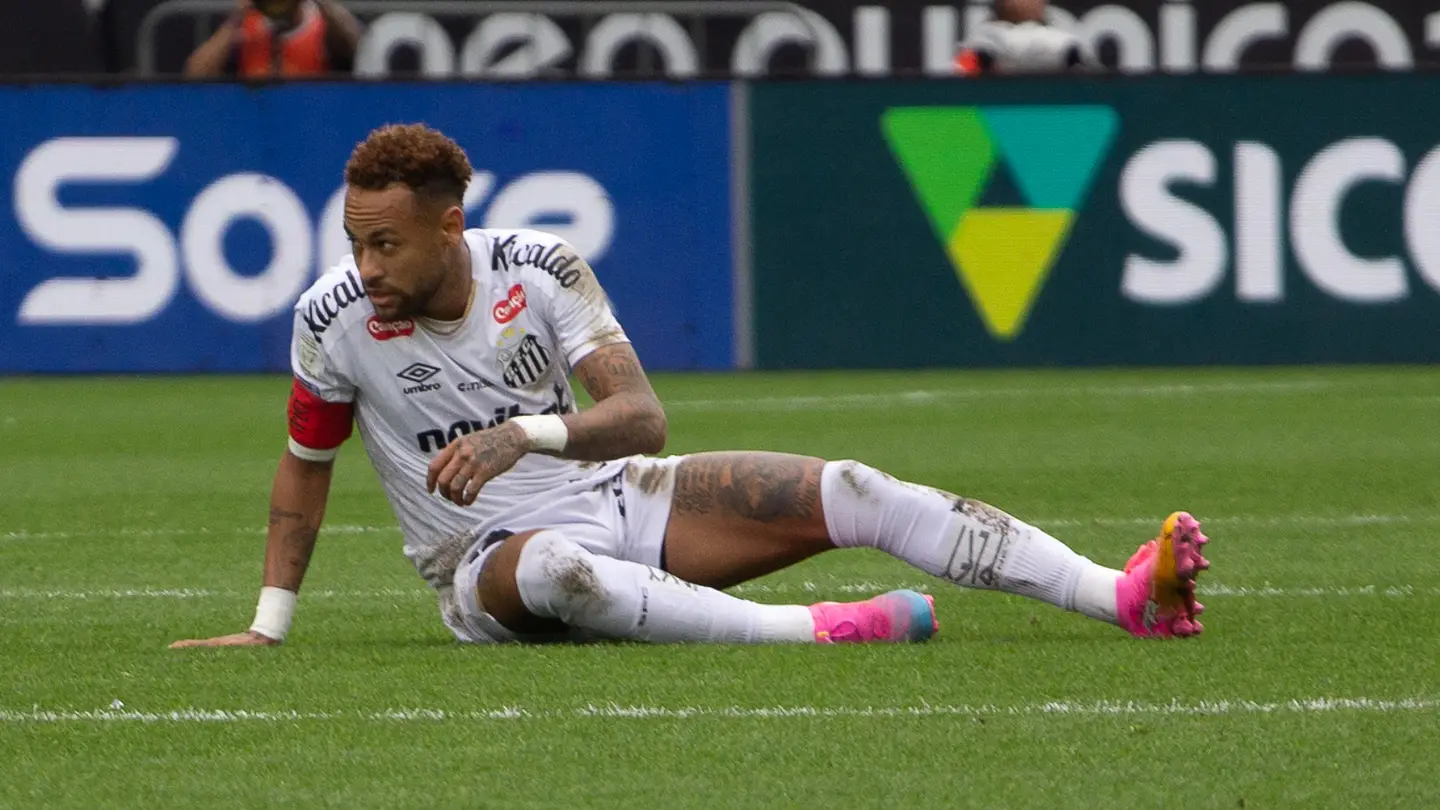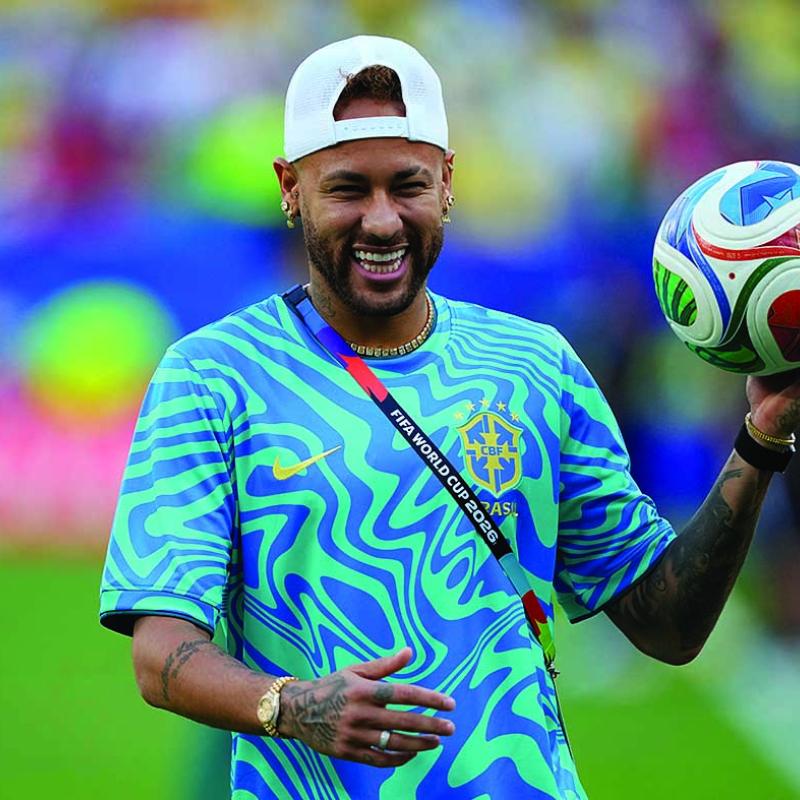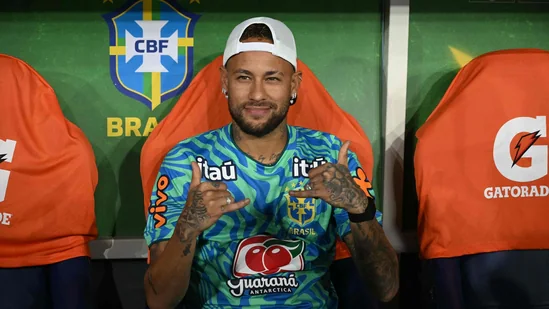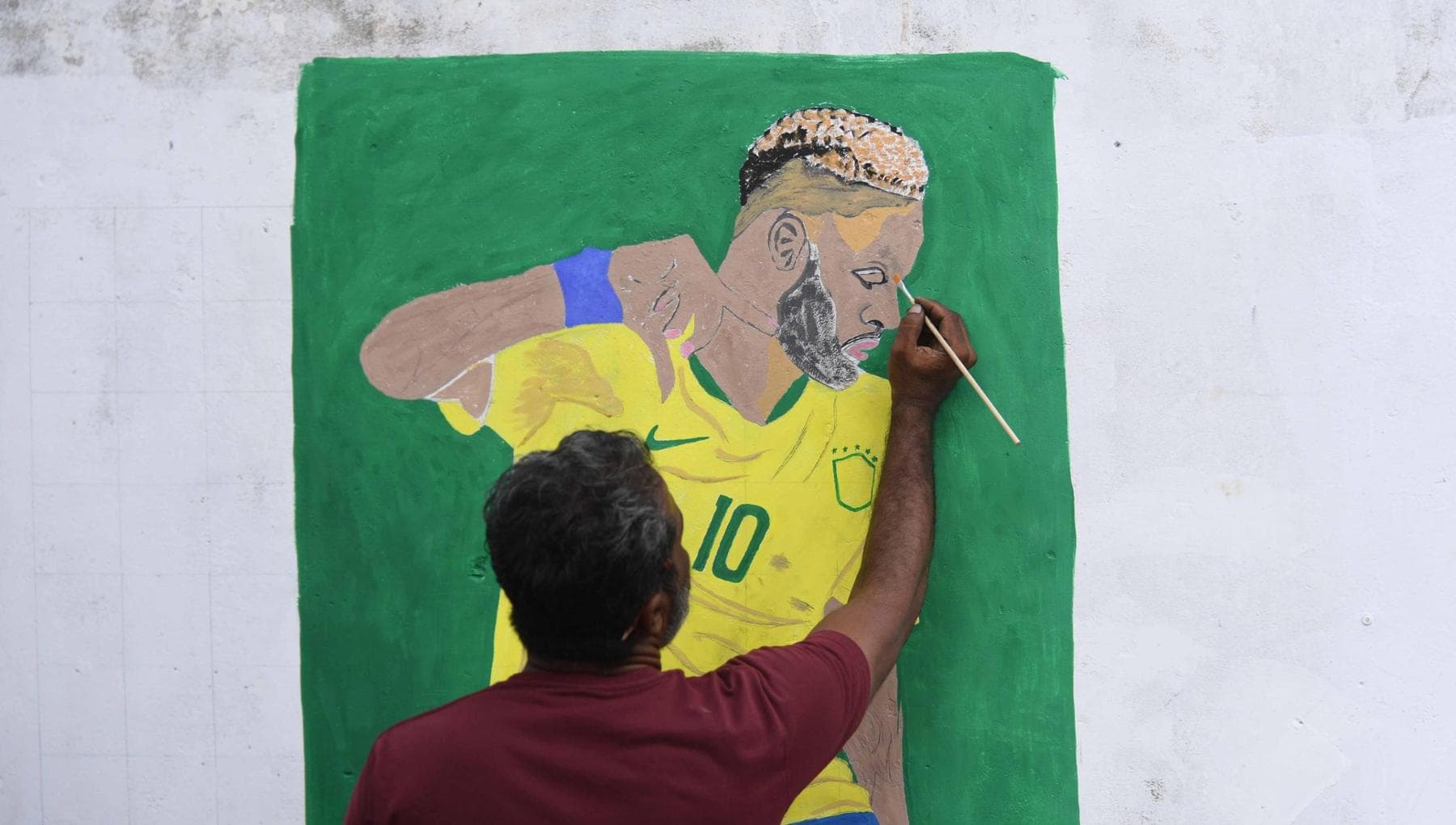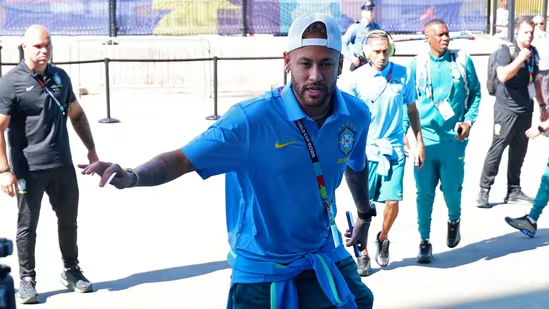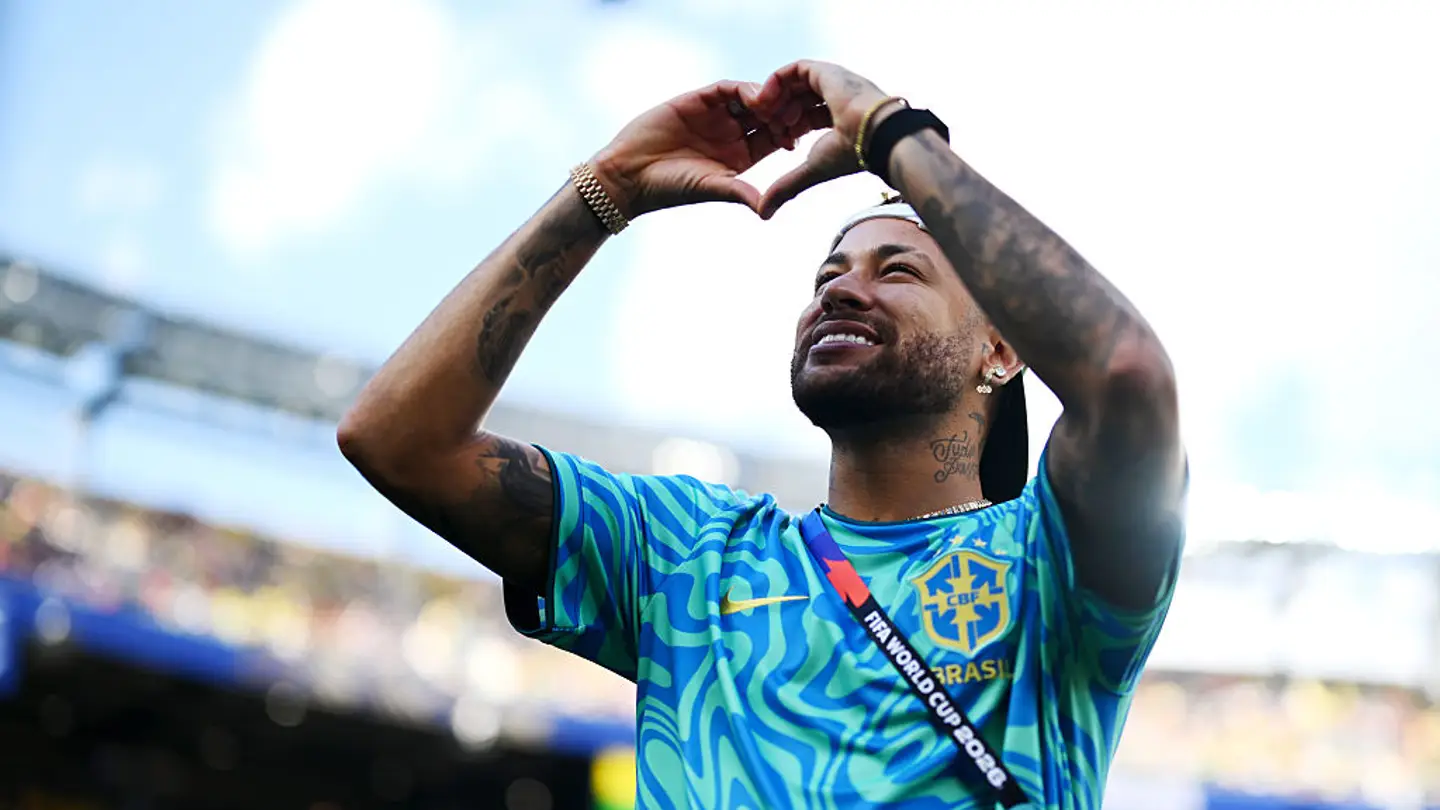
EAST RUTHERFORD, N.J. — Wrapped in a Brazilian flag and wearing a yellow Neymar jersey, Seleção fan Artur did not hesitate for a moment when asked if 34-year-old legend Neymar Jr deserved a roster spot.“Of course,” Artur says, despite Neymar’s laundry list of injuries that preceded Saturday’s World Cup opener against Morocco, a 1–1 draw. MetLife Stadium saw the star on the bench, sitting in a pink vest, warm up jersey and backward trucker cap.“He is my friend, after all,” Artur adds about Neymar. He reached into his side pocket and opened the Instagram app, scrolling to a recent photo of the pair together. While the nature of the relationship may have been a tad hyperbolic, it tapped into what is undoubtedly true of certain international soccer stars—an affinity to them that feels almost familial and transcends both rational fandom and, in the eyes of some, roster construction. Brazil, throughout history, has been unquestionably elite. Elite teams tend not to make decisions based on popularity. But Neymar, who was also left off the 2010 team as an ascending young player—a decision that then-manager Dunga is still asked about 14 years later—feels like a central character in the Brazilian football comic universe that has yet to receive a proper hero arc.The Need for NostalgiaNeymar attracted much attention despite his place on the bench. | Dan Mullan/Getty ImagesArtur talked about Neymar’s ability as a technician. He compared him to Lionel Messi or Cristiano Ronaldo. “A genius,” he says. “You need that star.” He was far more optimistic about Neymar playing meaningful minutes in this summer’s World Cup than his fellow supporters, who fear that Neymar’s calf strain will linger throughout the group stage.Perhaps fittingly, playing on the stadium video boards at the same time was a montage of Brazil’s 1994 World Cup win. It was soundtracked by pure nostalgia, such Tina Turner’s “Simply The Best,” which was released just a few years prior. Highlights of Bebeto and Romário rolled amid a sea of arriving Brazilian fans wearing jerseys that each represented their own iconic era of Canarinho football. Ronaldo. Ronaldinho. Kaká. Of course, Pelé. The environment captured the uniqueness of World Cup soccer, and the prolonged attachment that a country feels for one of its best players along with the inability to eventually let them go. Portugal and Ronaldo, aged 41, continue to participate in a awkward dance, with Ronaldo headlining the team’s World Cup roster after being benched in critical knockout stage matchups during the Qatar World Cup and facing legitimate questions about his age and decline for almost four years now. That case is far more severe, albeit reflective of the central question Brazil has had to wrestle with: Is it better to use this stage to develop the next Neymar or pacify the current one and those who love him so dearly?Francisco, another Brazilian fan dressed in a Neymar jersey, said that he understands why transcendent talent must be attached to a team, even if he, himself, does not believe that Neymar will factor meaningfully into a World Cup match this summer or even deserves to be on the roster at all. Two things can be true, he says. Neymar probably shouldn’t be here, but the Brazilian fans who survived an almost-heroic hours-long trek through New York and New Jersey public transit to arrive to the stadium—all the while, whooping, drumming, hurling arms around one another and chanting, “Olé, Olé, Olé,”—wanted him to be. “It’s still important,” he says. The Need for HopeNeymar will be a beacon of hope for fans this summer, even if he doesn’t touch the pitch. | Marc Atkins/Getty ImagesAnd, at least for the first 40 minutes of the game, Neymar represented something else that may form the psychological underpinnings of why so many fans cannot loosen their grip on an icon: hope that some part of the past may still be stored away somewhere, ready to bail out an offense that appeared to be slipping. Morocco dominated the first 30 minutes of the game, prodding a soft Brazilian midfield and capitalizing when striker Ismael Saibari split the team’s defenders and allowed for an opening in which he could loft the ball over the charging keeper’s head. Brazil appeared punchless, getting outshot and clamped, firing passes into a void and consistently surrendering the ball deep in its own territory. While the rhythmic drumming and low hum of the heavily Brazilian crowd never wavered, the unexpected arrival of Vinícius Júnior’s goal at the 32-minute mark broke the malaise. After halftime and subsequent cooling breaks, Brazil took a momentary lead in shots, a slender lead in possession and a rash of legitimate scoring opportunities. Vini Jr, like the old Neymar, appears to levitate while in possession of the ball. Whiffs of the team’s historical swagger—the kind that gets preserved on jerseys worn for a lifetime and that will ultimately perpetuate the same complicated love affair—are still evident when the team is able to isolate him on a single defender, which didn’t happen nearly enough against Morocco. He represented the few times the crowd reached a cacophony befitting its massive advantage. After the match, Brazil manager Carlo Ancelotti said he would not criticize any individual player. He would only address the team, which he felt played well, especially after a series of substitutions. But the line of questioning tended to hover around why there wasn’t more help for Vini Jr. The subtext was obvious: Why such an absence of a spark? Perhaps that, more than anything, answers the question of Neymar’s inclusion on the roster. After the game, still clad in his trucker hat, he walked through a series of post-mach niceties, attracting just as big of a contingent of Moroccan players as Brazilian ones, all of whom were just hoping to get into his orbit and shake his hand. READ THE LATEST WORLD CUP NEWS, ANALYSIS AND INSIGHT FROM SI FCAdd us as a preferred source on GoogleFollow
Neymar Brings Nostalgia, Hope for Brazil Seeking Long-Awaited Return to Glory
For many Brazilian fans, it is crystal clear why Neymar was included in the 2026 World Cup roster.
991 words~5 min read