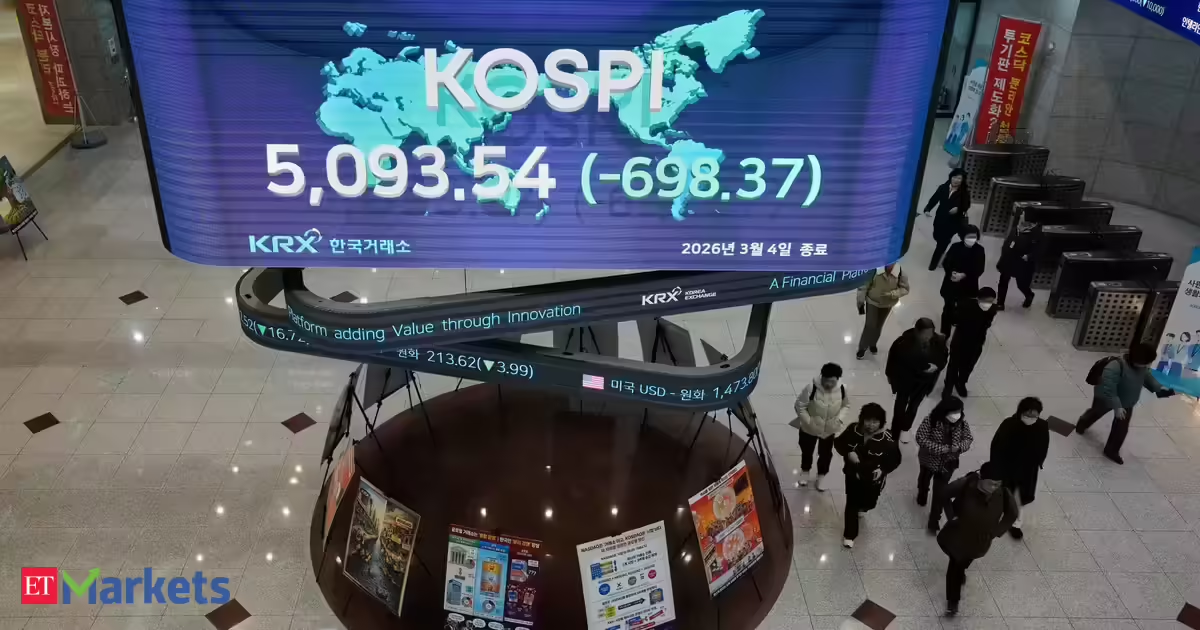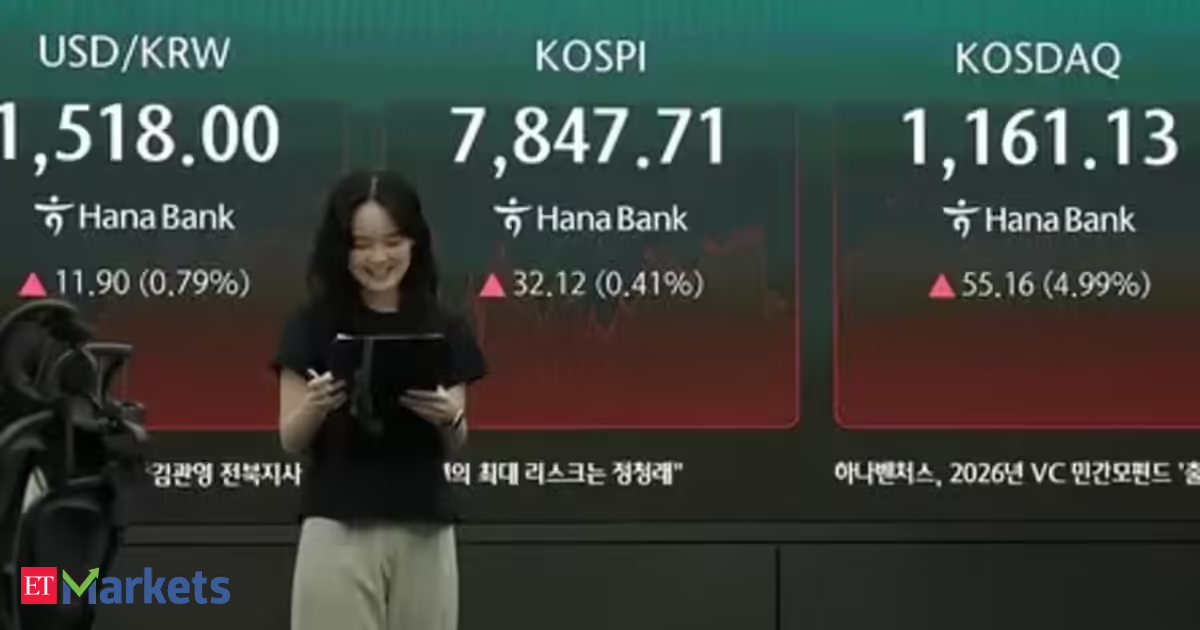
South Korea’s stock market just had the kind of week that gives index fund managers heart palpitations. The KOSPI dropped more than 8% in a single session in early June before snapping back with an 8% rebound the very next day. And all of this is happening right as the country edges closer to one of the most consequential upgrades in its financial history: reclassification from MSCI’s emerging-market index to its developed-market index.
MSCI’s Global Market Accessibility Review lands on June 18, followed by the Annual Market Classification Review on June 23. The outcome of those two dates could set South Korea on a path toward developed-market status as early as June 2027.
What MSCI reclassification actually means
When a country moves from “emerging” to “developed,” it gets shuffled from one set of index-tracking portfolios to another. Trillions of dollars in passive investment funds follow MSCI’s classifications. Analysts project that reclassification could attract substantial passive fund inflows and narrow what’s known as the “Korea discount,” which is the persistent undervaluation of South Korean stocks compared to peers in other developed economies.
South Korea has been stuck in MSCI’s emerging-market category for decades, sitting alongside countries like Brazil and India, despite having the world’s tenth-largest economy and being home to global titans like Samsung and SK Hynix. The country meets MSCI’s quantitative benchmarks for market size and liquidity. The problem has always been accessibility, the structural barriers that make it harder for foreign investors to move money in and out of Korean markets.