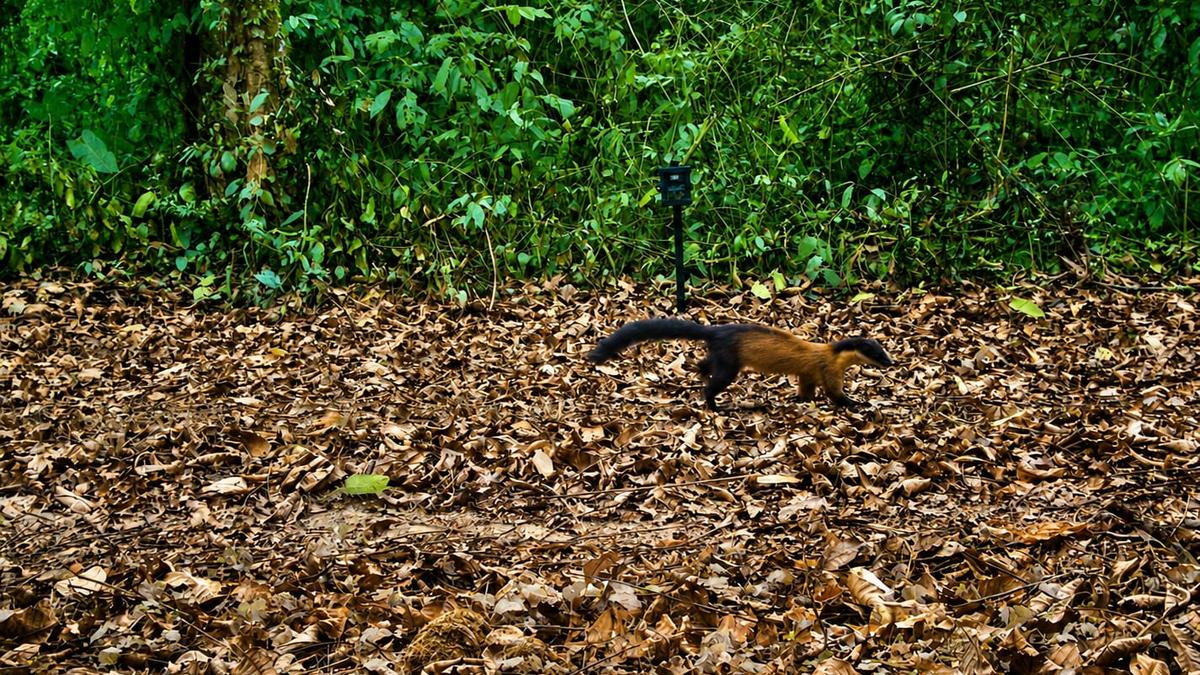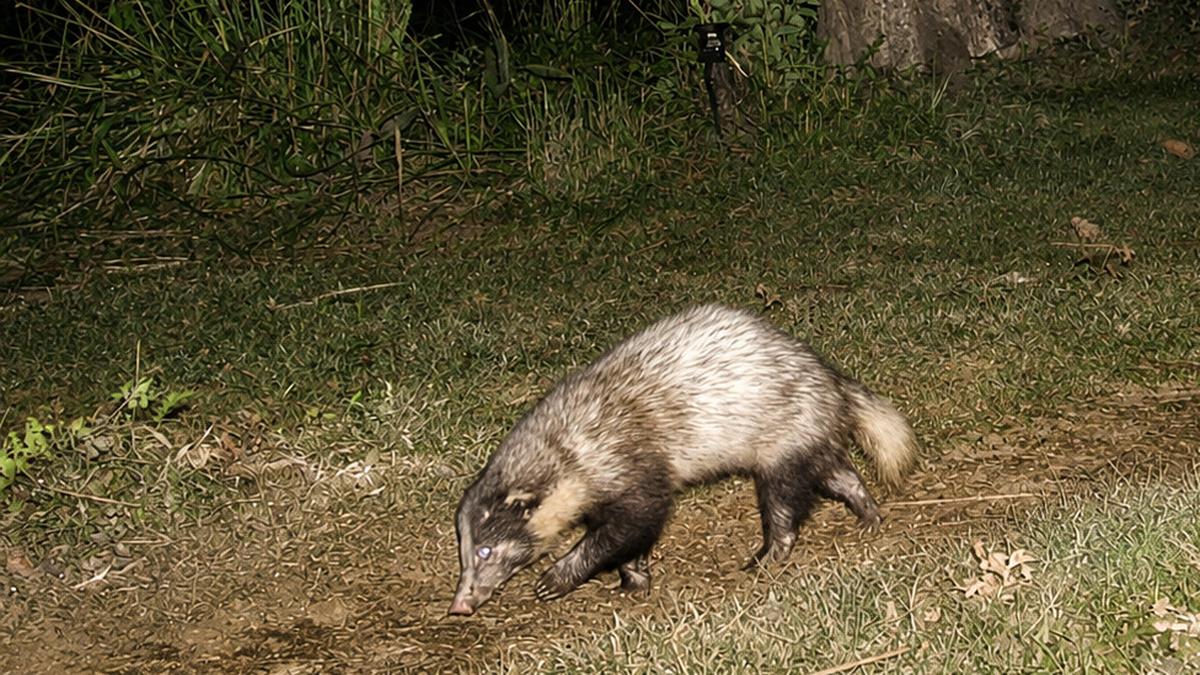
Greater hog badger recorded within a 1,100 sq km area of Kaziranga National Park and Tiger Reserve.
| Photo Credit: Special arrangement
GUWAHATI The Kaziranga National Park and Tiger Reserve has released the first scientific assessment report on the greater hog badger (Arctonyx collaris), a nocturnal small burrowing omnivore mammal called ‘mati gahori’ in Assamese.Conducted by Kaziranga’s Tiger Cell in collaboration with Wildlife Conservation Trust and The Fishing Cat Project, the study has confirmed that the globally vulnerable species, protected under Schedule I of India’s Wildlife Protection Act of 1972, is thriving in the park’s diverse habitat.Officials said that the density and habitat occupancy of greater hog badgers within the tiger reserve were assessed from camera-trap images available from past tiger estimation data.At least 55 individual greater hog badgers are estimated in approximately 1,100 sq. km area of the park studied, indicating a healthy and potentially viable population widely distributed throughout the landscape. “However, this outcome is a preliminary estimate and further work is needed to improve it, using detection covariate data not available to us at present,” a government statement said.Assam’s Environment and Forests Minister Jayanta Malla Baruah said the camera-trap by-catch data recorded more than 60 greater hog badgers. “The healthy presence of this elusive, nocturnal burrower across diverse habitats reflects the strength of Kaziranga’s ecosystems,” he said.Hog badgers are distributed across parts of South, Central, and Southeast Asia. Its range extends from Bangladesh and northeastern India eastwards through Myanmar, Thailand, Lao PDR and Vietnam, south to Cambodia and peninsular Thailand.