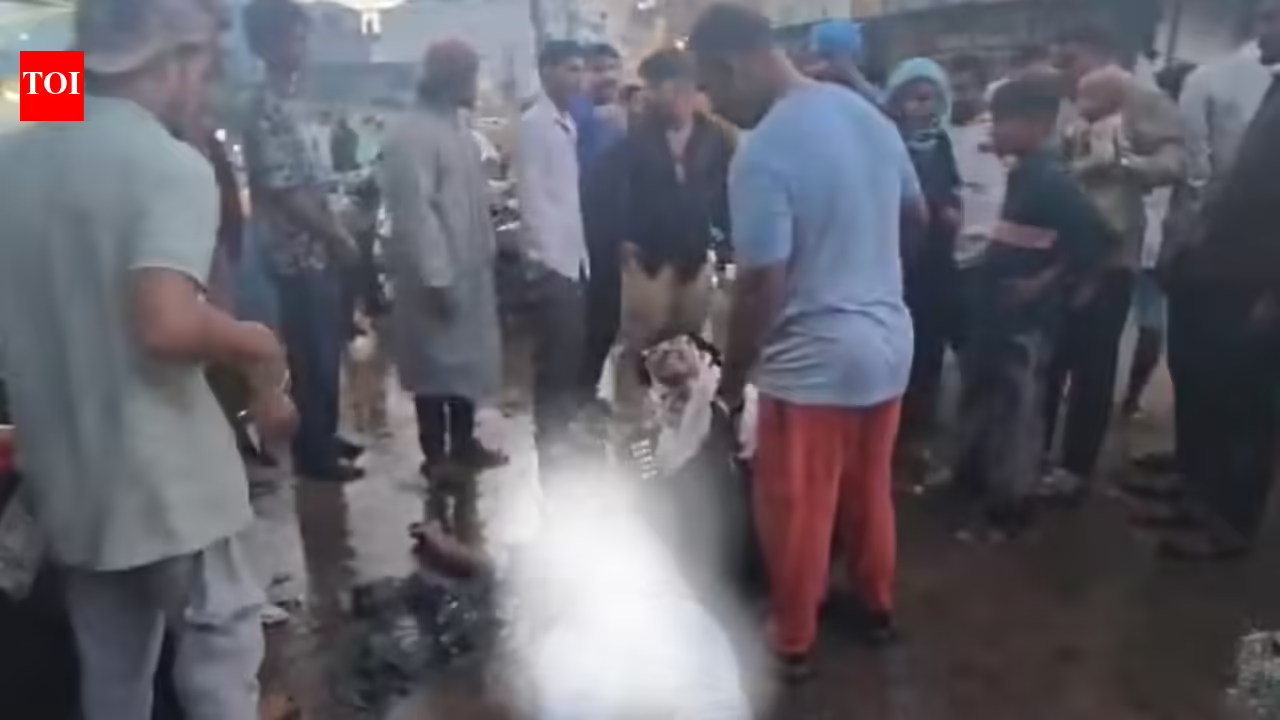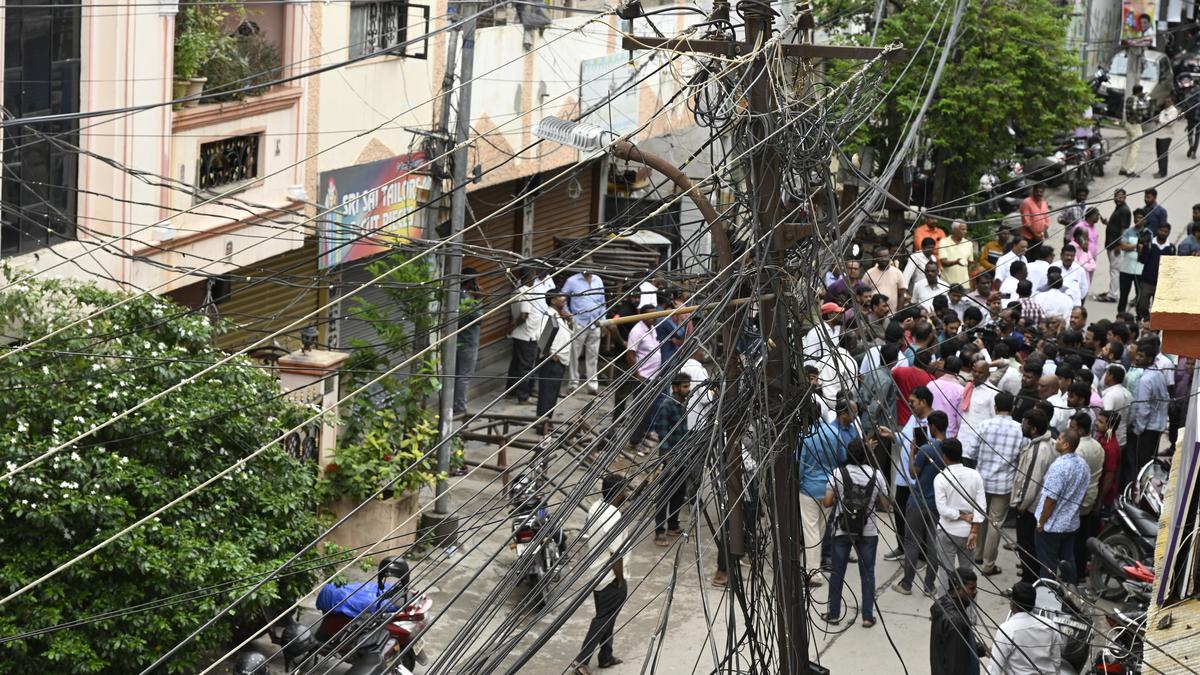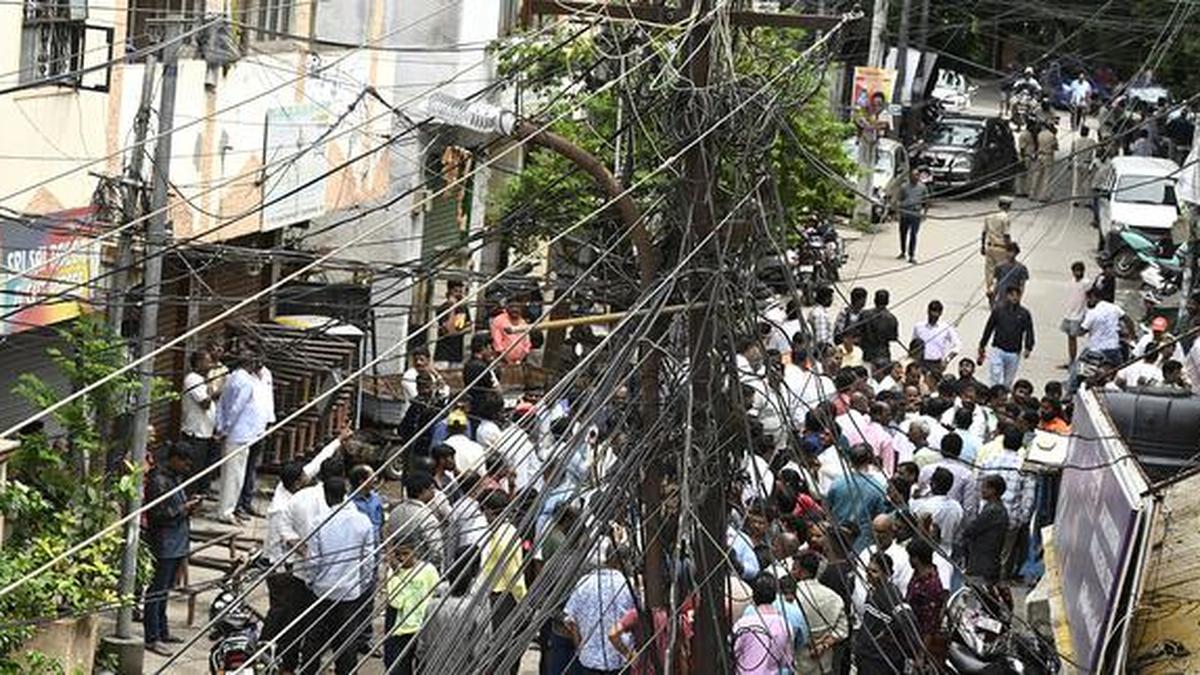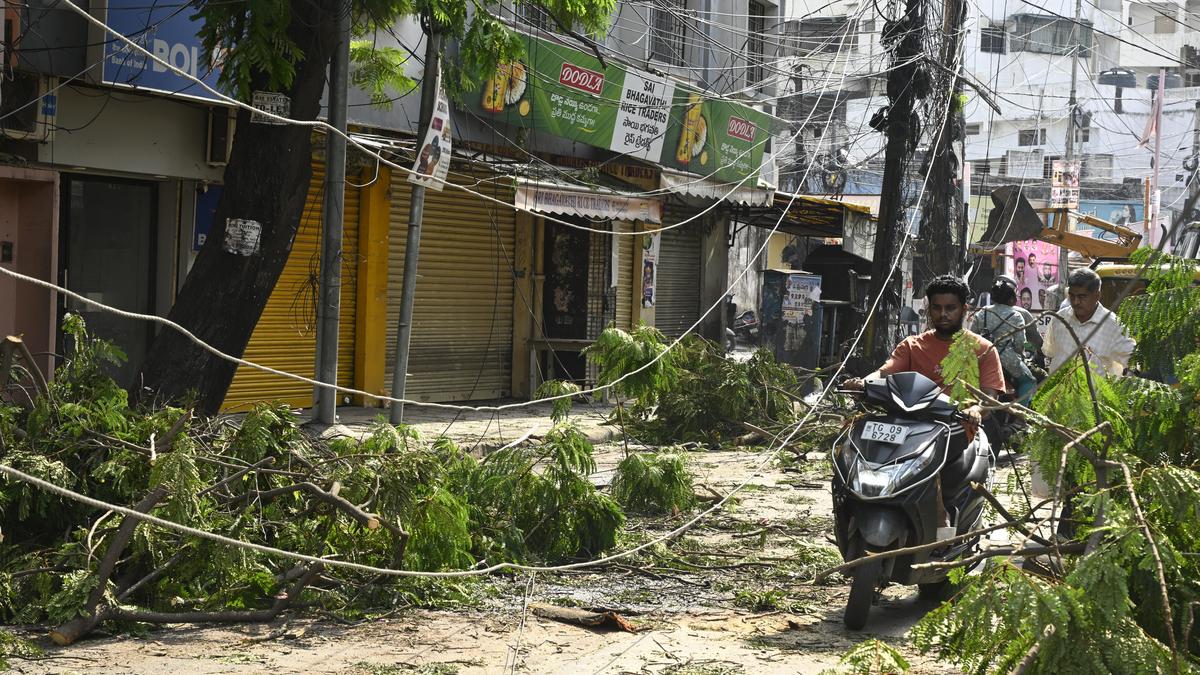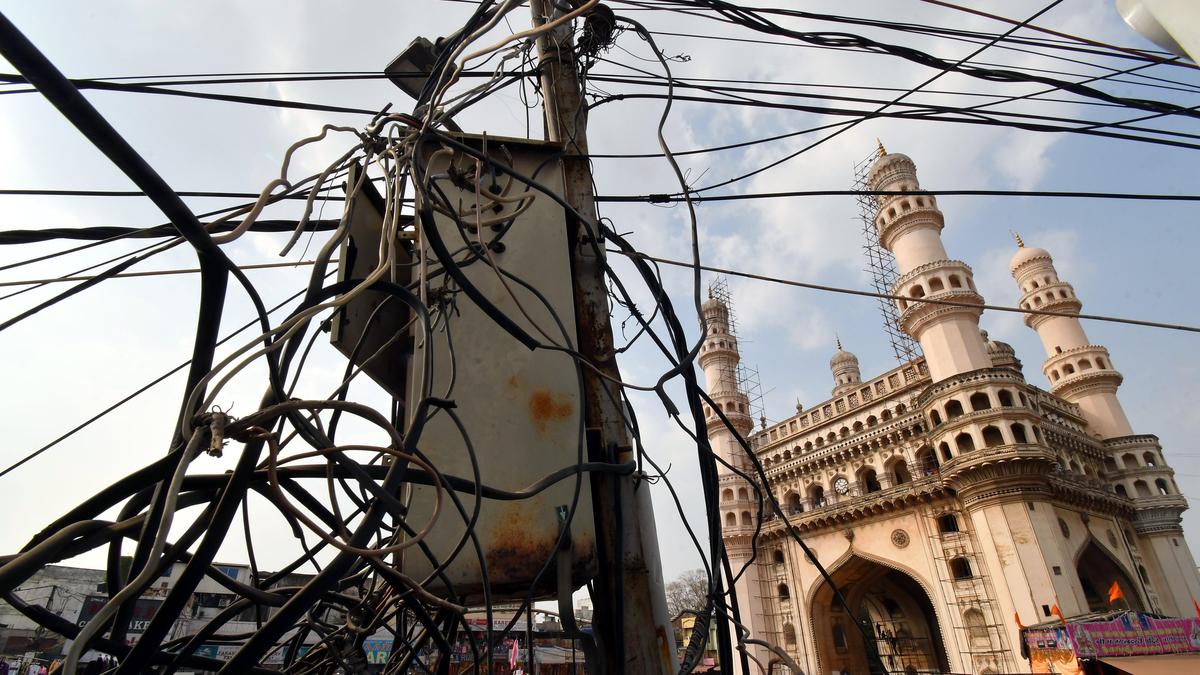
The city woke up to the sad news of two more persons — a father-daughter duo — falling prey to hanging power cables at Alwal in the wee hours of Saturday, after heavy rain battered the Western and Northern and Central parts through the night.Added with the two casualties recorded on June 9, snapped power lines have consumed four lives in the city in the past four to five days.The Telangana Southern Power Distribution Company Limited (TGSPDCL) issued a statement on Saturday saying that the cables belonged to streetlights, and that they snapped and fell onto the car along with the fallen tree branches.TGSPDCL also issued an alert urging people to remain vigilant and report snapped wires and fallen poles to the discom’s call centre at 1912.Streetlight poles, unlike electric supply poles, belong to the infrastructural network of the municipal authority concerned, and not to the discom.Officials from the Greater Hyderabad Municipal Corporation (GHMC) attributed the two deaths at Chandrayangutta to intense winds accompanied by heavy rainfall.“The falling of the cable was an act of nature and entirely beyond the reasonable anticipation or control of the authorities concerned. No negligence, lapse in maintenance or administrative oversight contributed to this incident,” a senior official said.GHMC’s Electrical wing, which earlier had engineers from the Discom working on deputation, was recently handed over to the Maintenance wing. Though a few engineers from the Discom still continue in order to finish their deputation period, maximum streetlight infrastructure is now maintained by the civil engineers from the Maintenance section.While the victims and act of nature are blamed respectively by the Discom and the municipal authorities, experts point to the absence of pre-monsoon maintenance as the sole reason behind the tragedies.“There are two reasons,” said an official on condition of anonymity, “Either the relay at the substation was faulty or the insulators at the pole. Had these two parts been functioning as they should, these two accidents would not have occurred.”Electrical relays at the substation are set to trip the power supply within milliseconds when a power conductor snaps, he says, arguing that the snapped cable should not have electricity flowing through it if the system functioned as it should.The insulators on the power lines, on the other hand, prevent electricity from escaping into the support structures such as poles and metal towers and to the ground.“Even if an insulator is faulty, power would not flow into the concrete pole under dry weather conditions. But when it rains, the wet pole acts as a conductor, and pumps power back into the cable,” the official explained.A thorough inspection of power and streetlight infrastructure before monsoons would have prevented the two incidents, and saved four lives.“Leave alone the technical issues. Proper pruning of the tree branches as monsoon preparatory exercise could have prevented the latest incident,” he noted. Published - June 13, 2026 08:42 pm IST
‘Pruning of tree branches as monsoon preparatory exercise could have prevented the latest incident’
While the victims and act of nature are blamed respectively by the Discom and the municipal authorities, experts point to the absence of pre-monsoon maintenance as the sole reason behind the tragedies.
478 words~2 min read