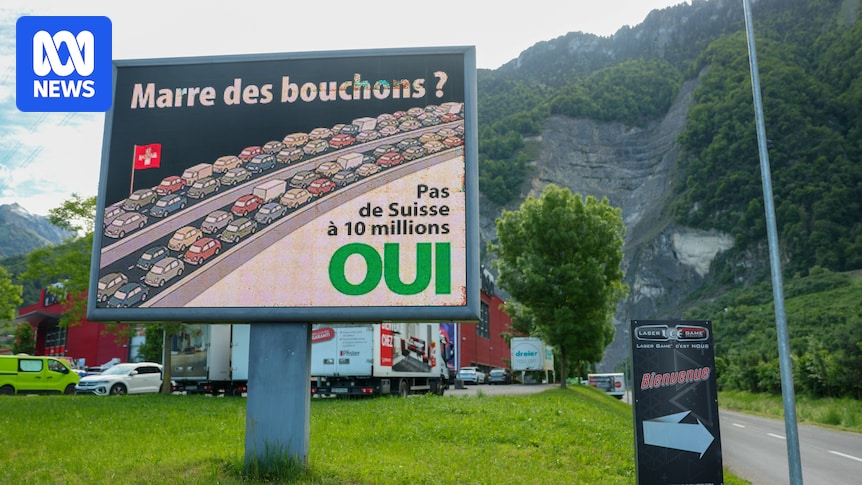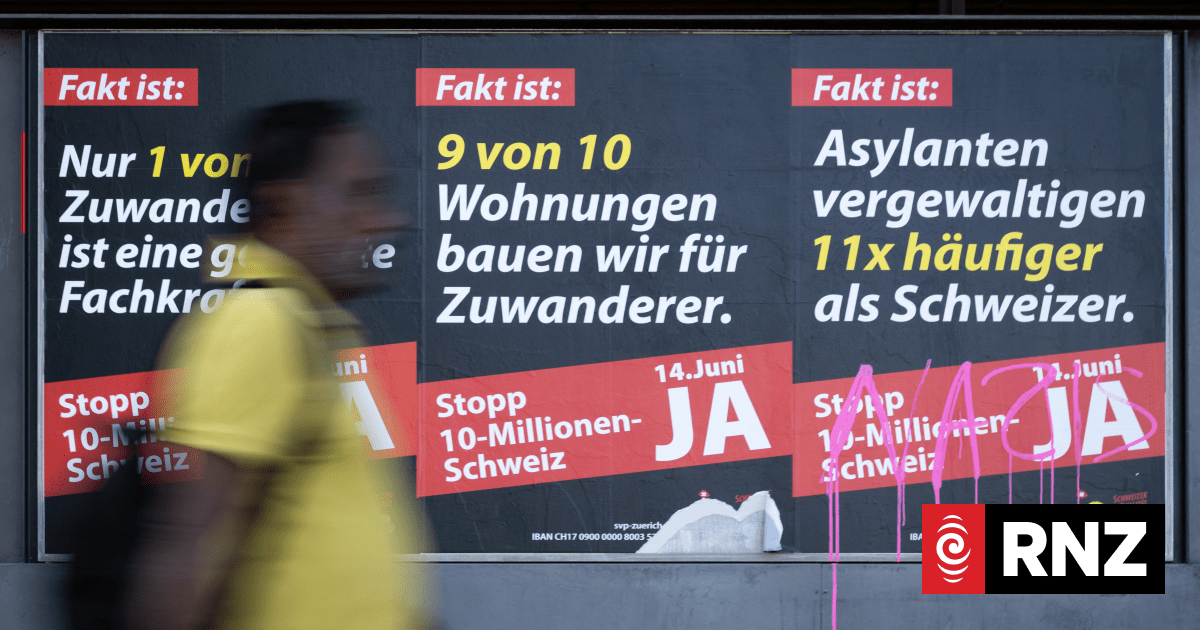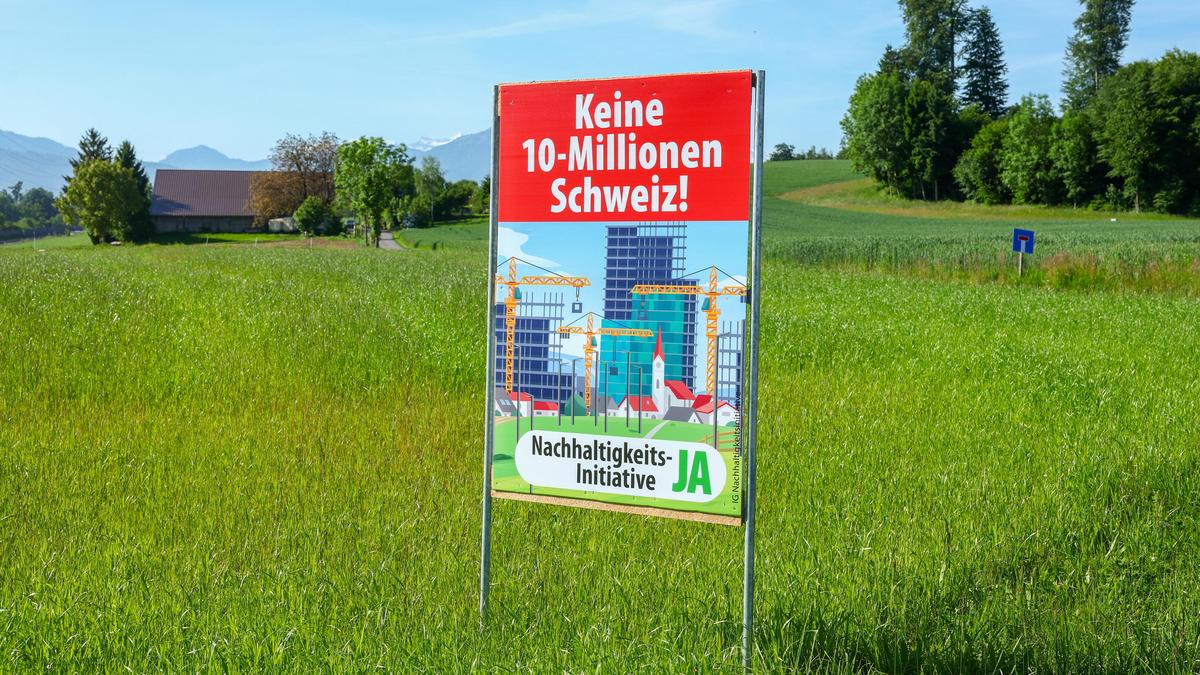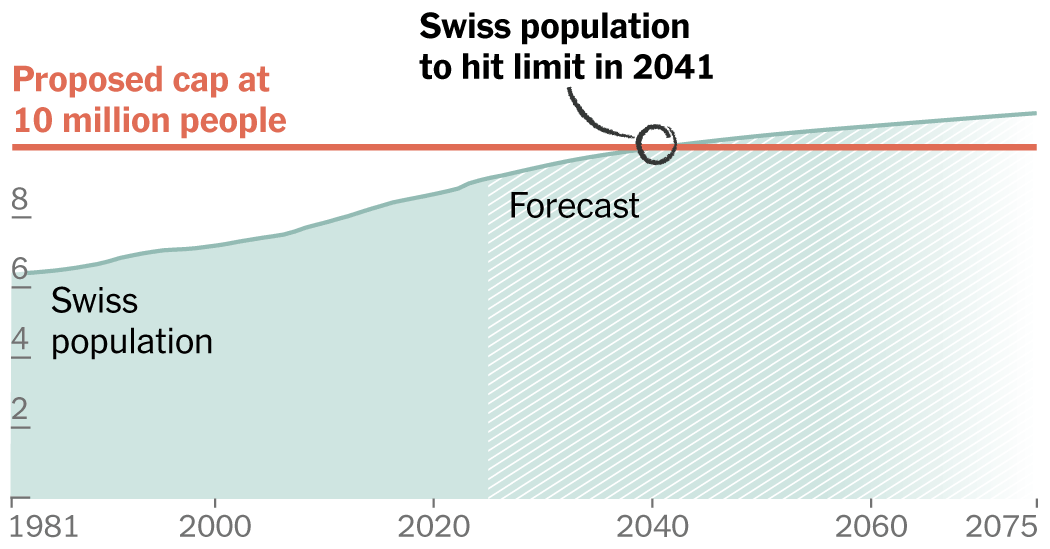
Interlaken—the Swiss vote to cap the population at 10 million on 14 June.gettyThis Sunday, Swiss voters will decide on an unprecedented referendum that could fundamentally change who can move to and live in Switzerland. On the 14th of June, the Swiss referendum may lead to capping the country’s population at 10 million. Here’s an explainer.What’s Behind The Swiss Referendum On The Population Cap?The referendum was put forward by the hard-right Swiss People’s Party, which is increasingly frustrated by what it perceives as immigration-related issues. That's to say, rising housing costs and straining infrastructure, something they cite as “density stress”.It's certainly true that Switzerland has higher immigration than the European average of less than 2%. Immigration has resulted in a population increase of around 10% over the past 10 years, bringing the Swiss population to around 9.1 million.Switzerland is not part of the EU, but it is part of the Schengen area, which allows free movement of people throughout the EU, as well as Switzerland, Norway, Liechtenstein and Iceland.Bloomberg reports that free movement began in 2002 across the EU and that, during this period, 80% of Switzerland's population growth was due to immigration, much of it from its European neighbors.What Would A Yes Vote In The Swiss Referendum Mean For Switzerland?If the referendum vote leads to capping the Swiss population at 10 million, then authorities would have to find a way to do so once the population exceeds 9.5 million.Immigration controls would be tightened, and once the population hits 10 million, Switzerland would no longer allow free movement within the EU. The Guardian states that this threshold will be reached between 2033 and 2041.Bloomberg Opinion firmly believes this isn't the answer for Switzerland, noting that it would be economically devastating, as the EU accounts for about half of its exports and 70% of its imports.These import-export agreements with the EU are intricately linked, meaning it might not be easy to disallow free movement and still expect to receive the other perks of a broader EU package. It’s not dissimilar to what happened after Brexit, where a yes vote for increased political sovereignty and isolation in the U.K. came with an economic cost—about 2 to 4% of British Gross Domestic Product, according to a recent calculation.The federal government is worried because more people are retiring than are entering the labor market, which means the economy is dependent on foreign workers. As in other European countries, this is largely in places like hospitals and care homes.Bloomberg suggests that, rather than imposing a cap, policymakers could more clearly distinguish asylum from labor migration by processing claims faster and handling failed claims more effectively.The Guardian recently stated that such a cap would “dismantle the openness that has made the country rich.” It has a highly diversified economy, high salaries, and comparatively low income inequality. It also states that Switzerland has a living space per inhabitant above the European average.From a relocation perspective, if the referendum passes to cap the Swiss population at 10 million, it would make the third-safest country in the world harder to relocate to.Swiss Referendum—Other European Countries Are Having Similar Political ConversationsThis referendum is not happening in isolation, and the same political issues are being discussed across several other European countries.In France, for instance, Le Monde quotes a report from the French statistics agency, INSEE, says net migration will keep the population growing only temporarily, before births and deaths push the country into decline after 2037. Economically, immigration is a necessity for a country facing an aging population. However, the far right has successfully turned immigration into a central political battleground, and the demographic debate is set to become a major source of contention in the upcoming 2027 presidential elections.This is against the backdrop of new asylum and migration laws that the EU has implemented across its 27 member states this week. The headline change is a much tougher, faster system built around screening, tighter registration, shorter deadlines, and greater emphasis on keeping asylum seekers and people on the move at Europe’s external borders rather than allowing onward movement within the bloc.In practical terms, Brussels is now treating migration less as a question of labor needs or shared protection and more as a security and deterrence issue. Critics argue the rules try to solve the wrong problem: irregular arrivals are already well below the 2015 peak, while Europe still needs migration to offset labor shortages and aging populations.An infographic explaining the referendum to cap the population at 10 million.Anadolu via Getty ImagesWho Will Win The Swiss Referendum?It's tense, and currently, France24 reports that recent polls suggest both sides are neck and neck at around 50%, much like U.K. polls before the Brexit vote. As France24 states, other political parties believe the referendum to cap the population is foolhardy—”the Greens call it an 'anti-foreigner' move; the Socialists brand it a 'chaos initiative', while the centrists call it a 'superficial solution'.”One thing is clear. If the Swiss referendum passes, moving to or relocating to Switzerland will become significantly harder. Immigration controls would tighten immediately once the population exceeds 9.5 million, and EU free movement would end at 10 million, requiring new visa/work permit systems similar to post-Brexit UK arrangements.MORE FROM FORBESForbes"One Journey, One Ticket"—The EU Unveils Cross-Border Train Travel PlanBy Alex LedsomForbesMore Americans, Especially Women, See Europe As A Plan BBy Alex Ledsom
Swiss Referendum Could Make Relocation To Switzerland Much Harder
The Swiss are set to vote on whether or not to cap their population at 10 million. If it succeeds, moving to or relocating to Switzerland will become harder.
889 words~4 min read