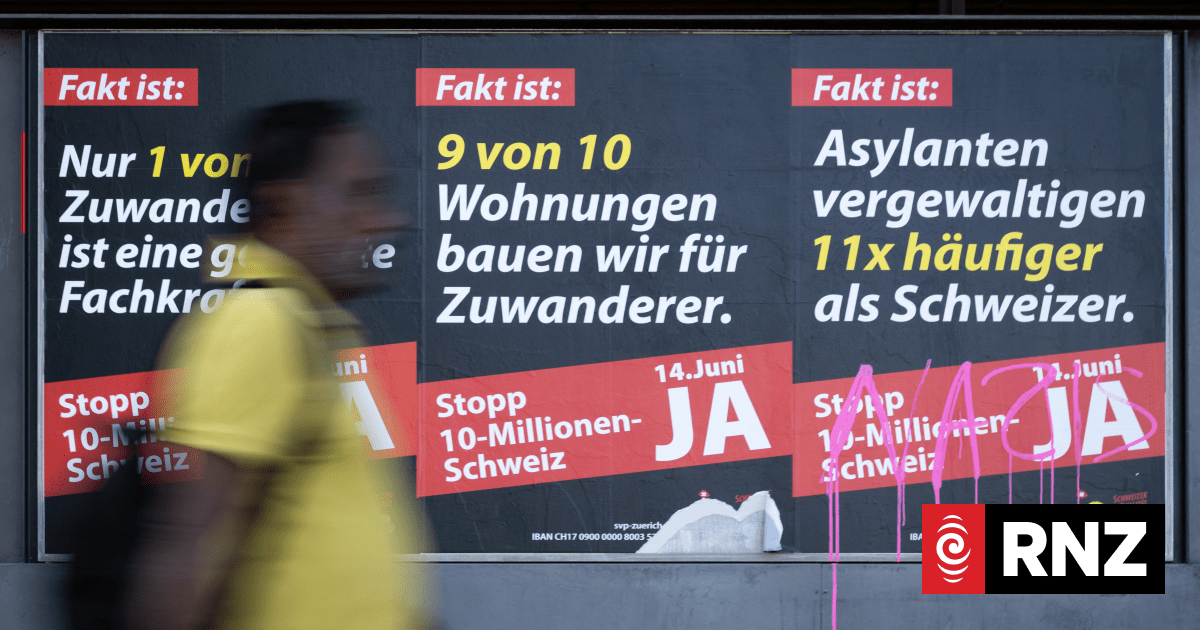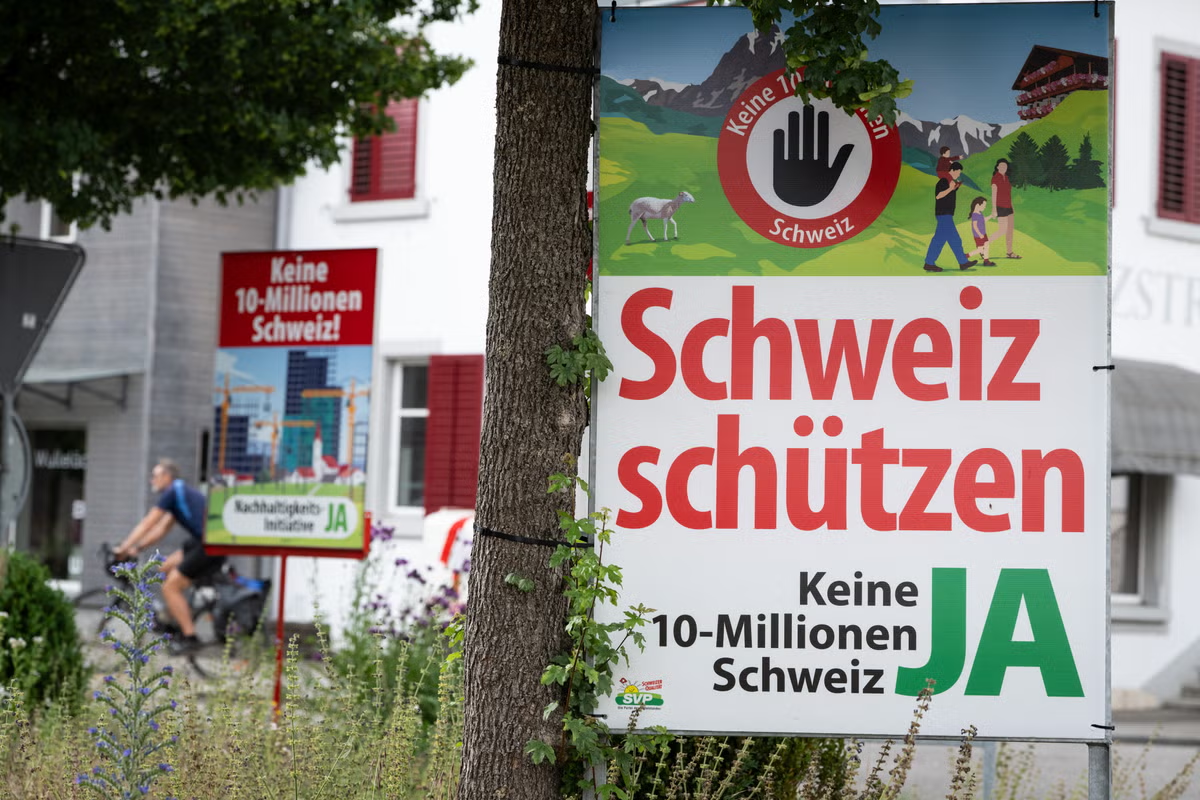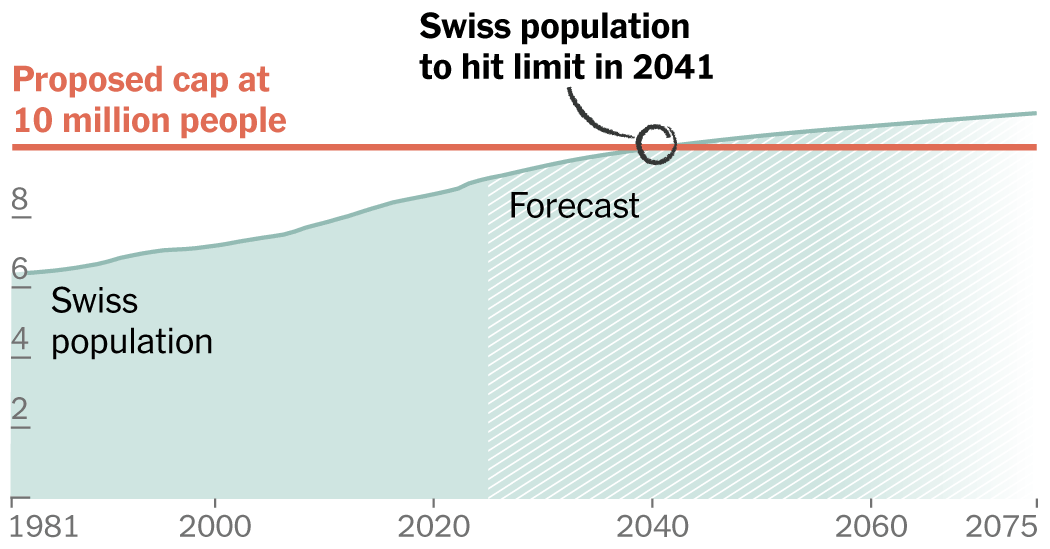
On June 14, Switzerland will vote on whether to become the only country in the world to officially cap its population.With a limit of 10 million people until 2050, the referendum has divided the country and been dubbed by some as a "Swiss Brexit".Here's what we know.First, catch me upIf you're a little behind on where this has come from, we've got you sorted.Championed by the right-wing Swiss People's Party (SVP), voters will decide on whether to back a referendum proposal to restrict Switzerland's population to 10 million. The SVP is the largest party in Switzerland's government.The threshold could be reached sometime between 2031 and 2042.The initiative is titled "No to a Switzerland with 10 million!""Uncontrolled immigration is causing Switzerland to grow far too quickly. The negative consequences are palpable in all areas of life," the Yes campaign says.Thomas Matter, an SVP lawyer and banker, has dismissed concerns that the initiative is a scaremongering tactic.Only one in 10 immigrants were workers with sought-after skills and the rate of GDP growth per head had declined since the increase in immigration, Mr Matter said."We are not against immigration, but it has to be moderate and controlled so we bring in the right people," he said."Before we had qualitative immigration, now we have quantitative immigration. Switzerland is still the same size as it was in 1848, and more and more people are living in the same space."What prompted the call for a population cap?In the past 25 years, Switzerland's population jumped from 7.3 million to 9.1 million, with roughly four-fifths of that increase driven by immigration.More than a quarter of residents are not Swiss citizens — one of the highest proportions in Europe.According to World Bank data, the country's population has increased by about 10 per cent over the past decade, surpassing that of the European Union (EU), which saw less than 2 per cent growth.The population increase in 2023 was especially high as national statistics factored in the arrival of Ukrainian refugees for the first time.In a bid to preserve the Swiss lifestyle and protect the environment from excessive human activity, the SVP came up with the population cap idea that same year.Its supporters have cited concerns about infrastructure, particularly housing, transport, schools and hospitals, becoming overloaded from an expanding population.An SVP sign stands in a field near the village of Knonau. It reads: "No Switzerland with 10 million. Yes to the sustainability initiative." (Reuters: Denis Balibouse)Peter Zuercher, a retired technician in Knonau, told Reuters there must be a point where population growth "just stops"."We need a certain amount of immigration, but what's happening now is too much," he said.Who is against the cap?Opponents of the cap, which include the seven-member government that is comprised of ministers from the four biggest parties, argue it could:Harm the competitiveness of Switzerland's economyLead to a shortage of workers with critical skillsDamage relations with the EUThreaten Swiss prosperity and internal securityThe Swiss Trade Union Federation, the Swiss Employers' Association and the business umbrella organisation Economiesuisse are also against the initiative.Economiesuisse chief economist Rudolf Minsch said the cap was a "populist attempt" to apply a simplistic fix to complex problems."It sells the illusion of a free lunch and will not solve our housing or traffic problems," Mr Minsch said.The No campaign says the initiative "will not create any additional housing or combat illegal immigration" and "solves no problems, but creates new ones"."It deprives our businesses and our entire society of a workforce we desperately need," the campaign said.Switzerland's population is already at 9.1 million and is expected to grow quicky. (Reuters: Denis Balibouse)University of Sydney associate professor Anna Boucher says growth is necessary because most Western countries, including Switzerland, have an aging population."You've got structural aging, which means you've got more people who are dependent on the welfare, social security and age pension systems and fewer people to provide the tax base necessary to support them," Dr Boucher told the ABC."That can create economic burdens for society."We're also seeing women in Western nations having fewer babies, which then places pressure on the labour market and pension systems."In 2024, the average number of children per woman in Switzerland was 1.29, the lowest since records began, according to the Federal Statistics Office.Claude Maurer, chief economist at research institute BAK Economics, says that if Switzerland's capital city, Bern, were to abandon its bilateral agreements with the EU, Swiss economic growth between 2028 and 2045 would be 7.1 per cent lower, equivalent to a loss of 685 billion Swiss francs ($1.22 billion).He added that growth would slow, while inflation, driven by wage increases, could trigger higher interest rates.Martin von Moos, the chief executive of two luxury hotels near Zurich, said he was "very concerned for the future of his country"."If we lost all of our foreign staff, the hotel simply wouldn't function," he said, noting that nearly half of his 115 staff came from outside Switzerland.Will the vote pass?We won't know until June 14.For months, opinion surveys have suggested a majority of people were in the "yes" camp, but more recent polling has shown the opposition gaining ground in what is shaping up to be a tight contest.The Swiss will head to the polls on Sunday to vote on the population cap. (Reuters: Arnd Wiegmann)About 52 per cent of the 19,400 respondents polled between May 19 and May 27 were against the proposal, with 45 per cent in favour, according to a survey carried out by GFS Bern for public broadcaster SRG.A previous poll carried out at the end of April showed the Swiss evenly split, with 47 per cent in favour and 47 per cent against.The initiative needs a double majority to pass. That means it must win both the national popular vote and the support of a majority of Switzerland's 23 full and six half-cantons.Switzerland is divided into 26 cantons, each possessing its own constitution, legislature, government and courts.How will they impose the limit if it does pass?If a majority of citizens back the plan, the government will be forced to take measures to reduce immigration through two measures.The first, triggered as soon as Switzerland exceeds 9.5 million inhabitants, would lead to restrictions on asylum seekers, family reunification and residency permits. That figure is expected to be reached by 2031.If the population surpasses 10 million, which it is forecast to do in 2042, the Swiss parliament would be required to terminate international accords that encourage population growth.That includes the agreement with the EU allowing free movement of people, a condition of the complex web of Swiss accords with Brussels that give the country access to the European single market. This agreement was signed in 2002.Dr Boucher says we will have to wait and see whether the initiative can be implemented."It could be a policy statement rather than an actual policy impact," she said."If you have a hard cap, in this case 10 million, you're basically tying the government to a very specific number and binding the constitution."So in my opinion, a hard cap can be very difficult to achieve."Have other countries had population caps?Switzerland's population cap would be the first of its kind enshrined in law.Other countries have implemented policies aimed at limiting population growth, either by controlling birth rates or restricting immigration.China had a one-child policy from 1979 to 2015. Any additional children would often lead to fines, loss of benefits, or other penalties.In Australia, we have a target for permanent migration. The target for 2026-27 is 185,000.ABC with wires
Could Switzerland become the first country to restrict its population?
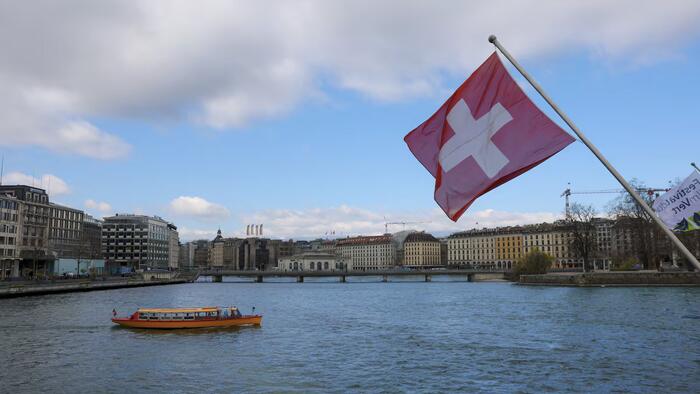
The Swiss will go to the polls on Sunday to vote on whether to back a referendum that would see its population capped at 10 million.
TL;DRAI
Switzerland votes June 14 to cap population at 10M by 2050 due to immigration surge (7.3M→9.1M in 25 years). The cap threatens labor supply and competitiveness; economists warn 7.1% growth loss and strain on aging-dependent welfare systems.
1,242 words~6 min read