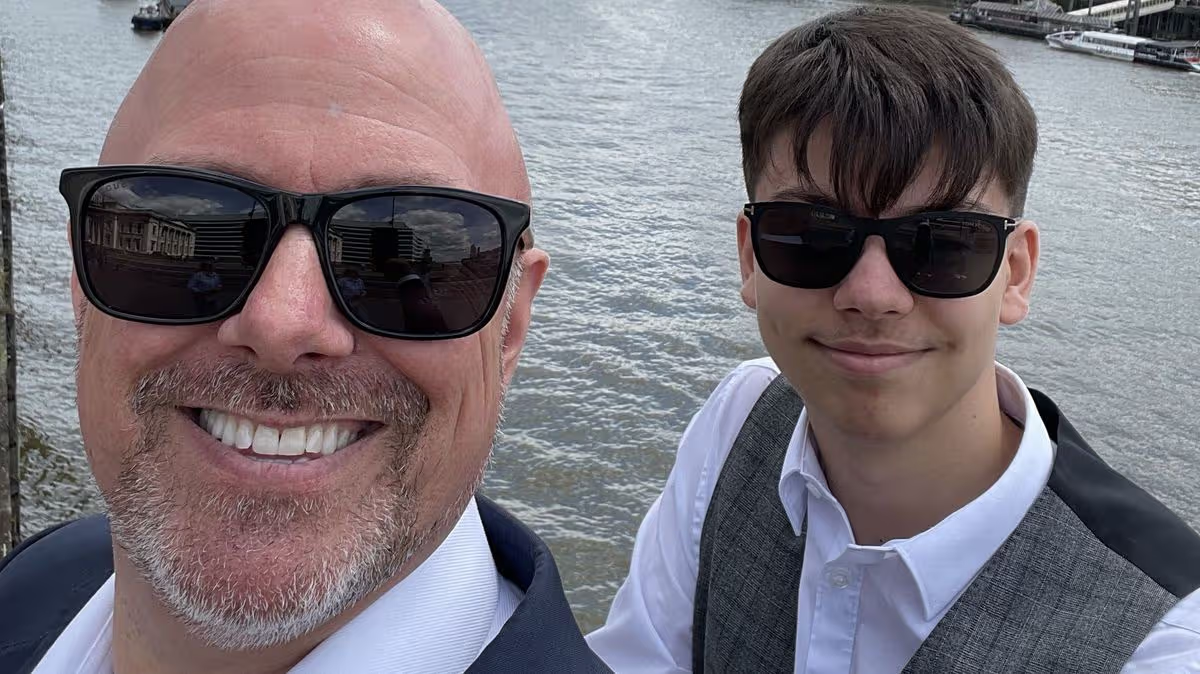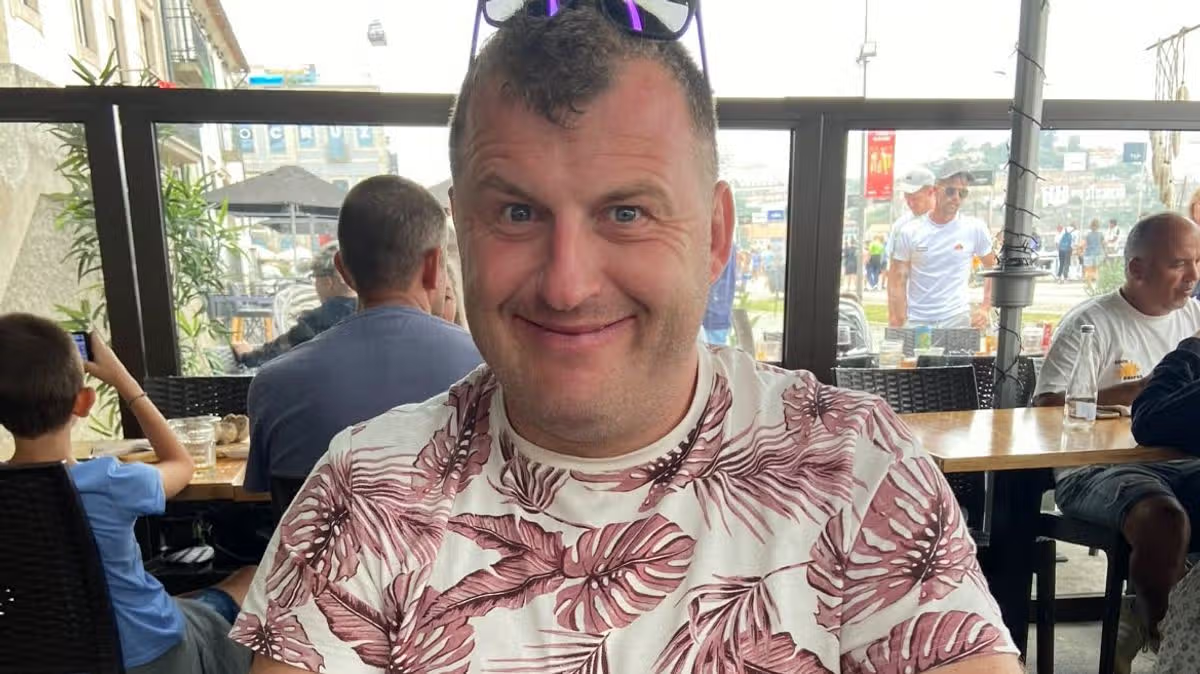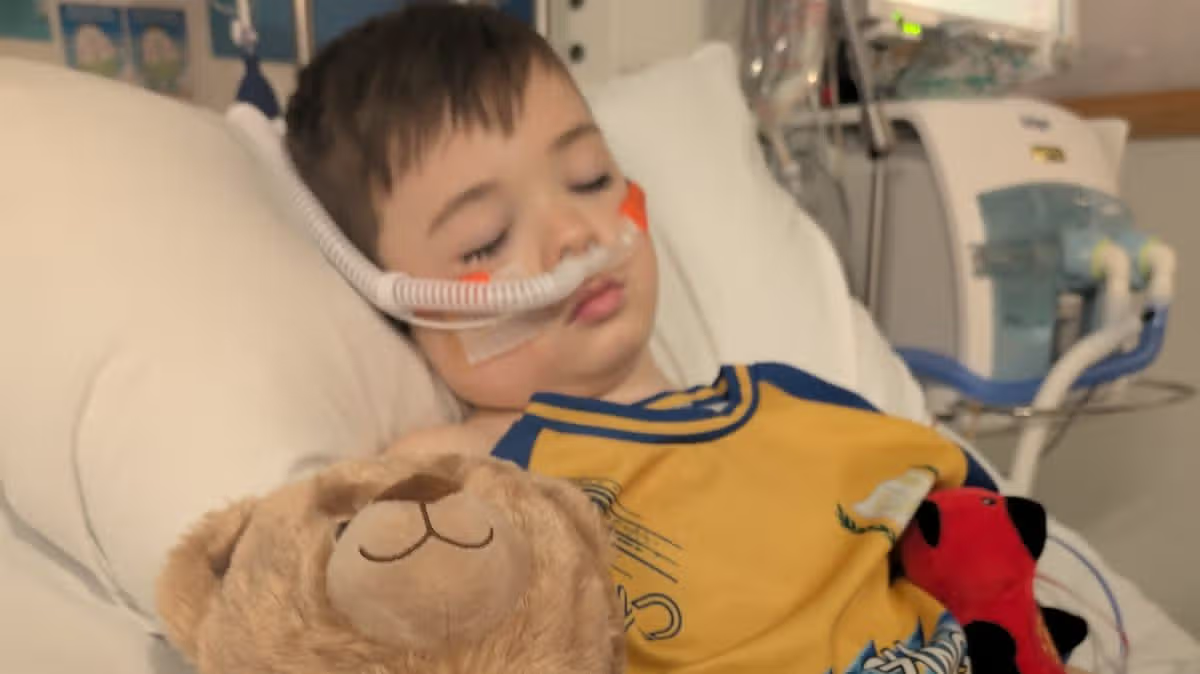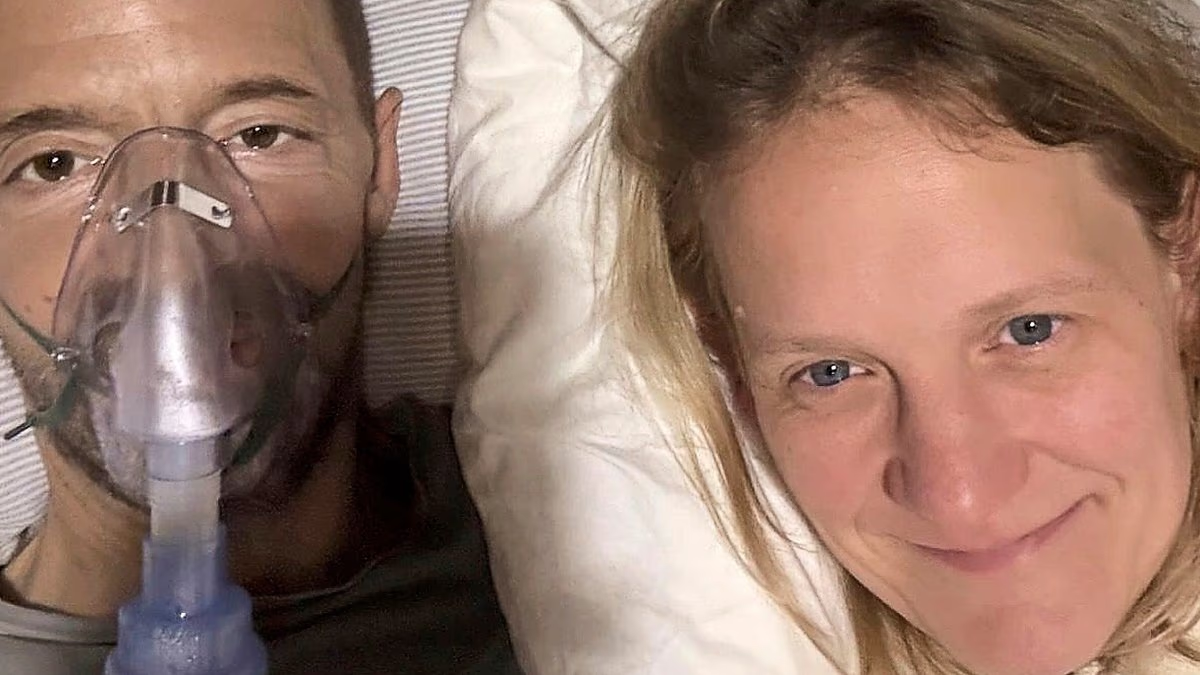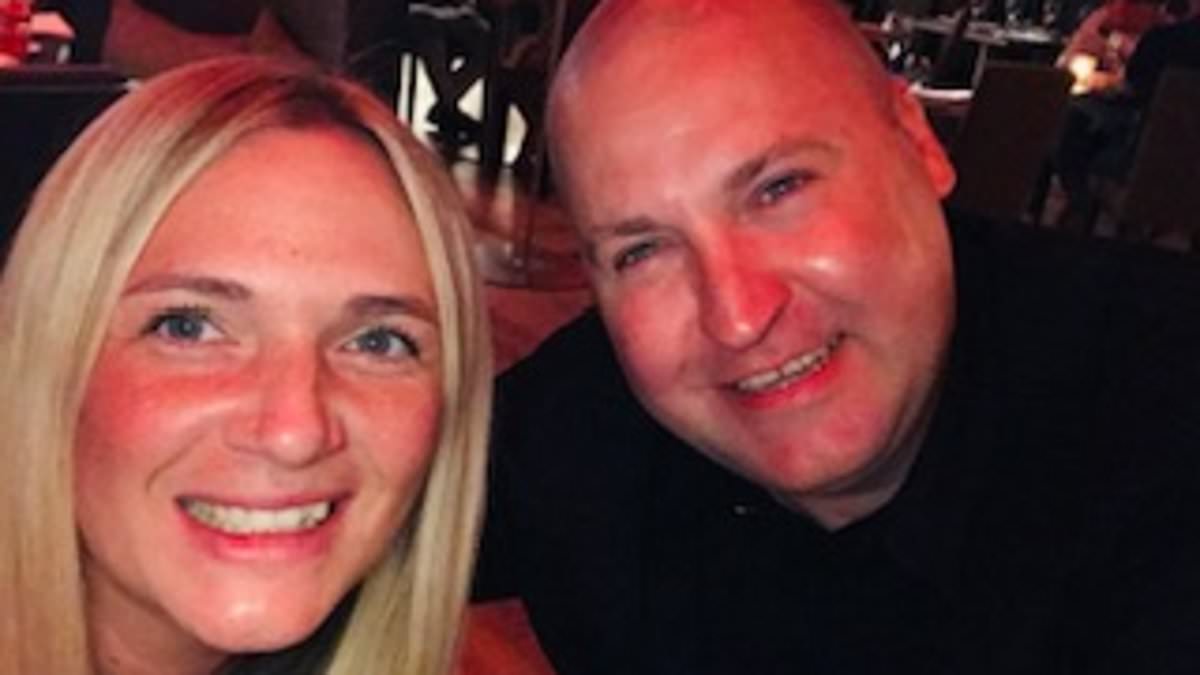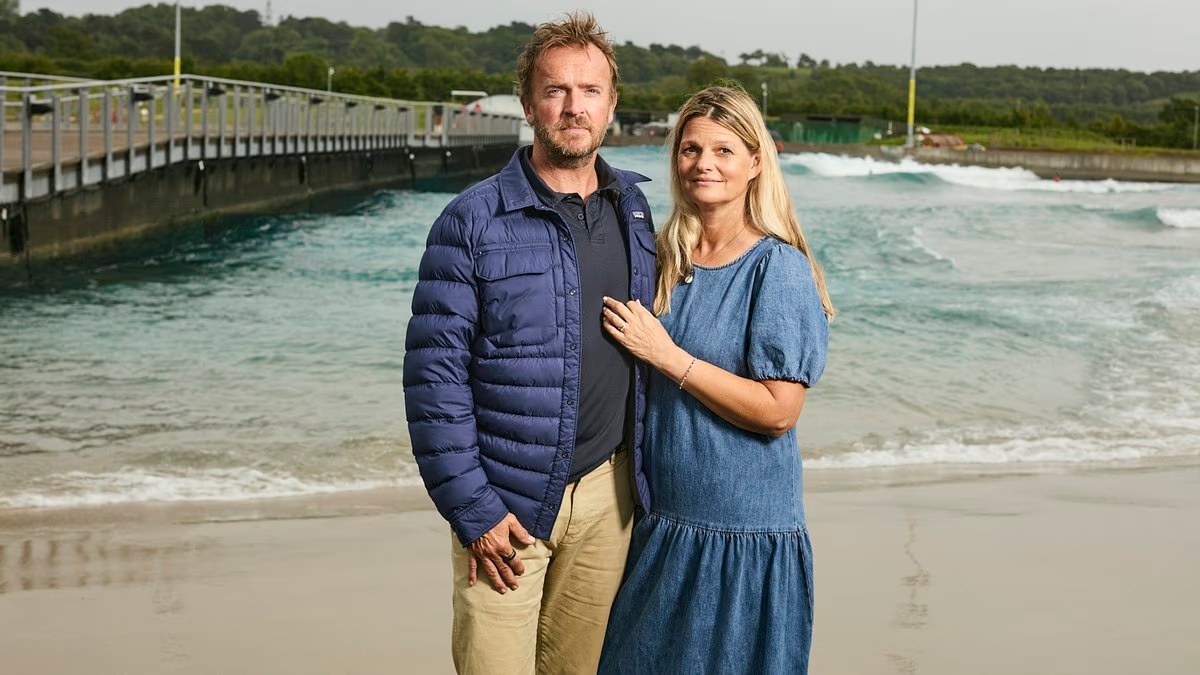
Juliana Hounsfield was collecting her 11-year-old son from a birthday party when she received ‘the worst call of my life’.Her surfing, marathon-running, 46-year-old husband, the father of her three young sons, had suffered a suspected stroke while playing a hockey match.It was a call she had been dreading for a few years.For while Nick was a slim non-smoker and only a moderate drinker, he was also an entrepreneur and had spent years so stressed with work, creating an outdoor surf centre, from scratch, she says she’d been ‘bracing’ herself for quite some time.‘Nobody can get away with being under so much mental strain, for as long as Nick had been, without there being consequences,’ says Juliana, an osteopath, reflecting now on that fateful day six years ago.‘He had been getting by on four or five hours’ sleep a night and working every waking hour. So when his team-mate called, my first thought was “Of course this has happened”.‘I’ve worked in healthcare for long enough to know that the body really does keep the score.’It was February 2020, shortly before the Covid pandemic, and Nick had just opened The Wave, an outdoor surfing centre - a slice of ‘inland ocean’ - near their home in Bristol, having spent ‘every minute of every day’ of the previous nine years realising his dream. Juliana Hounsfield (pictured with Nick) was collecting her 11-year-old son from a birthday party when she received ‘the worst call of my life’Nick and Juliana were no strangers to starting a business. They met at university, aged 19, and set up an osteopathy venture almost ten years later, shortly after they got married.But this was on a different scale altogether. For years, Nick would get up at 4am and work until 11pm in the service of his vision – an indoor lake the size of four football pitches, requiring an initial investment of £30million.Still, 46 is a full 22 years younger than the average stroke victim. It’s perhaps no surprise that doctors at first refused to believe he’d had one, leading to delays that meant the embolism inside his brain splintered into 13 smaller blood clots and caused a series of further mini-strokes.After the call, Juliana went into ‘coping mode’, arranging for her sister-in-law to take care of their three children, then aged 16, 14 and 11, while she made the hour-long journey to the hockey club.‘I was worried, but I didn’t want to panic my son, who I dropped at home en route,’ recalls Juliana. ‘So I tried to stay focused - called Nick’s sister, asking her to meet me at home, and also spoke to her husband, who’s an intensive care consultant, about the best course of treatment. I didn’t want to get anything wrong.’Frustratingly, Nick was still waiting for an ambulance when she arrived at the club.‘He was sitting on the floor, with the other players around him, looking so confused that he didn’t seem to register my arrival,’ recalls Juliana. ‘He looked scared, like a rabbit in the headlights, and when I spoke to him, asking how he was feeling, he couldn’t respond.‘His lack of speech confirmed to me that it was likely he’d had a stroke, rather than a mental health breakdown, and yet the emergency call handlers weren’t prioritising him – maybe because they thought he was too young and fit - and, an hour and a half after the first call, the ambulance still hadn’t arrived.’ Juliana's surfing, marathon-running, 46-year-old husband, the father of her three young sons, had suffered a suspected stroke while playing a hockey matchGiven the importance of getting immediate treatment for stroke patients, something the NHS has spent a great deal of money raising public awareness about, I imagine Juliana must, by that point, have been in a state of near hysteria.‘I know it sounds a bit weird but I wasn’t emotional,’ says Juliana, a highly capable, middle-class woman, who spent her early years in Cape Town and was educated at Steiner schools, in Germany and Sussex, which prioritise creative and hands-on skills, over academic pressures. ‘I was just very practical. It didn’t even occur to me that Nick wouldn’t make it – I’m good at not worrying about things that might never happen.‘I asked if he was scared, which felt like a mistake because he couldn’t say anything, but he suddenly looked utterly terrified.‘All the men, the other players, who’d been with him just sobbed. I think it triggered all their fears - of death and strokes and human frailty.‘So I got him into the car and drove him to hospital myself.’Juliana was no stranger to taking charge having looked after the couple’s children almost single-handedly while Nick pursued his ambitious indoor lake, doing all the school runs, all the domestic chores.Under mounting pressure to make his venture pay, in November 2019, Nick had agreed to open The Wave, long before it was actually ready.‘It was still a building site, diggers and mud everywhere,’ recalls Juliana, shaking her head. ‘Nick had this dream of healthy living, intergenerational mixing, of laughter, of good food and, despite him pulling off an extraordinary feat of engineering, and a world first, it still had a long way to go until it lived up to this awe-inspiring vision. It is now a very beautiful space, a magnet for global surfers.’In some senses, she says, though Nick’s stroke was a terrifying turn of events, she realises with hindsight that, for her, it brought some relief, a sense that a line had finally been drawn under their unsustainable way of living.The day of his stroke, while Nick sat in confused silence in the car beside her, looking at his phone ‘as if he had no idea what it was’, Juliana called doctor friends for advice about which local hospital would be best placed to treat him.They recommended Southmead Hospital in north Bristol, but doctors in the emergency department – perhaps influenced by his age and his hockey gear - insisted he couldn’t have experienced anything so catastrophic as a stroke.Juliana was aware that early treatment with blood thinning medication is essential to limit the damage, and yet doctors were suggesting he had something called functional neurological disorder (FND) instead.‘I knew the clock was ticking and that, with a stroke, we have to act fast, so I was increasingly frustrated – and frankly furious,’ says Juliana. ‘But, with Nick next to me, I didn’t want to show how cross or worried I was, because I was trying to stay calm for him.‘Thankfully, he showed no signs of deterioration, the only outward sign remained his loss of speech, and slight stiffness in his right leg and hand (symptoms which eased within days, with the help of physiotherapy) so that was reassuring.’And it wasn’t until Juliana called a doctor friend - who arranged for a consultant to assess Nick in the emergency waiting area - that a CT scan of his brain was even arranged. For while Nick (pictured with Juliana) was a slim non-smoker and only a moderate drinker, he was also an entrepreneur and had spent years so stressed with work, creating an outdoor surf centre, from scratch, she says she’d been ‘bracing’ herself for quite some timeThe scan, carried out seven hours after Juliana received that call from the hockey club showed several clots, on the left side of his brain, and that Nick had experienced numerous strokes. Clot-busting drugs were at last administered - drugs that are meant to be given within 4.5 hours of symptoms beginning for maximum effectiveness and the best chance of full recovery.Because of the delay, the original embolism had splintered into lots of little clots, which had led to further mini strokes. He was admitted to an acute care ward.‘It’s all a bit of a blur now,’ says Juliana. ‘But Nick was still unable to speak and looking terrified. I remember trying to reassure him that the doctors were doing everything they could and he would be fine.‘I knew there was actually nothing more the doctors could do at this stage, other than to find out what had caused it, which we never really have. The work would come afterwards, and that was all down to Nick.’However, fears around the spread of coronavirus were intensifying, and hospitals up and down the country were preparing for an influx of infected patients.So, just three days after being admitted, Nick - still unable to speak, read or write - was released, to Juliana’s care at home.The next few months were hugely challenging - for the couple and their sons - and raising awareness about the importance of early diagnosis and treatment to minimise the damage strokes can do is the reason Juliana has decided to share her story.Although his mobility had been quickly restored, Nick’s struggle to communicate led to overwhelming frustration, which would manifest as anger. Indeed, anger is a common involuntary symptom of stroke, and yet the toll it takes on the families of victims is rarely discussed.And for Nick and Juliana’s sons – Noah, now 21, Luca, 19, and Dylan, 16 – it was especially tough.‘He couldn’t cope with the boys falling out or not doing as they were told,’ says Juliana. ‘He would get very cross, very quickly, shouting and shaking with rage.‘He was never violent, though on one occasion he knocked the laundry off the table and another time he smashed some dishes.‘He’d never been an angry man, so this took him, and us, by surprise, when it first happened.‘The boys and I got used to treading on eggshells and he very quickly learnt to go upstairs, to regulate himself, when things became too much.‘It was hard for the boys. They’re young, and children should be able to be children, but they really love Nick, who has always been a brilliant dad, and could see how hard he was trying, so wanted to do whatever they could to support him.’She remembers Luca, then 13, saying that he wished people knew how difficult things were at home. It was February 2020, shortly before the Covid pandemic, and Nick (pictured with Juliana) had just opened The Wave, an outdoor surfing centre – a slice of ‘inland ocean’ - near their home in Bristol, having spent ‘every minute of every day’ of the previous nine years realising his dream‘I said “Why don’t you tell someone?”, so he emailed his school teacher, who was amazing and met him, one to one, for a long time, just to talk to him.’Though Juliana is known among loved ones for her infectiously positive attitude, she was hugely frustrated by Nick’s dislike of her sharing the family’s struggles.She needed to confide in friends, she says. For many months, Nick couldn’t hold a conversation with her, though his vocabulary was gradually rebuilding, and she desperately needed to talk to someone.‘Nick felt what was going on was quite personal, but I really needed to talk to people about it. I think it made him feel exposed, but sharing some of what we were going through helped me feel less vulnerable.‘I imagine it’s a common difference in how men and women respond to difficult situations.’Recovery was arduous, but Juliana is full of admiration for the way her husband approached learning to talk, write and read again.‘At the start he literally couldn’t make his brain communicate with his mouth to speak, and was non-verbal for several weeks,’ she says. ‘But he worked and worked at it, listening to audio books and teaching himself to read again.‘He took it step by step, every day, and it was utterly remarkable to observe.’Once again, however, the burden fell on her.The family now ‘desperately’ needed money to pay their hefty mortgage and the children’s school fees, so Juliana worked full time, as well as caring for their sons - while all Nick’s energy, once focused on The Wave, was directed towards getting well. Did she ever feel any resentment?‘Nick was doing his best and, knowing that things could have turned out much worse, I was just glad he was still here,’ she says. ‘He’s such a good human, so much of his life has been focused on other people.‘I knew I had to keep going for Nick, the boys, the people who work at my clinic and my patients.‘So I took a deep breath and told myself “I can do this”, and there’s something great about discovering how capable we are.’Juliana’s understanding of neuroplasticity, the brain’s capacity for healing, meant she also had faith that Nick would recover.Although his speech ‘still wasn’t perfect’, he was back at work within seven months.There he spent many hours in the water every day, using brushes to clean the algae collecting on the walls and at the bottom of the lake.It is this that Nick credits with his recovery. His love of water, from surfing to fishing, was nurtured in childhood when he visited grandparents who lived by the sea in West Sussex, and the connection with the lake – even in man-made form – soothed and inspired him.Within 18 months he was able to communicate confidently - although it can still feel like he’s speaking a second language - and his frustrations receded.Although others are unlikely to notice it in conversation, Juliana is aware that it takes a little longer for Nick to find words, before speaking, and tries to give him space, rather than jumping in to complete his sentences.As a self-proclaimed chatterbox she recognises she doesn’t always manage it, which can be frustrating for Nick.Last year, however, as a director - the investors, by then, owned the business - he became more and more disillusioned with the direction The Wave was being taken in and resigned.The Wave went into administration a few months later, reopening within days, and he is supportive of the new owners.Pursuing his vision of incorporating the healing properties of water into daily life, Nick is working on more ‘blue health’ projects, while maintaining a better work-life balance.He is now an ambassador for the Stroke Association and has also written a book, Do Blue: Water, Waves And Wellbeing, with Abby Richardson, a close friend of Juliana’s and a keen cold water swimmer who runs The Wave’s outreach programme.It draws on research into the benefits of being by water, including how it activates our parasympathetic nervous system, which helps with rest and digestion, a key part of stress management.Conscious that nearly a quarter of stroke survivors have a second one, Juliana remains hypervigilant around her husband, whose passion, she says, means he’s still a very hard worker.Life at home, where Noah, their eldest, is training to be an osteopath, Luca is taking a gap year before university, and Dylan is still at school, is much calmer than either the period before or after Nick’s stroke.‘The initial relief was that Nick had survived and, six years later, he is still improving, still changing,’ says Juliana. ‘I am so grateful that we’re strong humans, that it hasn’t broken us, because something like this very much could have done.’stroke.org.ukDo Blue: Water, Waves And wellbeing by Nick Hounsfield and Abby Richardson (£11.99, The Do Book Co) is out now
When my husband had a stroke it changed him. Here's how we survived
Juliana Hounsfield, from Bristol, was collecting her 11-year-old son from a birthday party when she received 'the worst call of my life'.
TL;DRAI
Questo articolo non è idoneo per Warptech Tech News. È una storia di lifestyle/human interest (ictus di un imprenditore, recupero familiare), senza alcun aggancio tech: niente AI, aziende tech, trend di mercato, o implicazioni per decisioni di stack/budget/team di un manager IT. Se intendevi passare un articolo diverso per il riassunto TLDR, ricondividilo pure. Altrimenti, per articoli fuori focus editoriale, il suggerimento è di escluderli dalla pipeline di categorizzazione.
2,523 words~11 min read