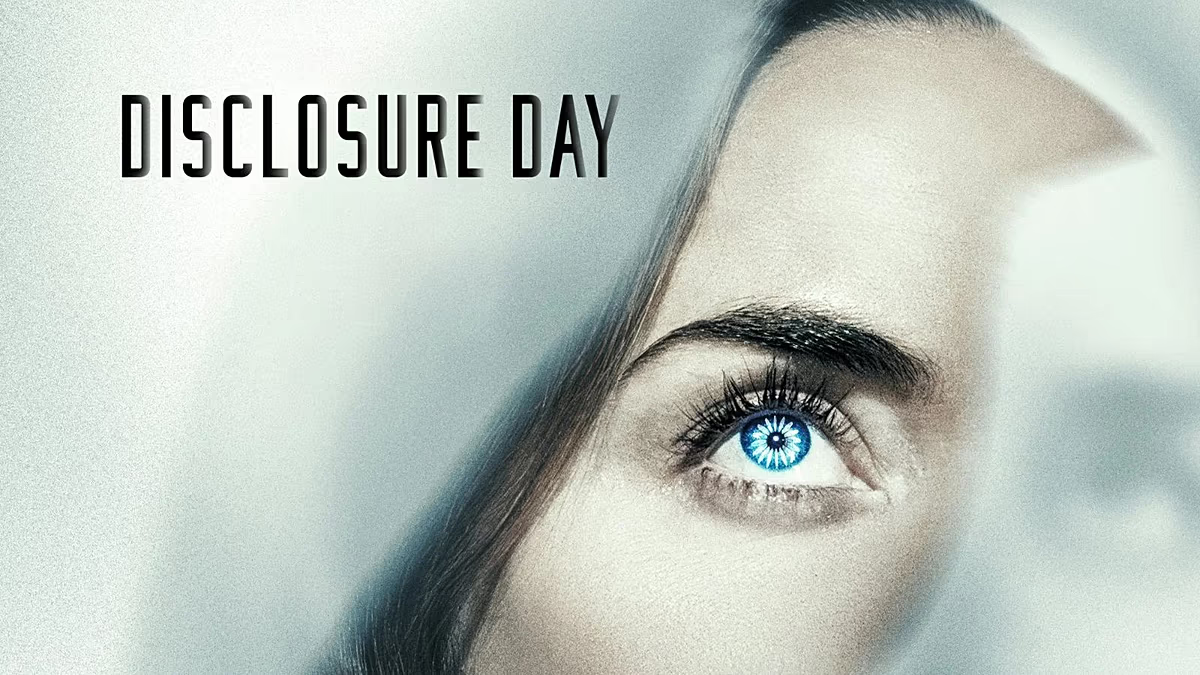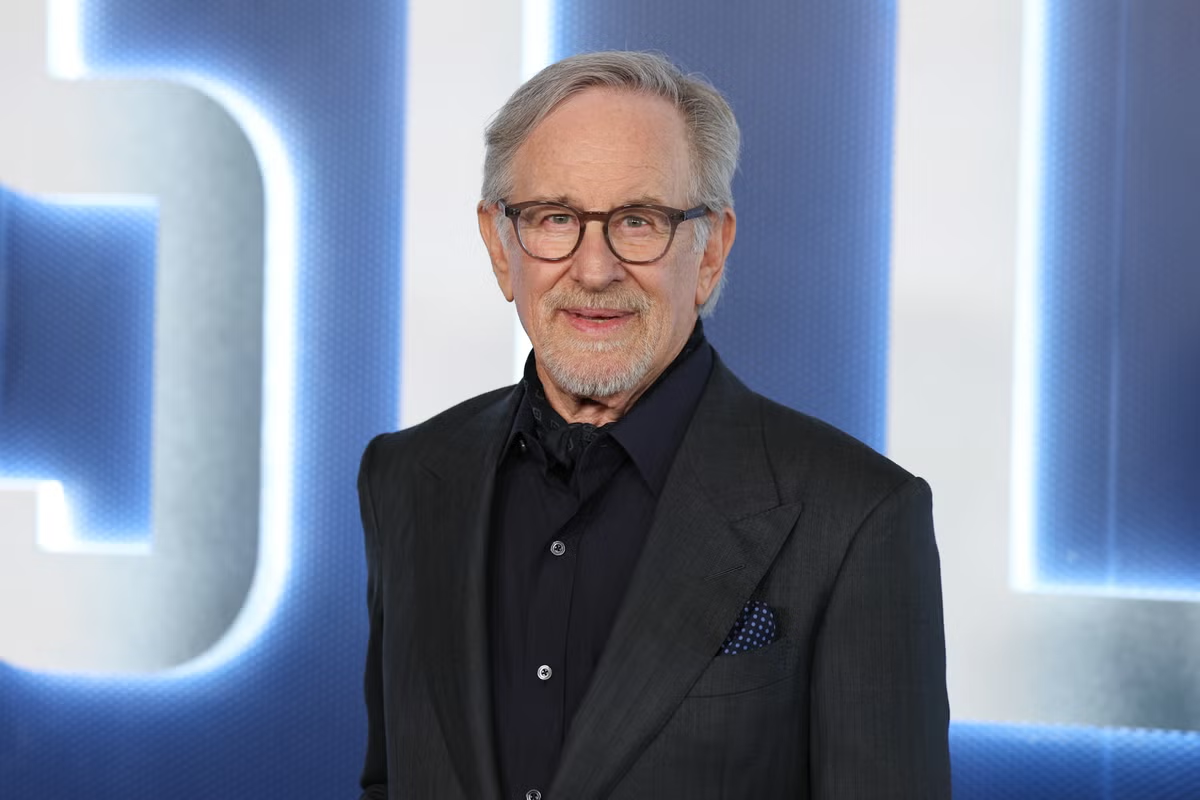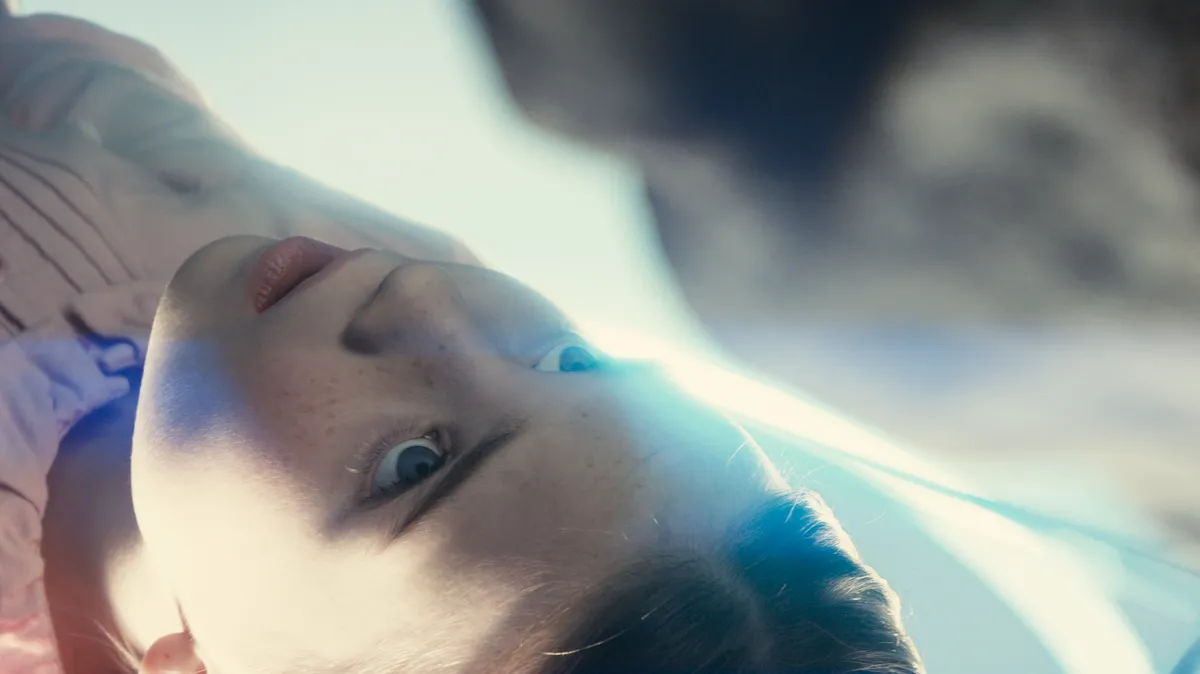
"Disclosure Day" posits that the U.S. government is concealing proof of aliens. Here's what Steven Spielberg had to say about that enigmatic ending.Show Caption
Spoiler alert! We're discussing major details about the ending of “Disclosure Day” (in theaters now). Stop reading if you haven’t seen the movie and don't want to know.NEW YORK – Growing up, Steven Spielberg loved to hate “Hansel and Gretel.”The Grimm Brothers fairy tale follows a pair of famished siblings who get lost in the woods and entrapped by a child-eating witch, after stumbling upon her cottage made of candy.“I was terrified of it,” Spielberg recalls. “It was the scariest fairy tale that I could’ve ever been told by my mom and dad. They always gleefully told me that in the most graphic way possible. Being lured into a space on a false promise? It’s ultimately a story of betrayal.”“Hansel and Gretel” plays a surprisingly pivotal role in Spielberg’s new movie “Disclosure Day,” which follows a whistleblower named Daniel (Josh O’Connor) who threatens to leak decades of government documents proving that aliens are real.The sci-fi adventure co-stars Emily Blunt as Margaret, a TV meteorologist who one day unlocks extraterrestrial abilities that allow her to have profound communication with strangers, tapping into their most intimate thoughts and fears.How does ‘Disclosure Day’ end?Margaret experiences a series of mysterious dreams, one of which includes “Hansel and Gretel.” Her cryptic visions eventually lead her to Daniel and Hugo (Colman Domingo), an advocate for alien disclosure.Now here’s where things get really trippy: Through a storybook-like flashback, we learn that Daniel and Margaret met as children. One night, they were both lured into a forest by aliens disguised as animals. After arriving at a snow-covered cabin, the young children were bestowed with cosmic skills: highly advanced language for Daniel, and deep empathy and connection for Margaret.The extraterrestrials wiped Daniel and Margaret’s memories of that night, knowing that when the aliens someday returned, the pair would be able to relay their otherworldly messages to the citizens of Earth.At Hugo’s urging, Margaret and Daniel go rogue on her local TV station: releasing decades’ worth of classified information confirming top-level alien cover-ups, which are swiftly picked up by national news channels.Through footage dating back to the 1940s, we discover that UAPs had landed on Earth multiple times before, only for government officials to torture and kill extraterrestrials. The film references popular alien conspiracies such as Roswell and Nixon-Gleason, suggesting that there is perhaps some truth to them.Spielberg and screenwriter David Koepp (“Jurassic Park”) immersed themselves in numerous transcripts of congressional testimonies, as well as documentaries and books about the subject, including Daniel Keyhoe's “The Flying Saucers Are Real.”“He was the first whistleblower who said, ‘Hey, all this stuff I've been seeing is real, and I know they try to discredit everybody, but it's actually happening,’ ” Koepp says.Koepp has long believed that life exists beyond this planet, and thinks we have “probably” been visited by aliens.But reading Keyhoe’s book, “what became undeniable is that there has been suppression by the government for 80 years. No question,” Koepp says. “You can read it in their own documents where they make plans for how to conceal this. So that went in my mind from a ‘maybe’ to a certainty.”Who are the aliens in ‘Disclosure Day?’With the film’s striking imagery, Spielberg wanted to embrace “the cultural memories that we have” of aliens, Koepp says. The extraterrestrials depicted in the movie, for instance, are very much in line with pop-culture stereotypes: small, pale creatures with large eyes, bulbous heads and rail-thin bodies.The aliens’ ability to take on the forms of stags, foxes and cardinals is also in line with what experiencers have reported about their visitations.“We wanted to take as much of the existing lore as possible, and not say, ‘Everything you thought is wrong,’ ” Koepp says. Instead, “we wanted to say, ‘Here’s proof.’ We wanted to take everything that seemed remotely credible and present it as a unified theory of everything we know about UAPs. Aliens presenting as animals was a big part of that.”What is the last line of ‘Disclosure Day?’The movie ends with people the world over, rapt by their TVs and smartphones as the news pours in confirming that aliens are real. In the final moments, an extraterrestrial arrives at Margaret’s news station. The creature quietly says something to Daniel, which Daniel then whispers to Margaret.“Listen,” Margaret says on air, before the screen cuts to black and the credits roll.Spielberg says that was the first scene he came up with for “Disclosure Day,” and there was never a version of the script where we hear what Margaret says next. We’ll also never know what Daniel whispered in her ear.“I'm never going to give that away,” Spielberg says. “Nobody will ever know that except [the actors], and they’re not allowed to say.”Koepp, too, says he always knew he wanted to end the film with the word “listen.”“It said everything I wanted to say,” Koepp says. “ ‘Listen, because this space boy told me a bunch of interesting stuff. Listen, because the heart of empathy is listening to one another.’ It’s also the first word of most Hebrew prayers.“I realized when you found one word that says everything, you should stop talking.”The ending of “Disclosure Day” leaves plenty of room for speculation about how people would react. While Spielberg thinks such an event would bring the world together, Koepp believes there could be mass uprisings against scientists, government officials or even religious leaders who kept this information hidden.“Personally, I think it would be to the benefit of the human race, but getting there would be a painful process in which there would be a lot of suffering and death,” Koepp says. “But I know Steven would disagree with me, so that’s for a future debate!”