Get the latest news and updates from Dawn
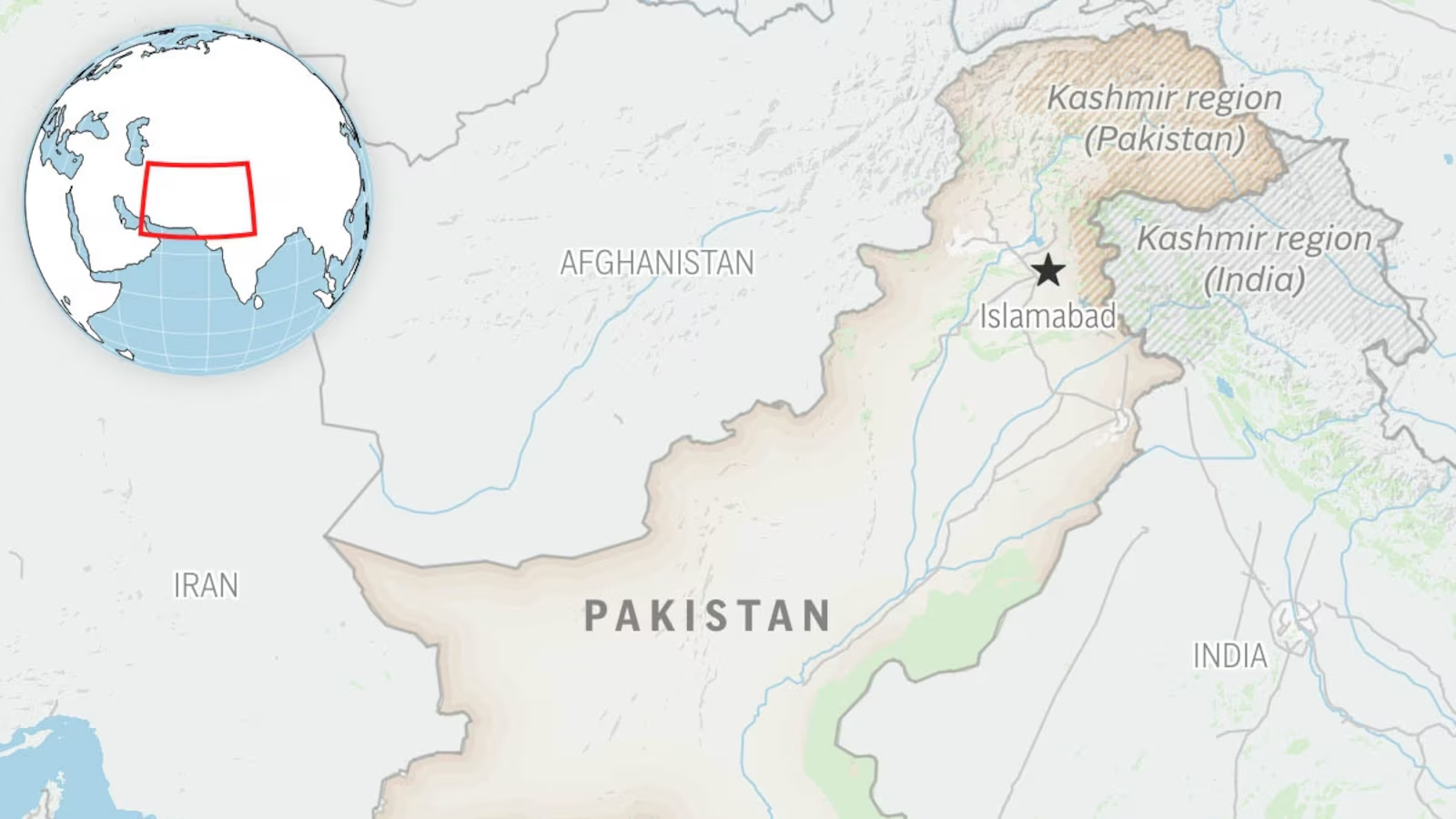
In the charged political landscape of Azad Jammu and Kashmir (AJK), the Joint Awami Action Committee (JAAC)’s core demand to abolish the 12 reserved seats for Kashmiri refugees in the legislative assembly strikes at the heart of constitutional governance, historical justice, and the enduring Kashmir cause.
These seats, constitutionally entrenched under Article 22 of the AJK Interim Constitution 1974, are not mere administrative privileges or tools for “electoral engineering,” as JAAC alleges. They represent a solemn recognition of the displaced Kashmiri population’s integral role in the state’s polity. Any attempt to abolish them — whether through executive fiat, street pressure, or even hasty legislative action — stands on shaky constitutional ground and risks violating fundamental rights and principles of state policy as guaranteed by the AJK Constitution.
While the AJK Supreme Court, recognising the situation, issued in haste its 32-page advisory opinion in response to a presidential reference under Article 46-A, it correctly affirmed that these seats enjoy constitutional protection and cannot be altered, abridged or abolished through executive action. However, in an exceptional concession, the Court stated that such abolition is possible through a formal amendment under Article 33. Most humbly, the opinion arguably errs in its framing by implying that this remains a viable path open to the Assembly, for a variety of tangible reasons. To understand the argument, one has to accept that the constitution grants refugees equal status with local Kashmiris, defining both as “state subjects”.