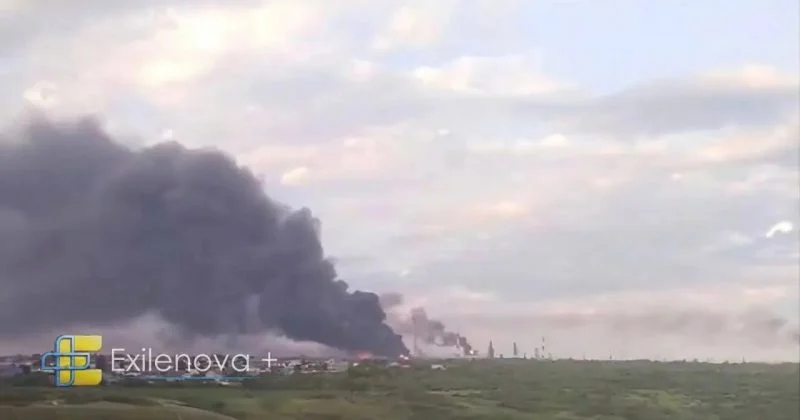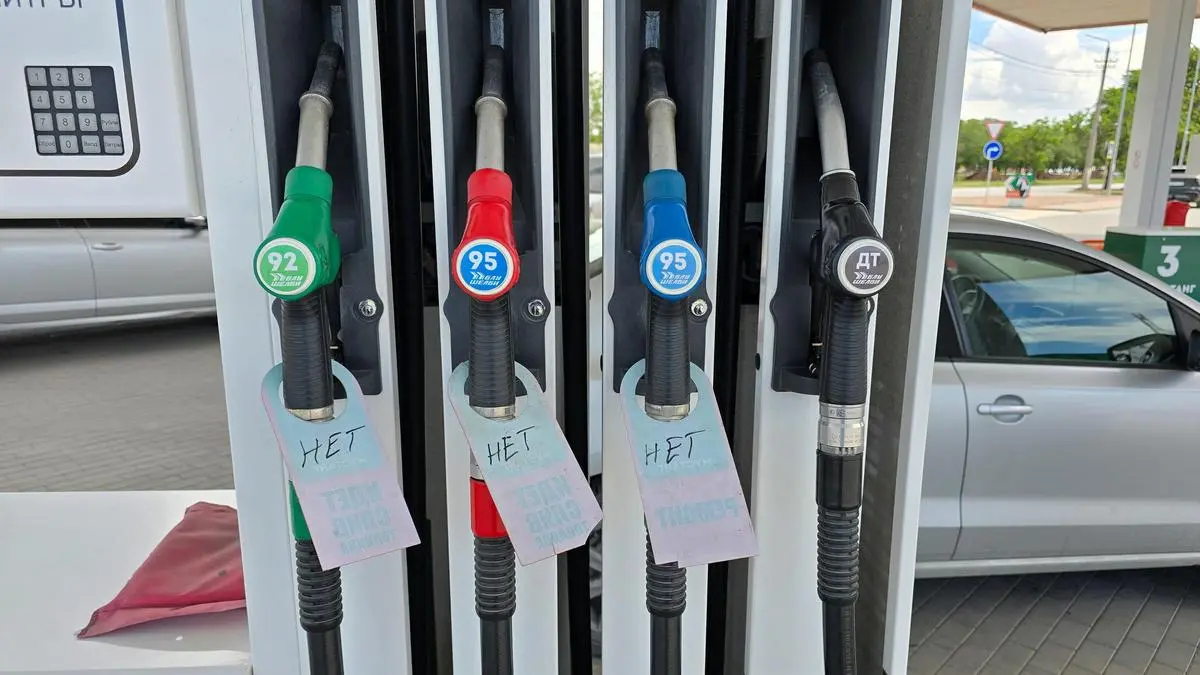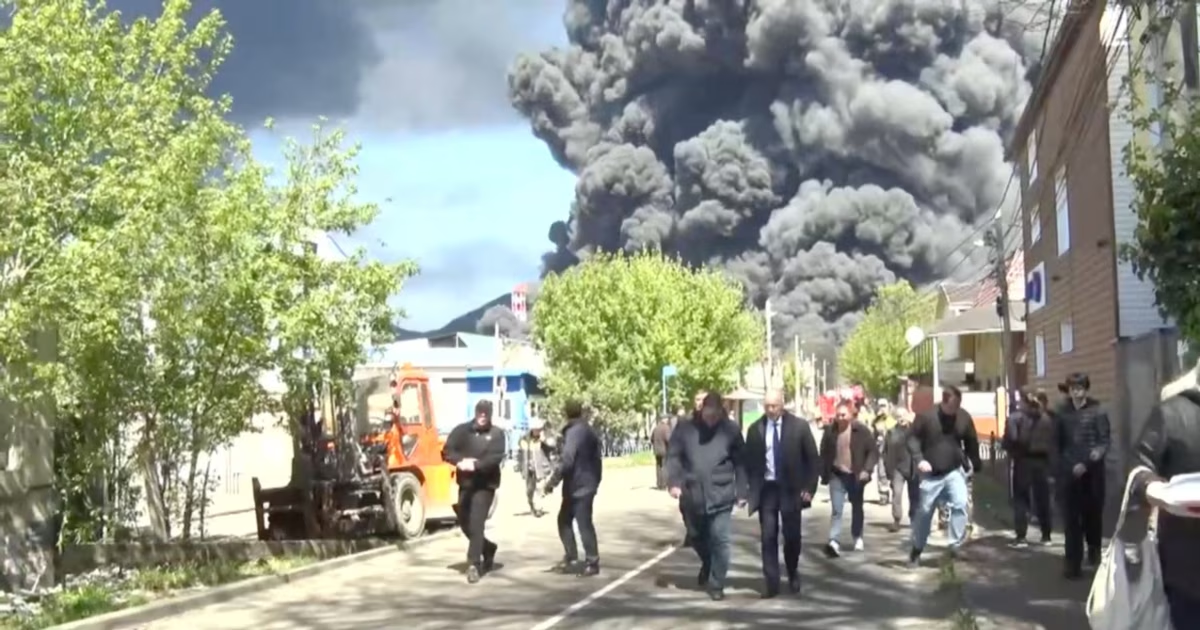
Russia’s deputy prime minister kept walking but couldn't shake off a gaggle of reporters with questions about the country’s growing fuel crisis. Aleksandr Novak admitted oil production had fallen due to “unscheduled maintenance” at refineries but avoided saying why it was needed.That was June 4. Come June 9, the Energy Ministry issued a statement that nailed it.“Companies in the fuel and energy sector have encountered an increase in enemy air attacks leading to temporary complications in supplies,” it said.Taken together, it was the first time the Russian authorities had acknowledged that Ukraine’s ramped-up attacks on the oil sector this year had led to production cuts and shortages. And it came with an admission by Russian President Vladimir Putin that Russia needed better air defenses.
Hydrocracker HitsThe reason may not just be the increase in attacks -- but also better targeting.Nikhil Dubey, a senior research analyst at Kpler, a commodity intelligence company, said the key was not just attacks on refineries -- but a switch to attacking particular parts of them.“That refinery has various units. Let's say one is the distillation column. Simple, where you heat the crude and different products come out,” he told RFE/RL.“It's a mother unit or primary unit because that is the unit which receives crude. Whatever streams come out from that unit, they are not marketable in nature…. You can't directly put that stream in your gasoline tank.”This is where refinery secondary units come in, for example the hydrocracker, that can remove sulfur from the stream to produce diesel. It’s full of more sophisticated parts that also take much longer to replace.“These are the items which are not readily available on the plant site, right? Once you have damaged that machinery, you have to place an order...because it is specialized equipment, it needs lead time,” Dubey said.Lead times can last weeks or months, and Western sanctions on components have made them longer.Kpler data shows Russia’s offline capacity of secondary processing units in May around 1.2 to 1.3 million barrels per day higher than a year ago, with “a significant share” caused by drone strikes. The hydrocrackers made up a fair share of this: 250,000 barrels per day compared to 50-60,000 last year.