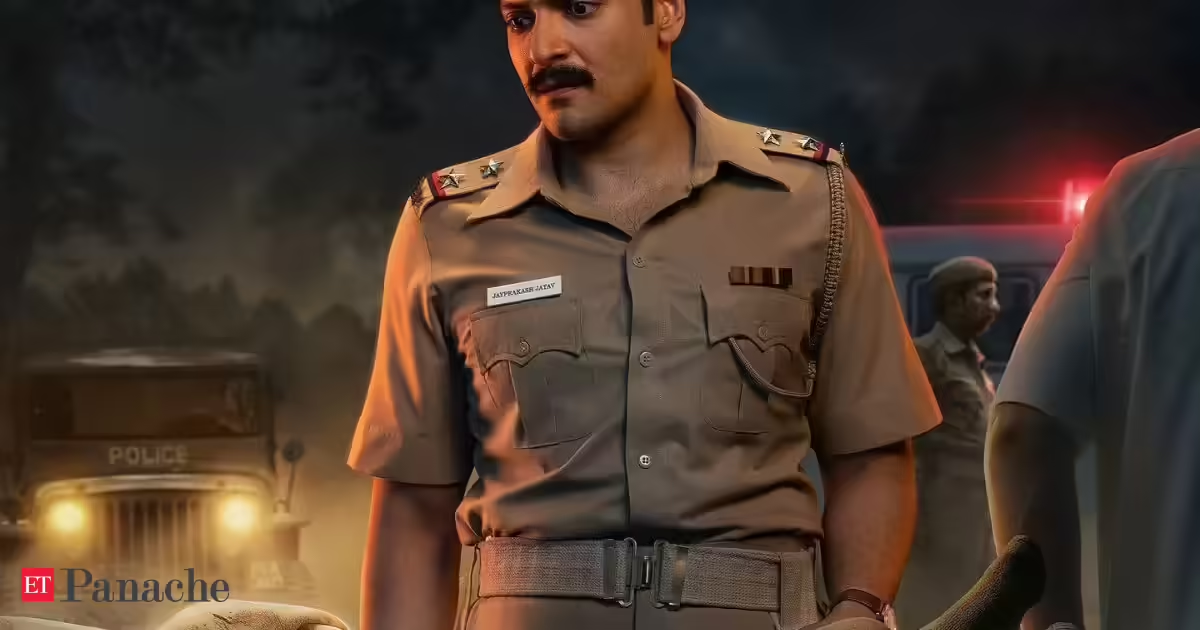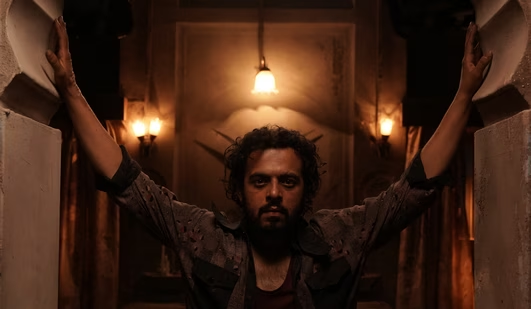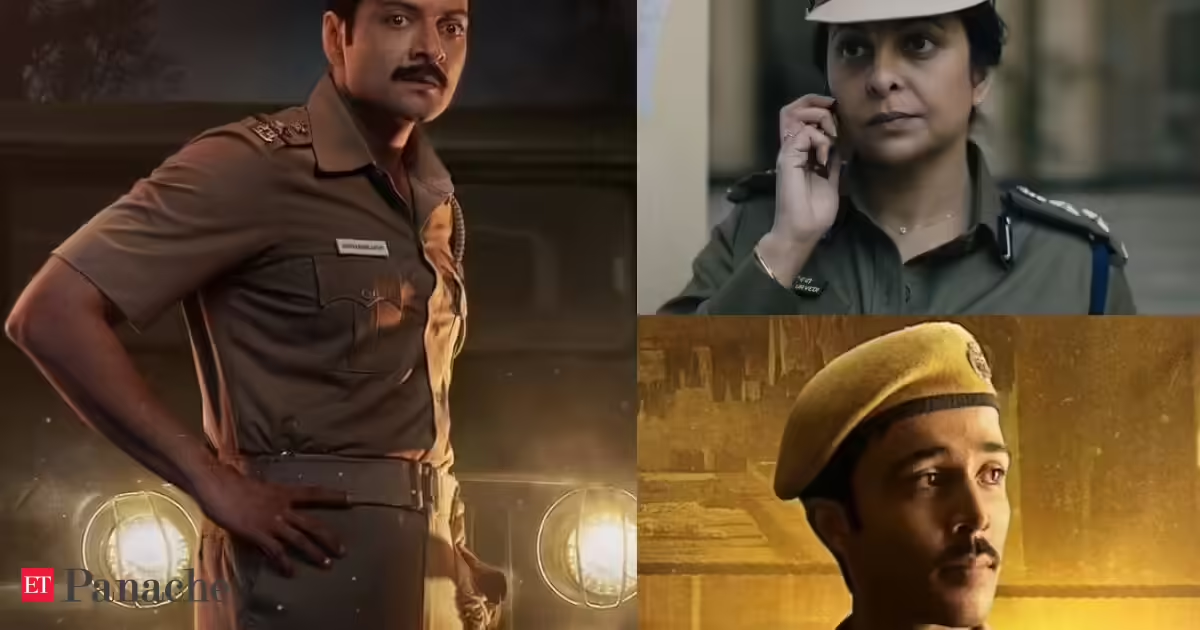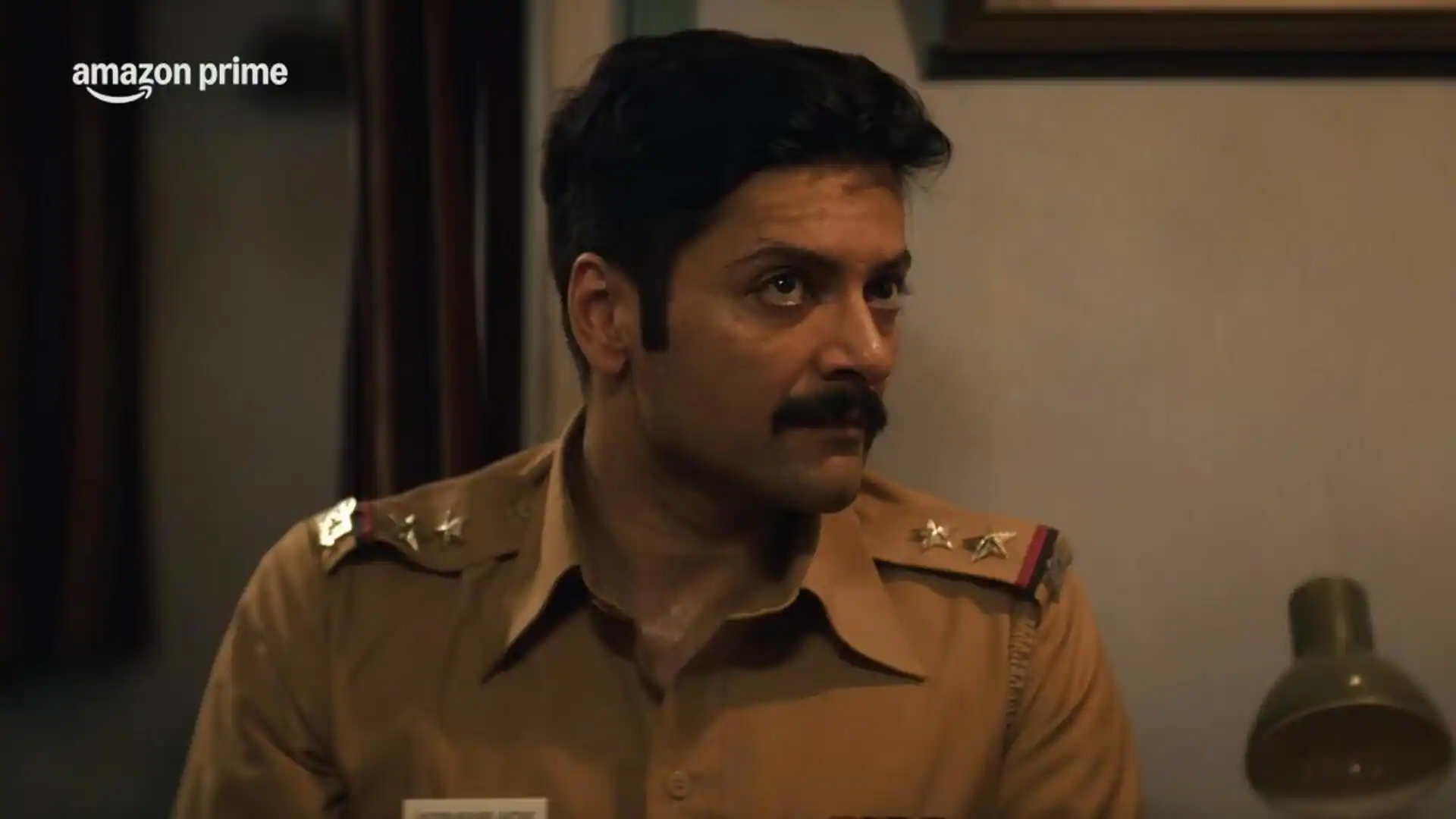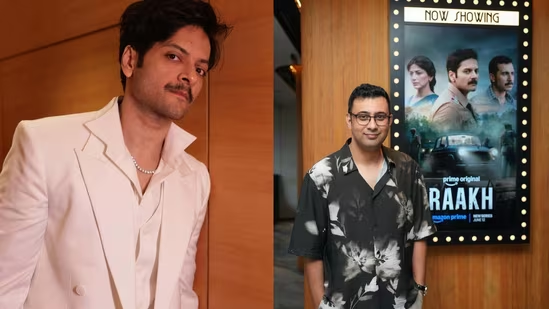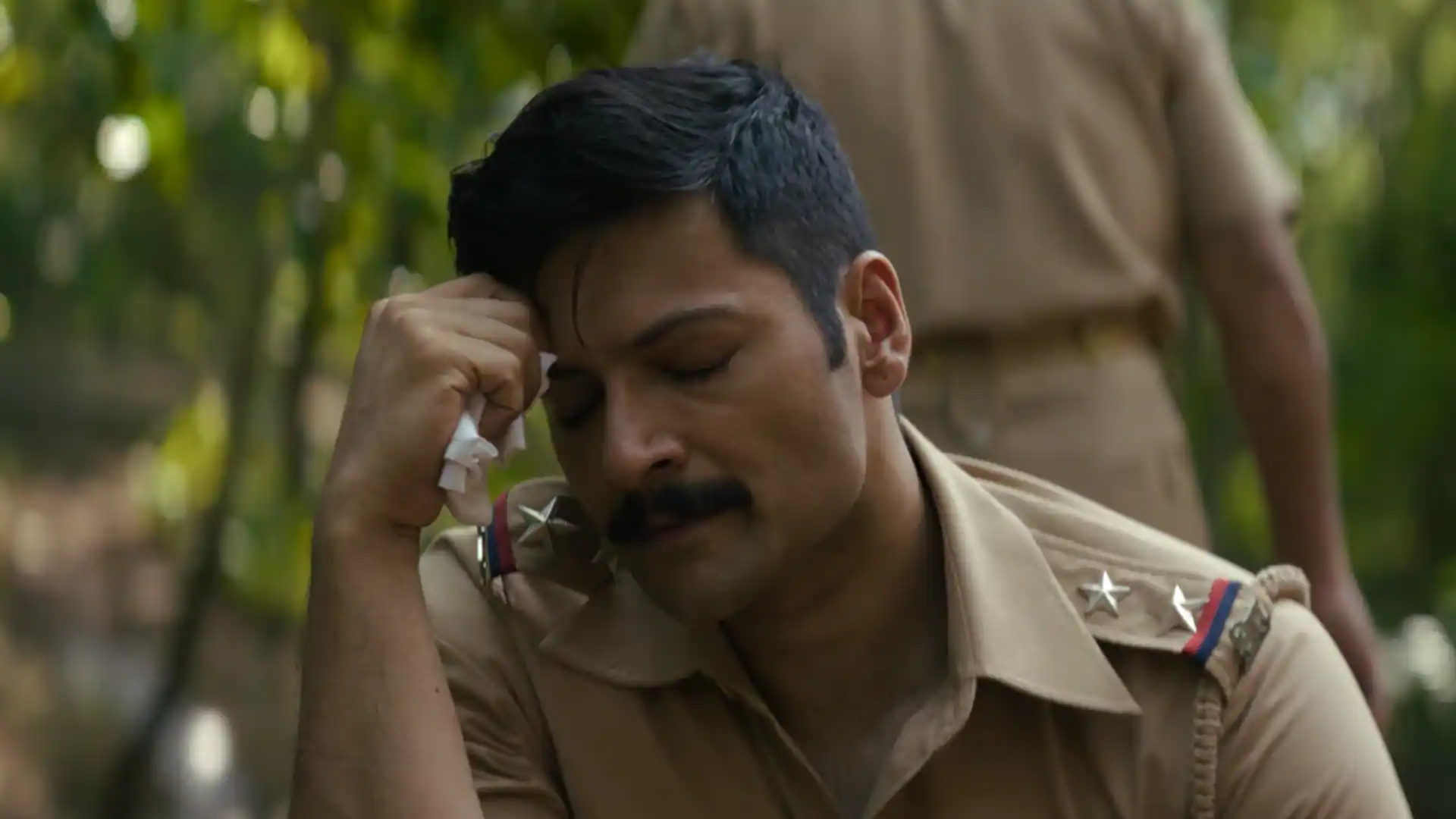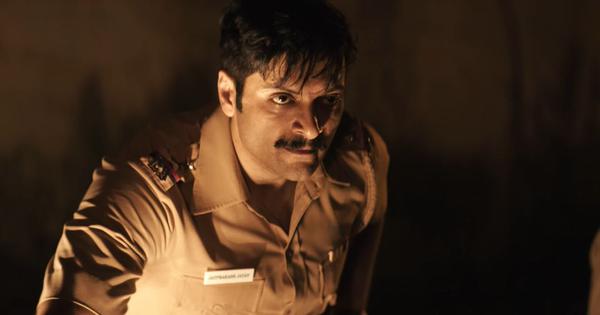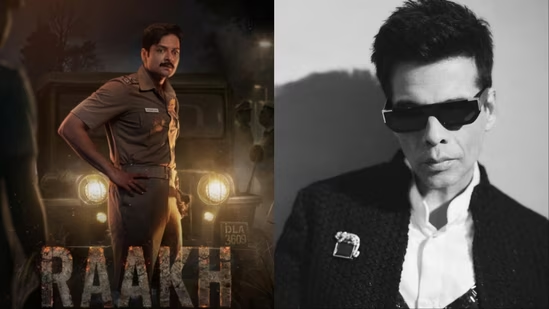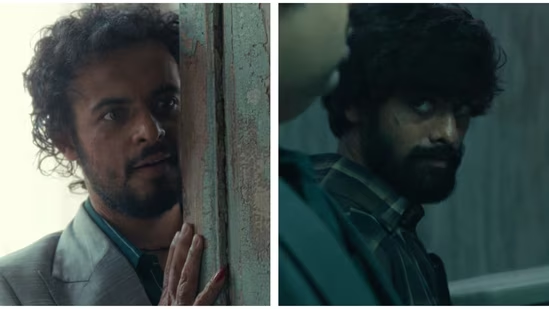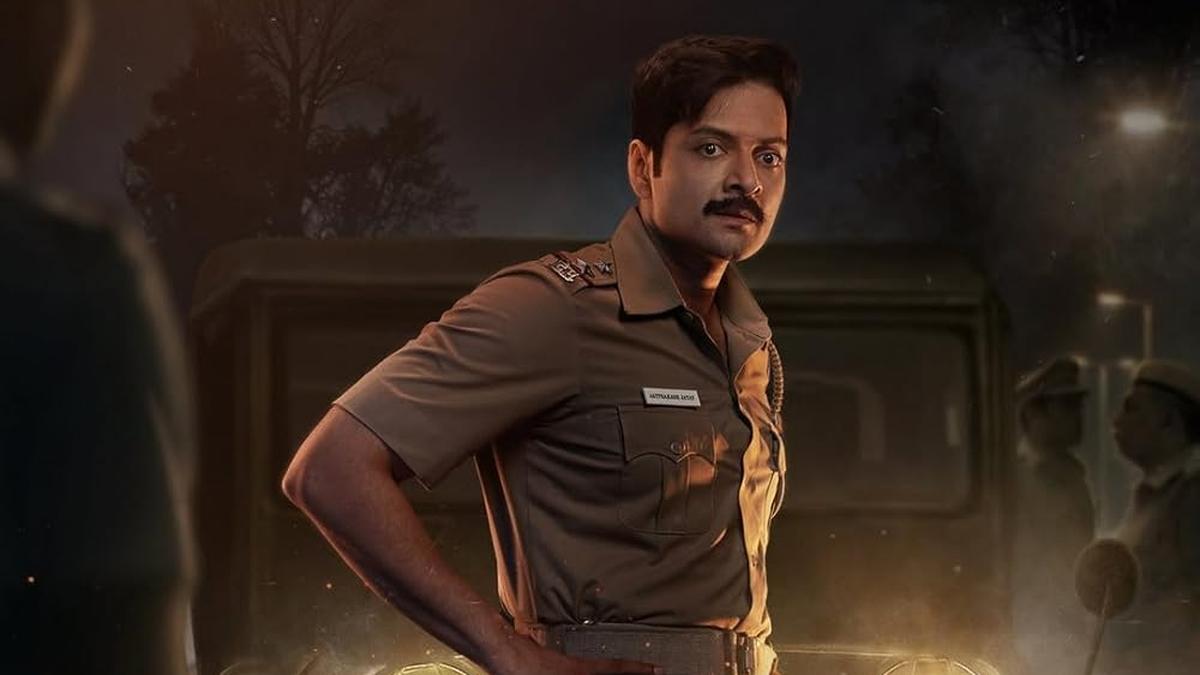
The flood of true-crime content has turned the living room into a dark laboratory. It feels unsettling to measure which series ‘grieves better,’ which depicts ‘more realistic’ violence, or which frames ‘suffering believably’. The couch feels like a spectator’s seat to human misery. Yet, this discomfort perhaps serves the point. The niceness of a living room is often a bubble, while the city outside – as Raakh reminds this week – remains equally brutal and indifferent.In the sweltering haze of August 1978, a sudden rain washes away Delhi’s innocence. When two children, Suman and Sahil Arora (Divya and Vivan Sharma), vanish into the maw of a predatory night, the world of a decorated army man, Ashok, and his wife Mona (Aamir Bashir and Sonali Bendre), dissolves into unsolvable grief. Into this void steps Sub Inspector Jayprakash Jatav (Ali Fazal), a rookie defined by the sharp crease of his uniform and the heavy burden of his birth, hunting two shadows who kill with the casualness of a seasonal breeze. Inspired by the infamous Ranga-Billa case, Raakh is not merely a chase, but a dissection of the anatomy of crime in the Capital.Raakh (Hindi)Director: Prosit RoyCast: Ali Fazal, Akash Makhija, Ramandeep Yadav, Aamir Bashir, Sonali Bendra, Anshul Chauhan, Rakesh Bedi, Dibyendu Bhattacharya, Divya Sharma, Vivan SharmaRuntime: 8 episodes (40-50 minutes)Storyline: In 1978 Delhi, a rookie police officer battles bureaucratic prejudice to hunt two predatory killers after the brutal kidnapping of two siblings.The ‘ashes’ in Raakh represent the remnants of a shelter that, as Jayprakash and his journalist friend Nisar discuss during a tender moment, once housed deer and peacocks but is now held hostage by predators. It is a grim reminder that the cycle of extreme brutality and the loss of safety in Delhi’s public spaces didn’t start in 2012 when Nirbhaya took a lift in a bus, but found a terrifying precursor in 1978 when Sanjay and Geeta Chopra got into a car on a rainy day to reach the radio station to record a song.Old timers would remember how the murder of two exceptionally brave siblings permanently altered how parents in the city viewed safety. When the mother, a mathematics teacher, refuses to come to terms with fate, she attempts to teach rational and irrational numbers in a daze, creating a profound metaphor for her internal state. Walking into class is her desperate attempt to find a rational anchor in a society that has just committed the most irrational act possible.Directed by Prosit Roy, known for Paatal Lok, and written and co-directed by Anusha Nandakumar and Sandeep Saket, along with dialogues by Ayush Trivedi. Raakh follows the trend in the OTT space, where makers use a harrowing crime as a surgical tool to lay bare the social realities of a particular period.Efficiently recreating the period, the series unfolds in dual timelines: one following Jayprakash’s present-day investigation and the other tracking the killers’ backstory to explore the making of a killer. Babu and Rajjo (Akash Makhija and Ramandeep Yadav are outstanding) are not super-villains; they are portrayed with a cold, everyday casualness. This banality of evil is what makes the series truly unsettling. Hailing from the margins, Babu is portrayed as inherently violent and depraved, while Rajjo is his reluctant sidekick whom he manipulates for his advantage. Their dynamic works like a toxic marriage: they love and hate each other, yet can’t be separated.Sterilized during the Emergency, Rajjo could not live up to the then government’s family-planning slogan, Hum Do Humare Do, which is meaningfully embossed on the ghostly bus stop. The docile Rajjo wants to exert his masculinity, but Babu and circumstances turn him into a brute. Ashok is distraught because his bravado in safeguarding the nation’s borders could not protect his two children in his city.Jayprakash comes across as a symbol of hope in the dark. As a junior officer finding his way through a bureaucratic maze and caste prejudice, he pursues the truth. The writing and treatment suggest that while systems may fail, individual conscience is perhaps what prevents moral collapse.His nameplate makes his Dalit identity amply clear, but for a change, its exploration doesn’t happen at the workplace. It comes through his relationship with his father, Ghanshyam (Rakesh Bedi’s dream run continues), a retired constable who has, over the years, used his ladle to carve out a space for himself in the system. Jayprakash doesn’t like this idea of currying favour.Ghanshyam sees himself as a survivor in the system, and his urge to please superiors to safeguard his son’s interests is portrayed as a defense mechanism born of years of being relegated to the sidelines. A follower of Bhimrao Ambedkar, he feels reaching the palate of the upper caste as a taste of victory, but pushes his son to chart his own path. Preparing for civil services, Jayprakash doesn’t see himself as a victim but understands where his father is coming from. It is not always a believable dynamic, but it works.Curiously, the writers surround the rookie with Muslim characters. His junior at the police station is called Javed, and his love interest is, as mentioned, an intrepid journalist named Nisar (Anshul Chauhan’s performance is overshadowed by her hairdo). This positioning creates a complex social map that highlights shared marginalisation and professional solidarity in the face of a rigid system. Those who understand Indian realities know that the social scourge of casteism is not limited to one religion.ALSO READ: ‘Main Vaapas Aaunga’ movie review: Imtiaz Ali’s love story for the agesHope also floats in the form of investigations getting rational with the emergence of forensics. While the crime is primal, the solution is increasingly modern.Ali walks the thin line between restraint and subtle intensity of a man hounded by social horrors in his quest for dignity. He anchors the series so well that one forgets that Raakh is essentially about two brave children.Structurally, the eighth episode feels like an add-on or a postscript. However, the series deliberately and perhaps rightfully shifts focus from the sensationalism of the crime to the dignity of the victims. By centering on the lives Suman and Sahil could have lived, the series transforms them from mere statistics into a symbol of what the nation must protect.Raakh is currently streaming on Prime Video
‘Raakh’: Ali Fazal lights up this smouldering study of crime and punishment
Led by an excellent ensemble, ‘Raakh’ on Prime Video, starring Ali Fazal, is an immersive investigative crime drama that sifts through Delhi’s lost innocence
1,040 words~5 min read