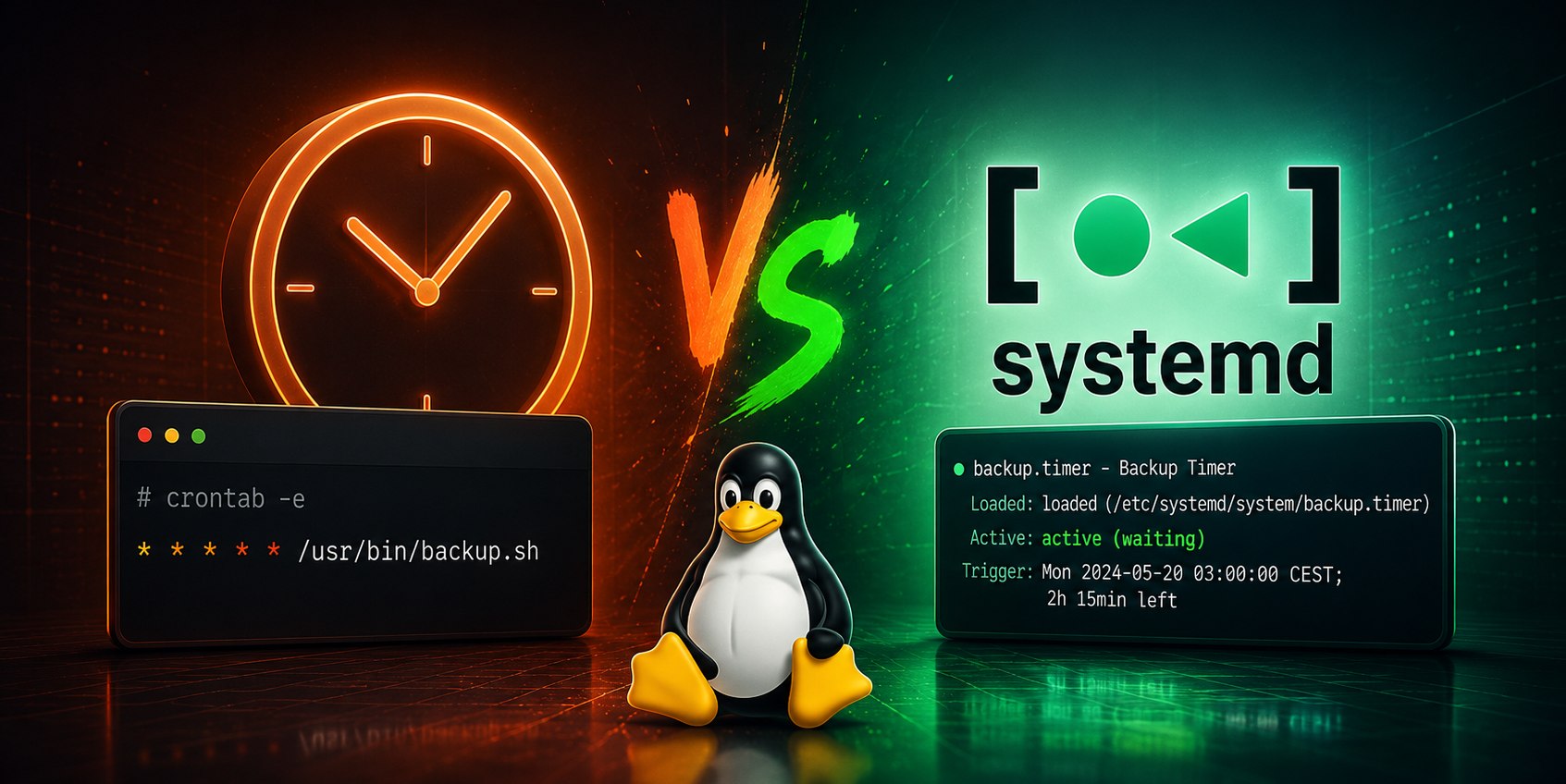
Cron has run the world’s scheduled jobs for forty years, and on most servers it still works fine. But the moment a job needs structured logging, a controlled environment, dependency ordering, or a way to catch up after the machine was off, the cron model starts to creak. That’s where systemd timers come in — and if your distribution already runs systemd (Debian, Ubuntu, RHEL, Fedora, Arch, SUSE all do), you have a more capable scheduler sitting unused.
This post walks through what actually changes when you migrate, with real units you can adapt.
Why bother moving off cron
Cron is a single line. That brevity is its appeal and its ceiling:
Logging. A cron job’s output goes wherever you redirect it, and if you forget, it’s emailed to a mailbox nobody reads. A systemd service writes to the journal automatically — journalctl -u myjob.service shows you every run, with timestamps and exit codes.