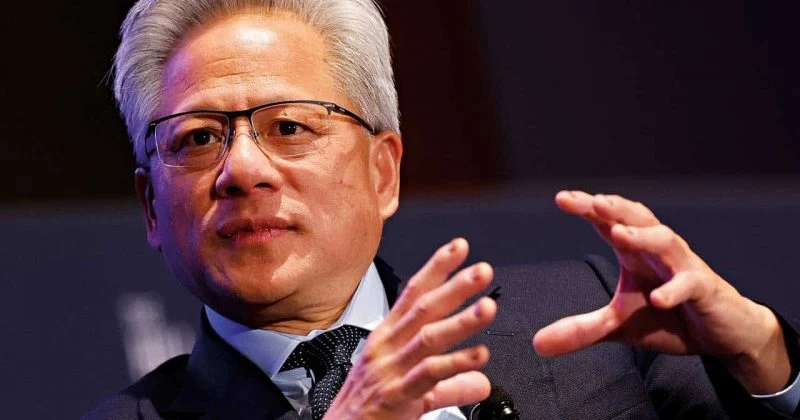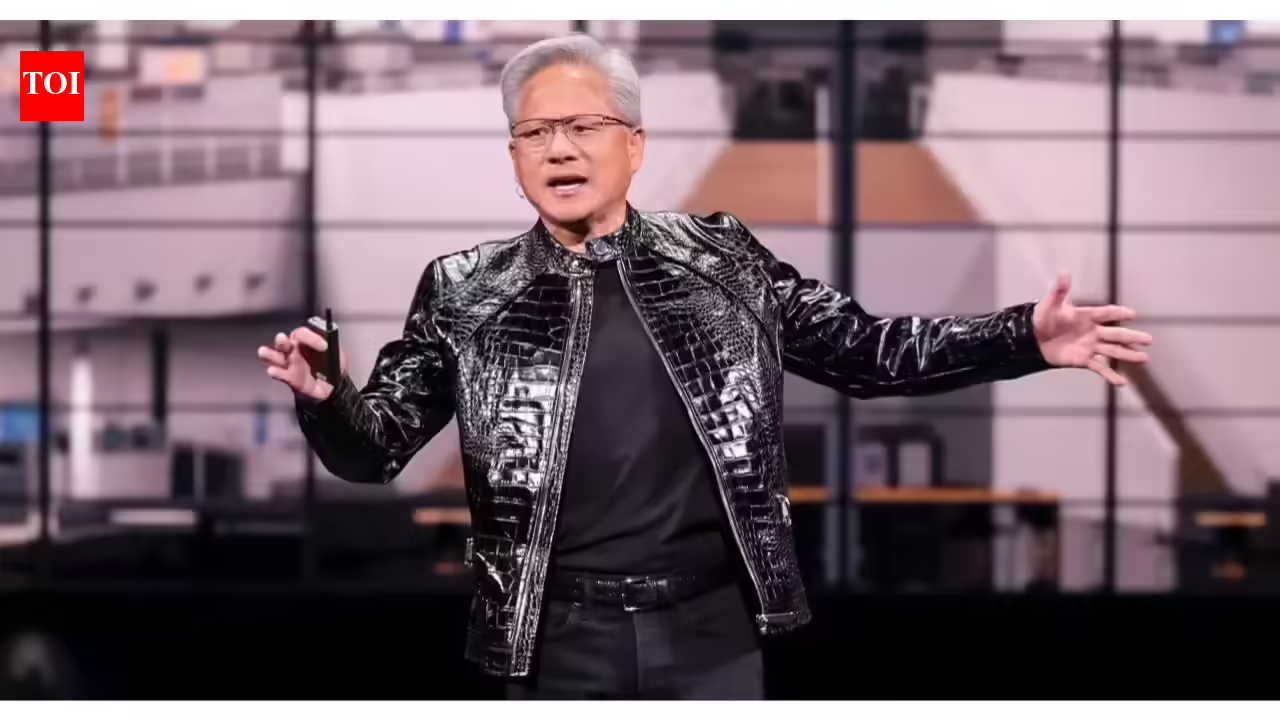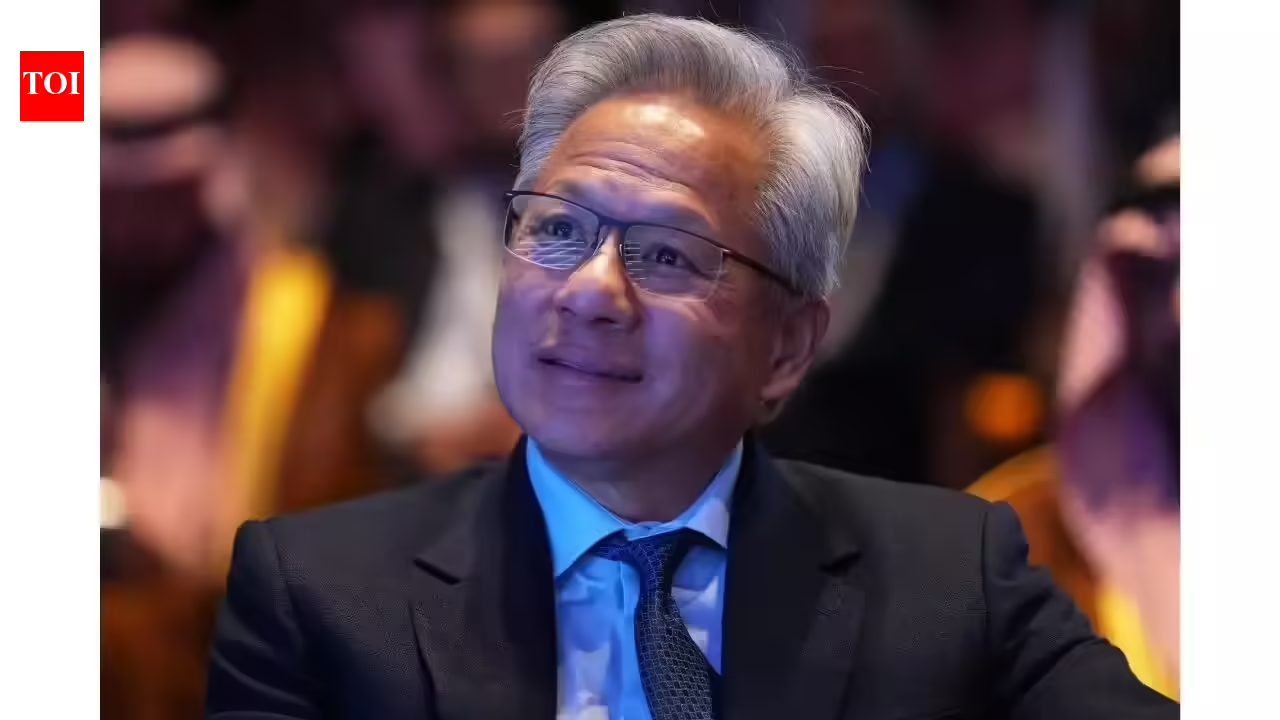
NVIDIA CEO Jensen HuangA few years ago, a young founder walked away from a business conference feeling defeated. Every speaker seemed to have a story about explosive growth, breakthrough ideas and overnight success. He returned home convinced that he was falling behind. His own company was surviving, but just barely. Customers came slowly. Revenue fluctuated. Progress felt frustratingly ordinary.Then an older entrepreneur offered a piece of advice that stayed with him. "Most people quit because reality doesn't match the movie they created in their heads."The comment was simple, but it captured something many ambitious people struggle to understand. Expectations can be powerful motivators, yet they can also become sources of disappointment. When people expect success to arrive quickly, every obstacle feels larger than it really is. Every delay appears like evidence of failure.That is why a remark from Jensen Huang, the chief executive of Nvidia, often catches people by surprise. Here is a man who helped build one of the world's most valuable technology companies, yet he credits one of his advantages to having "very low expectations." At first, the statement sounds almost contradictory. On closer examination, it reveals a philosophy that has shaped many successful careers.Quote of the day by Jensen Huang“One of my great advantages is that I have very low expectations.”Meaning and interpretation of Jensen Huang’s quoteMost people hear the phrase "low expectations" and immediately assume it means thinking small.Huang is not talking about ambition.There is a difference between aiming high and expecting an easy journey.Many people confuse the two. They set ambitious goals and then quietly assume that progress will happen in a relatively smooth and predictable way. When reality turns out to be slower, more complicated or more painful than expected, discouragement follows.Huang's quote points in another direction.It suggests that people can pursue extraordinary goals while remaining realistic about the difficulties involved. They can dream big while expecting setbacks, mistakes and periods of uncertainty.In that sense, low expectations become a form of preparation rather than pessimism.Why expectations often create unnecessary frustrationThink about how many disappointments begin with an assumption.A graduate assumes finding a job will happen quickly. A new business owner assumes customers will arrive immediately. Someone learning a new skill assumes improvement will be visible within weeks. Sometimes those assumptions prove correct.More often, reality introduces complications. Applications go unanswered. Businesses grow slowly. Skills take longer to develop than anticipated. The challenge is not the obstacle itself. The challenge is the gap between expectation and reality.Two people can experience the same setback and react completely differently. One sees it as proof that the goal is unattainable. The other sees it as part of a process they expected to be difficult from the start.The circumstances are identical. The mindset is not.The lesson hidden in Nvidia's storyLooking at Nvidia today, it is easy to imagine a smooth ascent towards success. The company dominates headlines, influences the development of artificial intelligence and sits at the centre of some of the most important technological changes of the modern era.The actual story was far messier.Like many technology companies, Nvidia faced uncertainty, fierce competition and moments when the future was anything but guaranteed. Products succeeded, failed and evolved. Strategies changed. Risks did not always pay off immediately.People often see the destination and overlook the road that led there.Huang has spoken openly over the years about difficulty, pressure and persistence. That perspective helps explain the quote. Someone expecting constant success is likely to become discouraged by inevitable setbacks. Someone expecting challenges may be frustrated by them, but not defeated.What is the importance of the quote in everyday lifeYou do not need to run a global technology company to benefit from this idea.Consider someone training for a marathon. If they expect every run to feel rewarding, they are likely to be disappointed. Some days will be exhausting. Some days will feel unproductive.Or think about someone learning a musical instrument. Early progress often comes quickly. Later improvement can be painfully slow.The people who continue are not necessarily the most talented. They are often the people least surprised by difficulty. They understand that frustration, boredom and setbacks are part of the experience. That understanding helps them keep going when enthusiasm alone is no longer enough.How to apply this quote in daily lifeOne practical way to use Huang's advice is to lower expectations about the speed of progress while maintaining high standards for effort.Many people focus on outcomes they cannot fully control. They become obsessed with promotions, recognition, profits or immediate results.A different approach is to concentrate on consistent work.The writer focuses on writing. The athlete focuses on training. The entrepreneur focuses on building. Results matter, but they often arrive later than expected.When people stop expecting immediate rewards, they often become more resilient. They are less likely to interpret every delay as a sign that something is wrong.Why resilience frequently beats brillianceHistory is full of talented individuals who abandoned promising paths because progress felt too slow.It is also full of people with ordinary abilities who achieved remarkable things through persistence.The difference often comes down to expectations. Those who expect constant success tend to view setbacks as evidence that they should quit. Those who expect difficulties are more likely to treat setbacks as temporary.Over long periods of time, that difference becomes significant.Talent matters. Intelligence matters. Opportunity matters. Yet resilience frequently determines who remains in the game long enough to benefit from those advantages.A quote that becomes clearer with ageMany ideas sound more convincing at forty than they do at twenty. This may be one of them.Young people are often encouraged to believe that success follows a relatively straightforward path. Experience teaches otherwise. Careers zigzag. Plans change. Opportunities appear unexpectedly. Failures sometimes lead to outcomes that seem impossible to predict at the time. With age comes a greater appreciation for uncertainty. People begin to understand that the road is rarely as smooth as they imagined.Paradoxically, accepting that reality often makes the journey easier.Final takeaway from the quote by Jensen HuangJensen Huang's quote is memorable because it turns a common assumption upside down. Most people believe confidence comes from expecting success. Huang suggests that strength may come from expecting difficulty.That does not mean abandoning ambition. It does not mean lowering goals or settling for mediocrity.It means recognising that worthwhile achievements usually involve setbacks, delays, mistakes and long stretches of uncertainty.People who understand this are often harder to discourage. They keep moving when others become frustrated. They continue experimenting when others stop. They remain patient when results take longer than expected.In the end, having low expectations may not be about expecting less from life. It may be about expecting more from the journey itself, the twists, frustrations and surprises that accompany every meaningful pursuit. Those who accept that reality are often better equipped to handle it when it arrives.
Quote of the day by Nvidia CEO Jensen Huang: “One of my great advantages is that I have very low...”
A few years ago, a young founder walked away from a business conference feeling defeated. Every speaker seemed to have a story about explosive growth, breakthrough ideas and overnight success.
TL;DRAI
Huang (Nvidia CEO) vede "very low expectations" come vantaggio cruciale: ambizioni alte con realismo su difficoltà. Per tech leader, proteggere resilienza dai setback in AI significa separare sforzo massimo da aspettativa di velocità.
1,129 words~5 min read