By Sailee Shingare | M.S. in Computer Science, Northern Illinois University (NIU)
In the last post, we learned how Docker lets you package and run applications in containers.
But here’s a question — what happens when you have not one container, but hundreds?
What if a container crashes at 3 AM? What if traffic spikes and you need 50 containers instead of 5? Who manages all of that?
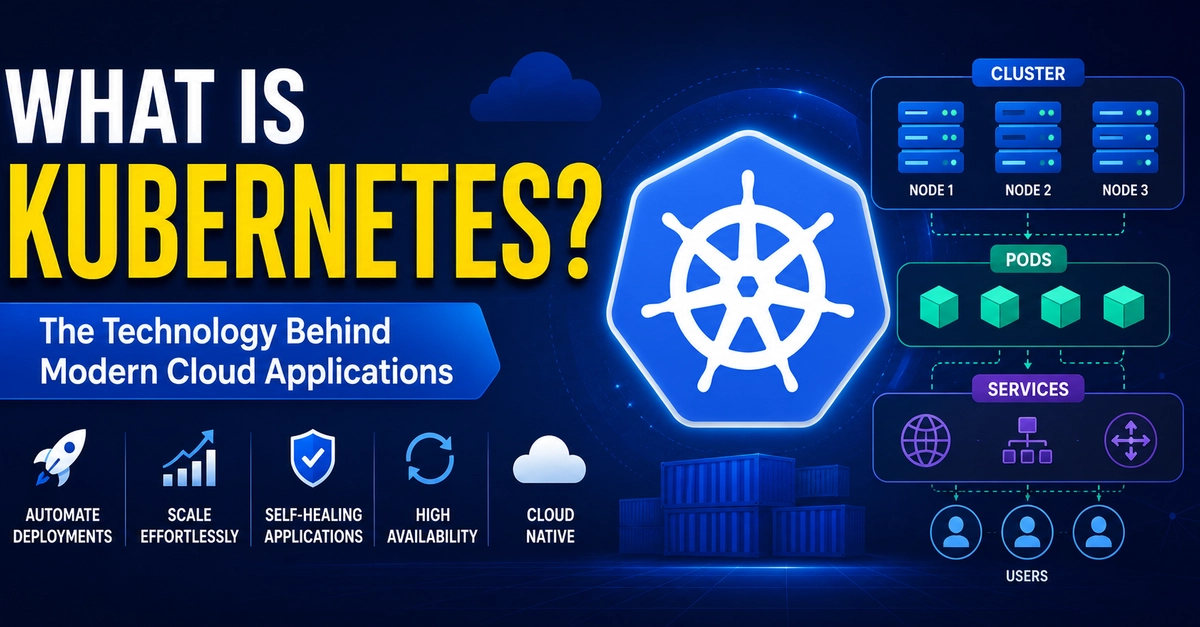
That’s exactly what Kubernetes does.