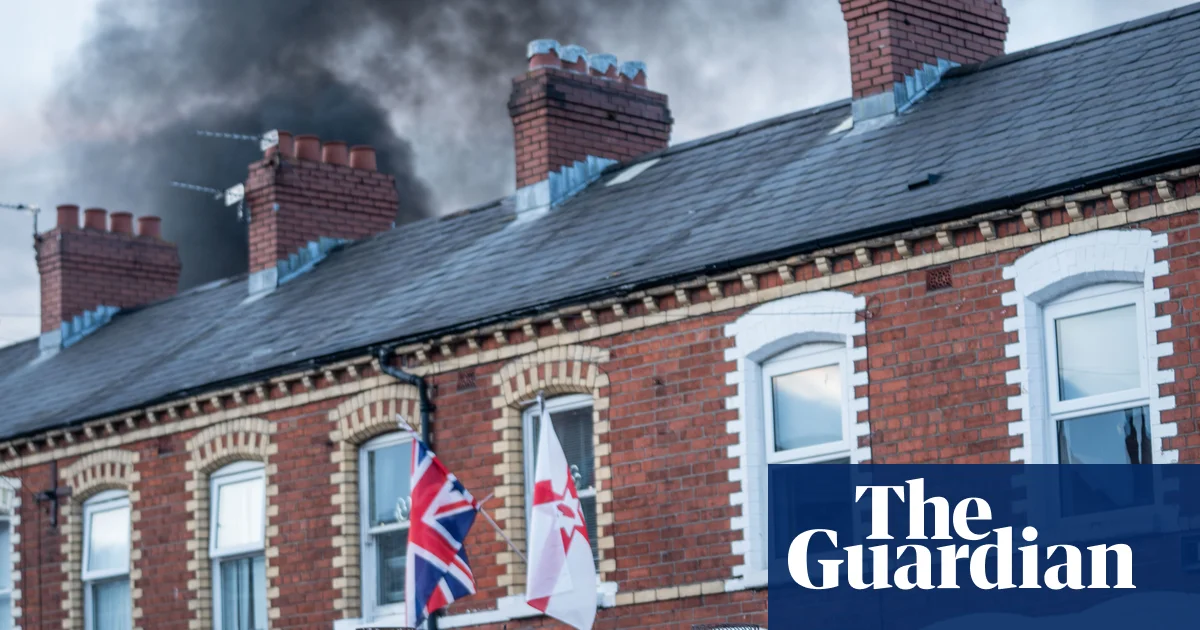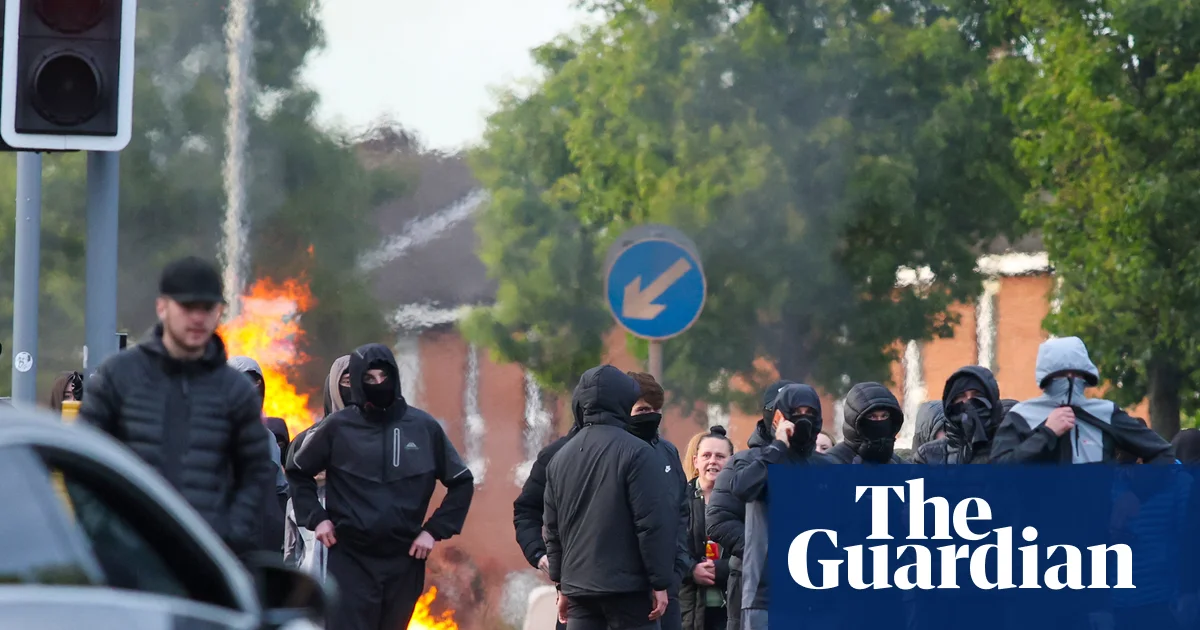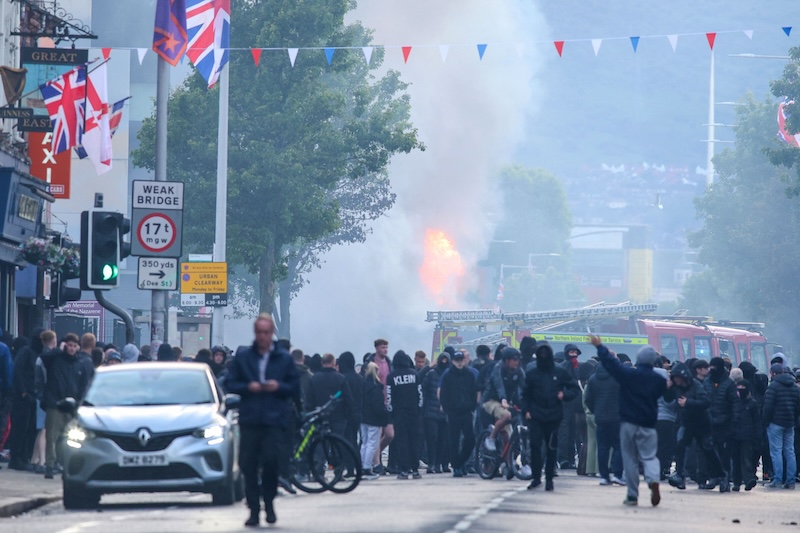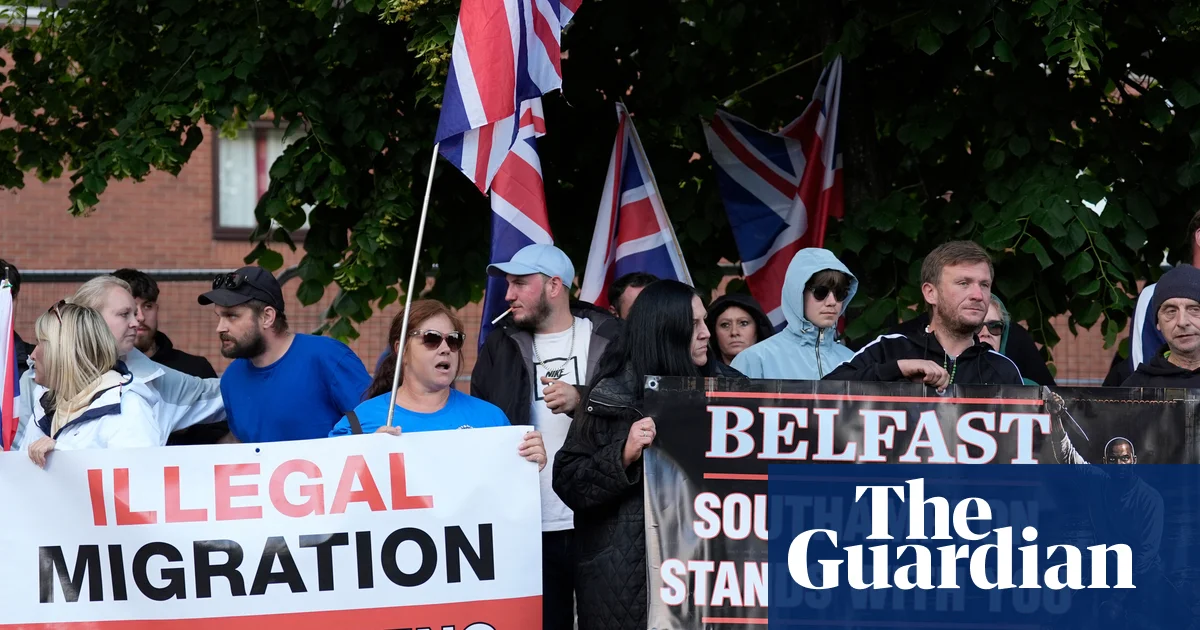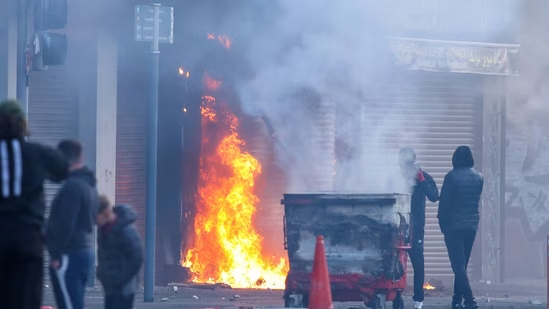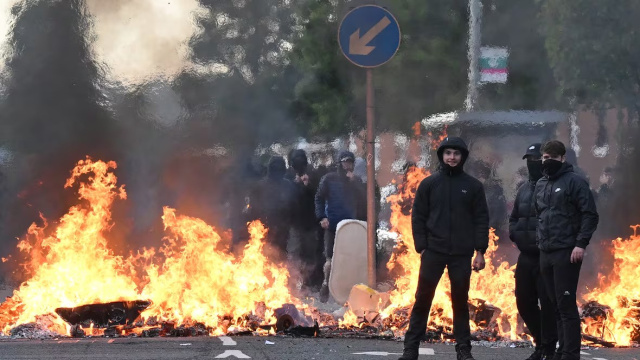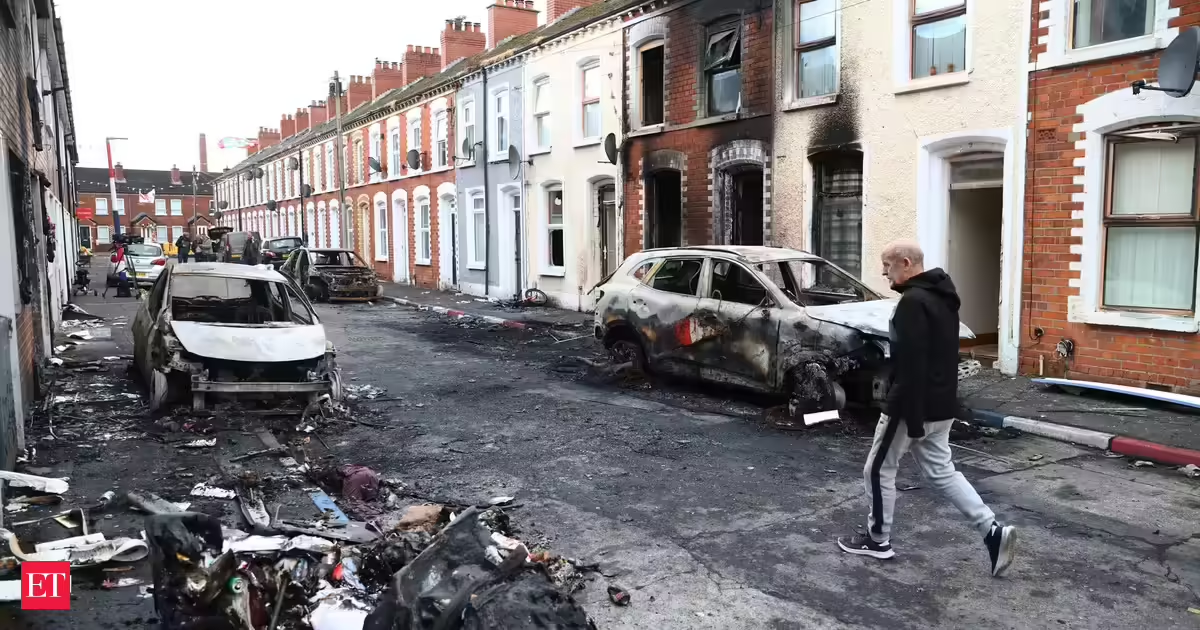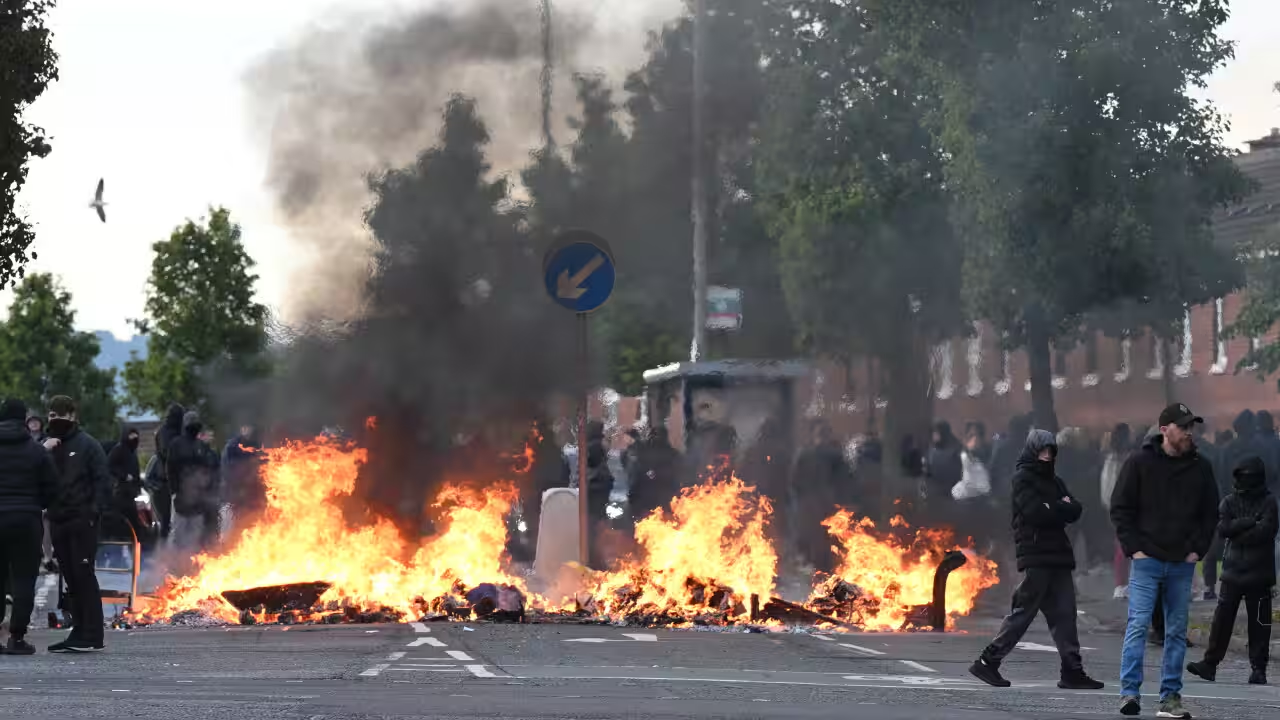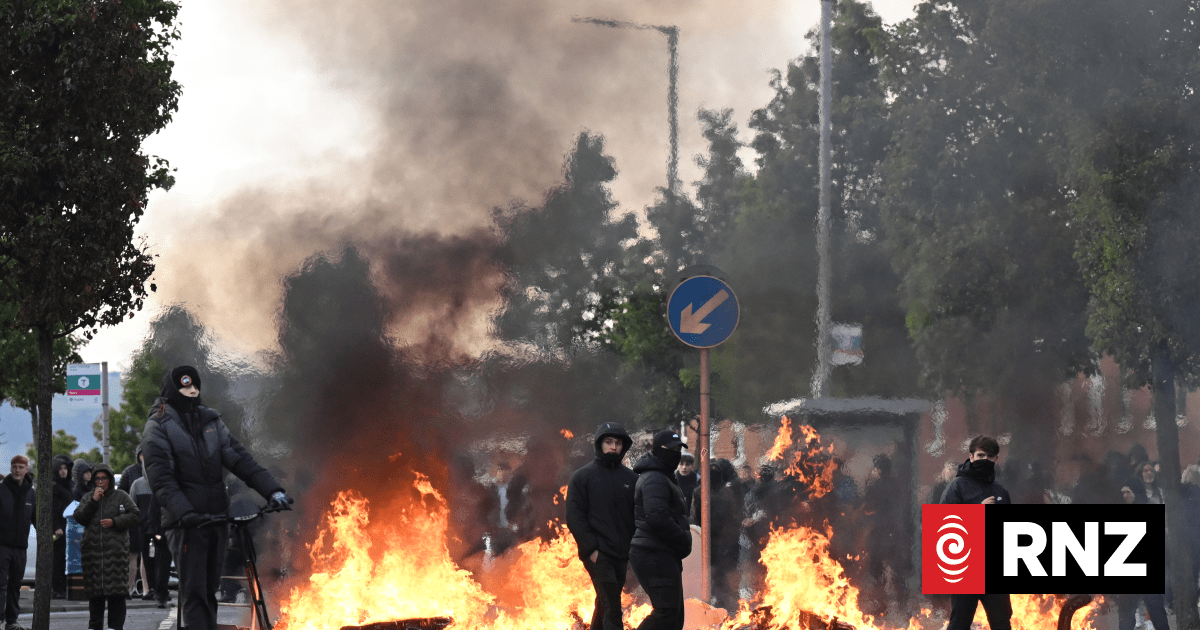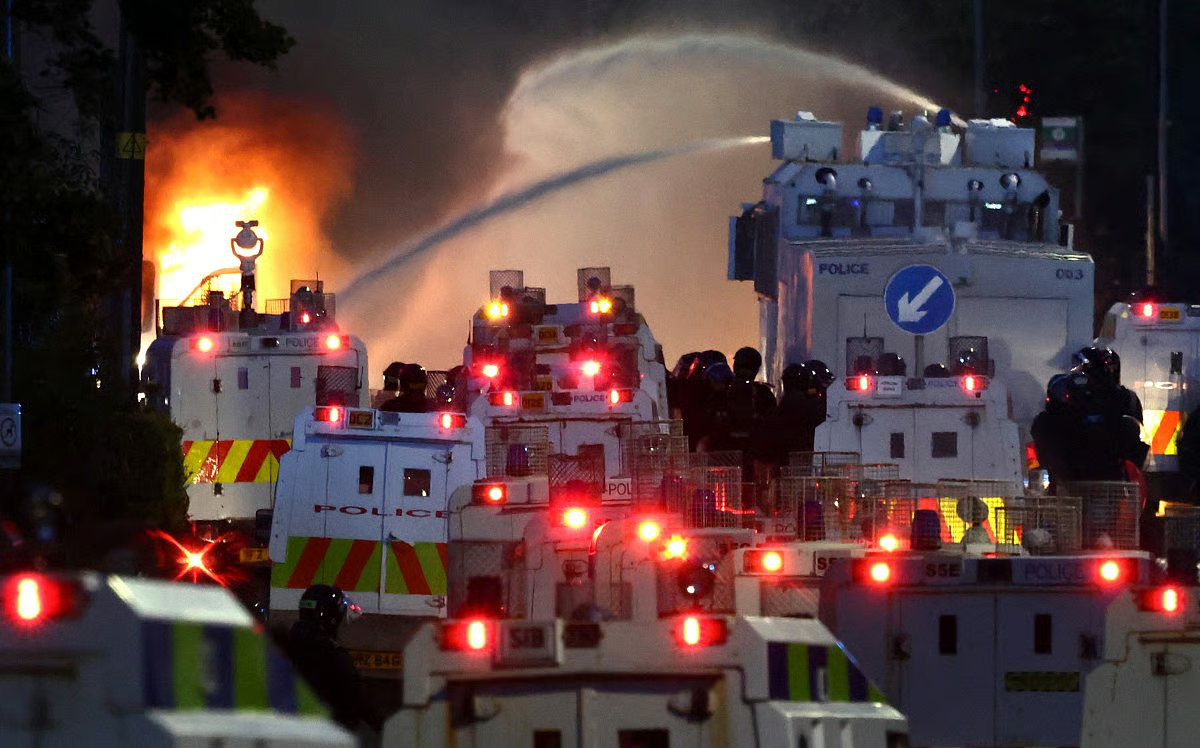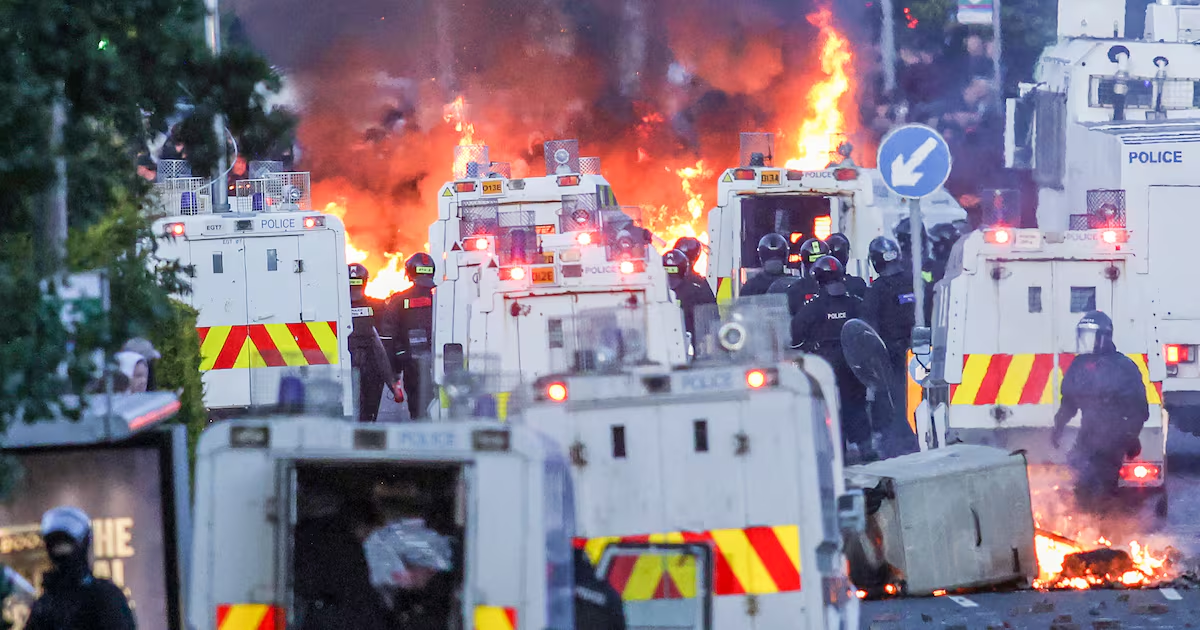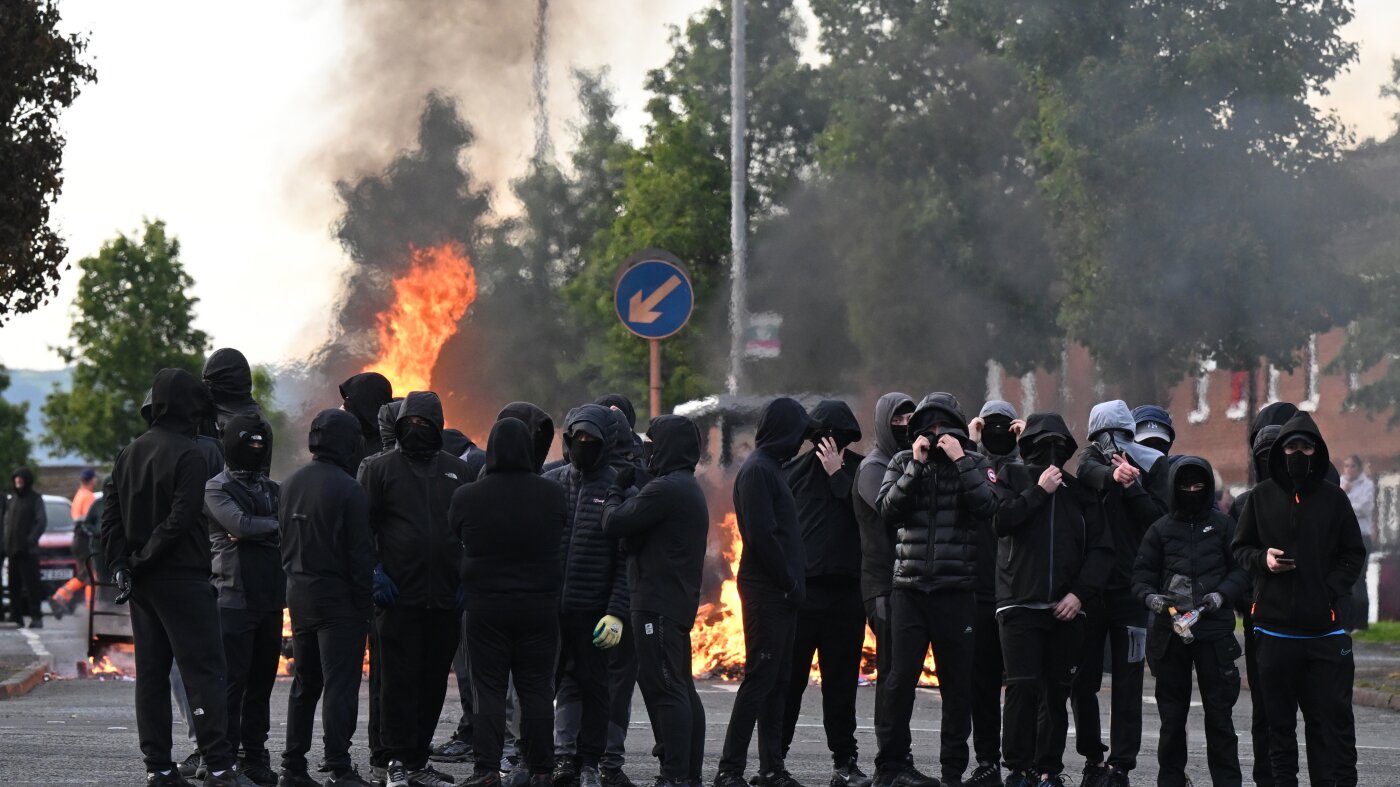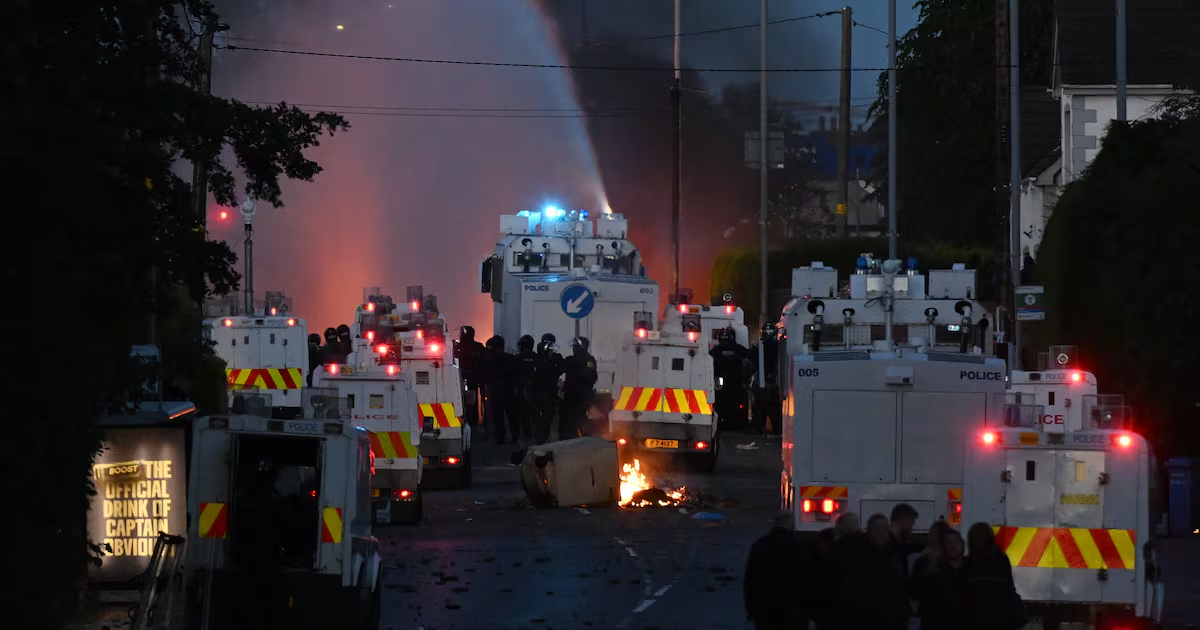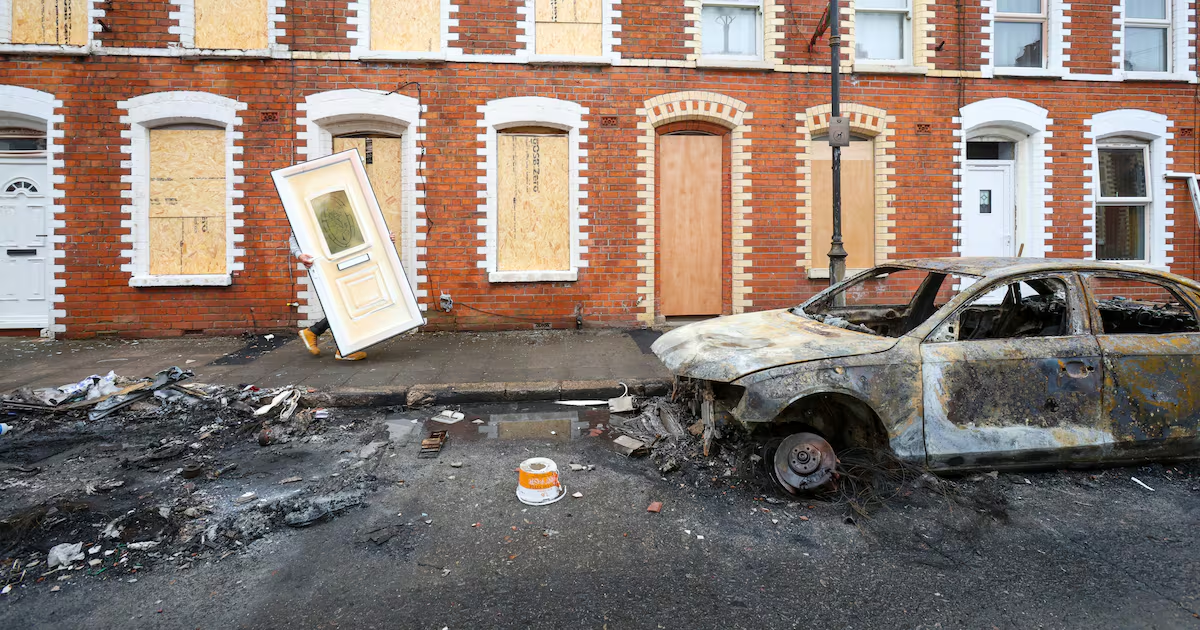
The graphic video was like a scene from a horror movie set on a nondescript, working-class street in north Belfast. Footage of a black man repeatedly stabbing a white man lying beneath him on Kinnaird Avenue attracted thousands of views on social media within minutes, and immediately the wheels of ethno-nationalism spun into motion. What is striking is how well-oiled this machine now is, how familiar the playbook feels and – despite how well-flagged the trouble was on social media – how powerless the authorities were to stop it. The call went out on WhatsApp chats and Telegram groups. Men were urged to assemble at locations across Belfast at 7pm the following evening. “Wear dark clothing”, the message read, “and be prepared to fight or be arrested”. On X, Elon Musk amplified the planned location of protests to his 240 million followers. Unionist MPs spoke of the dangers of importing “alien cultures” to the UK. In Westminster, politicians whose disregard for the peace process in Northern Ireland was apparent during Brexit suddenly developed a passionate interest in current affairs on the island of Ireland.Reform UK leader Nigel Farage demanded to know the “identity and status” of the attacker. Once Hadi Alodid, a Sudanese national who had entered the UK via Paris and Dublin, had been charged with the attack on Stephen Ogilvie, the rhetoric became even more vitriolic. On anti-immigrant Facebook groups, people were told to leave their phones at home and turn their Ring doorbells off, in an attempt to minimise the risk of incriminating footage of the crimes they planned to commit. Overnight, the city seemed transported back to the dark days of the Troubles. Schools closed their doors early on Wednesday. Supermarkets, restaurants and immigrant-run businesses pulled down the shutters. Buses and coaches were suspended. The campaign of intimidation got to work even before a single match was struck. The official-looking (and likely AI-generated) advisories that warned of road and business closures did their job. And when the violence finally arrived, it followed a grimly predicable pattern. As Suzanne Breen wrote this week, Northern Ireland has been here before. “Claims that this brand of brutality is entirely ‘alien’ to Northern Ireland represent a severe case of historical amnesia.”But as the leader of the SDLP, Claire Hanna, put it, what was unfolding was nothing less than a premeditated “race-based pogrom”.What was also different was the largely unsuccessful attempts by agitators to make the riots a cross-community affair. There were overt invitations to Catholics from the north and the south of Ireland to join the anti-immigrant fold. AI-generated images with the Union Jack and Irish Tricolour displayed side by side circulated on social media along with the slogan: “Protestant and Catholic United Against Invaders”. People were urged to assemble on the ultra-loyalist Shankill Road and Sandy Row, but also in the nationalist Ardoyne and Falls Road neighbourhoods. In the end, the violence on Tuesday and Wednesday nights was mostly restricted to loyalist areas, where immigrants and asylum seekers often find themselves living due to the relative availability of social housing. Senior paramilitary figures were a visible presence during the rioting. The fact that loyalist and UK-based activists were taking the lead didn’t stop some of their counterparts from the South travelling to Belfast to livestream their support for the unrest. Some Irish nationalists declared online that it was time for Protestants and Catholics to “stand together” in the face of a shared enemy. “Deport the invaders and close the borders”, one Irish activist posted online, adding – apparently unaware of how badly this might land with his friends north of the Border – that it was time to reclaim the island of Ireland for the “Irish people”.Many also noted the fact that the weapon used by the local resident to fight the attacker off in Kinnaird Avenue, an “interface” area between Catholic and Protestant communities, was a hurl. The area is a historically significant one for nationalists: a little over 100 years ago, at Kinnaird Terrace just yards from Kinnaird Avenue, six Catholic civilians were brutally murdered in their own home by a group of Protestant men dressed in police uniforms. [ How the Belfast riots unfoldedOpens in new window ]Horrifying scenes like the ones on Tuesday night and, to a lesser extent, on Wednesday – buses and police cars set on fire; people burned out of their homes; local residents drinking beer and vodka as they watched masked men pelt a house with bricks, as a mother and young children were inside – are, of course, far from unprecedented in Northern Ireland. There was similar disorder in Ballymena this time last year, and in Belfast in 2024.Nor is anti-immigrant sentiment a new phenomenon. The bonfires that appear across the North on July 12th now regularly feature anti-immigrant slogans. On one such bonfire in Moygashel, Co Tyrone, last year, a life-size effigy of a group of asylum seekers was set on fire.But what’s happening now is that some of the same social divisions, economic inequalities, tribal mindsets and unresolved conflicts that drove sectarianism are being mobilised into anti-migrant sentiment.Another aspect of this week’s violence is something we have seen elsewhere: how social media platforms allow unrest to torment much more rapidly, to become more visible and to reach a much wider audience. [ Northern Ireland’s politicians have no power over immigration. London controls it allOpens in new window ]The definition of racism is to assign a type of behaviour or characteristic to an entire group of people. In 1970s Britain, the Irish – whether they were from the North or South, Catholic or Protestant – were widely seen as drunken brawlers and potential terrorists. Following the 9/11 terrorist attacks on the US, Muslims in the West were forced to live with the idea that there was something inherent about their religion that made them predisposed to violence and mass murder. Now it is foreign-born migrants and ethnic minorities who are the targets of racist vitriol. What we’re seeing in Northern Ireland is less a new phenomenon than old tropes and divisions being weaponised against fresh targets. Kieran Connell teaches history at Queen’s University Belfast. His most recent book is Multicultural Britain: A People’s History, and he leads the research project Multicultural Ireland: immigration, community and society in post-partition Ireland
Kieran Connell: How did an attack in a nationalist part of Belfast lead to rioting in loyalist areas?
AI-generated images with the Union Jack and Irish Tricolour displayed side by side circulated on social media before this week’s riots, but loyalists were at the centre of the disturbances
TL;DRAI
A Belfast stabbing sparked anti-immigrant riots via WhatsApp/Telegram, amplified by Elon Musk to 240M. Encrypted messaging, AI-generated disinformation, and algorithmic amplification mobilized unrest rapidly—signaling critical content moderation and platform governance challenges for CTO and tech leaders.
1,050 words~5 min read