Story audio is generated using AI
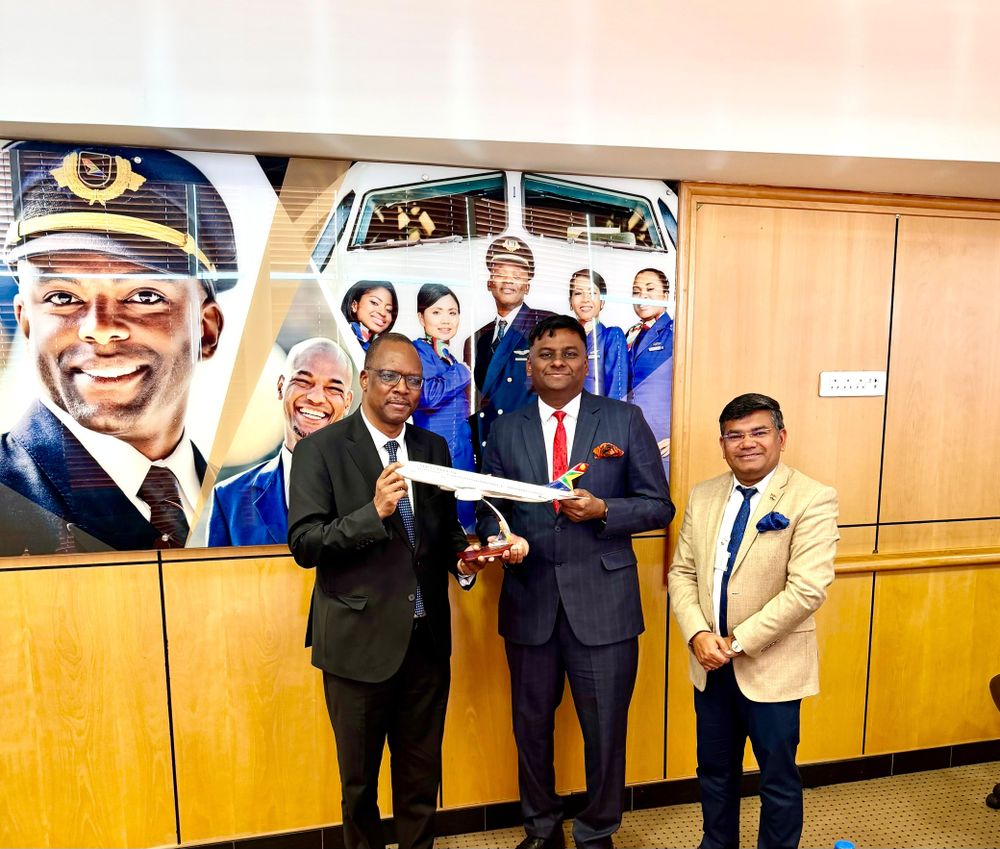
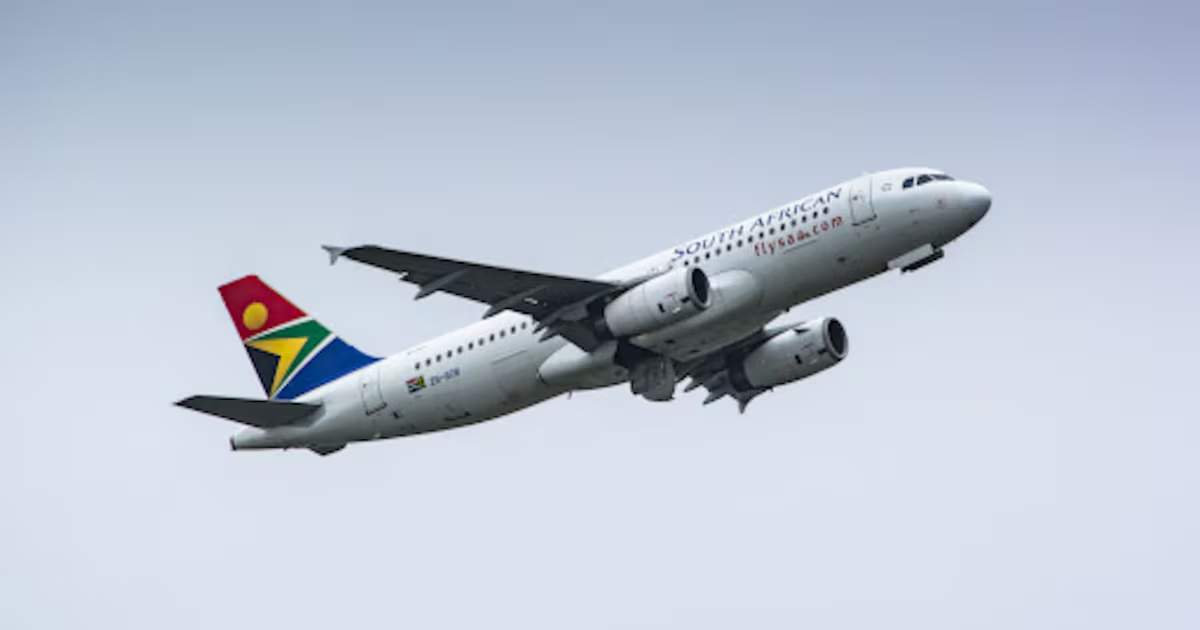
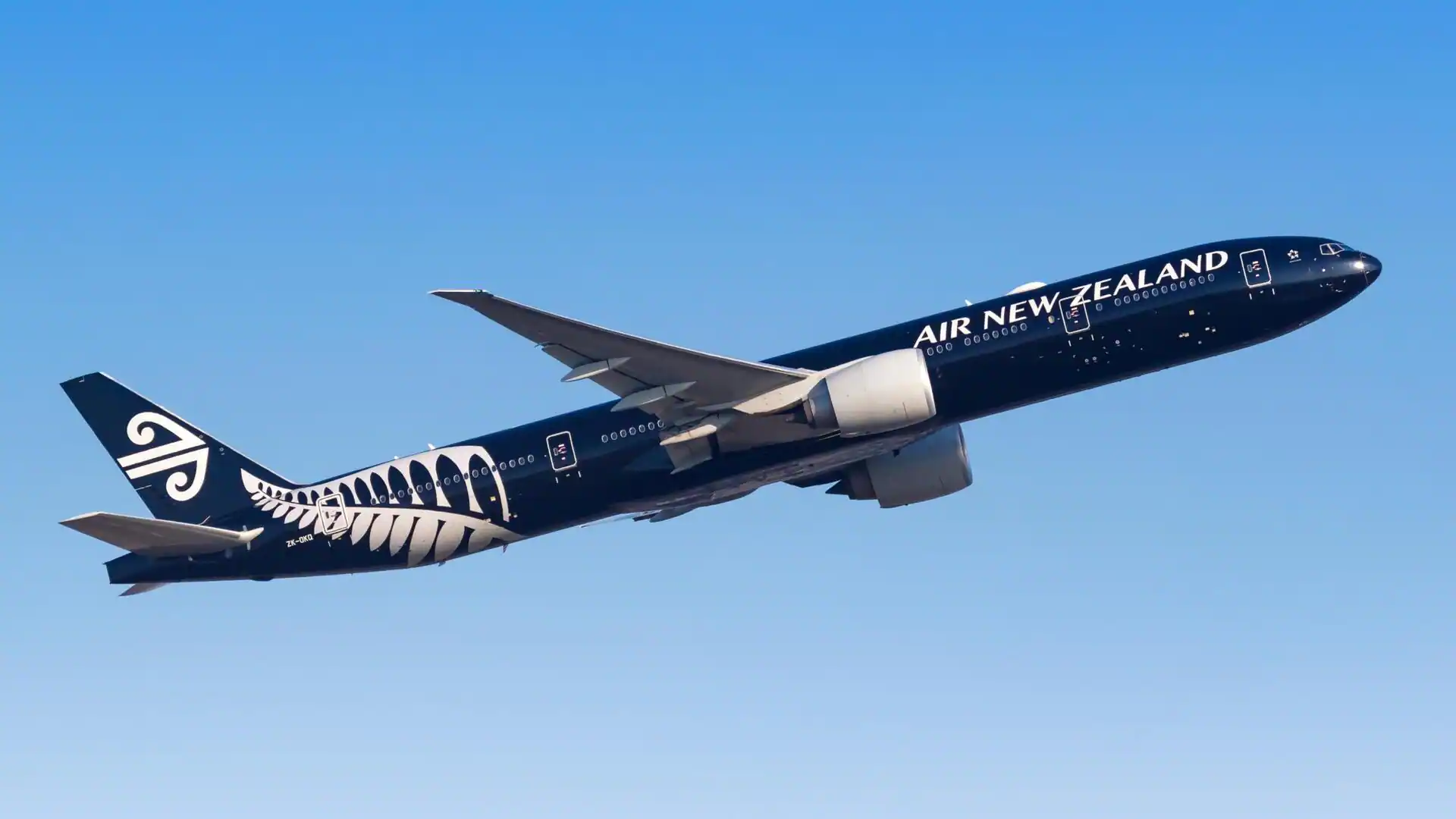
The lack of direct flights connecting Johannesburg to Mumbai has been ranked as the second most underserved route in a study conducted by commercial aircraft major Airbus, underlining the gap in the market left by the withdrawal of South African Airways (SAA), which has become a shadow of its former self.The study found that passengers travelled through hubs such as Addis Ababa, Nairobi or Doha, with a small but surprising portion even travelling via London, incurring substantial detours.“It was highlighted that the route was previously served by SAA and Jet Airways, reaching a peak of 11 weekly flights in 2010 before the service was discontinued,” the study says.“Specific operational challenges were highlighted for the journey from Johannesburg to Mumbai, particularly the ‘hot and high’ takeoff conditions that are frequently encountered at Johannesburg [OR Tambo international] airport. This factor, alongside the 7,000km distance, was found to require the use of efficient widebody aircraft. “It was suggested that the viability of the route should be considered by operators on both sides of the connection, such as SAA or major Indian carriers like Air India and IndiGo.”The increasing influence of the Brics alliance is said to be a key driver for future traffic growth between the two countries.Trade between South Africa and India is a multi-billion-dollar bilateral partnership, with total trade hovering around $19bn (R309bn). South Africa is India’s second-largest trading partner in Africa.Sanlam, South Africa’s financial services major, has identified India as a key growth vector, looking to tap into its robust rural economy and the growing need for wealth management.The two countries also enjoy deep historical ties, rooted in centuries of maritime trade, British colonial networks and shared 20th-century anti-imperialist and anti-apartheid struggles.The Airbus report noted that the long-term prospects for the route connecting Johannesburg and Mumbai are bolstered by the projected expansion of the Indian middle class and the introduction of the trusted tour operator scheme, which simplified visa requirements for Indian nationals travelling to South Africa.The scheme was brought to life by home affairs minister Leon Schreiber as a means to address the long-standing challenge faced by tour operators in bringing large groups from the burgeoning source markets of India and China to South Africa.South Africa welcomed 213,138 tourists from the key Brics allies: China, India, Russia and Brazil last year, when Africa’s largest economy held the presidency of the G20.Statistics South Africa has also flagged the potential the Brics ties present for South Africa’s tourism industry. “The strength of regional travel, combined with a steady rebound in long‑haul markets and deepening ties with major economies like the Brics nations, illustrates the country’s enduring global appeal,” the agency said in a report, reflecting 2025 arrivals.“As international travel continues to stabilise, these trends offer valuable insight into the opportunities that lie ahead for sustaining South Africa’s tourism growth.”To make direct routes between South Africa and India’s major cities feasible, the Airbus study said one innovative approach would involve leveraging the large population of Indian descent living in Durban and the surrounding region.“A triangle routing connecting Mumbai and Johannesburg with a highly efficient transit stop in Durban could prove exceptionally advantageous. Since taking off from Durban is less challenging, a customised BOM [Mumbai]-JNB [Joburg]-DUR [Durban]-BOM routing becomes an interesting case to evaluate,” the study says.“Triangle flights are already extensively used in airline operations to, from, and within Sub-Saharan Africa today, so this solution would not be a standalone case.”Another unserved route the Airbus study flagged is the one that connects Brussels, the de facto capital of the European Union (EU), to the economic hubs of Johannesburg and Cape Town.The study said the convergence of rising passenger demand and a surge in demand for South Africa’s perishables — such as fruit and meat — presents a clear opportunity to establish a northbound belly cargo stream.The report said this cargo potential makes a non-stop service between Brussels and South Africa a highly compelling proposition. “Brussels Airlines and SAA appear best positioned to serve this market, albeit through different operational strategies. Brussels Airlines could deploy a triangle routing or a non-stop service to Johannesburg with a tag-end flight to Cape Town, mirroring Air Belgium’s former approach,” the report states.Within the Sub-Saharan region, Airbus has identified Cape Town to Lagos as the most important unserved city pair“Conversely, SAA could launch non-stop flights between Brussels and its Johannesburg hub, connecting passengers onward to Cape Town via its domestic network.”The EU is South Africa’s largest trading bloc and primary source of foreign direct investment. Over the last decade, trade between the bloc and South Africa surged by over 30%. Within the Sub-Saharan region, Airbus has identified Cape Town to Lagos as the most important unserved city pair.“Despite this surging demand, Cape Town–Lagos remains a challenging, unserved sector. Separated by about 2,600 nautical miles in great circle distance — roughly equivalent to flying from Dubai to Copenhagen or from Boston to Dublin —this route demands a flight time of about 6.5 to 7 hours.”Business Times