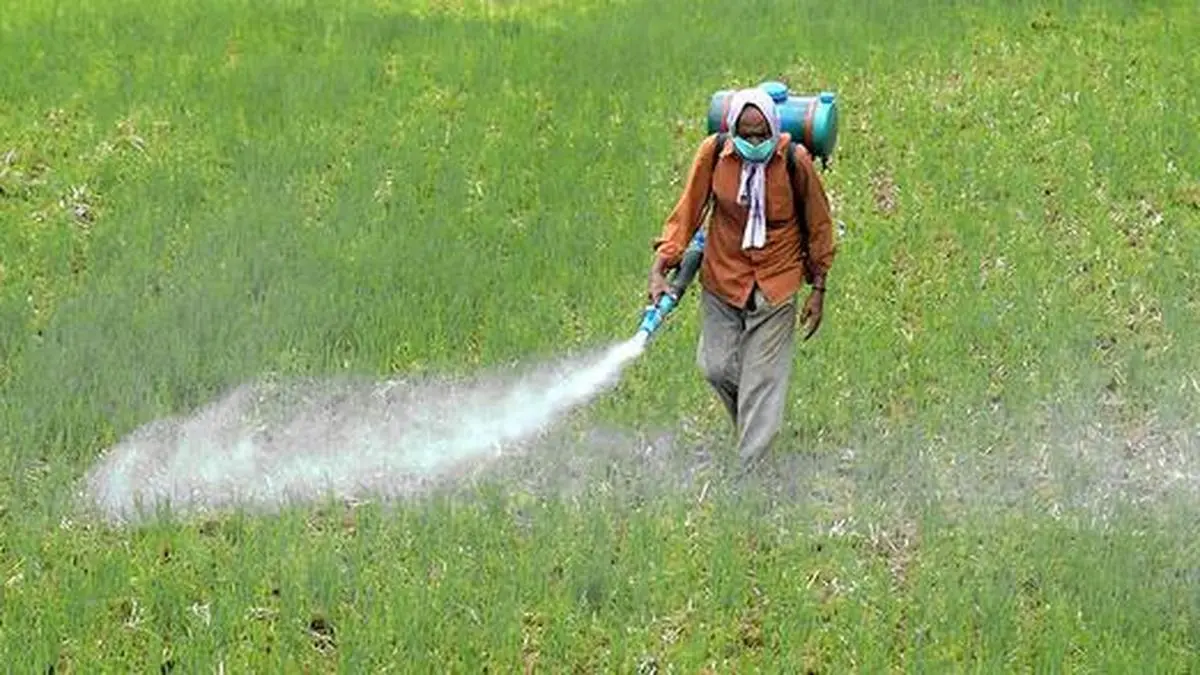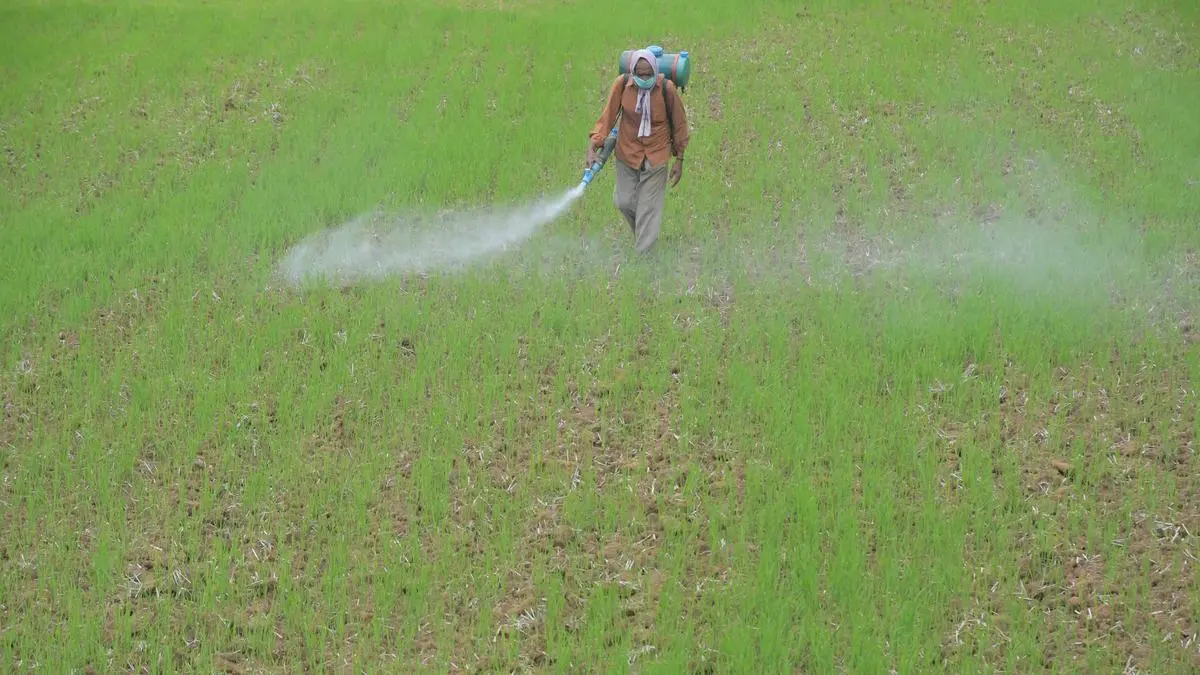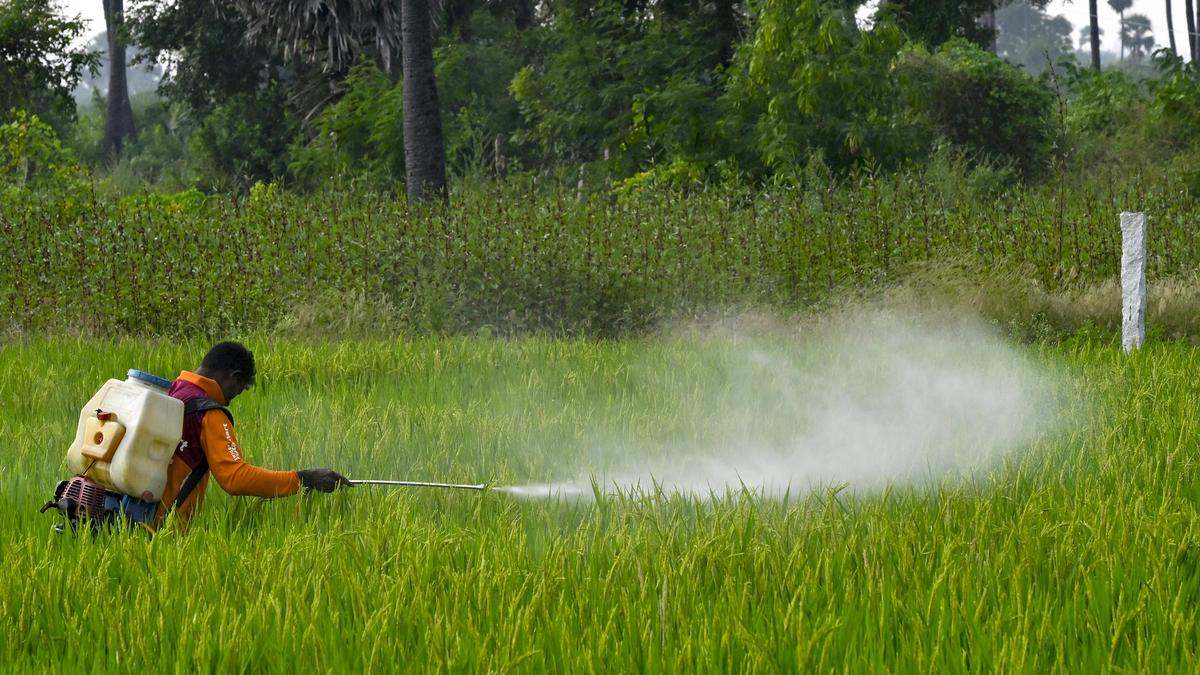
At 50, Banoth Goud (name changed) has lived to tell a tale. “I may look normal, but I become breathless when I climb stairs or walk more than five minutes. The doctor says my lungs got affected,” he says.About three years ago, on a sweltering afternoon, Goud opened his refrigerator, took out a small plastic bottle labelled with a popular juice brand, and took a sip. The drink did not have the sweet, tart apple flavour that he was used to; instead, it tasted flat. He began vomiting.Goud did not know that he had drunk paraquat, a highly toxic herbicide and one of the most effective weed killers in the world. Paraquat, a colourless and tasteless liquid, is most often fatal for both humans and animals.It was a mistake that resulted in Goud fighting for his life. “I had asked my nephew to get the gaddi mandu (the local term for the weedicide) to clear weeds in front of our house,” he recalls. “He kept the bottle on a table inside the house. My wife thought it was a cool drink and placed it inside the fridge.” While wholesale traders store paraquat in drums, farmers and others often fill up stray bottles with the weedicide.Goud was immediately rushed from his house in Paloncha town to a hospital in Kothegudem, about 11 kilometres away. The doctors were convinced he would die.Being an employee of TSGENCO (Telangana State Power Generation Corporation Limited), Goud had an ESIC (Employee State Insurance Corporation) card, necessary for workers below a certain salary level to access free medical care and financial benefits at ESIC dispensaries and hospitals across the State. He was quickly ferried in an ambulance to a tertiary-care facility in Hyderabad, roughly 285 km away.Dr. Verrana Addanki, a General Medicine practitioner, noticed that Goud had a ‘paraquat mouth’ — the severe, corrosive damage that occurs when a person swallows or is exposed to paraquat — and put him on continuous renal replacement therapy (CRRT). Over the next 40 days, Goud’s condition slowly improved.“His family had given up on him,” remembers Dr. Addanki. “But we persisted and he had the will to survive too. Now, he has photographs of his family as his WhatsApp display picture.”On March 31, 2026, Telangana banned the sale, distribution, manufacture, and use of paraquat, to protect the safety and health of people, especially farmers. It became only the third State to do so, after Kerala and Odisha. The Government Order was issued days after intense lobbying by doctors, clinicians, and public representatives calling for the ban of the weedicide, which has been often used for self-harm. Neighbouring Andhra Pradesh followed suit in May.Bans and bust-upsParaquat wreaks havoc due to its immense potential for harm, easy availability, low price (₹280 per litre), and widespread use in India. The only law to regulate hazardous chemicals such as paraquat is the Insecticides Act, 1968.Goud’s story is an exception: the weedicide has killed thousands of people, as is evident from autopsy reports from hospitals across the world. Paraquat is banned in 74 countries. In India, Kerala became the first State to ban it in 2011. However, in February 2022, the Kerala High Court overturned the ban following a plea by a cardamom growers’ collective. While the Kerala Agriculture Department’s notification specifically named the chemical along with 13 others, the High Court struck down the ban on the technical ground that the State did not have the authority to enforce it beyond 60+30 days (as per Section 27 of the Insecticides Act).In October 2022, Kerala was rocked by the murder of Sharon Raj, who was allegedly poisoned with a paraquat-laced drink by his fiancée, Greeshma. He died at the Medical College Hospital in Thiruvananthapuram, triggering a public uproar as details of the case quickly emerged in the public domain.“We can still order it online,” says Dileep Kumar of Pesticide Action Network, a global coalition of over 600 NGOs, institutions, and individuals across 90 countries dedicated to eliminating hazardous chemical pesticides. “A ban by one State without the involvement of e-commerce sites is just a ban on paper. It is ineffectual,” he points out.Kumar adds that the country needs stronger laws and regulations to manage the crisis. “Even the Bhopal gas tragedy [in 1984] did not lead to new laws to regulate pesticides,” he says.The problem is not just limited regulation of pesticides, weedicides, and insecticides; it is also low awareness about safe use. According to a statement by the Minister of State for Agriculture in the Lok Sabha, 79,185 farmers were made aware of the safe and judicious use of pesticides between 2020 and 2026. This is a low share in a country where 46.1% of the population is dependent on agriculture, as per the Economic Survey of 2025-26.As per the Act, the ban in Telangana was for 60 days and can be extended by 30 more days. On the day that the Telangana issued a Government Order imposing a ban on paraquat, the Legislative Assembly passed a bipartisan resolution asking the Central government to ban the chemical across the country.Lobbying for a banOn the afternoon of February 12, Dr. Marri Mahesh Reddy, the founder of a grassroots movement called Doctors Against Paraquat, called for a gathering of farmers in Potharam village in Karimnagar. The emerald green village, with endless paddy fields, is on the eastern side of the Sriramsagar flood flow canal that carries water from the Godavari river. This whistle-stop tour and meeting with farmers was part of a campaign by Dr. Reddy.“If we don’t use this, can’t we do agriculture?” Dr. Reddy said, addressing the gathering. “Didn’t we do agriculture before this? Brush-cutter leva, vere mandulu leva. Dina valla yavaruki upogam? (We have brush-cutters, sickles, and other chemicals. Why use this toxic substance?)”He explained what made paraquat particularly dangerous. “I used to get emergency cases of snake bites and poisoning,” he said. “There were antidotes for snakebites and the venom was not always so toxic. But paraquat is in a different league. It destroys the cell structure and there is no antidote.”Doctors Against Paraquat comprises 202 doctors drawn from different parts of Telangana, who lobbied with politicians, farmers, and bureaucrats relentlessly for a ban on paraquat. Using social media and personal connections, Dr. Reddy reached out to the Telangana Chief Minister’s Office, the Maharashtra Chief Minister’s Office, the Prime Minister’s Office, and politicians.Yet, Potharam and other farming villages have found paraquat useful. As labour shortage is rising and the cost of hiring farm workers is increasing, farmers use paraquat, which is labelled and sold as non-selective contact herbicide (meaning, it does not differentiate between one plant and another), to clean up residual plants and weeds. Paraquat imports to India rose from 8,598 tonnes in 2019-20 to 20,786 tonnes in 2022-23, according to the Lok Sabha Unstarred Question No. 2542 under the Minister of Agriculture and Farmers’ Welfare in 2025.“Without any oversight or intervention by officials from the agriculture department, there is a runaway use of paraquat in most parts of the country. There are many accidental deaths due to careless use as well,” says Kodanda Reddy, Chairperson of the Telangana Agriculture Farmers Welfare Commission, who has also worked to get the ban imposed in the State.“Currently we are working with e-commerce companies as well as cyber crime officials to ensure that the product is not available in online stores,” he adds. This lobbying appears to have paid off, as two big e-commerce sites — Flipkart and Amazon — no longer list the chemical in Telangana. However, it is easily available from smaller agriculture commerce sites.A rush to save patientsBodies are constantly wheeled in and out of the Department of Forensic Medicine, Toxicology and Autopsy Complex at Gandhi Hospital in Hyderabad. Families wait in grief and the police mill around. There is an overpowering odour of bleach, urine, and putrefying flesh.The toll of paraquat poisoning is evident here. According to Dr. Atmudi Vivek Sai Ram’s Doctor of Medicine dissertation, ‘An autopsy based study on deaths due to Paraquat poisoning in Gandhi Hospital’, the facility recorded 217 cases of paraquat poisoning in 2024 and 2025. Of these, 54% of the patients were farmers and 16% students. Of the 100 cases studied for the dissertation, 94% were suicide cases and 5% were accidental.
The human cost of a deadly weed killer: banning of paraqua in Telangana
Telangana banned paraquat, one of the world’s most widely used and highly toxic weedicides, becoming only the third State in India to do so. The herbicide is responsible for hundreds of deaths each year, most of them by taking their own lives, and some accidental
TL;DRAI
March 31, 2026: Telangana banned paraquat, becoming India's third state after Kerala and Odisha. State bans lack federal backing and e-commerce regulation; only 79K farmers trained reveals governance gaps for substances banned in 74 countries.
2,122 words~10 min read