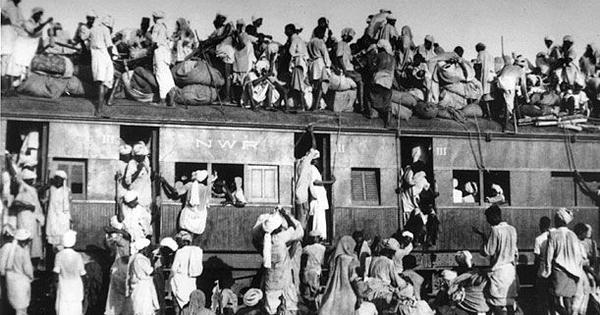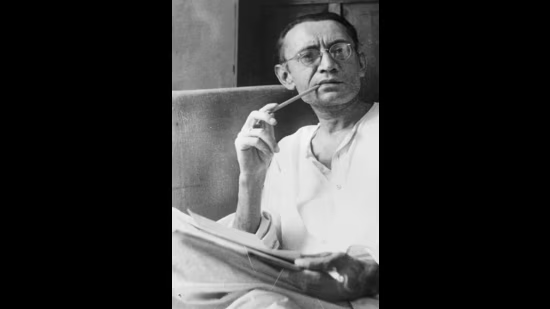
Though it evokes revulsion, depictions of violence also occasionally convey moral decay and force you to confront the existence of unthinkable realities. Urdu short story writer Saadat Hasan Manto (1912-1955), who saw it as an elemental instinct that can serve as a vehicle for existential revelation, understood the potential of violence to reflect the innate wickedness of humankind.Author Saadat Hasan Manto (Courtesy Aleph)His unsettling writings, wrapped in savage irony, now brighten the intellectual landscape of the Anglophone literary sensibility as well. Manto’s graphic literary response to the catastrophe of the Partition that left over two million dead and displaced 10 million has cemented his stature. His harrowing writing about communal strife, political repression, and sexual exploitation stemming from the arbitrary cruelty of borders puts him in the same heroic category as two prominent chroniclers of the Holocaust, Primo Levi(1919-1987) and Tadeusz Borowski( 1922-1951). Indeed, his profound reflections on identity, the dialectic between majority and minority, and the complexities of political conflict created by the Partition should have given him a more prominent place in the global canon. There has been a proliferation of translations over the past three decades but the Anglophone world still hasn’t been exposed to the full extent and thematic diversity of his lean, ironic prose.Manto’s essential identity is not tied to Toba Tek Singh, Babu Gopi Nath, Hatak, Phundane Ram Khilawin, and the like. He also told familiar stories in an unsettling, psychologically ambiguous idiom, and these stories, a treasure of unsaid meaning that have been rendered with extraordinary candour, are hardly translated or anthologised. In Bismillah and Other Stories, translator and literary historian, Rakshanda Jalil now presents what has been left out.Dense with the spoken idiom of pre-Partition Bombay and Lahore, these stories include vignettes of everyday disasters and moral collapse. The task must have been daunting but Jalil is more than up to it as she presents 25 of Manto’s lesser discussed stories. “There is more than Thanda Gosht, Khol do or Kali shalwar – stories that offended many (including the progressives) on grounds of perversion and obscenity,” Jalil writes. “While these stories have been most anthologized and are therefore most well-known, they are by no means representative of Manto’s writings,” she adds, going on to explain that the general reading public now believes that these dark pieces are typical of the writer’s oeuvre. The truth is that Manto’s world is peopled by the good and as much as the bad. If anything, he possesses the rare knack of making the reader share his delighted discovery of goodness and beauty whenever he comes across it in the midst of wickedness and ugliness. This selection may not fully reveal his creative engagement sans sentimentality with all aspects of social marginality but, in general, the reader will agree with Jalil’s assertion that it provides a glimpse into a remarkably eclectic oeuvre.Manto always ridiculed pseudo-religiosity and formulaic ritualism. Surprisingly, though, 786 (the numeric representation of the Quranic verse, Bismillah al Rahman al Rahim/ In the name of God, the most gracious, the most merciful) always appeared at the beginning of all his stories, even the censured ones. This anthology begins with a short piece of auto fiction titled Saadat Hasan, which blends personal details with fictional elements. In it, Manto seeks to resolve the dichotomy: “I know that whatever he has written, the first thing he writes on the front page is 786, which means “In the name of Allah,” and this man, who appears to be an atheist, becomes a believer on paper. At the same time, it is the paper Manto, who can be crushed between your fingers like paper-thin almond shells, whereas the real Manto is not one to be broken by hammers! It is a crafted ploy to deceive the reader as the word (paper) is everlasting, whereas physical presence is ephemeral. Still, the author asserts that paper Manto can be crushed, but real Manto, Sadat Hasan, cannot.” Colossal events, changing power dynamics and contemporary political movements never escaped the writer’s scrutiny and this anthology includes such stories as A Letter to Uncle Sam, An Incident from 1919, and Slivers and Slivereens. An Incident from 1919, on the gruesome slaughter at Jallianwala Bagh, is told through the valiant acts of the two famous Amritsari prostitutes and their brother. Raconteur and an aesthete Tahila Kanjar, who was the first to grapple with the mounted white soldiers firing at innocent citizens, faced a volley of shots. The massacre and the death of Tahila were fresh when Shamshad and Almas were called to dance and sing for an English Sahib. Dressed like fairy princesses, they provided wholesome merriment. The twist is in the tail: “We are Tahila’s sisters – sisters of that martyr whom you riddled with bullets simply because he possessed a soul that loved his country. We are his beautiful sisters. Come and besmirch our fragrant bodies with the molten lead of your lust. But before you do that, let us spit on your faces – once!” they state. This is a gripping alternative account to dominant nationalist historiography. Each of these stories reveals new dimensions of ethical bankruptcy, hypocrisy, vice, and venality, while also admiring the unsung morality of gangsters and pimps.Rakshanda Jalil’s translation of Bismillah and Other Stories effectively brings out both, the colloquial idiom of these pieces and the narrative momentum that makes Manto’s work so distinctive.Shafey Kidwai, a bilingual critic, is the director of Sir Syed Academy, Aligarh Muslim University.
Review: Bismillah and Other Stories by Manto, translated by Rakshanda Jalil
Manto is now known for his unsettling Partition stories. However, this collection presents his lesser-known short fiction that tells familiar stories in a psychologically ambiguous idiom
910 words~4 min read