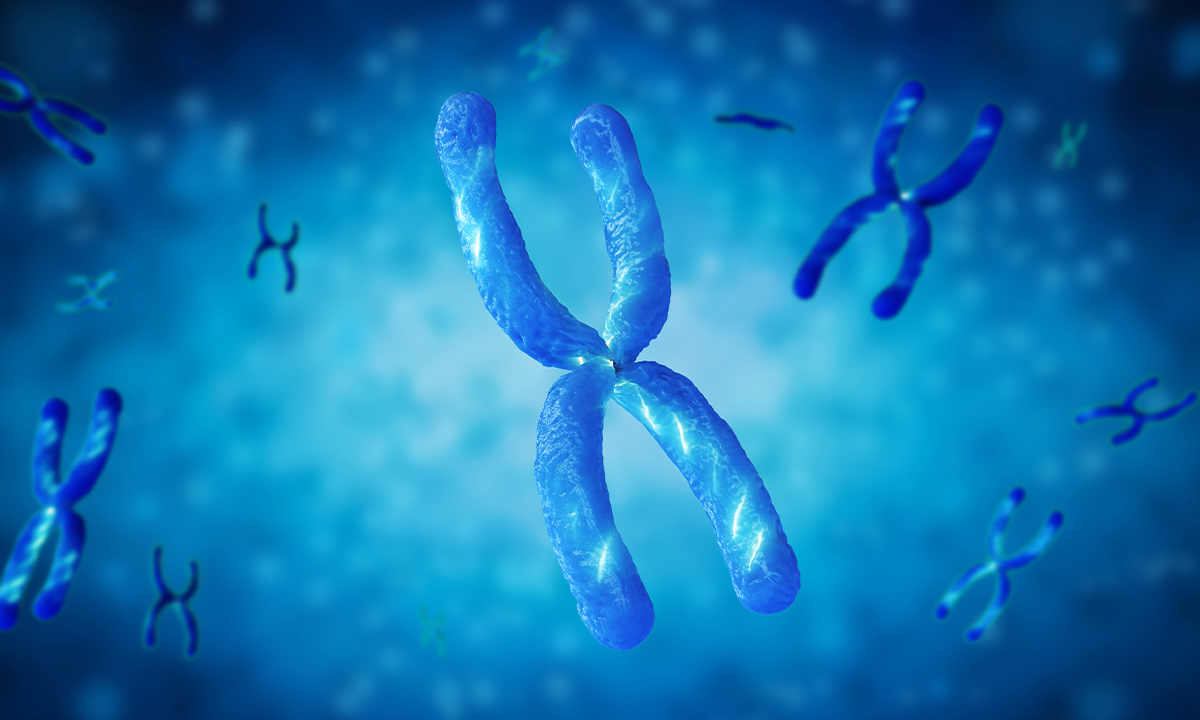
The human Y chromosome is shrinking.In the next 5 million years or so, some geneticists think the sex-determining chromosome will vanish completely from our species.In the meantime, we have a bigger concern at hand.As some men age, they are losing the Y chromosome in their blood, brain, or immune cells, and that could have serious health effects.A loss of the Y chromosome has surprising connections to cancer, kidney disease, heart disease, and Alzheimer's.For decades, researchers have noticed that as some men grow older, certain cells in their bodies begin to lose their Y chromosome.Among 70-year-old men, roughly 40 percent show loss of Y in their blood cells, and among 93-year-olds, that number rises to 57 percent.Once, this loss of Y was considered a 'benign' marker of aging.But recently, emerging genetic evidence suggests that a lack of the Y chromosome in some cells may be actively contributing to death and disease.The Y chromosome is known to be crucial for sex determination and sperm function, but historically, it wasn't thought to do much else.Although it exists in most cells of the body, the odd little chromosome seems to just sit there, twiddling its thumbs. It is a fragile, finicky unit that often leads to mutations during replication.Of all 46 chromosomes contained in most human cells, the Y chromosome is the only one that can be lost without the cell dying.But that doesn't mean it can disappear without issue.Is the Y chromosome vanishing in men? Read our story on the scientific debate. (Dmitry Bayer/Getty Images)In 2022, a study found that when specialized immune cells in the hearts of mice lacked Y chromosomes, it led to cardiovascular dysfunction and death.Further clinical studies suggest that among elderly men, those who show Y chromosome losses are more likely to die early or develop cancer. While these losses are rare in younger individuals, they can also be associated with infertility and developmental defects.In 2023, researchers found that up to 40 percent of older men with bladder cancer lack the Y chromosome in their tumors.Because men are up to five times more likely to develop bladder cancer than women, this led some scientists to suspect that the Y chromosome was playing a role in the disease.Preliminary evidence supports that idea. In 2025, a study found that immune cells lacking the Y chromosome are less effective at attacking cancerous cells.That same year, a review concluded that the loss of the Y chromosome is likely to be important in shaping the activity of the male immune system.Even though the Y chromosome contains roughly 0.9 percent of the total DNA in a male cell, it was only fully sequenced a few years ago.Since then, advances in genomic sequencing have ushered in a new era for Y chromosome research.
Men Can Lose Their Y Chromosome With Age, And We Finally Know The Cost
The human Y chromosome is shrinking.
707 words~3 min read