It is oddly encouraging that a film like Ryuya Suzuki‘s “Jinsei” — not that there are many films like Ryuya Suzuki’s “Jinsei” — should be released within weeks of “The Odyssey” and “Disclosure Day.” Those two 2026 tentpoles are unalike in most ways, except that each will be the product of hundreds of people moving heaven and earth, starry casts and astronomical budgets at the behest of inordinately famous and commercially successful filmmakers, in order to elicit from us viewers the merest sigh of wonder. Telling the sparse and spiky story of a century in the life of a taciturn J-pop idol, “Jinsei” is crowd-funded, cost-efficient and hand-drawn by its self-taught debut writer-director-editor-composer. It is the opposite of a prestige Hollywood blockbuster primed to manufacture astonishment on an industrial level. But if this is the Summer of Awe, the visionary “Jinsei” belongs right there alongside them.
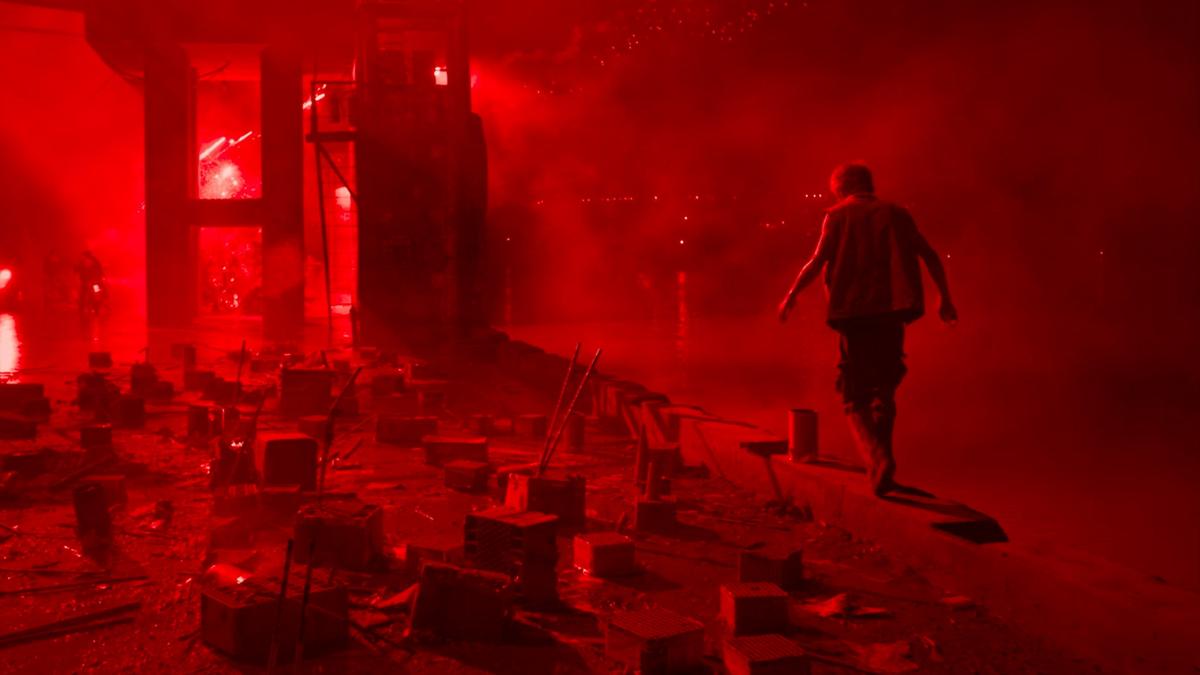
Much of the wonderment it inspires comes from the radical disparity between the lovely simplicity of its aesthetic and the sprawl of its intricate, century-spanning story. The lines are clean and sharp, the palette muted, approaching grayscale (which makes later splashes of color, like in the gaudy decor of a talk show or the blood-rust-red of a post-apocalyptic sky, pop even more), and motion within the frame is kept to a minimum. Instead, composition is everything, as in a dizzying prologue which, in the space of a few wordless minutes, gives us a meeting, a parental estrangement, a courtship, a marriage, a birth, a divorce and a sudden, shocking death, all delivered as vignettes glimpsed through the windscreens of a series of cars.