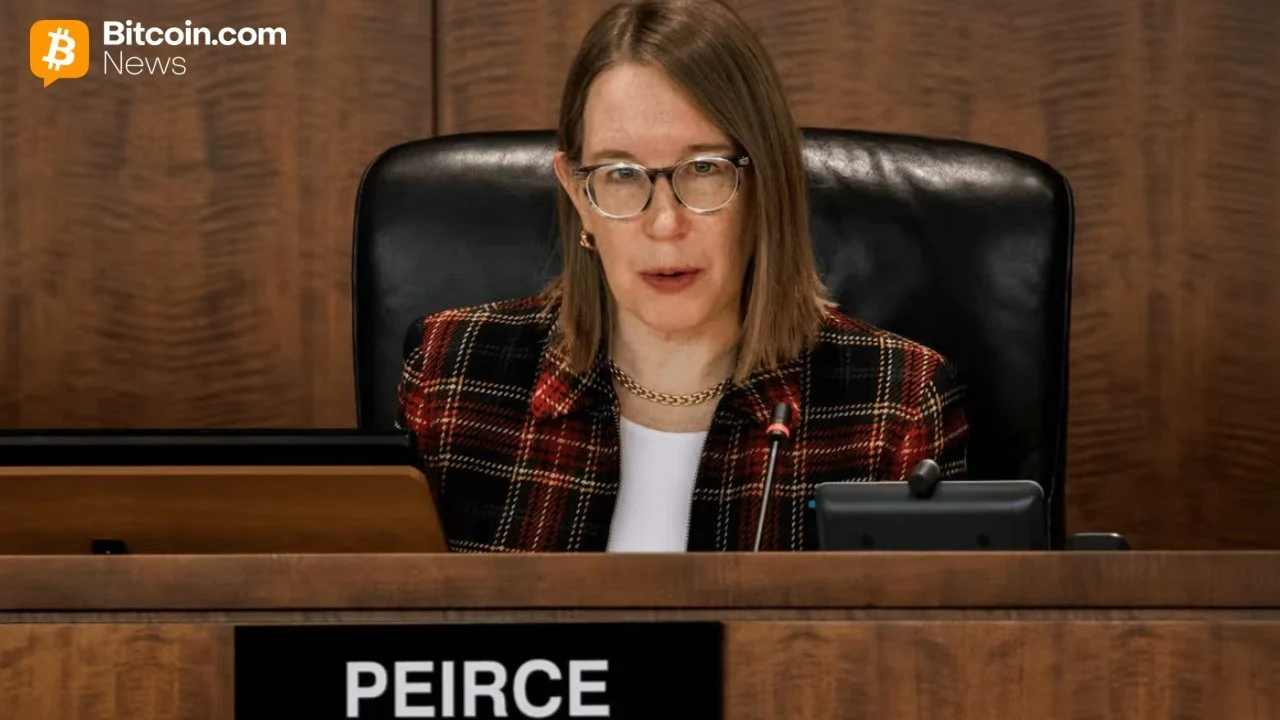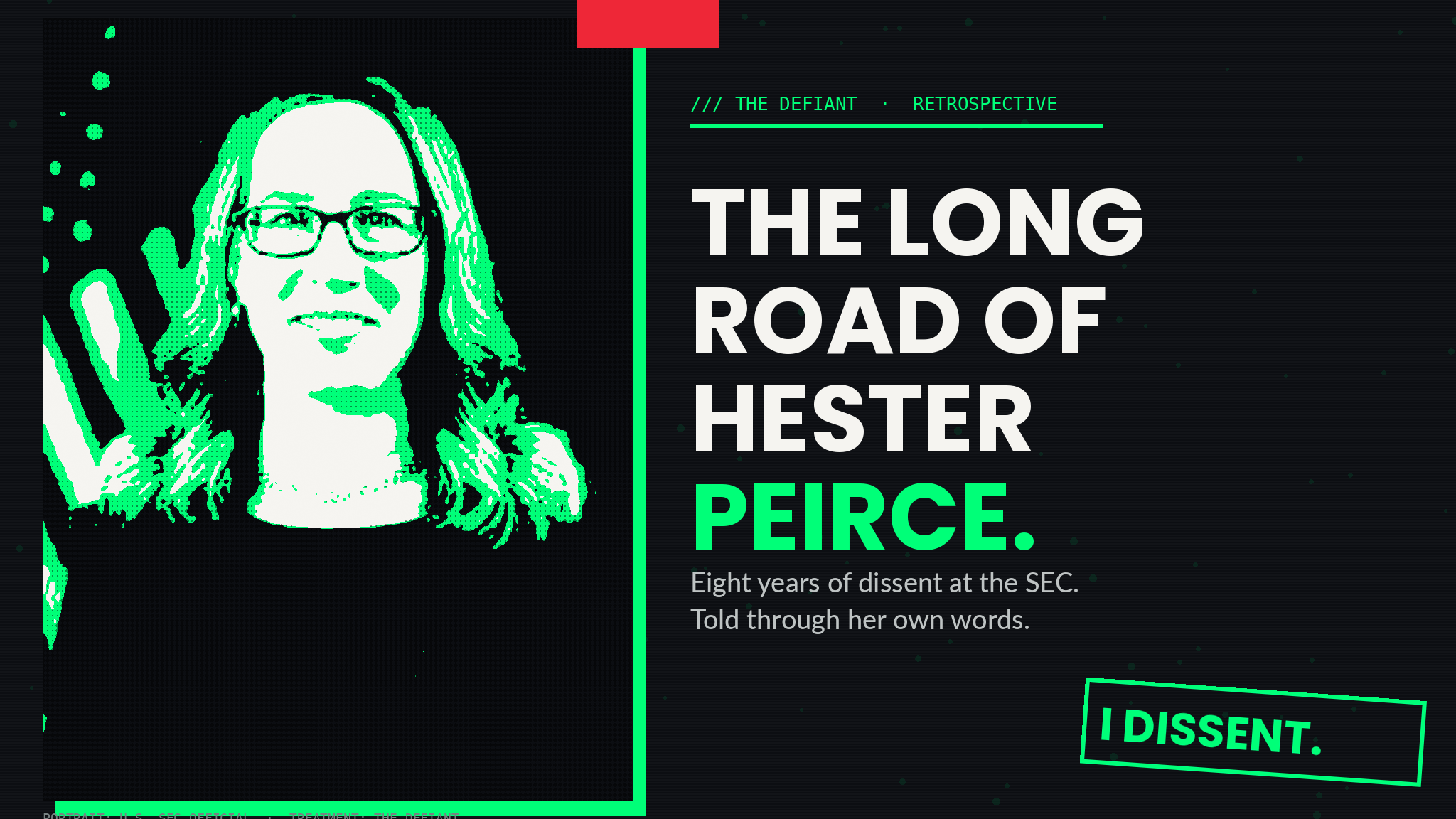
Hester Peirce delivered her farewell remarks at the U.S. Chamber of Commerce on Tuesday and called the speech "Peirce Out." She is leaving Washington after nearly thirty years for a teaching post at Regent University School of Law in Virginia Beach in November. Her second commissioner term expired in June 2025; she had been serving in a holdover capacity since.
Peirce arrived at the Commission on January 11, 2018, at a moment when crypto was both very large and almost entirely unregulated. Bitcoin had just printed an all-time high. Initial coin offerings had attracted billions of dollars the previous year, and Chairman Jay Clayton had issued a public statement on cryptocurrencies and ICOs the month before Peirce was sworn in, warning that "by and large, the structures of initial coin offerings that I have seen promoted involve the offer and sale of securities." The SEC had already begun a first wave of enforcement actions against ICO issuers but had not articulated how, or whether, decentralized networks could come into the regulatory perimeter. Peirce inherited that gap and would spend eight years describing it.
She came to the role with the resume of a securities-law institutionalist who happened to be deeply skeptical of how the institution operated. A Case Western Reserve economics undergraduate and a Yale Law graduate, she clerked for Judge Roger Andewelt on the U.S. Court of Federal Claims, practiced at WilmerHale, then worked as a staff attorney in the SEC's Division of Investment Management before serving as counsel to SEC Commissioner Paul Atkins during his 2002-2008 term. She left for the Senate Banking Committee under Ranking Member Richard Shelby, then conducted financial-regulation research at the Mercatus Center at George Mason University until her own commissioner appointment. Atkins, the colleague she had served two decades earlier, would later be confirmed as her chair.