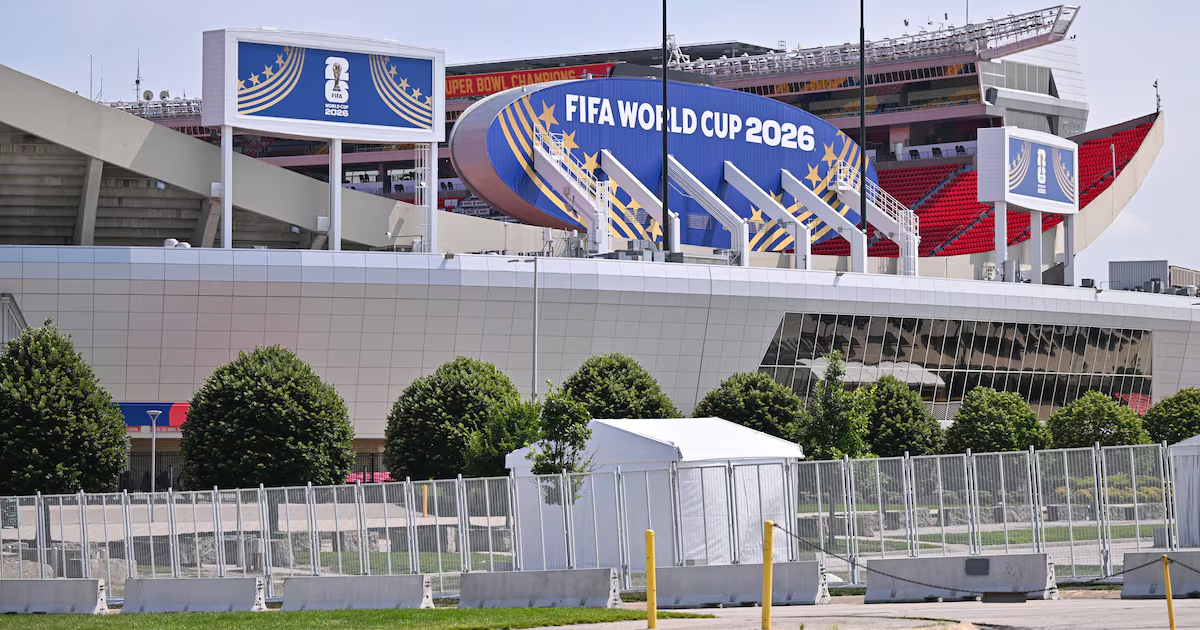
In 1994, the last time U.S. stadiums hosted the World Cup, an average ticket cost US$58. The most expensive ticket for the final could be grabbed for $475.
Adjusted for inflation, that would be $131 and $1,069, respectively, in today’s prices. Fast forward 32 years and things have become a lot pricier.
In the tournament due to begin on June 11, 2026, at the Azteca Stadium in Mexico, the average ticket prices have been in the region of $1,300. The cheaper tickets for the final are going for a whopping $10,000, and it is even more for the better seats.
That represents an inflation-adjusted increase in average ticket prices of about 1,000% between the two times the U.S. has hosted or co-hosted the event. As a benchmark for comparison, over that period, median household incomes in the U.S., adjusted for inflation, have risen by only 32%.
But is ticket pricing the real problem with the World Cup? As a soccer economist and co-host of the Soccernomics podcast, it is a question I have long thought about. And economic analysis can bring some clarity as to what brought about such eye-watering ticket prices, whether they are justifiable and why many think them unfair.