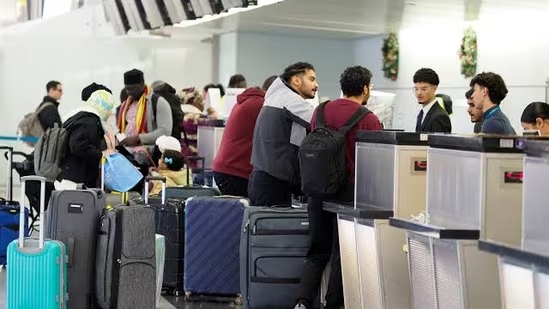
SynopsisRecent incidents have seen Indian holidaymakers criticized for their noisiness and rowdiness in foreign lands, a scenario not unfamiliar in the global travel narrative. Specialists advocate a cultural shift akin to China's meticulous promotion of travel etiquette.iStockThe Awful Indian has become a tourist trope that is overtaking the Brainy Indian one that had gained currency thanks to all those nerdy techies. There is all-round criticism of loud, bumptious, littering, pilfering Indians who make popular tourist destinations unbearable for all other visitors as well as locals. Aghast Indian and foreign commentators have noted that many foreign countries are now putting restrictions on Indian tourists because of their unacceptable behaviour.The examples given are familiar. Passengers standing up and making a push for the doors even before aircraft dock at gates, unruly behaviour inside the cabin including passing food around (a la trains) and using personal gadgets without earphones, attacking buffets at hotel restaurants with no concern for hygiene or others' convenience, leaving rooms damaged and dirty, being loud and rowdy at safaris, beaches, mountains, monuments, etc. They are an embarrassment.But does bad behaviour start only from the moment they begin their holidays or is it endemic and perpetual? And, importantly, are they the only tourists who behave badly abroad? British lager louts or yobs are also known for drunken, bad behaviour at budget European destinations and football venues. Russian tourists are also known to be rude, loud and disrespectful of local customs and rules. American, Australian and Chinese are also not exactly model tourists either.In fact, the term "The Ugly American" was immortalised 70 years ago in the novel by the same name, referring to highhanded US diplomats. That was the time when the US had emerged as the dominant political and economic power after World War II. But eventually the term came to symbolise the entitled, boorish, culturally ignorant, loudmouth Americans travelling abroad who damaged the image of the US. Did becoming a superpower impact American citizens' behaviour?While Australians' perceived bumptiousness is harder to explain, China has also had the same trajectory, as it became Asia's economic powerhouse in the past few decades. Hordes of Chinese gained the means to travel, without familiarising themselves with foreign destinations and norms; it was dubbed the "new traveller phenomenon". Add to that the cachet of international travel for a country and people that have been historically isolated, the result was headline-grabbing bad manners.A couple of decades ago, the horror stories now coming out about Indian tourists used to be routinely said about Chinese ones. There were incidents galore about Chinese tourists defecating in airport lounges, scratching their names on ancient monuments, forging marriage certificates to get honeymoon discounts, spitting, jaywalking, jumping queues, and generally disregarding rules and norms of the country they were visiting. It has become almost an economic rite of passage.China, however, was careful to ensure that the bad behaviour of those Chinese going abroad was not allowed to taint the entire country's image internationally in the long run. China's government took a pro-active stance and launched public education initiatives on international travelling etiquette with even "name and shame" databases to penalise disruptive Chinese nationals. India should take a cue from China, with adequate adaptation to suit our democratic polity.Social media is now a powerful tool through which behaviour that brings Indian tourists into disrepute abroad can be communicated, along with warnings about the consequences of flouting norms. Rules regarding etiquette in aircraft, hotels and tourist spots must be more stringently and punitively enforced within India too, to acclimatise Indians to what is acceptable behaviour. There is no point in being proud of our 5,000 year old civilisation if we cannot be civilised now.Read More News on...moreless
Awful Indian tourist? Why better travel etiquette matters more than ever
Recent incidents have seen Indian holidaymakers criticized for their noisiness and rowdiness in foreign lands, a scenario not unfamiliar in the global travel narrative. Specialists advocate a cultural shift akin to China's meticulous promotion of travel etiquette.
615 words~3 min read