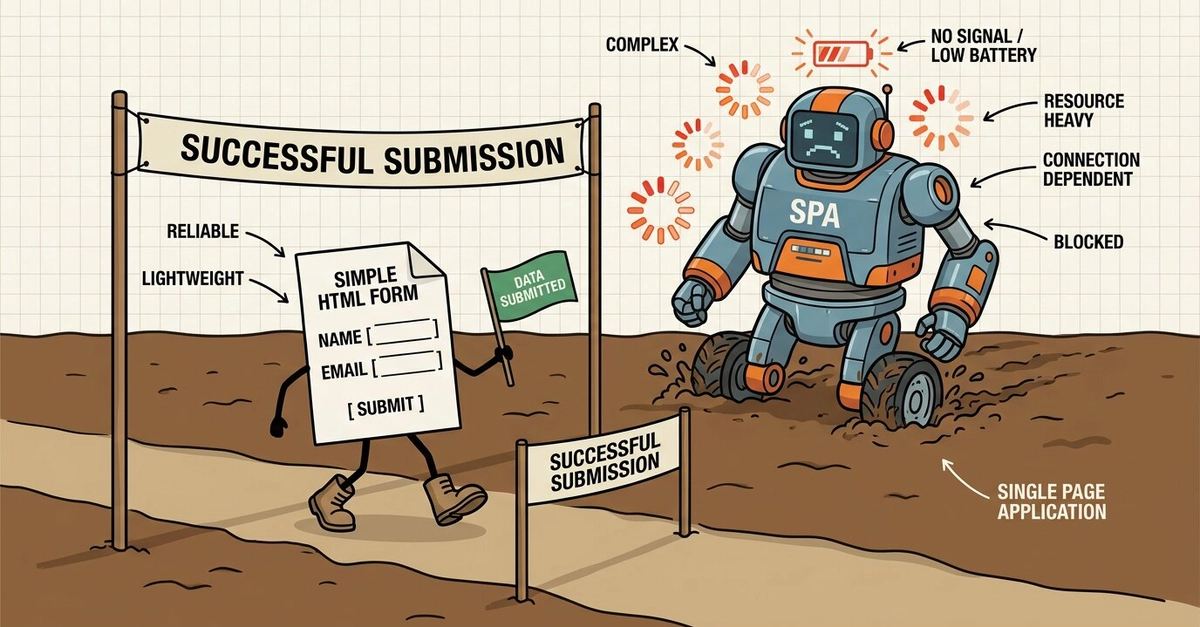
TL;DR: HTML-first means shipping real, server-rendered content before any JavaScript runs, then adding scripts only where they earn their place. In 2026 this approach is winning again, not out of nostalgia, but because the median mobile page now ships around 646 KB of JavaScript, fewer than half of mobile sites pass Core Web Vitals, and the browser already does natively what many sites still pull in libraries for. For most business websites, progressive enhancement is faster to ship, cheaper to run, and easier to keep alive.
Sometime in 2026, "just use HTML" stopped being a contrarian take. I noticed it first in my own client work, not in a conference talk. The sites that start close to the platform, plain HTML, forms, links, server rendering, and add JavaScript only where it genuinely helps, are the ones that launch faster, load cleaner, and generate fewer confused support messages two months later.
This is not anti-JavaScript. It is a reaction to a decade of reaching for a framework before asking whether the project needed one. The pendulum is swinging back toward the browser, and the numbers explain why.
What HTML-first actually means (and why it is not 2009 web design)
The fastest way to misunderstand this is to picture table layouts and inline styles. That is not it.