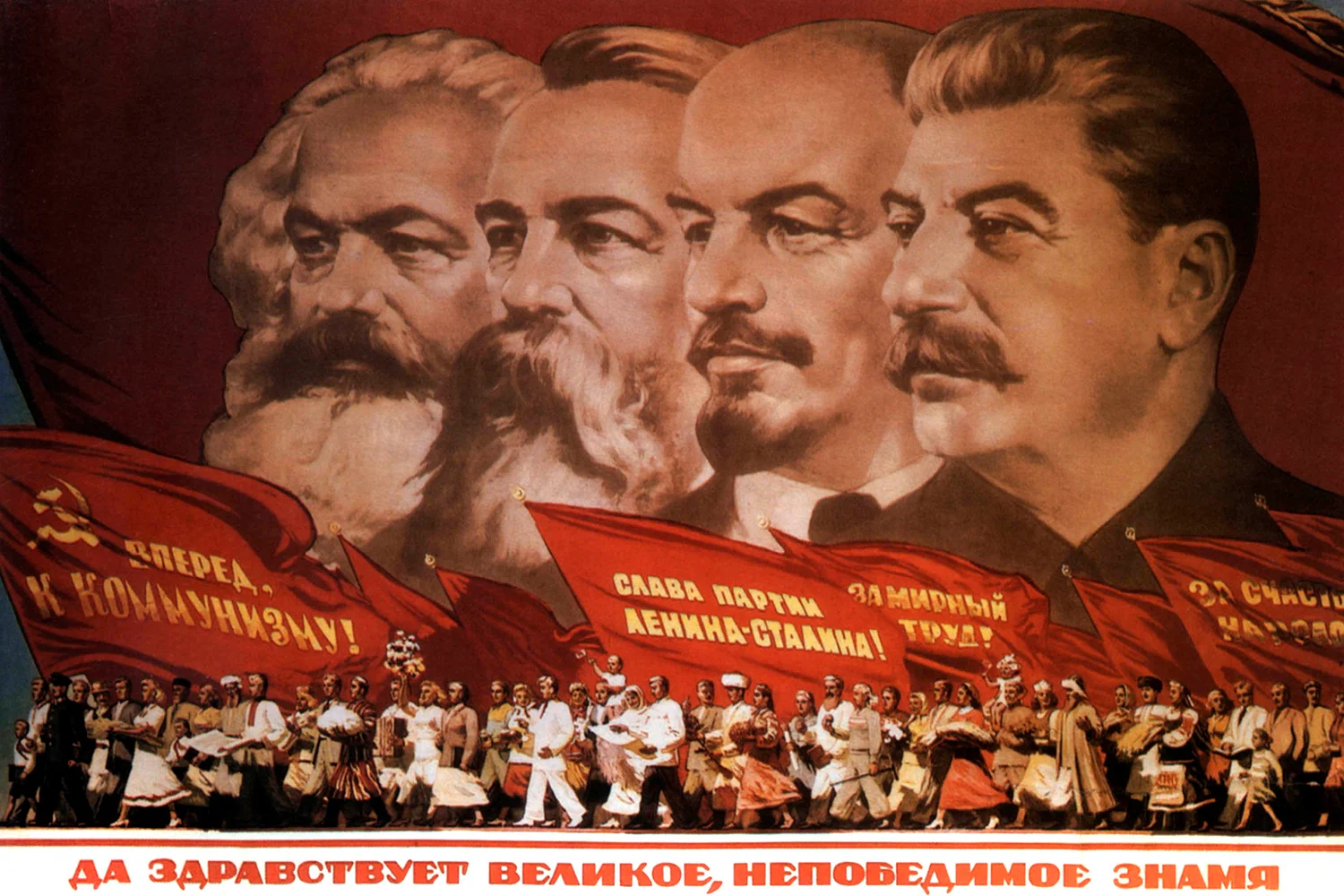
Many history books about Russia and the Soviet Union published in recent years are microhistories: scholarship that looks at the past as through a microscope, prioritizing the minutiae of everyday life over wars, government changes, economic cycles, and other large-scale events.
One recent example is Yuri Slezkine’s The House of Government: A Saga of the Russian Revolution (2017), about the private lives of Bolshevik elites who shared an apartment building. Karl Schlögel’s The Soviet Century: Archaeology of a Lost World (2023) puts the material in materialism, exploring Soviet existence by way of ordinary household items like wrapping paper and Krasnaya Moskva perfume bottles. More recently still, The Dark Side of the Earth: Russia’s Short-lived Victory over Totalitarianism (2025) by Mikhail Zygar covered the Soviet Union’s final years through hundreds of interviews, including one with former Soviet leader Mikhail Gorbachev.
Book cover featuring a historical, eye-level photograph of a crowded city street in what appears to be the Soviet Union. Numerous pedestrians in mid-century attire walk along the sidewalks and crosswalks, while vintage cars and trolley wires are visible on the wide road. In the background, grand European-style buildings and the distinct onion domes of a Russian Orthodox church are visible under an overcast sky. Large, bold white text at the top reads "EXIT STALIN." Below it, smaller yellow text reads "THE SOVIET UNION as a Civilization, 1953–1991." At the bottom, the author's name, "MARK B. SMITH," is printed in bold white capital letters.