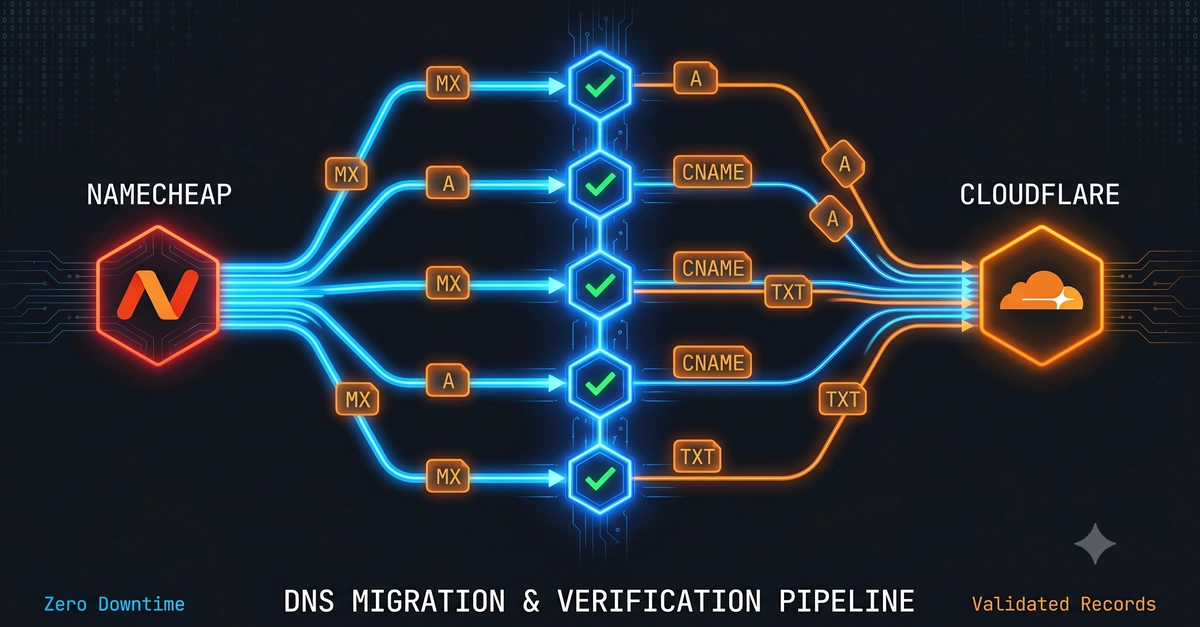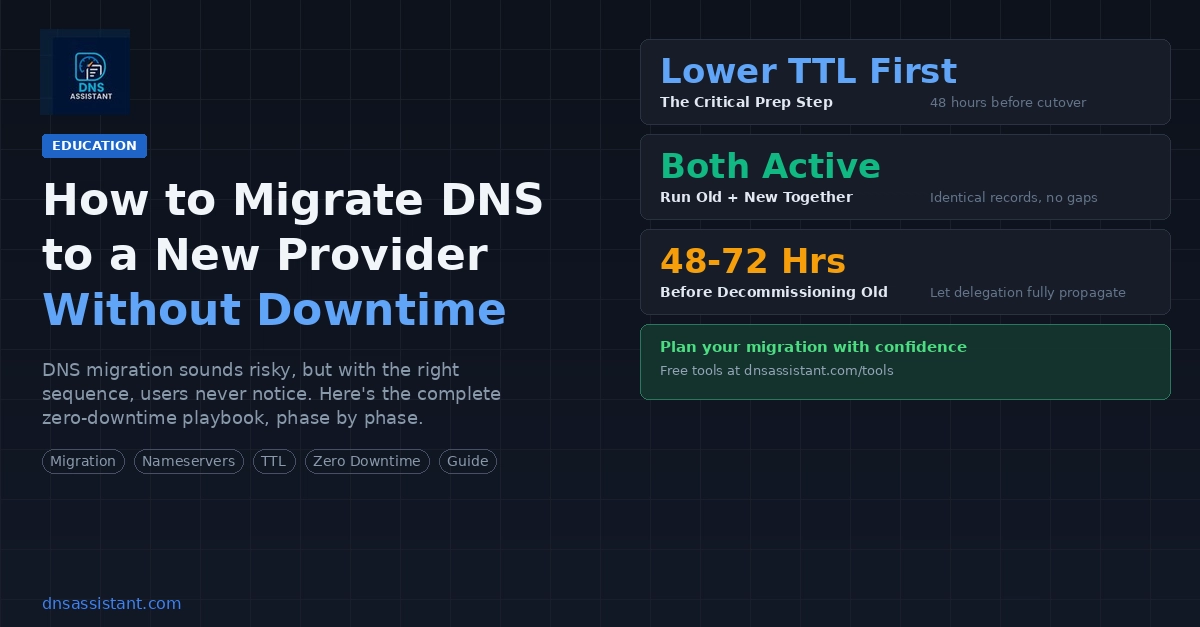
Migrating your DNS from one provider to another sounds risky. Your entire online presence, your website, your email, your APIs, depends on DNS resolving correctly. A mistake during migration can take everything offline. But with the right process, DNS migration can be done with zero downtime, and it's far less dangerous than it seems.
The key is understanding that DNS migration isn't a single switch you flip. It's a careful sequence where you prepare the new provider completely, verify it works, and only then redirect traffic, with the old provider standing by as a fallback throughout. Done correctly, users never notice anything changed.
This guide walks through the complete process: preparation, the actual migration, verification, and the common mistakes that cause the downtime you're trying to avoid.
Why Migrate DNS Providers?
Organizations move DNS providers for many reasons: better performance through a larger anycast network, lower costs, advanced features (traffic management, better APIs, DNSSEC support), consolidation of services, improved security and DDoS protection, or moving away from a provider that's being deprecated. Whatever the reason, the migration process is the same.