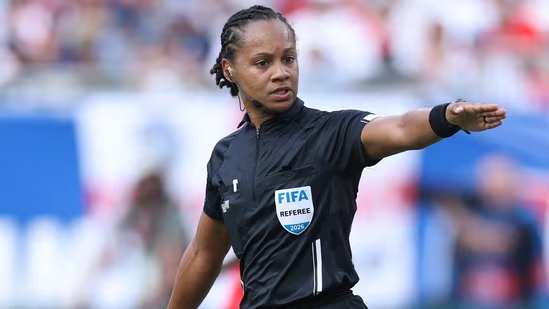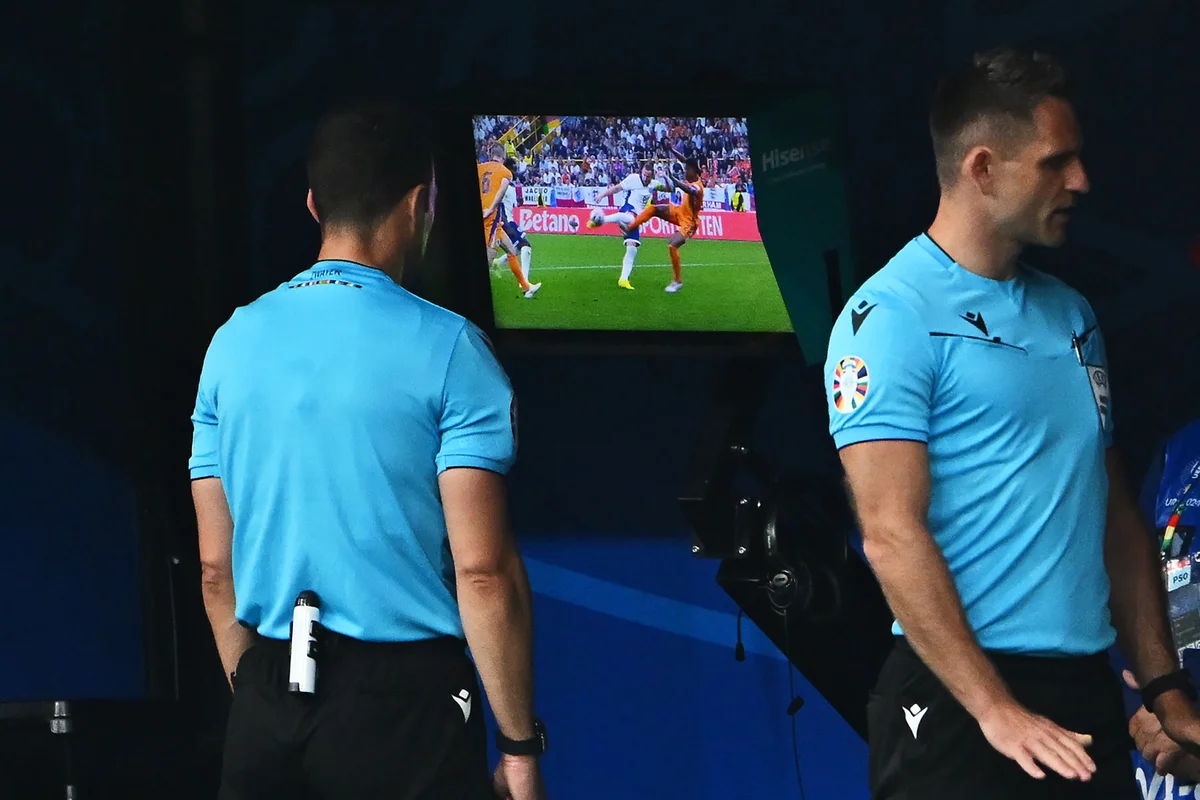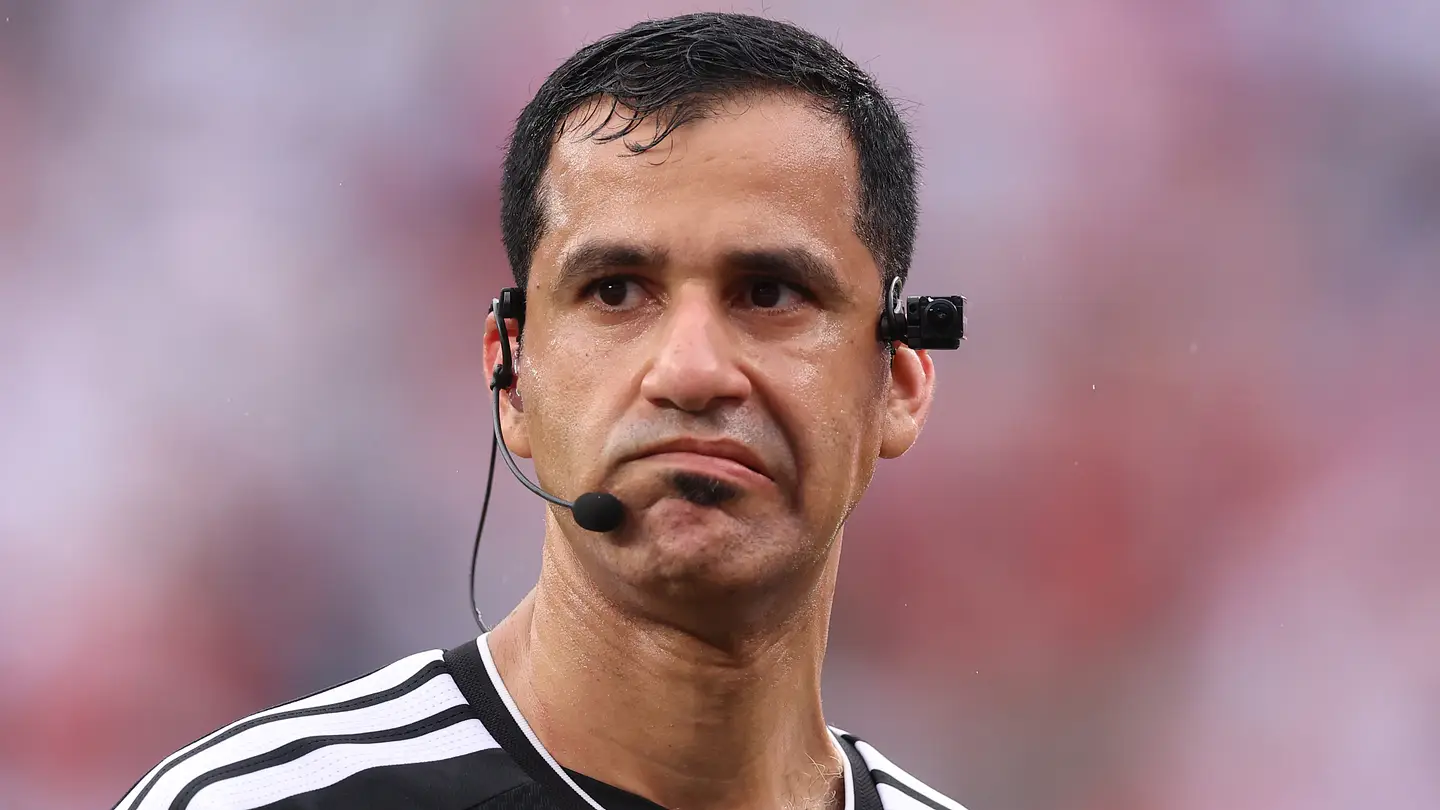
Not all of Fifa’s innovations at this men’s World Cup have been an instant hit with fans. But amid the clutter of the opening day one success did seem to emerge – the new and improved refcam view.As part of their matchday equipment a small, high-definition “stabilised” camera is attached to the referee’s headset. Before the tournament, the Italian veteran referee Pierluigi Collina, chair of Fifa’s referees committee, said: “We think that it is a good chance to offer the viewers a new experience … from an angle of vision which was never offered before.”Fifa deployed a clunkier iteration during last year’s Club World Cup, and the Premier League has occasionally dabbled with it. However, usage in England has historically focused on clips of confrontation – picture Manchester United’s Bruno Fernandes advancing on some hapless official, hand clasped over his mouth so he can’t be lip-read as he berates the ref over some minor infraction or other. The incorporation into the World Cup coverage has been different. So far in the opening two matches, the refcam has been used to show replays of goals from a unique angle, adding greater depth to watching from home.hhhThe Raúl Jiménez goal for Mexico against South Africa was shown from the perspective of Wilton Sampaio having to keep up with the pace of the move by these elite level athletes, and rapidly follow a beautiful cross in, emphasising how much of the action at a moment like that is going on behind him or outside his peripheral vision. Replays of near misses – such as Mexico hitting the post near the end of the first half at the Azteca – bring home how close referees have to stay to the action, and really emphasise the fine margins at play.A refcam view of Mexico v South Africa at the World Cup, as broadcast on ITV in the UK. Photograph: ITVLadislav Krejci’s opener for Czechia, as seen from refcam, showed just how much visually referee Amin Omar had to take in, as players converged on the ball at the edge of the six-yard box and the officials made a snap judgment on whether a player in an offside position was impeding goalkeeper Kim Seung-gyu’s view. Of course, VAR is lurking in the background, but the refcam demonstrates just how fast the game is played at the top-level in a way that a view from a higher angle camera, or even sitting in the stands, doesn’t necessarily fully convey.Whether this newfound perspective will inspire television audiences to feel a sudden wave of benevolence toward the immense pressure officials face remains to be seen – we are yet to have a howling officiating error, but with 102 more games to go in this format the chances of there not being one along the way seem pretty slim.What is clear though is that this is yet another way that the presentation of the beautiful game on television is taking its cue from the video games industry. Ironically, given the split between Fifa and EA Sports over the long-running football simulation series, the governing body’s graphic and interactive designers for the 2026 World Cup are very much reading from a gaming script. The glossy opening lineup graphics featuring digitised players posing in hyper-real montages and data-heavy overlays that sweep across the screen are nothing if not reminiscent of the loading screens and heads-up display menus in games. And first-person perspective is the way millions of players experience games like Fortnite and Call of Duty.The refcam isn’t perfect – the stabilisation technology has still got some mileage for improvements for sure – but it is, so far, an interesting new way for armchair fans to experience what it is like to be right in the centre of the action on one of the world’s largest stages. Among all of Fifa’s recent misfires, they might have just given us the future of football broadcasting.
World Cup refcam offers new perspective to hint at future of football broadcasting
Usage in opening matches focused on replays of goals from a unique angle offering the viewer greater depth to watch from home
652 words~3 min read