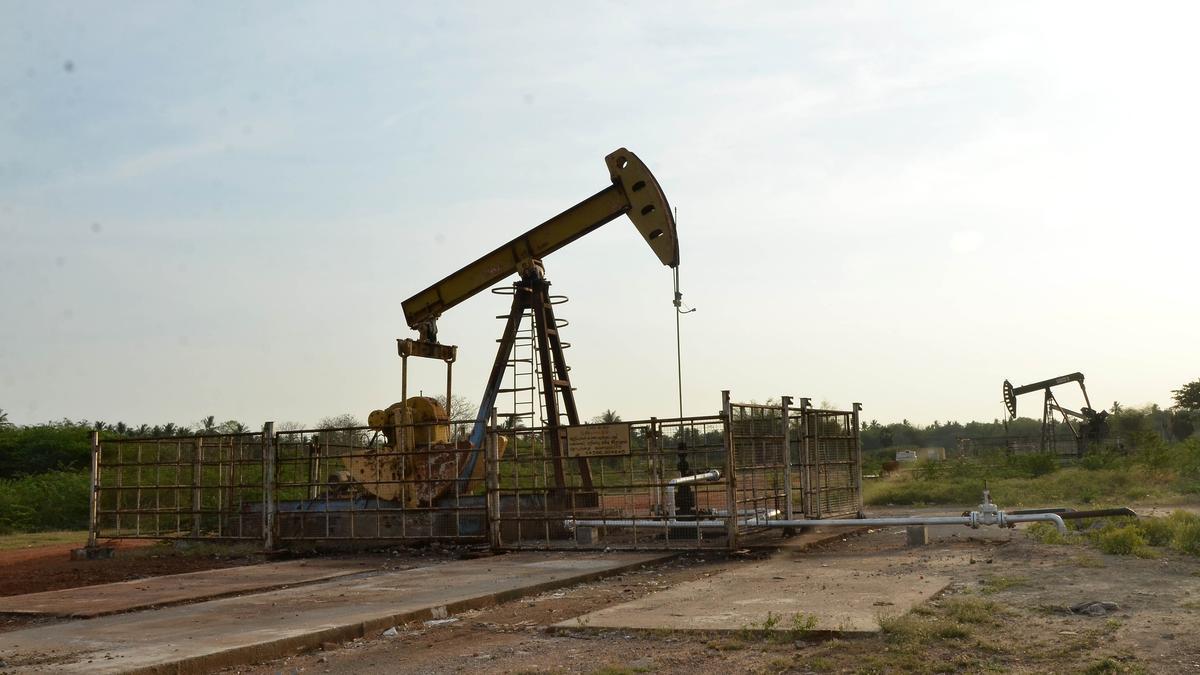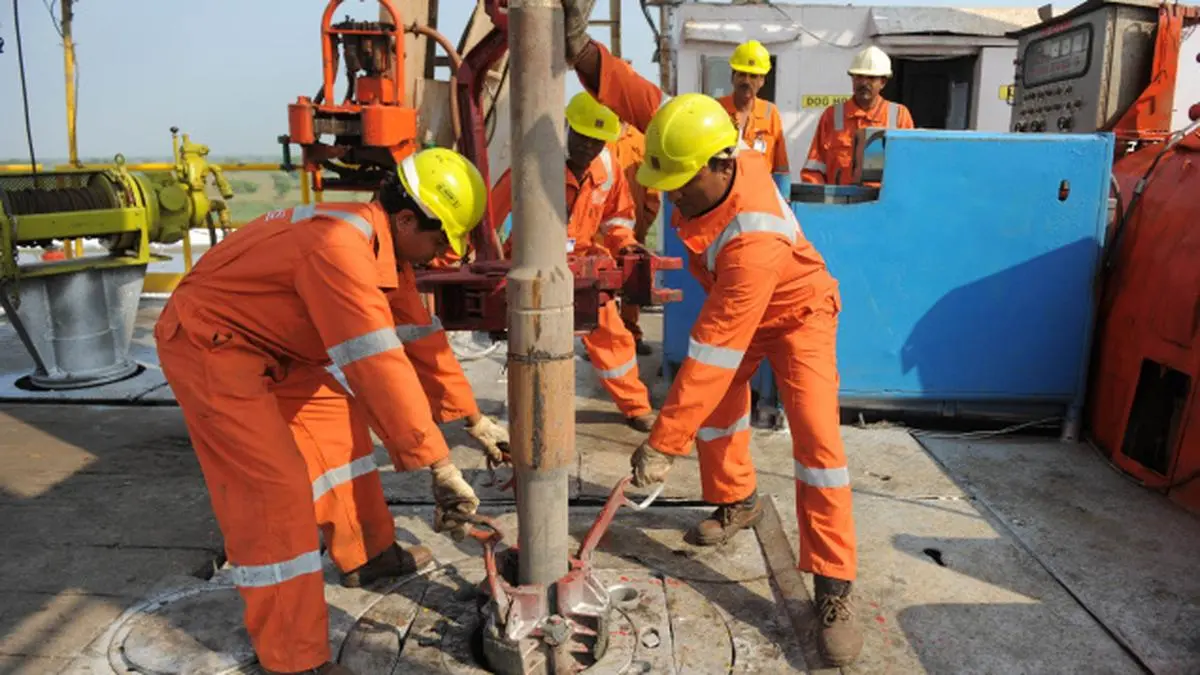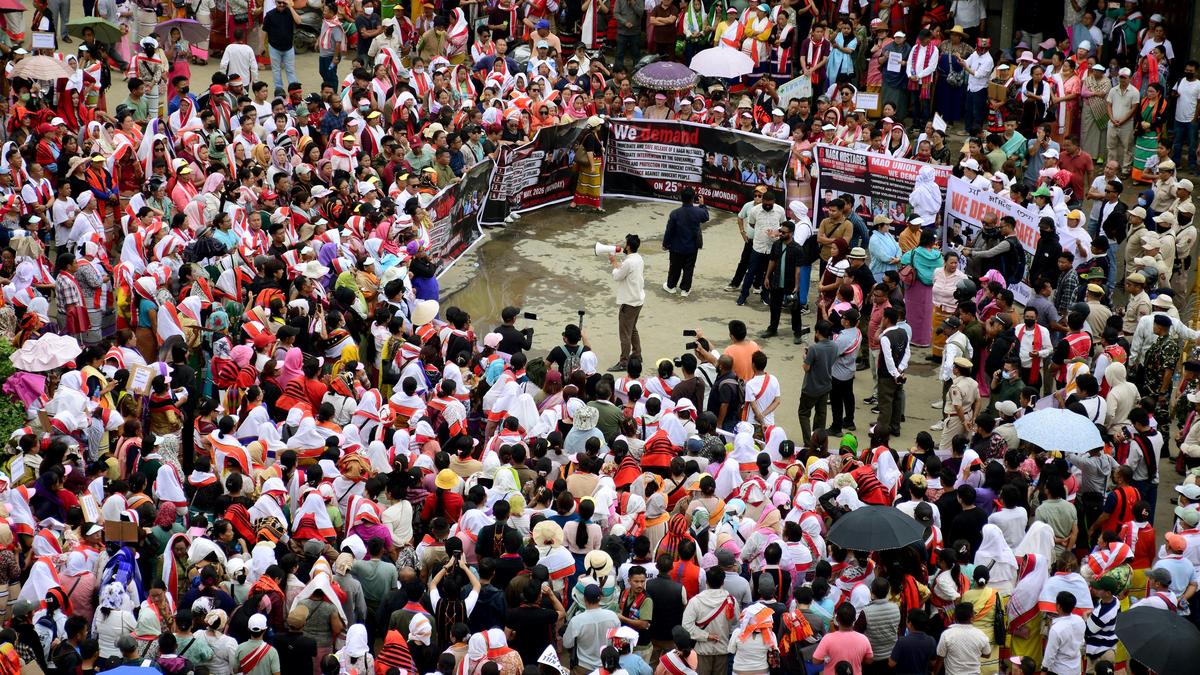
Guwahati: A group of seven Naga organisations has opposed an agreement among the Centre, Assam and Nagaland on energy exploration on the inter-state border before firming up a political settlement of Naga issues.The Naga National Political Groups (NNPG), in a statement, asserted that ownership and control over natural resources are part of the 'Agreed Position' signed with the Centre in 2017. NNPG is a conglomerate of several groups which are talking to the government of India on Naga political issues.Citing provisions of the 2017 agreement, the group maintained that any attempt to explore natural resources in Naga areas before a formal political settlement is reached would be "illegal and against the agreed principles".The governments of Assam and Nagaland, on Thursday, signed a tripartite Memorandum of Understanding (MoU) with the Centre for the exploration and production of crude oil and natural gas along their disputed inter-state boundary, ending nearly three decades of stalled activity in one of the region's most resource-rich but contested stretches of territory.NNPG stated, “Ownership and transfer of land and its resources, both manmade and natural including Mines and Minerals, Fossil fuels, Petroleum and Natural Gas and any new finds, Nagaland Tatar Hoho (parliament house) shall be the apex body to legislate on matters. With respect to radioactive elements which have national security relevance and implications, exploration and mining shall be through Joint Venture Agreements between the Government of India and The Government of Nagaland. This implies post-solution Nagaland Government and unless Indo-Naga political settlement is officially signed across the table, any attempt to explore natural resources in Naga areas anywhere is illegal and against the agreed principles.”The group stated, “Until such time, WC, NNPGs will, peacefully or otherwise, ensure that no company, national or international, extracts crude petroleum reserves from the Naga soil. It would be a betrayal. Revenue sharing between Nagaland and Assam State or with any other state is a profit motive of the few and not in the interest of the Nagas. The so-called Disturbed Area Belt (DAB) is legally and historically an integral part of Naga Homeland. Assam is not sharing its oil revenue with Nagaland, why would the Nagaland Government share its wealth with the Assam Government? The resentment of Nagaland tribes and civil societies against oil exploration and extraction is justified. Prospecting firms and marketing companies such as Oil India Limited (OIL), Oil and Natural Gas Corporation (ONGC), Metropolitan Oil and Gas Private Limited (MO&GPL), Public Sector Oil Marketing Companies (OMCs), Indian Oil Corporation (IOCL), Bharat Petroleum Corporation Limited (BPCL), Hindustan Petroleum Corporation Limited (HPCL) etc. could be reliable partners of Nagas in the post solution years. The question is, when will the Government of India officially sign and declare Naga political settlement, having acknowledged and appreciated the Naga history and identity?.”The agreement was signed at the Ministry of Home Affairs in New Delhi in the presence of Union Home Minister Amit Shah, Assam Chief Minister Himanta Biswa Sarma and Nagaland Chief Minister Neiphiu Rio.It seeks to facilitate exploration and production activities across more than 1,000 square kilometres of land along the 434-km Assam-Nagaland boundary, an area believed to hold substantial hydrocarbon and mineral reserves.The agreement targets exploration in the Disputed Area Belt (DAB), a stretch of disputed territory along the inter-state boundary of Assam and Nagaland.Nagaland chief minister Neiphiu Rio recently met Union Petroleum minister Hardeep S Puri and discussed resumption of petroleum exploration and production in the State.In 2025, on ceasefire militant outfit National Socialist Council of Nagaland-Isak-Muivah (NSCN-IM) had reiterated that it would oppose the move of the centre to explore petroleum in Nagaland.Oil India Limited (OIL) last year has stated that it plans to start exploration in Nagaland once the climate is conducive. OIL has a 3000 sq. km area in Nagaland.ONGC had earlier stopped E&P activities in Nagaland in 1994 after the militant outfit NSCN (IM) asked it to quit the state.
Seven Naga groups oppose Centre-Assam-Nagaland energy deal before settlement of issues
Naga groups are opposing a new energy exploration deal between the Centre, Assam, and Nagaland. They argue that natural resource ownership is part of the agreed political settlement. The agreement allows exploration along the disputed border. Naga organizations state that any exploration before a final political solution is illegal. They vow to prevent extraction from Naga land.
646 words~3 min read