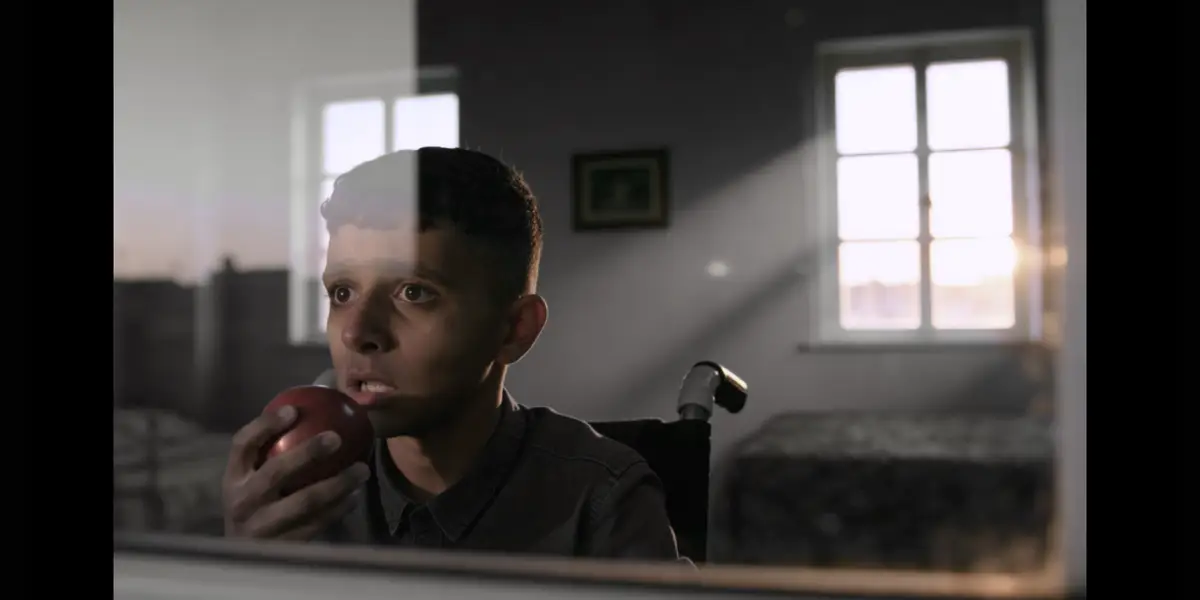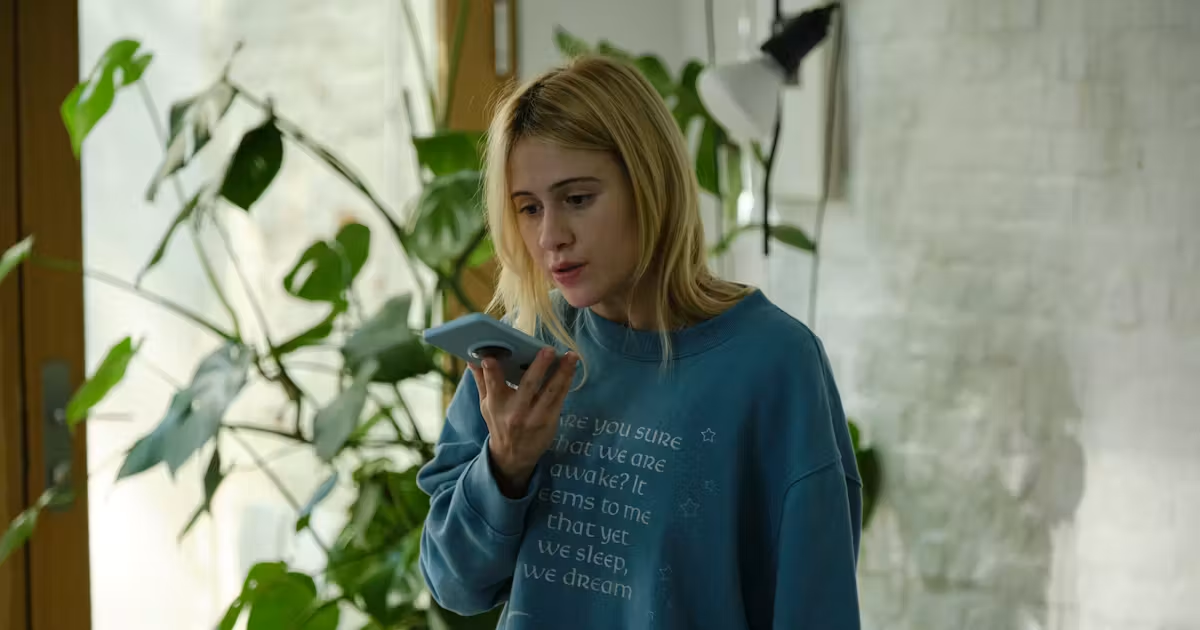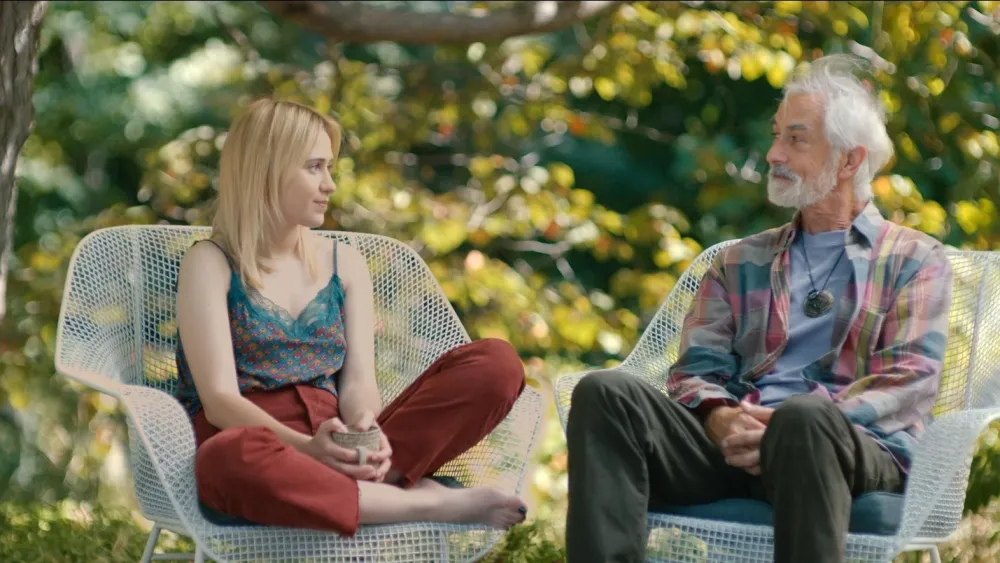
A decade or so ago, the premise of “O Horizon” might have seemed like “Black Mirror” fodder: Fed various photos, videos, messages and personal effects of a dead man, a computer program devises an interactive simulacrum, available at any time for conversation via a phone app, live if not alive. Today, the idea doesn’t feel old hat so much as depressingly immediate, as discussions of the ethical and existential ramifications of AI chatbots have migrated from the hypothetical to the everyday. But writer-director Madeleine Rotzler — better known as Madeleine Sackler, the name by which she made her previous films — largely opts not to get into the weeds there, focusing instead on one bereaved woman’s experience of healing with technological assistance.
That makes “O Horizon” a warmer film than it might have been, thanks in large part to Oscar nominee Maria Bakalova‘s open, ingenuous presence as the young woman in question. But it’s also a less interesting or penetrating one, led by big feelings rather than big ideas, and ultimately noncommittal (or nonjudgmental, if you prefer) regarding the concept of artificial companionship and synthetic memory: Rotzler’s script suggests that these can be helpful to some people in some contexts, but also, you know, that we should be asking questions. One can see why the filmmaker – as the daughter of Jonathan Sackler, the late co-owner of Purdue Pharma — would resist being drawn on even abstract debates about pain management, but the film’s hopeful, semi-comic approach is overly cautious.