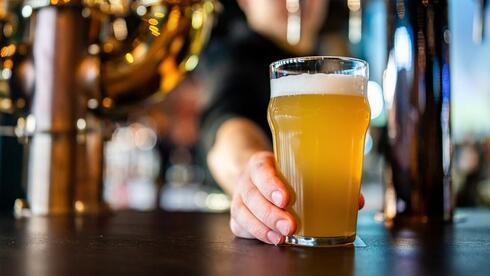
After COVID, wars and modest local beer consumption, Israel’s boutique breweries have learned to survive through quality, partnerships and a stubborn belief that the next pour will be betterItzik Shasho|For a few days in January 2011, it felt as if Israel had finally joined the family of nations, specifically the nations that like to drink and are willing to invest a little in doing it properly. The feeling grew stronger with every minute I spent inside Yad Eliyahu Arena in Tel Aviv, then still known as Nokia Arena, in keeping with the branding spirit of the time. The event had nothing to do with basketball. It was Israel’s first beer exhibition, officially called BEERS 2011, which promised, delivered and poured 200 different beers from Israel and around the world.Alcohol writers at the time, myself included, competed in effusive previews, live reports and post-event reflections. The general line was that this was the natural and long-awaited next stage in the beer revolution that had begun in Israel about five years earlier and was now reaching its peak before thousands of thirsty visitors.10 View gallery Beer(Photo: Siamionau Pavel, Shutterstock)Looking back, that moment may have been the high point of the local hype around boutique beer in Israel. These were beers from new, small breweries, far smaller than the two giant players that had long dominated the market, all promising to bring the craft beer gospel from the United States and Europe to Israel.At the time, it seemed that two or three invitations landed on the editorial desk every month, each one asking us to come see some tiny romantic brewery in the Galilee or a cool south Tel Aviv pub pouring only local boutique beer. Many times, the small brewery turned out to be little more than a few jerrycans connected to a pipe, and the pub was a hole in the sidewalk with two taps that had seen better-flowing days. But the general atmosphere was clear: something good was happening here, and it was bubbling.Some small breweries already seemed built to last. They were trying to do things by the book, at least in terms of equipment and know-how, and fighting to secure the occasional tap in nightlife venues or catch a customer’s eye from the shelf of a specialty alcohol shop. Some even made it onto the shelves of larger retail chains, though for most supermarket shoppers they still felt like something of a curiosity.Fast-forward to 2026, and here is a spoiler that will probably not shock anyone: Israel did not become a beer powerhouse. Not for regular beer and not for craft beer. In a country where annual beer consumption per person is around 15 liters, roughly a quiet quarter in much of the Western world, the ceiling is clear, and it is not very high.Still, 20 years after that much-discussed revolution began, it is worth asking where we have ended up. Who is still with us? Who fell by the wayside? And how does anyone maintain a boutique alcohol industry in a country where the busiest app belongs to the Home Front Command?So I went to find out. Which is another way of saying I drank a lot.The northern Tefen Industrial Tower at 11 a.m. on a weekday is exactly the sleepy event you imagine it to be. The road winds between green patches and small communities, and shortly after the traffic circle, Malka Brewery appears.It is easily one of the first brands that comes to mind when talking about Israeli boutique beer, and not only because it started playing with malt and hops back in 2006.Owner Assaf Lavi greets me in his office, overlooking the large brewing tanks, and asks what I want to drink. It takes me a second to remember the hour and the fact that I still need to drive home, so Lavi uses my hesitation to make us both coffee.The last time we met was at Malka’s original location, at Kibbutz Yehiam. Back then, the brewery was much more modest, but it opened onto a huge wooden deck with a stunning view, and a glass of fresh beer in hand was all you needed to overcome the aroma from the nearby sausage factory.10 View gallery Assaf Lavi, Malka Brewery(Photo: Effi Sharir)“The whole thing started with my brother,” he says. “In the United States, the craft beer revolution was already in full swing, and in Israel there were only Tempo and Israel Beer Breweries. My brother said that if people here were drinking 14 or 15 liters a year, and the whole market could grow to 25 or 30 liters, maybe there was business potential here.“We were also used to the idea that in every Western country there is wine with the meal, cocktails and beer that people drink daily. When I lived in London, I would drink two or three pints at a regular after-work meeting on the way home.”But Israel, to put it mildly, is not there.
The hype is gone, but Israeli boutique craft breweries keep pouring
After COVID, wars and modest local beer consumption, Israel’s boutique breweries have learned to survive through quality, partnerships and a stubborn belief that the next pour will be better
4,364 words~20 min read