Tata Tiago CNG
| Photo Credit:
Kaizad Adil Darukhanawala
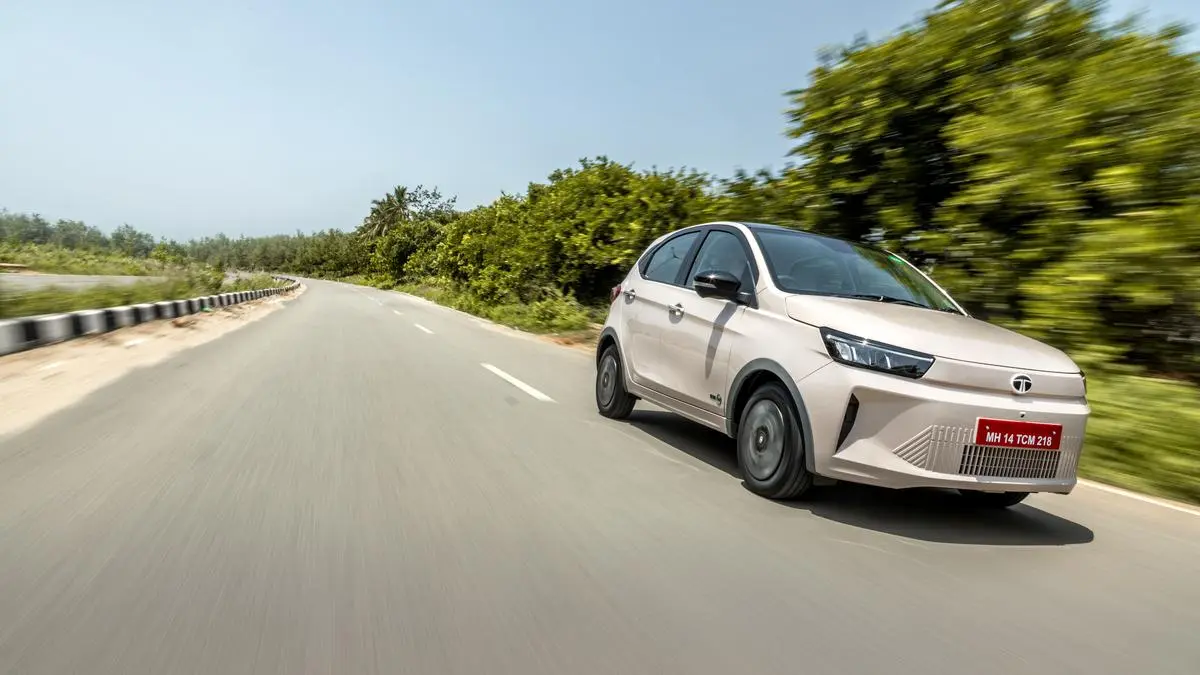
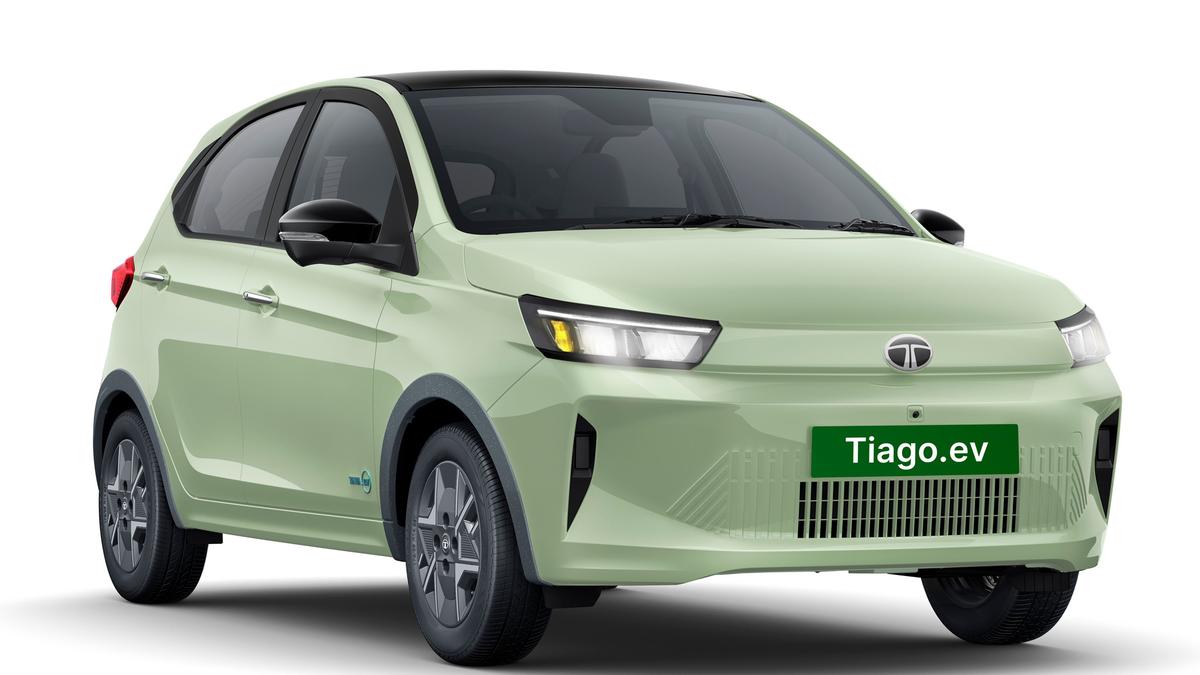
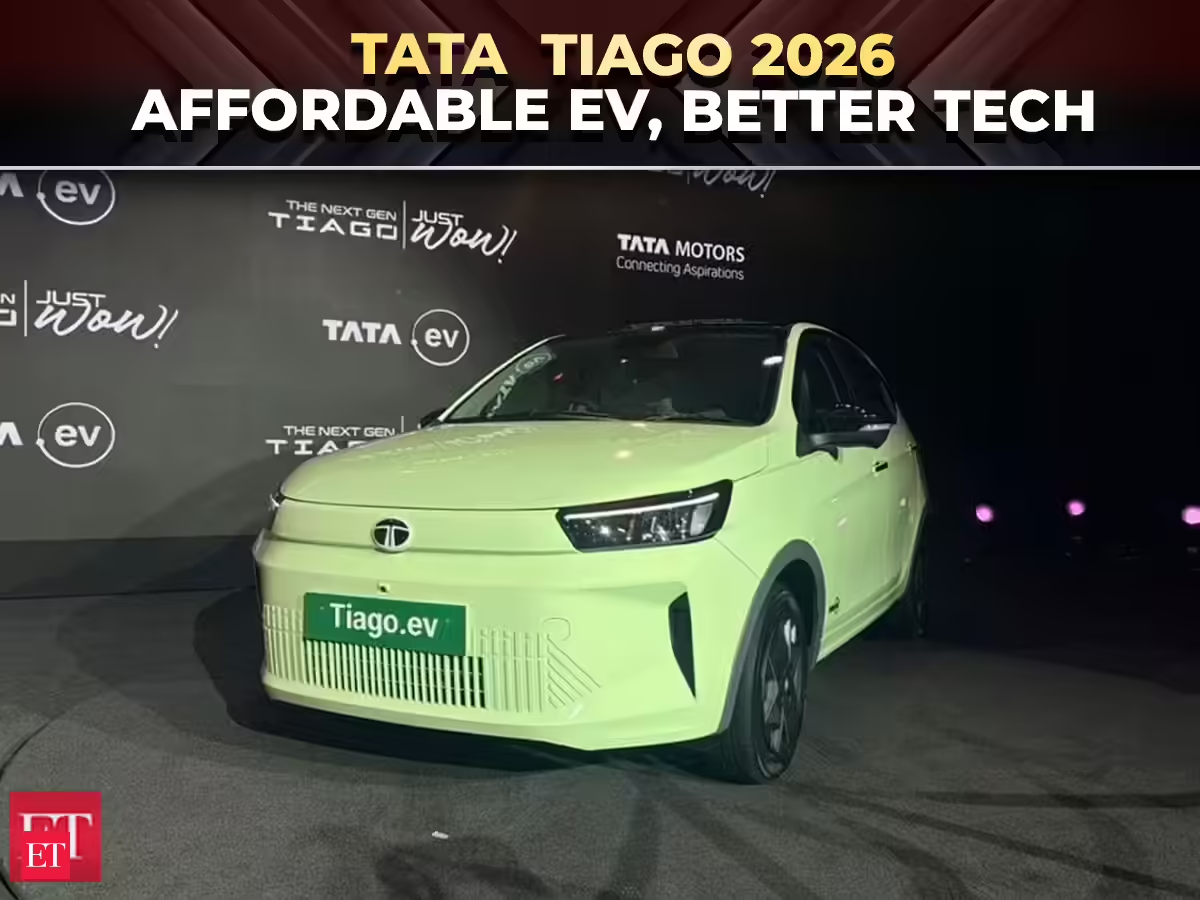
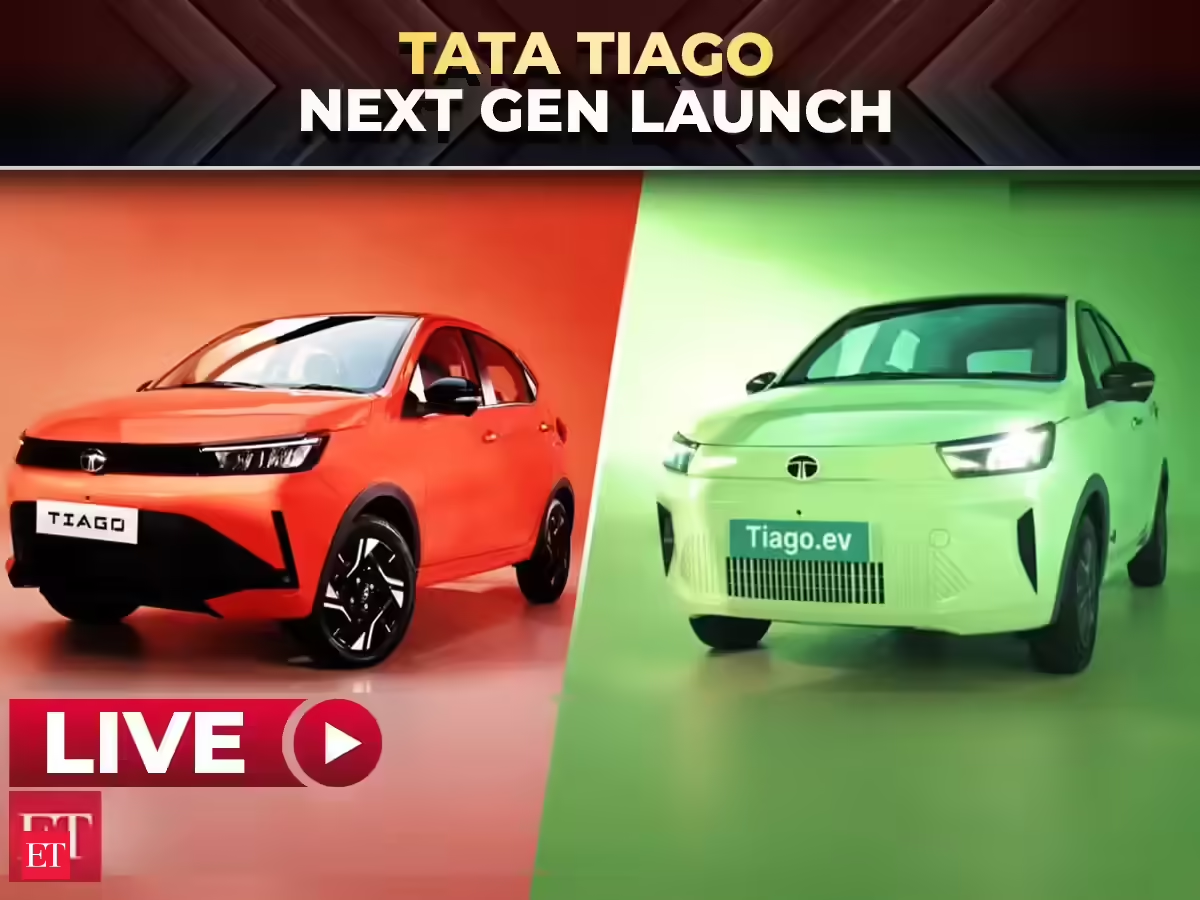
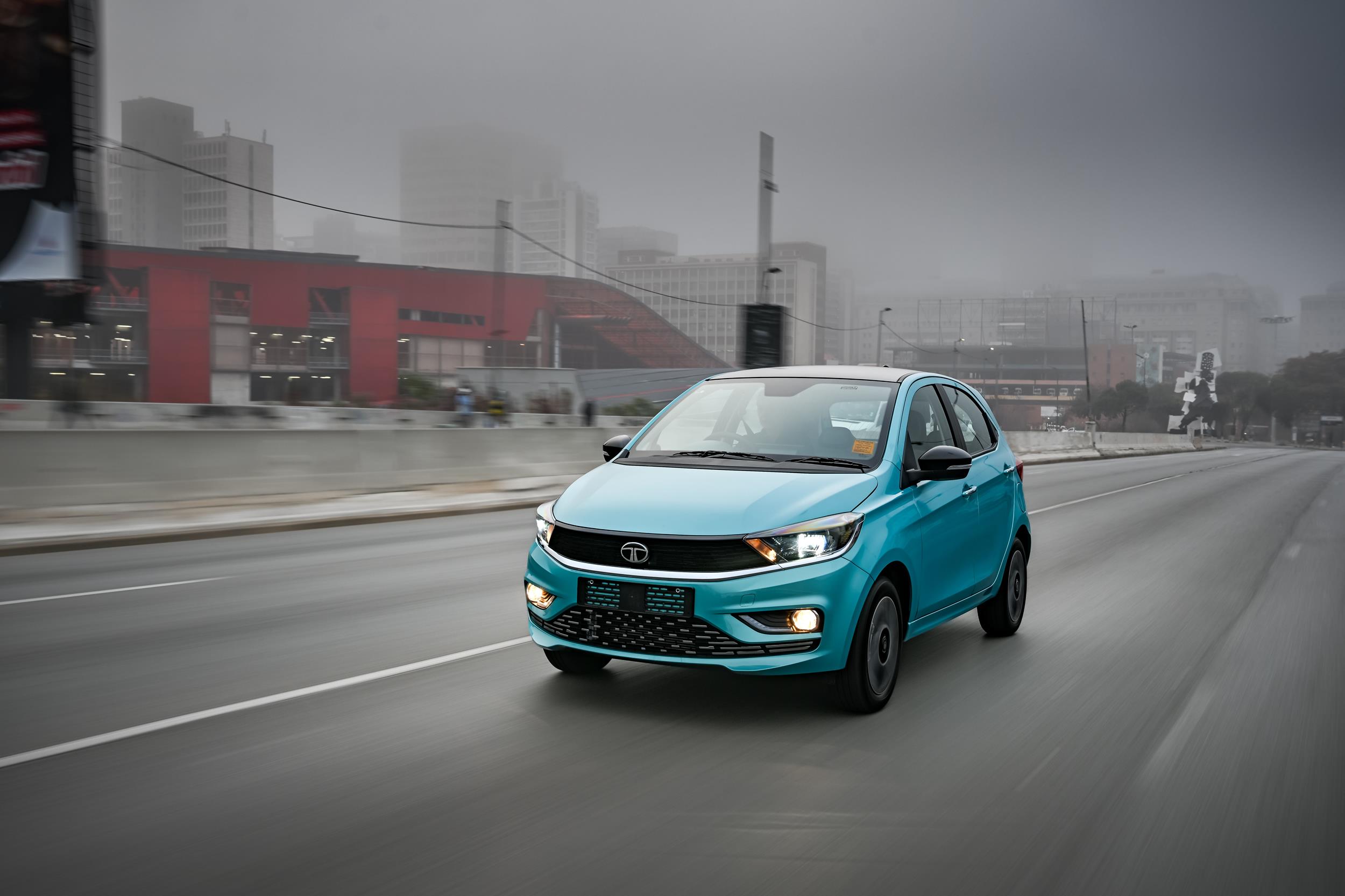
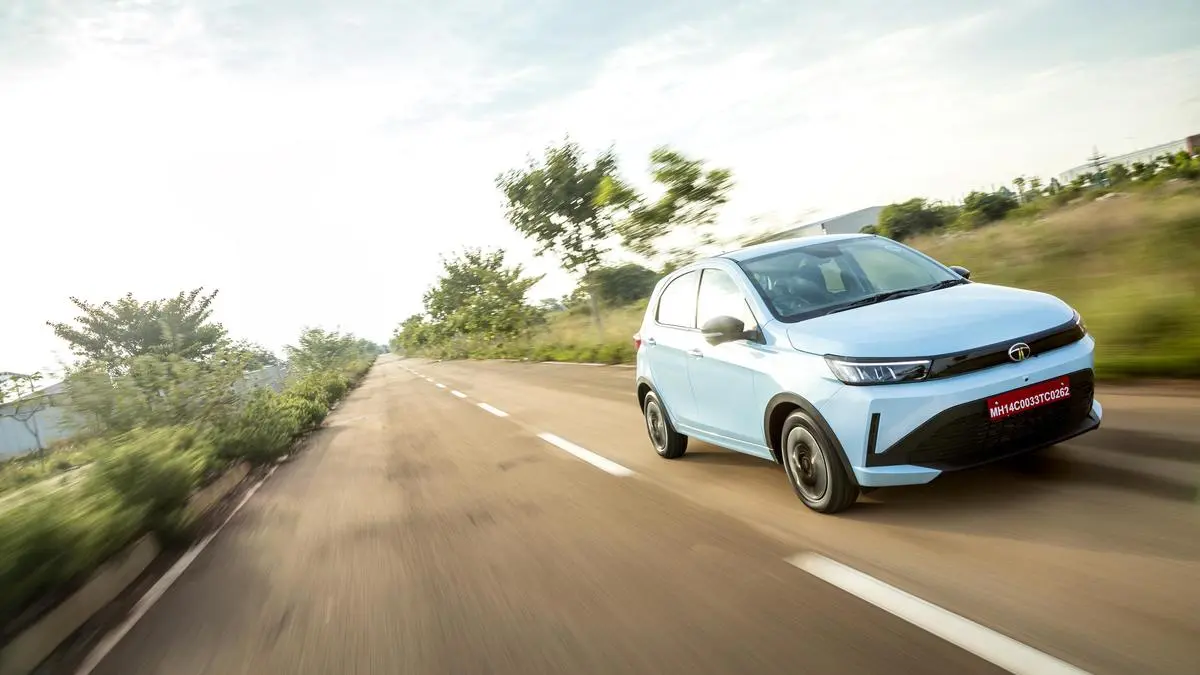
A strategic error on Tata’s part was to let me drive the Tiago ICE after the EV. In all honesty, the ICE and EV feel significantly different and it’s not just owing to the powertrain. Why am I starting the story here, though? So that you get your test-drive experience right! For now, I’ll reserve most of my Tiago.ev thoughts for a separate story that is to follow.STOP, LOOK, GO!Like the way the Tiago’s looking in the shots? I do and it’s an interesting approach for sure. The cleaner styling definitely makes the Tiago look crisp and slightly butch (it was never a bad looker anyway) and it looks good in most of the pastel shades it’s offered in. If the connected tail-lamps excite you, allow me to inform you, the bit in the centre is purely a reflector. The `14-inch wheels (caps, not alloys) are in keeping with the times although the 15-inchers are reserved for the pure petrol variant.An equally tedious amount of work has been extended to the cabin which now boasts a refreshing look and feel. There’s a fabric mesh-like trim, a tasteful grey, which looks very good. On our test car (both versions), though, the trim had already scuffed and worn out noticeably. The overall layout is new with a neat touchscreen, lots of good-quality physical buttons, a new steering wheel (fortunately, without the piano black centre band), a good use of overall plastics and also a smaller instrument display which I loved for its compactness. There’s a 360-camera, a lane-watch display and a decent audio system as well!FUN? SORT OFIn case you’ve grown suspicious, no, these frills aren’t a method of distraction. The Tiago iCNG is pretty nifty to drive as well! It’s powered by a 1.2-litre three-cylinder engine which churns out 74.4 bhp (the pure petrol produces 84.8 bhp); our test car came with a 5-speed AMT, but there is a 5-speed manual on offer, too. Quite cleverly, the Tiago features a twin-tank CNG setup, which essentially offers an 8-9 kg capacity (same as, say, on a WagonR), but the two leaner tanks don’t protrude as much into the boot. There’s a load-bearing frame around the tanks, too, so you can comfortably stow a few small bags on it.In the city, the Tiago’s compactness and spirited attitude makes for a fun combination. Okay, it’s no scorcher, but considering most Tiago owners may be first-time drivers, it’s a pretty good package. I can’t say refinement is of a very high degree and the AMT certainly feels basic, but on friendliness and ease of operation, it scores really well. The brakes felt quite confident and the tyres seemed adequate even under aggressive driving. What I found quite impressive was its high-speed stability; it’s not a car you’ll feel out of place in, on the highway.Now, since the Tiago isn’t a tall-boy design, it certainly isn’t big on space. At the front, you won’t notice this (the large windows certainly help), but the backseat is definitely no place for fully-grown adults. At least not for long stints. It’s here that the Tiago feels the constraints of its platform and while kids (or adults with a below-average frame) may not struggle, its peers definitely have the edge over it.Which of the two ICE versions of the Tiago must you consider? If frills don’t matter to you, the base petrol (manual) which starts at ₹4.69 lakh (ex-showroom, Delhi) is good enough. If CNG is a must, however, the starting point is at ₹5.79 lakh going all the way up to ₹8.54 lakh for the top-end CNG AMT (our test unit). Is the CNG worth the premium? Certainly, and it’s also got the highest cumulative range — think upwards of 600 km, easy. What about the EV, though? You’ll have to wait just a bit longer for our take on that!@TheMotorGramPublished on June 12, 2026