The last time the U.S. federal government had a balanced budget was in fiscal 2001, when it recorded a surplus of about $130 billion.To a certain extent, that budget was a product of the conflict between Republicans in Congress and the recently departed Democratic President Bill Clinton. Republicans didn’t want a great deal more spending. Clinton didn’t want to cut taxes. One result of their clashes was a precariously balanced budget.Fiscal years overlap with, but are different from, calendar years. This one ran from the beginning of October 2000 to the end of September 2001 — a fateful month, it turned out.
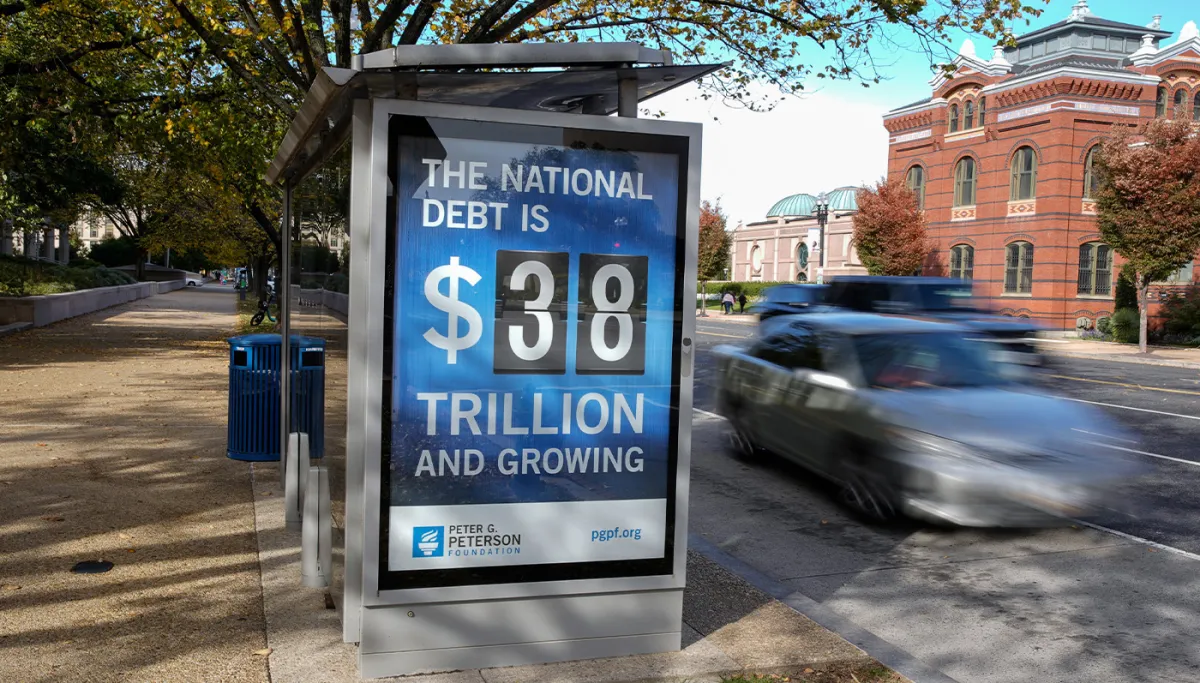
A bus shelter displays an electronic billboard and a poster showing the current U.S. National debt in Washington, D.C. in October 2025. As of press time, the national debt stands at over $39.2 billion. (Jemal Countess/Getty Images for the Peter G. Peterson Foundation)
In the 25 years following that balanced budget, the federal government has not come particularly close to balancing its books, even once. Right now, it runs a structural deficit of approximately $2 trillion per year, every single year.
For fiscal 2025, for instance, the federal government took in $5.23 trillion in revenues and spent $7.01 trillion. That created a $1.78 trillion budget deficit for the year.