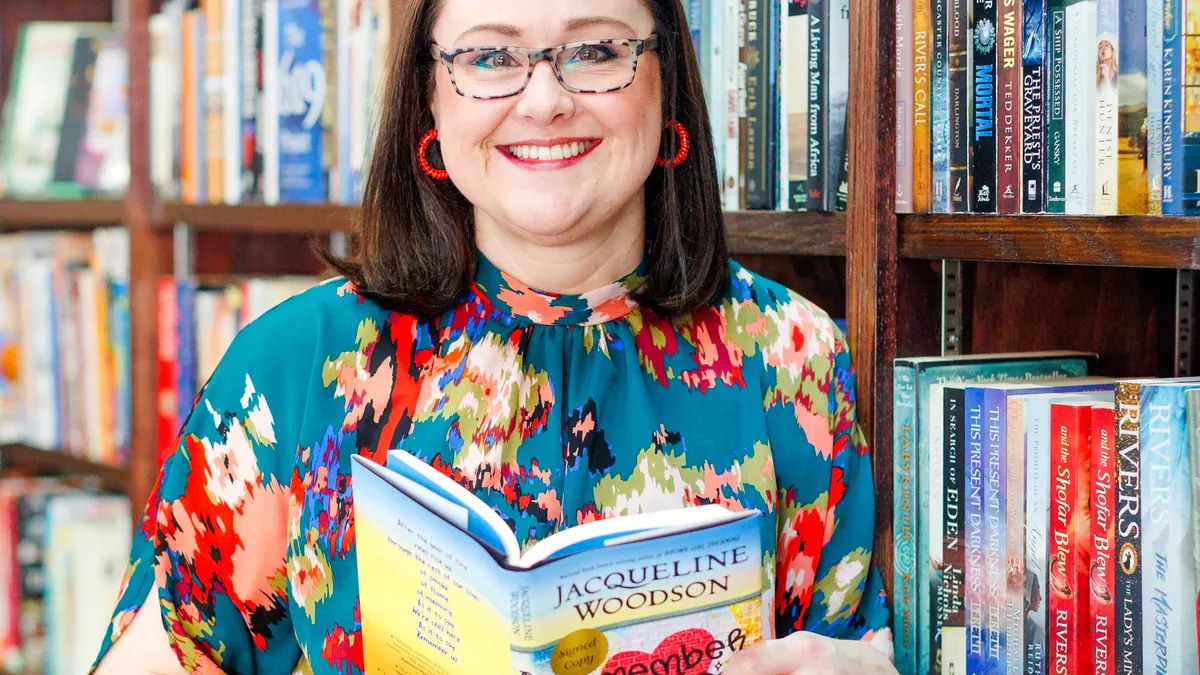
Mac Barnett is a best-selling author of children’s books, including a suite of droll, spare picture-book collaborations with the illustrator Jon Klassen, and the whimsical “First Cat in Space” series of graphic novels, illustrated by Shawn Harris. Barnett is also the current National Ambassador for Young People’s Literature, and, last month, he published his first book for adults, titled “Make Believe: On Telling Stories to Children.” A hubbub sprang up on social media around a passage of the book in which Barnett floats the possibility that “94.7 percent of kids’ books are crud.” (Barnett was riffing on an old quotation by the science-fiction writer Theodore Sturgeon, who was making the point that the vast majority of works in any literary genre are subpar.) Some authors, librarians, and miscellaneous posters were outraged that Barnett would pour scorn on the very field that he is officially tasked with championing. A petition of complaint to the Library of Congress and the nonprofit Every Child a Reader, the two bodies that appoint the National Ambassador for Young People’s Literature, attracted a few hundred signatures.The author’s defenders said that the comment was taken out of context, and Barnett has repeatedly apologized for labelling most kid lit as “crud.” “That line is not in the spirit of the book,” he told the Times. At a bookstore event in May, Barnett found a sympathetic audience in fellow children’s-book author Jeff Kinney, of the “Diary of a Wimpy Kid” series. Kinney remarked that, in the past, there were more “forums to share provocative takes on children’s literature,” but that “those spaces have really dried up.” Barnett invoked Katharine White, the New Yorker editor who, in the nineteen-thirties and forties, published more than a dozen lengthy omnibus reviews of new children’s books in this magazine. Such serious consideration of young people’s literature was once “true of so many newspapers, magazines,” Barnett said. There used to be more opportunities, in other words, to separate the wheat from the crud.Barnett is attempting to reclaim some of that space. In a conversation last year with one of his predecessors as National Ambassador for Young People’s Literature, Jason Reynolds, Barnett said that he wasn’t especially interested in “being a champion of literacy to kids, going and, like, urging kids to read.” Instead, he went on, “I really want to be an ambassador from kids’ books to, like, the wider literary world to advocate on behalf just of the value of these books, and the brilliance of the kids who read them.” In “Make Believe,” Barnett presents a slim manifesto for the idea that “kids have a right to great literature,” exemplified by books such as Margaret Wise Brown and Clement Hurd’s “Goodnight Moon” and Maurice Sendak’s “Where the Wild Things Are.” Picture books, and kid lit writ large, are under siege by didacticism, Barnett writes, which creates “a literature that is flat, homogenous, and boring,” one that “tends to warp narrative, flatten characters, and mar beauty.”He is strikingly reiterative, yet nonspecific, about his distaste for most children’s literature. “There are so many bad kids’ books,” Barnett writes, “and kids’ books are bad in so many different ways.” He states that “a big reason for our low opinion of children’s books is simply that lots of children’s books are bad.” He drills down on common traits among the “abundance of bad kids’ books”: “There are treacly ones, and preachy ones”; there are “books with amateurish writing, or amateurish illustrations, or both; bland books; boring books.” The “crud” line may have suffered from context collapse on social media, but, even in its original setting, it hardly reads like an isolated quip—more like a variation on a theme. (Although Barnett tends not to name names of his worst offenders, he did, in conversation with Reynolds, go on a brief rant against Robert McCloskey’s “Make Way for Ducklings,” which is somewhat akin to a Pixar director deciding to rip “Bambi” a new one.)Barnett’s consternation about the proper status of his craft puts him in company with P. L. Travers, C. S. Lewis, and J. R. R. Tolkien—all writers who spoke astringently about the condescension paid to their work and the dubiousness of relegating children’s books to a separate, lesser-than category of literature. Children’s authors “inhabit a sort of literary shtetl,” Sendak said in 1980. “When I won a prize for Wild Things, my father spoke for a great many critics when he asked whether I would now be allowed to work on ‘real’ books.” These assumptions may not have changed much in the decades since—in the first sentence of the first chapter of “Make Believe,” Barnett complains that if you write books for kids, “people will often ask you if you plan on ever writing a real book.”One thing that has shifted since Sendak’s heyday, however, is our baseline of assumptions about how much kids are reading, or how well or how happily, or to what extent the culture that surrounds them is fundamentally hostile to reading. Barnett’s concerns about literary merit and professional esteem may be timeless, but they are not terribly timely; they seem to float high above the current on-the-ground realities of what many educators and researchers agree to be a literacy crisis. In urging his audience to see children’s books as “real books,” Barnett skips over larger, more pressing questions about why so many children aren’t reading books at all, real or otherwise.About a week after the Barnett controversy broke, the Educational Opportunity Project at Stanford and the Center for Education Policy Research at Harvard published a study of district-level test-score data from across the country, which found that the “United States entered a ‘learning recession’ in 2013, as student progress in math and reading stalled and achievement began to decline”; the researchers wrote that, by 2024, eighth-grade reading scores were “at their lowest point since 1990.” On June 10th, the National Assessment of Educational Progress (NAEP) released survey results showing that just thirty-seven per cent of nine-year-olds and fourteen per cent of thirteen-year-olds read for fun in their free time “almost every day” (down from fifty-three per cent and thirty-five per cent, respectively, in 1984). Twenty-nine per cent of thirteen-year-olds reported “never or hardly ever” reading for pleasure, compared with eight per cent in 1984. (The NAEP report noted encouraging signs of a turnaround in reading scores among nine-year-olds; according to the Stanford-Harvard analysis, the states that saw over-all gains in reading achievement between 2022 and 2025 have, in recent years, reformed their literacy curricula to embrace a “science of reading” approach.)Ample research shows that passive content consumption among kids and teens is adversely affecting attention spans, language attainment, and other factors that help make deep reading both sustainable and fun. It’s all the more alarming, then, that forty-six per cent of teen-agers reported being online “almost constantly” in a 2024 Pew survey. Meanwhile, phone-addicted adults aren’t necessarily modelling reading habits for the young people in their lives. A 2025 analysis of the American Time Use Survey found that the proportion of people “who read for pleasure on an average day” fell from twenty-eight per cent in 2004 to sixteen per cent in 2023. And a 2022 Scholastic report found that only thirty-seven per cent of parents read aloud to infants before they turned three months old, a six-point drop in just four years.Federal and state governments, too, appear to be inimical to children’s literacy. DOGE cuts to Americorps, the national-service program, have hampered tutoring and literacy programs in multiple states. Dolly Parton’s Imagination Library program, which mails free books to children from birth to age five, has also lost funding in several states, most recently Missouri, where the state’s education department announced that it will stop new enrollments of children in the program on July 1st.In the midst of a reading emergency, librarians are the E.M.T.s. “We need to be talking to children about what they want to read, what makes them feel connected to literature, and how we can go about supporting their connections with literature,” Arlene Laverde, an elementary-school librarian in Manhattan and a past president of the New York Library Association, told me. School librarians are uniquely well-positioned to provide that support, she added, because of the ongoing nature of their relationships with students. Research shows that schools with librarians tend to outperform schools without them on standardized tests, and even that schools with full-time librarians get better scores than schools with part-time library staff.Yet, according to the education magazine Phi Delta Kappan, the number of full-time school librarians in the U.S. dropped by about twenty-five per cent between 2010 and 2023. By the following year, thirty-seven per cent of school districts reported not having a librarian at all; previous research has shown that the proportion is even higher in the smallest districts, which tend to be rural. These trends predate the “grooming” hysteria of the Joe Biden era, when calls for book bans surged and school librarians were routinely harassed over false claims that they were foisting inappropriate material on students. Since then, President Donald Trump has signed executive orders to dismantle both the U.S. Department of Education and the Institute of Museum and Library Services, the federal agencies that provide major funding to school and public libraries, respectively.It’s impossible to quantify all that is lost when schools lose librarians. But one place where their guidance and expertise can be pivotal relates to the phenomenon often called the “fourth-grade slump” or “decline by nine,” which refers to the steep drop-off in both reading interest and reading frequency that many children, especially boys, exhibit around age nine. Avoiding this cliff is more likely with the help of a librarian who understands her students’ likes and dislikes, who respects their autonomy and individuality, and who can use this knowledge to guide kids toward the texts they will love, regardless of whether or not they meet a subjective threshold of literary excellence.“In my experience, many young boys don’t want to read narrative fiction unless it’s gruesome,” Laverde told me. These kids may need her help in seeking out informational texts, she said, perhaps in the form of a reference book or a technical manual; what they specifically don’t need is anyone saying that such books are flat or bad or unbeautiful. “As adults, we might say, ‘That’s not real reading,’ but it absolutely is,” Laverde said.Among the fiction titles that do connect with kids in this age bracket, some of the biggest commercial hits are essentially entry-level graphic novels, such as Kinney’s “Diary of a Wimpy Kid,” Dav Pilkey’s “Captain Underpants” and “Dog Man,” Lincoln Peirce’s “Big Nate,” and Aaron Blabey’s “The Bad Guys.” These are “light, funny stories-with-pictures that can help uncertain readers make the leap from picture books to big-kid books,” Dan Kois wrote in a 2024 piece for Slate. (Some of these entries appear to prove Laverde’s “unless it’s gruesome” hypothesis; the titular Dog Man, for one, is sewn together from the remains of a cop and a canine who were grievously injured in a bomb explosion.) Books in this mold are nobody’s idea of high art—nor, for that matter, is Barnett and Harris’s similarly situated “First Cat in Space” series. The median parent (me) of a “Big Nate” and “Dog Man”–loving nine-year-old (mine) may wish that their kid was more inclined to the classic likes of “Charlotte’s Web,” “Where the Red Fern Grows,” or “Harriet the Spy.” But librarians and educators stress that what’s more important than matters of taste is keeping kids conditioned to reading at a crucial developmental moment.“When someone starts exercising for their health, we don’t criticize their choice of exercise or belittle them for not being able to run a marathon on the first day,” Deborah Reed, director of the Tennessee Reading Research Center at the University of Tennessee, Knoxville, told me. “Once the habit is formed, they do more and are encouraged to try new things they previously didn’t think were possible. Shouldn’t we approach reading the same way?” Yet, at a moment when political, economic, technological, and cultural forces are aligned against young readers and libraries, the National Ambassador for Young People’s Literature is loudly rejecting a high percentage of books that readers might be drawn to on a library’s shelves. “What I want from someone in this role is to champion all different kinds of reading,” Laverde said. “We need people to want to read, as opposed to policing what they read. The book-shaming has to stop.”I admittedly share Barnett’s nostalgia for the bygone era of Katharine White; in her columns, reading and books are as ubiquitous and seductive as the screens of today. (She did, incidentally, like “Make Way for Ducklings,” calling it the “perfect picture book for a Boston child but universal enough to appeal to anyone of picture-book age.”) But White also understood that holding children’s literature to high standards did not necessarily demand a highbrow approach. A column from 1939 considers Gertrude Stein’s well-received foray into kid lit, “The World Is Round,” which White found to be “buried in tedious mannerisms and lumbering whimsy.” She describes attempting to read it to her eight-year-old, who, by page 5, she wrote, “began to wriggle, and very shortly after that, I regret to say, he got up quietly, slid over to the table, and picked up a copy of Time.” White doesn’t specify which issue of the magazine it was—maybe it was the Picasso cover, or perhaps the Paderewski—but what I wouldn’t give to have this problem. ♦
Why “Book-Shaming” Won’t Solve the Children’s Literacy Crisis
The nation’s official advocate for children’s books says most of them are “crud.” But matters of literary quality don’t explain why kids aren’t reading.
2,250 words~10 min read