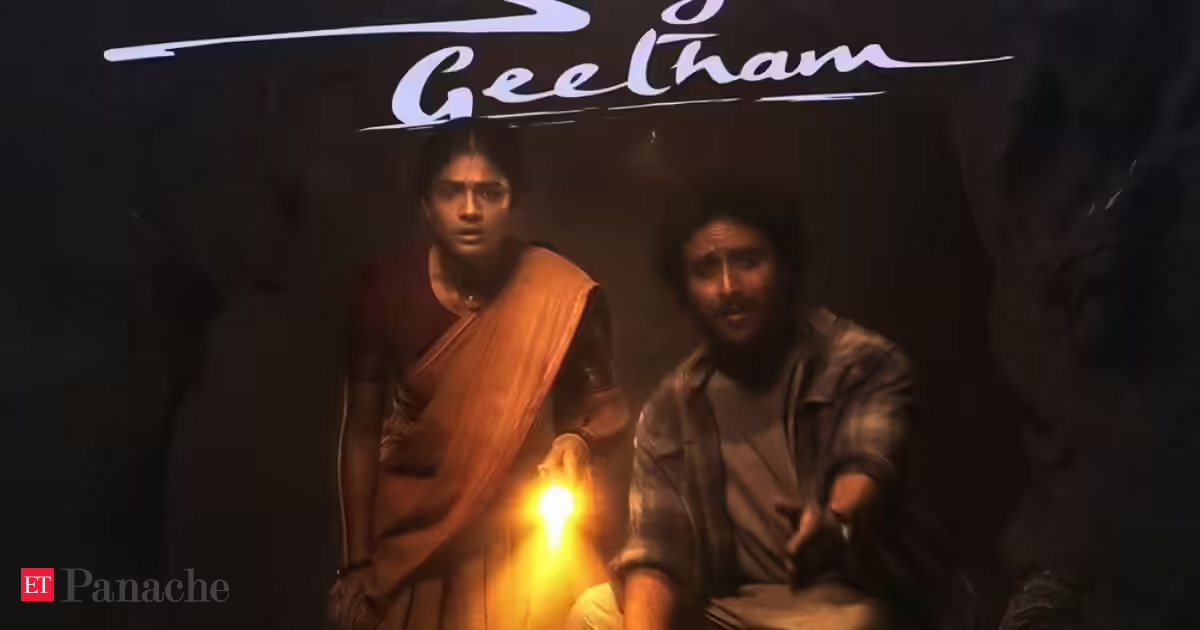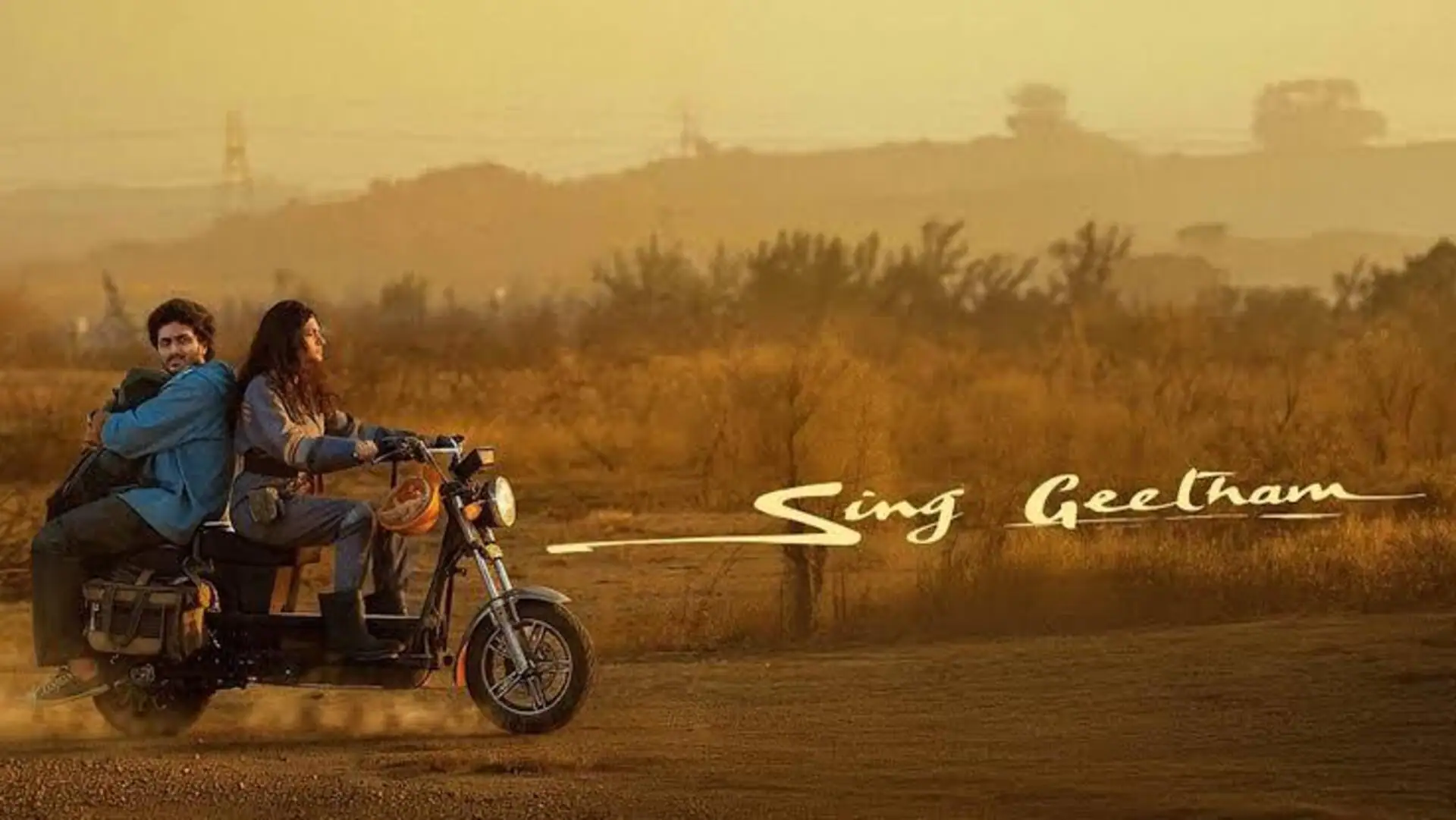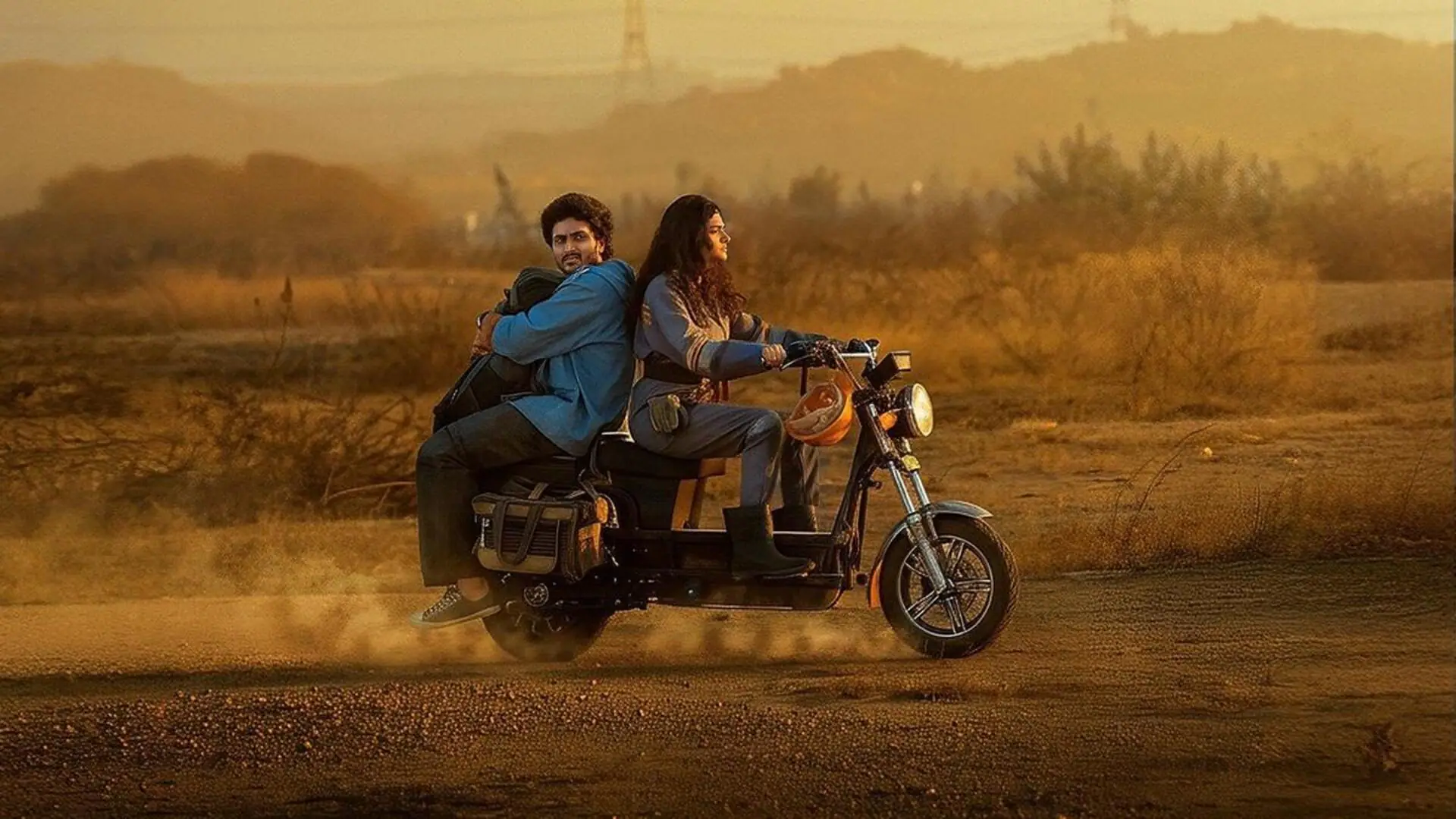
At a time when Telugu cinema seems trapped in the pursuit of pan-Indian ambitions, with big-budget productions often resting on weakly written stories, Sing Geetham is a refreshing departure. Directed by 94-year-old filmmaker Singeetham Srinivasa Rao, it serves as a timely reminder that the industry can still take leaps of faith and offer audiences something new. The story reflects on the futility of human greed while reinforcing the need to live in harmony with Nature. Its musical fantasy-drama format springs from childlike innocence and an audacity to defy stale box-office formulas. Bringing wings to Rao’s 40-year-old dream project is a talented cast and crew, with music composer Devi Sri Prasad serving as the film’s backbone.C Ankur’s cinematography frames the arid landscape as one of the film’s key characters as Pratap (newcomer Ayaan) approaches the fictional village of Kuberapuram. The setting feels almost dystopian. A lone tree offers shelter to villagers and passersby in the dusty mining settlement. As if from a children’s fairytale, Gauri (newcomer Ahilya) emerges from a cosy abode within the tree. As its name suggests, the village is rich in gold, and its mines are coveted by local and international interests alike. As profiteers eye expansion, the tree comes under threat.The conversation around the promise of wealth and development, and why a tree should not stand in the way, immediately draws parallels to urban realities. In Hyderabad, debates continue over trees lining the KBR National Park being felled for flyovers. Similar concerns echo across India as green cover gives way to infrastructure projects. A film tackling such a subject could easily become preachy and dull. Instead, the musical fantasy format gives it a fresh spin, making it entertaining and engaging.Sing Geetham (Telugu)Director: Singeetham Srinivasa RaoCast: Ayaan, Ahilya, Shalini KondepudiRun time: 137 minutesStoryline: When a village axes its last-surviving tree to expand mining activity, it is cursed. Its people have to find a way out and this involves introspection and redemption.If some of Rao’s most iconic films were celebrated for their wordplay, Sing Geetham carries echoes of that spirit. The opening portions are filled with witty exchanges and playful moments as the village’s residents, played by Shalini Kondepudi, Banerjee, Sivanarayana and others, are introduced.Let the music beginThe transition depicting how the village is cursed, leaving its people unable to speak and forced to communicate through song, is a joy to watch. As the bewildered villagers wake up to their new reality and the catchy “Emayindi emayindi…” begins to play amid cheers in the theatre, it is hard not to admire Rao’s ingenuity. Once again, he manages to bring out the child in every viewer, much as he did in milestone films such as Aditya 369, Bhairava Dweepam, Apoorva Sagodharargal and Michael Madana Kama Rajan.Much of the credit goes to the actors, young and old, who sing every line of dialogue throughout the film. Ayaan and Ahilya are terrific finds, bringing innocence, warmth and vulnerability to their roles. It takes a while to adjust to seeing the usually amiable Shalini Kondepudi as a shrewd, calculating businesswoman, but she gradually settles into the role’s required coldness. Seasoned actors such as Banerjee, Sivanarayana and Tulasi remain dependable assets. The real surprise comes from the many child actors, who deliver their sing-song dialogue with remarkable ease.The story touches on several themes, from faith to humanity’s tendency to brand someone as a bad omen. A flashback featuring cameos from well-known actors provides the emotional anchor and context the drama needs. However, in the latter portions, when humour recedes and the narrative moves fully into fantasy territory, with melodramatic detours on the road to redemption, the film occasionally feels stretched.Yet Sing Geetham is the kind of film I would gladly surrender to rather than nitpick. The musical conversations kept me invested throughout. In an era of short-form videos and shrinking attention spans, presenting an engaging narrative as a musical feels like a smart way to hold an audience’s interest. Devi Sri Prasad takes on the formidable challenge of composing for an entire film, ensuring the tuneful conversations remain playful and easy to follow.Sing Geetham is unlike Hollywood musicals built around song-and-dance routines. It is closer in spirit to the 1964 French classic The Umbrellas of Cherbourg, where dialogue itself is sung.The young direction team, led by executive director Sankalp Gora, along with co-writers Gautami Challagulla, Nanda Kishore Emani, Shashank Chintalpudi, Ratna Sreekar and Rahul V Rajeswar, deserve credit for successfully translating Singeetham Srinivasa Rao’s vision to the screen. The writing carries genuine emotional weight, and the execution manages to honour it — a rarity in Telugu cinema over the past few months. Credit is also due to Nag Ashwin and Vyjayanthi Films for backing Rao’s unconventional idea despite contemporary box-office pressures.By the end of Sing Geetham, I found myself wondering how the team pulled it off. Much like generations of Telugu and Tamil cinema lovers continue to marvel at how Rao brought so many of his seemingly impossible ideas to life. It is no surprise that he remains celebrated, or that his films continue to endure.
‘Sing Geetham’ film review: A bold musical fantasy from Singeetham Srinivasa Rao
‘Sing Geetham’ film review: Singeetham Srinivasa Rao's bold musical fantasy brims with childlike innocence, powered by Devi Sri Prasad's music
842 words~4 min read