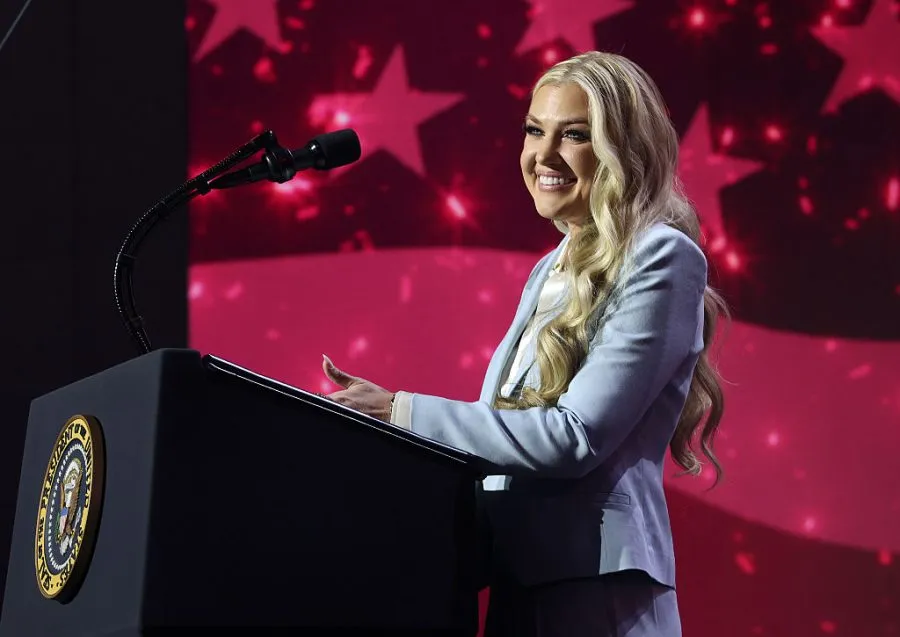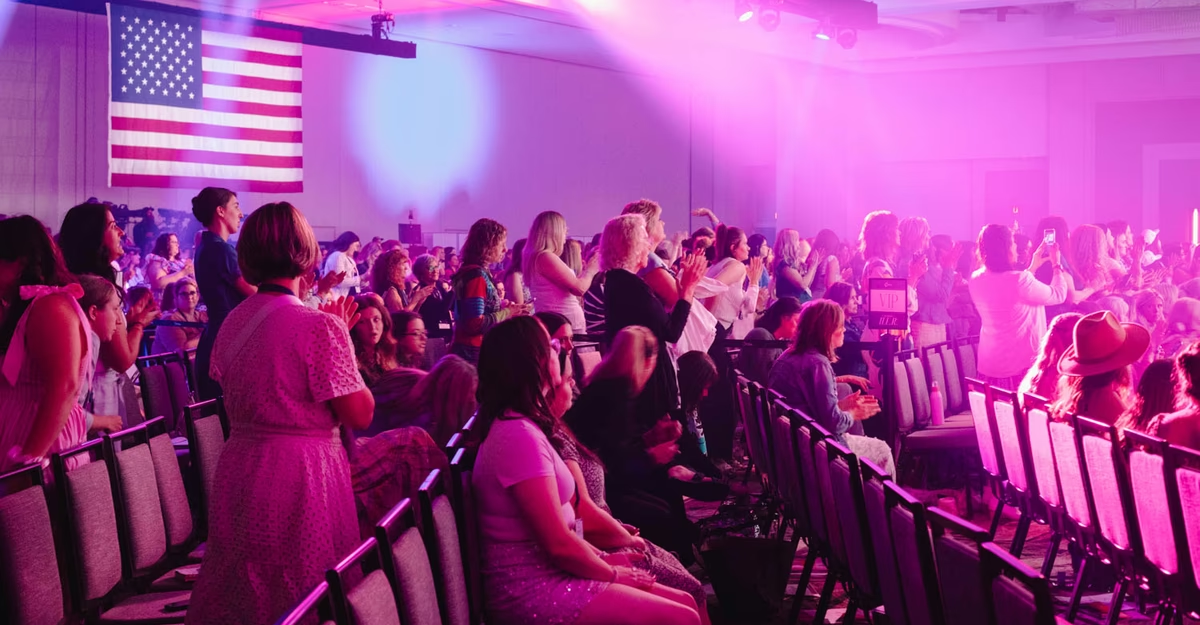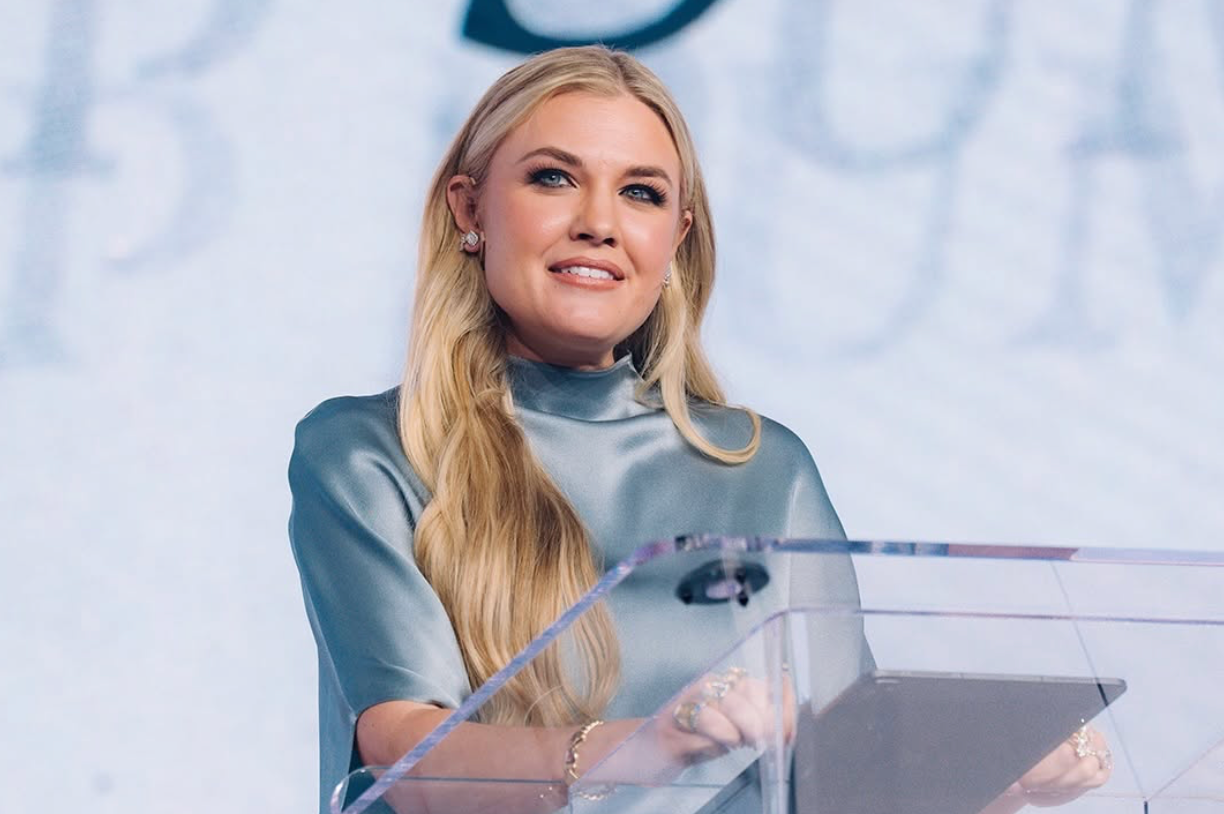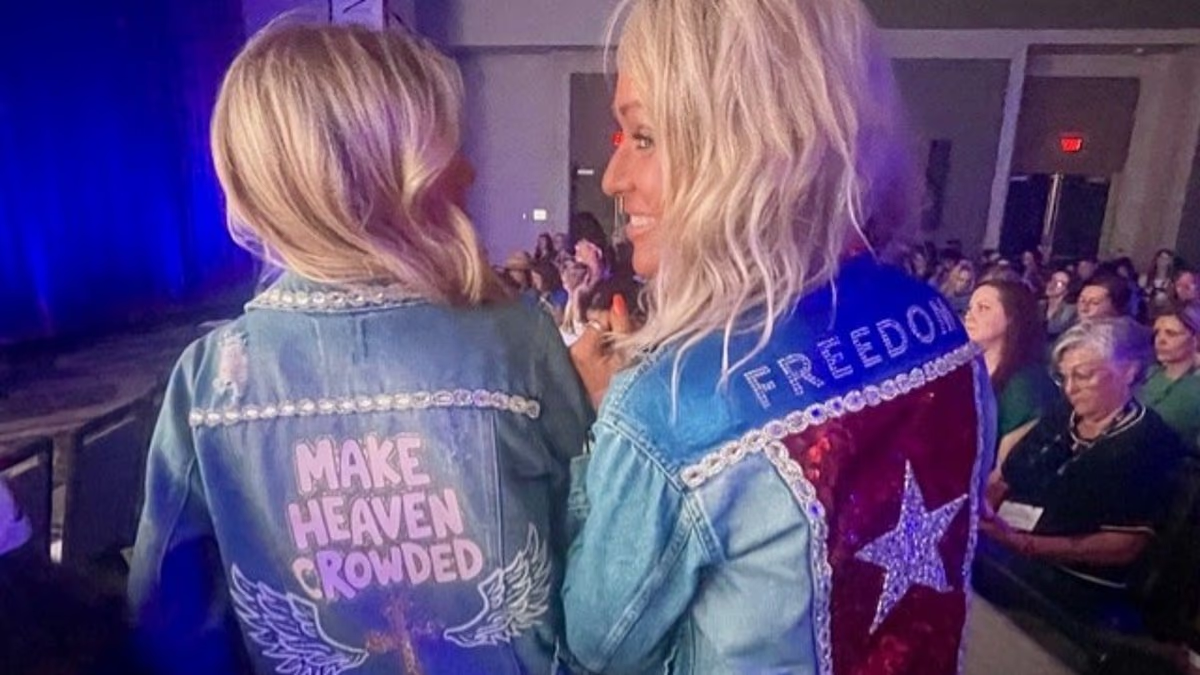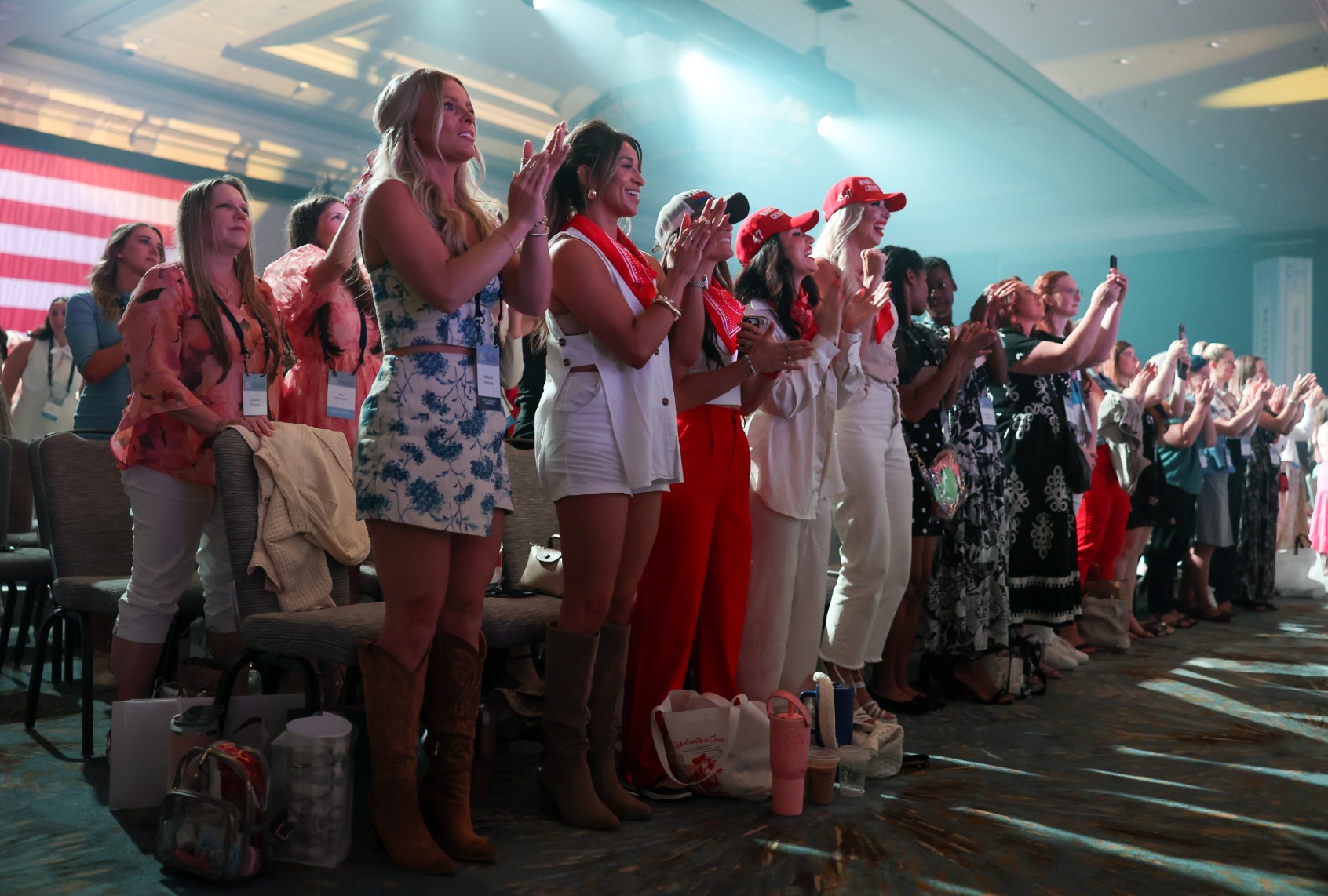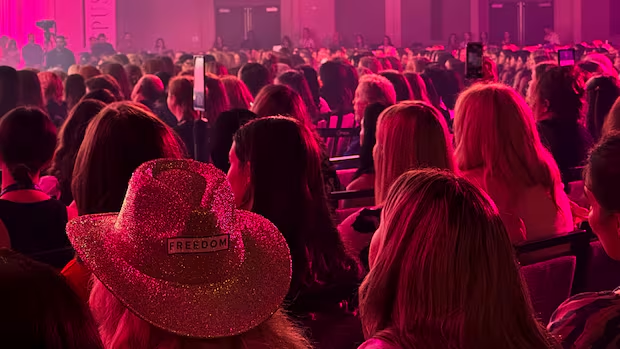
When Savanna Stone first started publicly sharing her support for U.S. President Donald Trump, she says it was a dealbreaker for some members of her extended family. "It was my two uncles; they’re married," said the 21-year-old social media influencer. "Because I said I was voting for Trump, they completely stopped talking to me." In a deeply polarized climate, these kinds of stories are not necessarily unusual. But what Stone said next was surprising. "I don’t even like Trump anymore, so it’s crazy."Stone is a rising star in the online conservative community, with some 800,000 followers across her platforms. She mainly posts Christian relationship advice, but is also highly critical of feminism, advocating for traditional gender roles. Some of her statements have sparked controversy. She was invited to be a keynote speaker at the Turning Point USA Women’s Leadership Summit, a three-day gathering held on the first weekend of June in San Antonio, Texas, of mostly young Christian conservative voters. While she didn't raise her concerns about Trump in her main stage address, she warned later in an interview with CBC News of a possible splintering of this voting block.Savanna Stone is a rising star in the online conservative community. (James Young/CBC)She’s even decided not to vote in the U.S. midterm elections this November. "He made it seem like everything was going to become more affordable; now the economy’s worse," she said of the president. "He promised no more wars in the Middle East and we are in a war, so it’s disappointing."Stone was a part of the conservative coalition that helped Trump win re-election in 2024. His national approval ratings have dropped in recent months, as backlash grows over the U.S.- and Israel-led war in Iran, and the subsequent rise in fuel prices. If Republicans are to maintain control of U.S. Congress, they'll need that same coalition to show up and participate in the midterm elections. WATCH | CBC News goes inside Turning Point USA Women's Leadership Summit:Turning Point women are torn on Trump — and their right to voteJune 10|Duration 5:44CBC’s Katie Simpson goes inside the Turning Point USA Women's Leadership Summit to talk to the young Christian Conservatives who helped shape the MAGA movement and find fractures emerging in support for U.S. President Donald Trump.AnalysisTrump wanted retribution in Indiana. Primary results show he can still deliver itNicki Minaj says Trump, Vance are 'role models' for young men at Turning Point USA eventTurning Point USA and TrumpTurning Point USA was founded by Charlie Kirk, the right-wing activist assassinated last September during an outdoor college debate in Utah. The organization is now run by his widow, Erika Kirk. She is critical of modern feminism, a broad theme embraced by many of the speakers at this summit. The organization has drawn a new generation of young voters into the conservative movement, through college campus outreach events and programs. Trump has credited TPUSA with helping him get re-elected. Despite Stone’s criticism, there was still plenty of support for Trump and the Republican Party on display at the gathering, attended by some 3,000 women — mostly students. Turning Point USA Erika Kirk speaks at the Turning Point Women's Leadership Summit in San Antonio, Texas, on June 5. (Joel Angel Juarez/Reuters)Two issues emerged as key reasons why women at the conference said they still support Trump and plan to back the Republicans this fall. The first: Changes the Trump administration has made to health policy, led by Robert F Kennedy Jr., who is commonly referred to as RFK. While many planks of his “Make America Healthy Again,” agenda have sparked backlash, those efforts were largely popular at the event. Erika Kirk says Turning Point will throw weight behind JD Vance for 2028 presidential campaignAnalysisCharlie Kirk memorial delivers heavy mix of politics and religion. He likely would have approved"I really like how [Trump] is allowing RFK to say, 'OK, we have a lot of toxins in our foods,'" said Alexus DeGraaf, a 31-year-old from Columbus, Ohio. She is a seamstress and costume designer by trade, but has recently started offering support services to women as a prayer minister. "We need to focus on healing our people so they can make quality decisions for their children and their communities."Alexus DeGraaf, a 31-year-old from Columbus, Ohio, is a seamstress and costume designer by trade, but has recently started offering support services to women as a prayer minister. (Katie Simpson/CBC)The second issue was the fight against transgender rights. "I don’t want a party that’s going to tell my son he can cut off his penis," said Brooke Foxworthy, 48, a stay-at-home mom who recently moved with her family from California to Texas.Another voter said she didn't want schools to teach kids about the existence of the transgender community. "Go back to reading, writing, arithmetic," said Stephanie Collins, 55, of Denver, Colo., who had set up a kiosk at the conference to sell sequined jackets, vests and hats. "I don’t need you to teach them values; that’s my job as a parent and my job in the church."The fringe and women's voting rightsIt remains unclear whether Stone’s criticism of Trump and her decision not to vote this fall is representative of a broader shift. As she has grown a significant follower base, she has also courted plenty of backlash.She says she doesn’t think women should vote, and that the U.S. should adopt a one-vote-per-household election system. Women tend to support more liberal candidates, she argues, so changing the voting system would result in a more Christian and conservative America. "That’s just one of the opinions that I hold, because I think that it would be better for society," she said. "Now, is that a hill I'm going to die on and run for office and try to complete? No," she said. "That’s Ideal Savanna’s world; that’s not our current world."Several women at the conference told CBC News that they'd be open to the idea, even if it meant losing their own right to vote — all in the pursuit of a more conservative country. Brooke Foxworthy, 48, is a stay-at-home mom who recently moved with her family from California to Texas. (Katie Simpson/CBC)"I think [Stone] has a very big point," said Foxworthy, the stay-at-home mom whose family recently moved to Texas. Foxworthy said she’s voted in every single election since she was 18 years old, and she plans to vote in the midterms coming up this fall. But she is open to the strategy. "If my husband is the head of the household, I am the neck, and we work very cohesively together," she said. "If he was voting on behalf of our household, I would be fine with that." She said she'd even be comfortable if it meant her daughter lost her right to vote, as well."I also know she’s going to marry a biblical man, and that they would also be in line," when it comes to political values, she said.WATCH | What's happening at the TPUSA women's summit:Is Trump's conservative vote splintering? We visit Erika Kirk's summit to find outJune 9|Duration 2:42KayElah Gardner said she'd give up her vote if it meant banning abortion."I feel like with my mindset, I would want to put my vote in," said the 19-year-old nursing student from San Diego, Calif. "But … I think getting rid of that would actually help women more."Though Gardner tempered her response by adding, "Hopefully that would never happen."Swaying female votersBut the vast majority of women at this conference who spoke with CBC News said this was a conversation for the fringes, and that they did not support the idea. "I think that the best thing that we can do is hold conferences like this ... to educate liberal women and hopefully swing them to the conservative side," said Lainie Shields, a 20-year-old college student from Huntington Beach, Calif. There is plenty of online chatter about women’s voting rights, according to Emmy Mills, 20, a college student from Greenfield, Ind. Emmy Mills, 20, is a college student from Greenfield, Ind. (Katie Simpson/CBC)"So many Christian influencers do say that they would prefer a world where they can choose to vote for the household, but I think it’s 2026.… Not all of our destinies are to get married and have kids," she said. "As a conservative, I do really embrace tradition, and so I do enjoy the democracy system that we have."
Among Christian conservative women, potential trouble in support for Trump | CBC Accessibility
Savanna Stone is a rising star in the online conservative community, with some 800,000 followers across her social media platforms. She was invited to be a keynote speaker at the Turning Point USA Women’s Leadership Summit. While she didn't raise her concerns about U.S. President Donald Trump in her main stage address, she warned later in an interview with CBC News of a possible splintering of this voting block.
1,396 words~6 min read